Mexico
mexico
North America
north-america

Updated October 10, 2026

Hot springs in Mexico

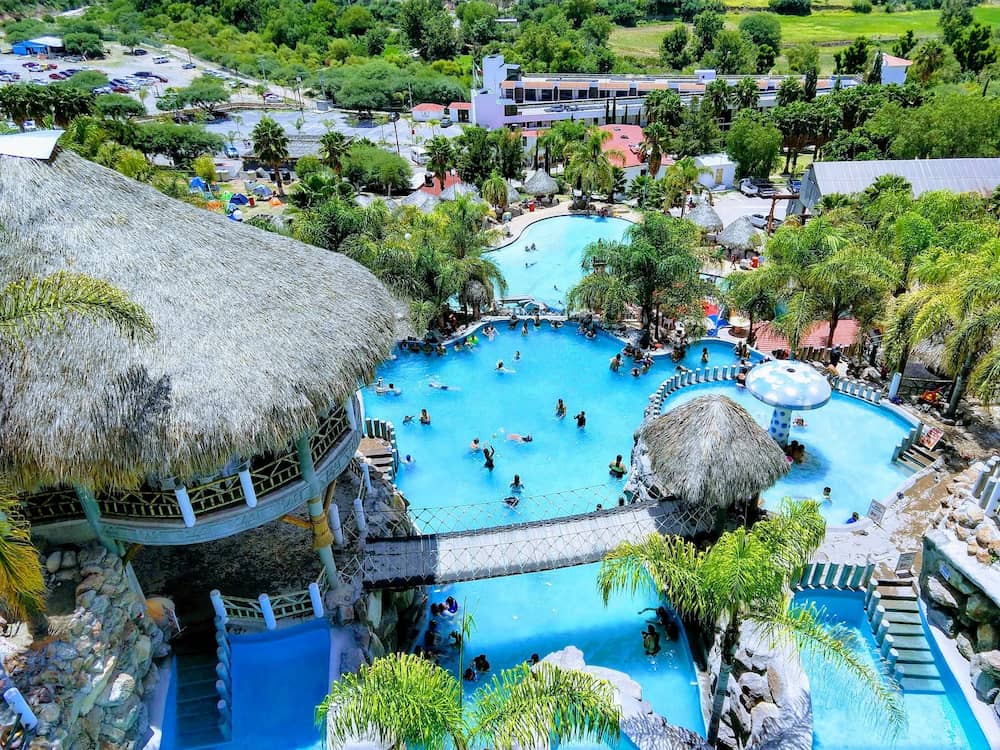
Mexico's hot springs are balnearios and grutas, from the turquoise canyon pools of Tolantongo to steamy thermal caves across the central highlands.
Nearly all are paid water parks and resort grottoes reached by road, busiest on weekends and holidays, so a weekday visit means quieter pools.

Map of hot springs in Mexico

Mexico's hot springs are balnearios and grutas, and at least 11 of them sit in this directory across the central highlands and Baja California. The turquoise canyon pools of Grutas de Tolantongo draw crowds to Hidalgo, while Parque Acuatico Ixtapan runs a large thermal water park near Toluca. All 11 listed here are paid sites. Thermal caves and water parks define the country.

Where Mexico's hot springs cluster

The state of Hidalgo, north of Mexico City, holds the country's most famous thermal canyon. Visitors crowd the warm river and cliff pools of Grutas de Tolantongo, soak in the steamy cave of Grutas de Xajha, and watch the cold water eruptions of El Geiser close by. Four of the directory's Mexican springs cluster in this single highland region, where warm rivers run through steep limestone canyons north of the capital.

The central Bajio and highland states spread balnearios across Guanajuato, Puebla, and beyond. The thermal grotto of La Gruta Spa near San Miguel de Allende and the resort water of Termas Comanjilla near Leon draw spa visitors, while Aguas Termales de Chignahuapan serves the Puebla highlands. Several of the listed Mexican springs sit across this central belt, most of them developed water parks a few hours from Mexico City by road.

Baja California adds remote desert soaks far to the northwest. The palm-shaded pools of Guadalupe Canyon Oasis Hot Springs near Mexicali and the coastal rock pools of Puertecitos Hot Springs on the Sea of Cortez sit hours from the central cluster. These two northern springs round out the directory's Mexican entries, reached by desert tracks rather than the paved roads of the central highlands.

What makes Mexico's hot springs different

Mexican thermal bathing centres on the balneario, a paid water park with warm pools, and the gruta, a thermal cave or grotto cut into limestone. Sites like Tolantongo pair both in one canyon, which sets Mexico apart from countries built around quiet wild springs. All 11 springs listed in this directory charge entry, and none is free. Water at the central-highland pools runs warm rather than scalding. These sit within the wider hot springs in North America.
All hot springs in Mexico

Frequently Asked Questions

1
How many hot springs are in Mexico?
At least 11 hot springs in Mexico are listed in this directory, concentrated in the central highlands and Baja California. Others exist beyond this directory across the country. A good starting point is Grutas de Tolantongo in Hidalgo, the most visited of them all. Most are paid balnearios and grottoes.
2
What is the best hot spring in Mexico?
Grutas de Tolantongo in Hidalgo is the most celebrated, a canyon of turquoise mineral pools, a thermal river, and a cave set into the cliffs. For a spa-town visit, La Gruta Spa near San Miguel de Allende offers warm grotto pools. Both rank among the 11 springs listed here.
3
What is a gruta in Mexico?
A gruta is a thermal cave or grotto, and several Mexican sites build their pools around one. Warm mineral water fills limestone caverns at places like Grutas de Xajha in Hidalgo and the resort tunnel at La Gruta Spa. Of the 11 springs listed here, several pair a gruta with open balneario pools.
4
Are Mexican hot springs free to visit?
No, all 11 hot springs in Mexico listed here charge for entry, as they are balnearios and resort grottoes rather than wild pools. A day pass to a water park like Parque Acuatico Ixtapan near Toluca covers the thermal pools and slides. Prices are lower on weekdays at most sites.
5
When is the best time to visit Mexican hot springs?
Weekdays outside holidays are best, as balnearios like Grutas de Tolantongo fill with families on weekends and during Semana Santa. The central highlands are pleasant year-round, sitting above 1,500 metres. All 11 springs listed here are developed sites with set opening hours.