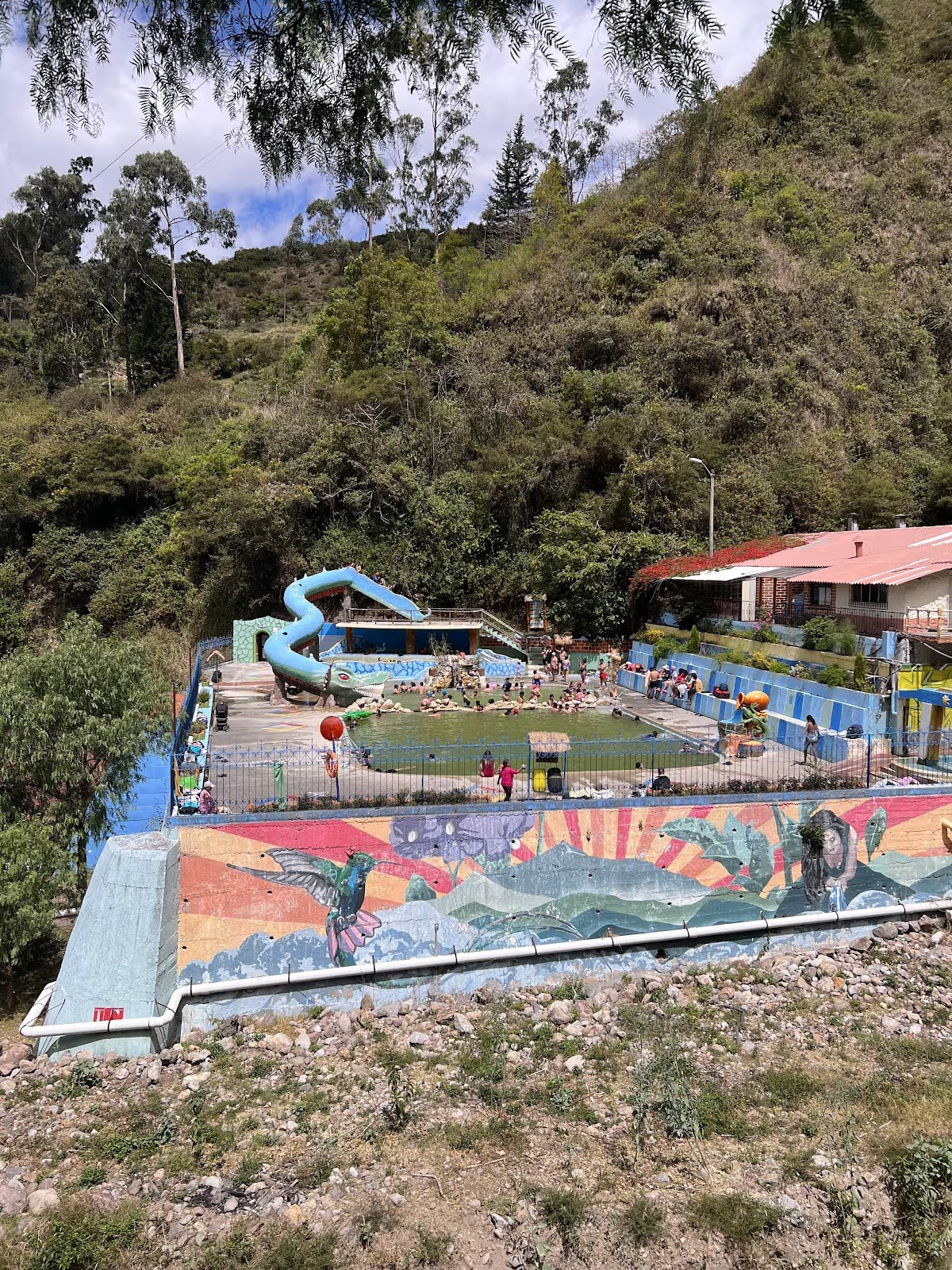
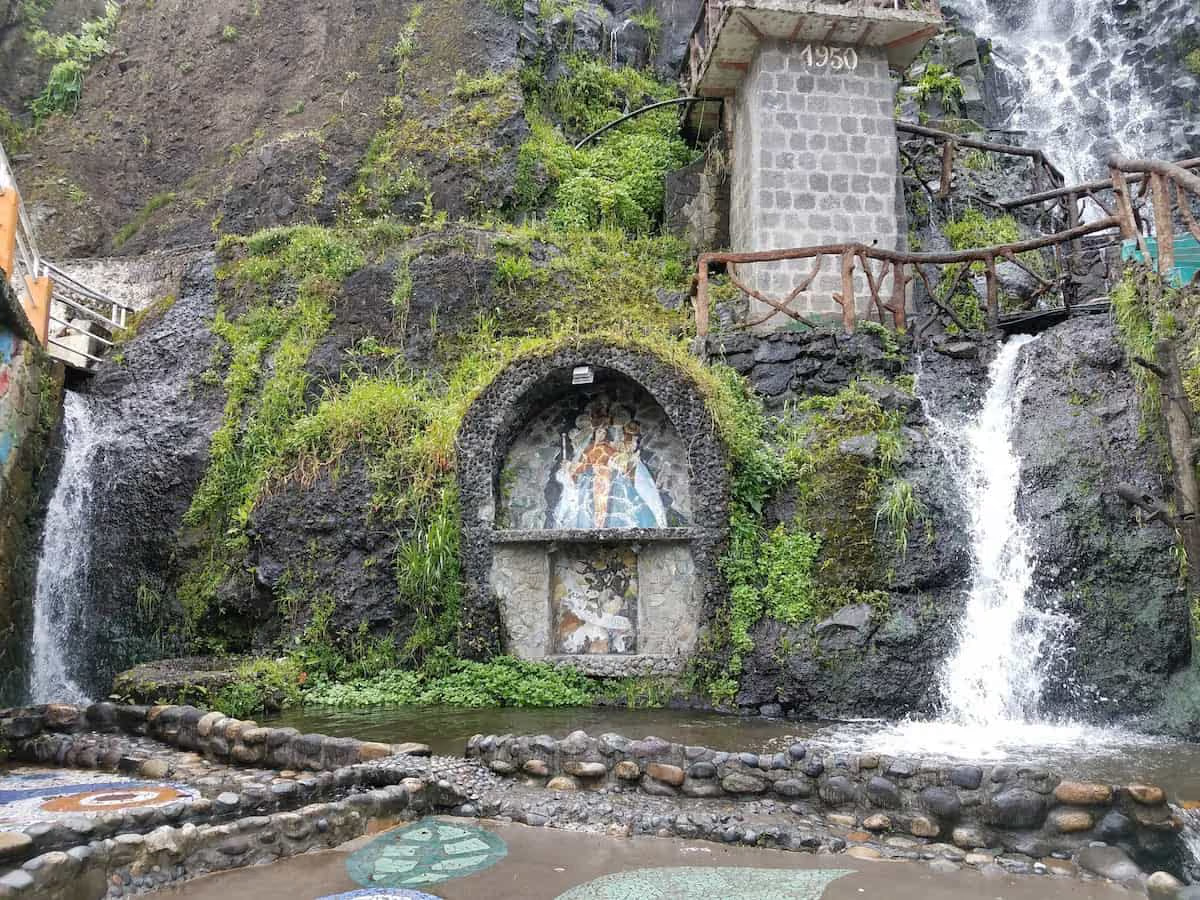
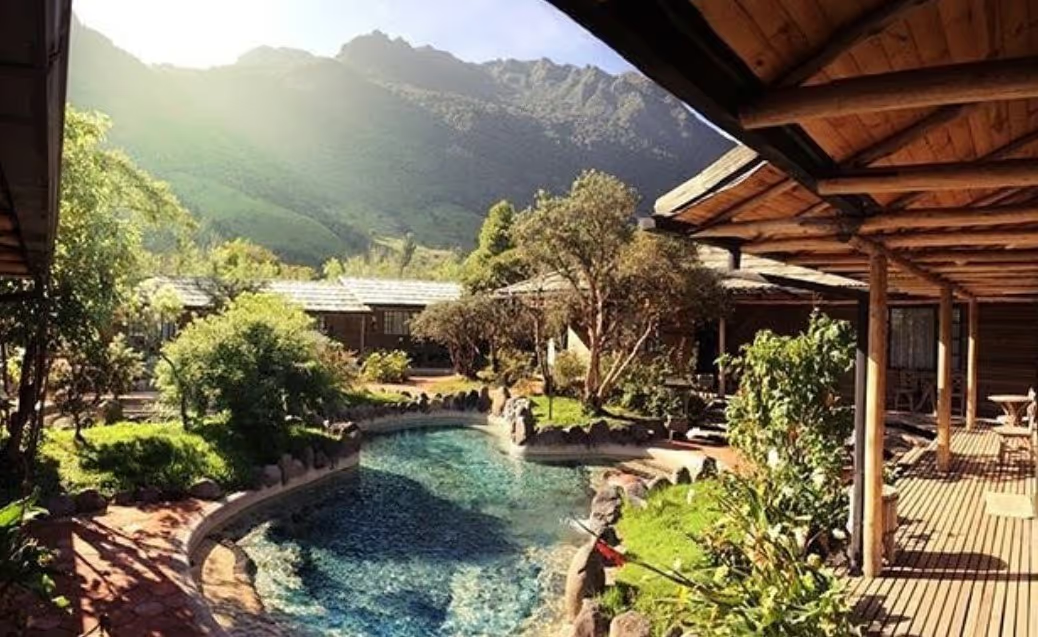
Ecuador's hot springs are Andean aguas termales, and at least 6 of them sit in this directory, strung through the volcanic highlands. The volcano-fed pools of Termas de la Virgen Antigua sit beneath a waterfall in Banos, while Termas Papallacta spreads outdoor geothermal pools at 3,300 metres near Quito. 4 of the 6 listed here are public pools and parks, and all of them are paid. Volcanic mountain termas define the country.
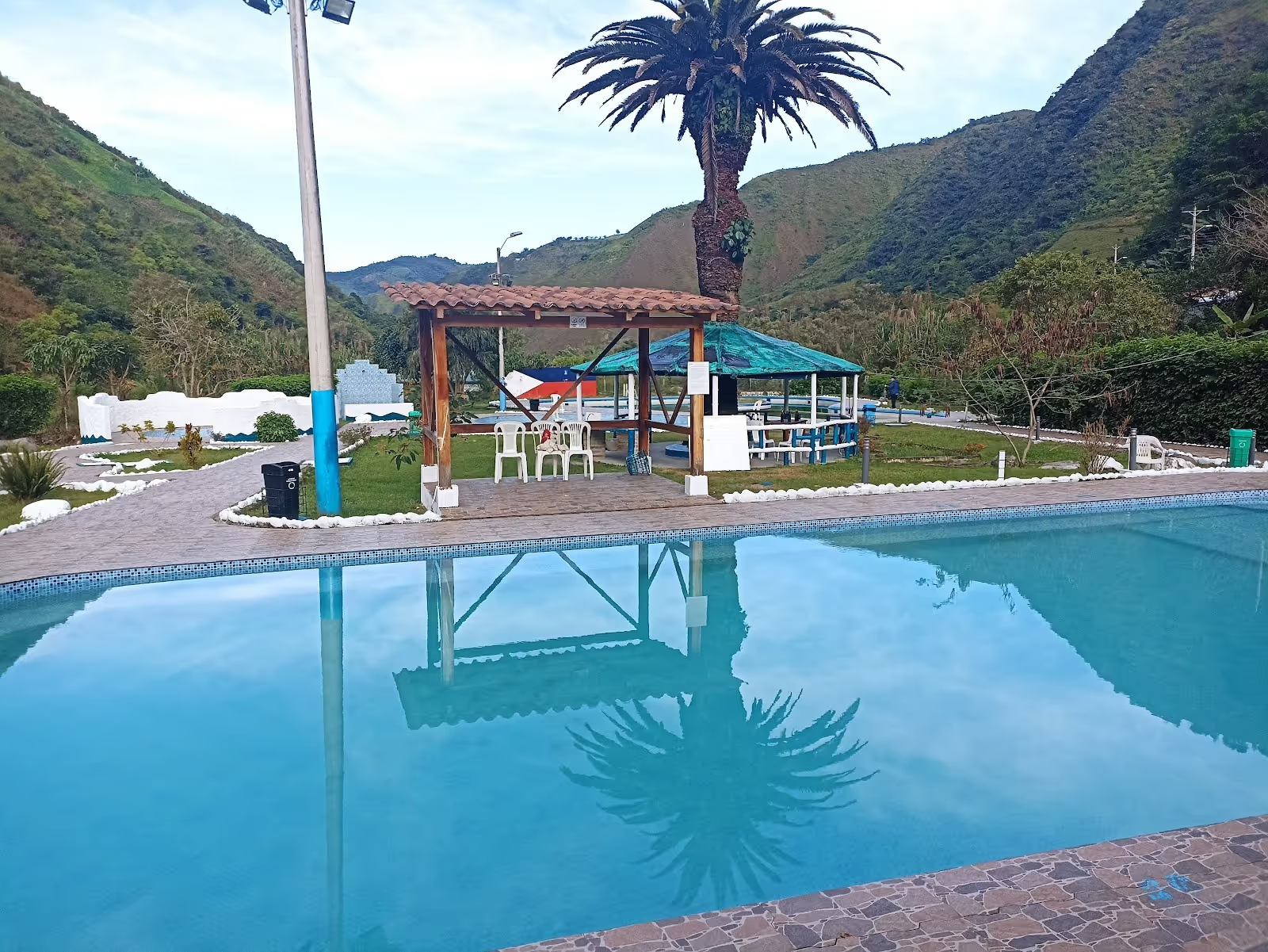
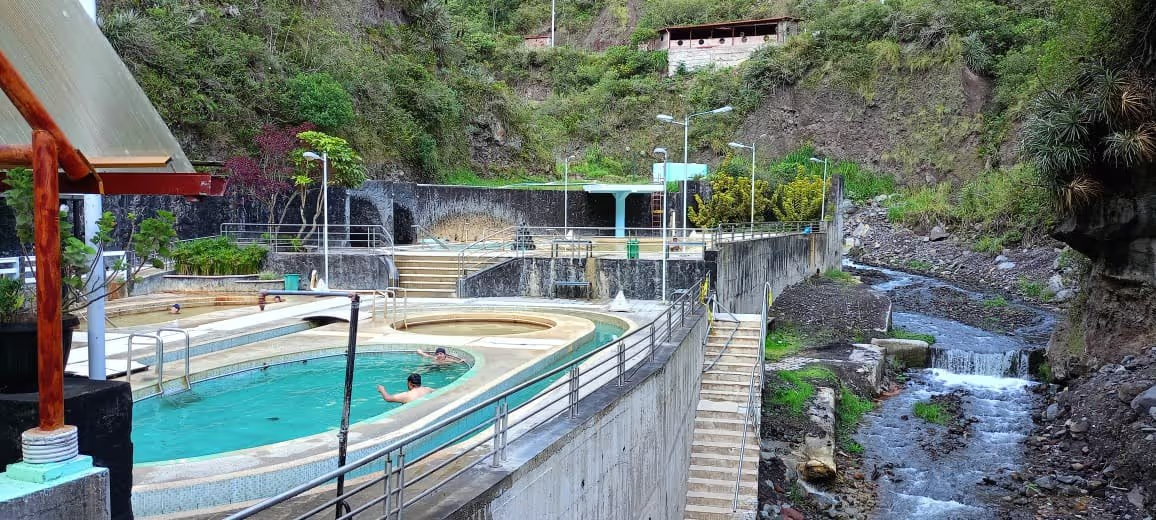
Banos de Agua Santa, below the Tungurahua volcano, is Ecuador's best-known thermal town. The in-town pools of Termas de la Virgen Antigua sit directly under a waterfall, while Termas El Salado on the edge of town runs hot-to-cold pools fed straight from the volcano. Two of the directory's Ecuadorian springs sit in this single volcanic valley, both walkable from the town centre.
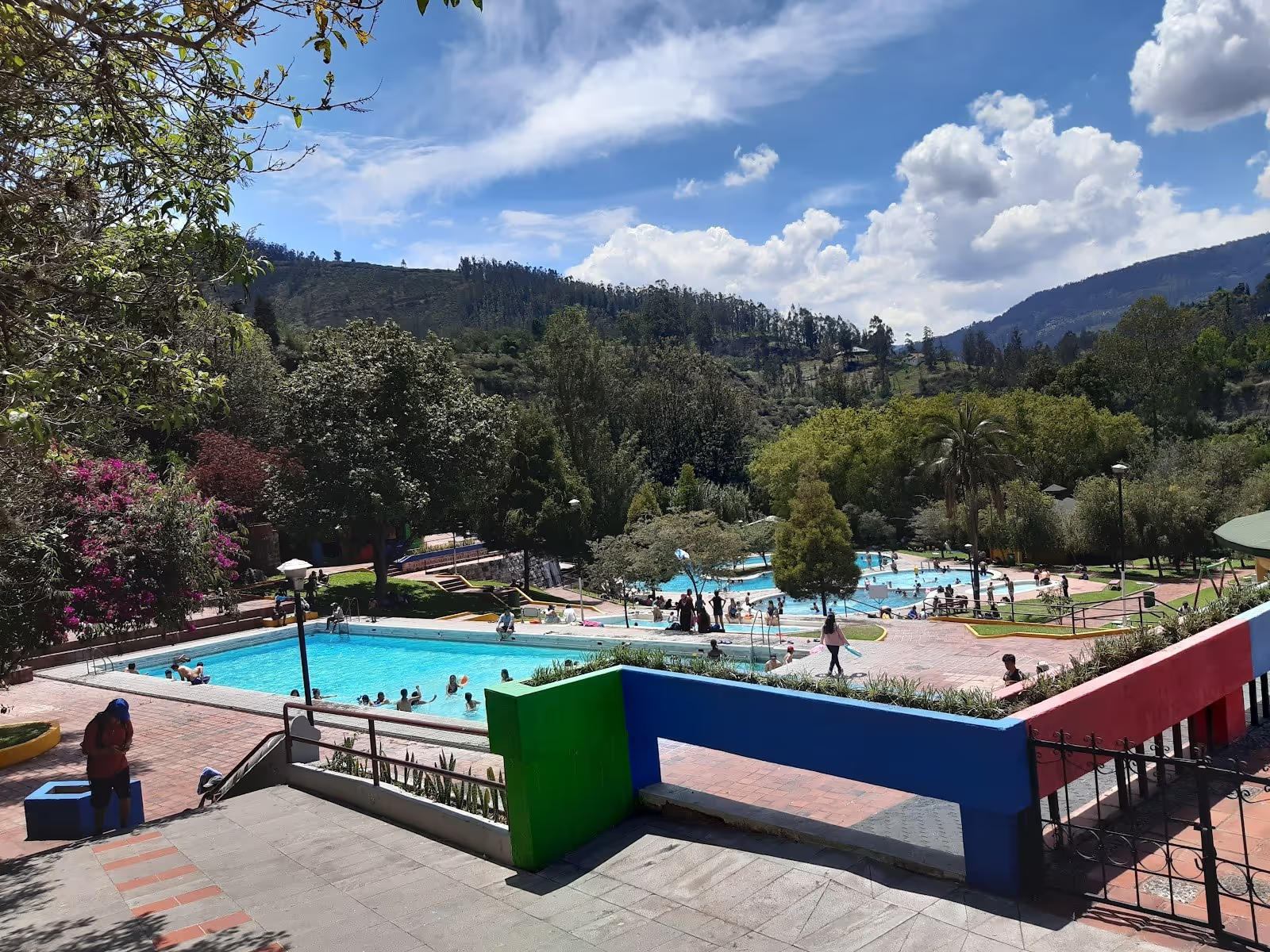
The capital region and the eastern Andes hold the country's most developed pools, set high in the mountains. Termas Papallacta sits at 3,300 metres about 90 minutes from Quito, with outdoor geothermal pools and a spa, while the municipal Balneario Municipal Cunuyacu fills seven pools in the Tumbaco valley fed by Cerro Ilalo. Both lie within easy reach of the capital, making them the simplest termas for a short trip from Quito, whether for a half-day soak or an overnight stay.
The Imbabura highlands in the north gather community and resort pools in cloud-forest valleys. The government-run resort at Santagua Termas de Chachimbiro near Ibarra pairs recreational pools with a medical spa, while the community complex of Termas Nangulvi fills six mineral pools in the Intag cloud forest. These northern springs round out the directory's Ecuadorian entries.
Ecuadorian thermal bathing follows the volcanic spine of the Andes, where mineral aguas termales feed town pools and highland resorts. Most are public balnearios or community pools rather than wild soaks, which sets Ecuador apart from countries with free backcountry springs. All 6 springs listed in this directory charge entry, and none is free. Many sit well above 2,000 metres, so the water feels warm against cool mountain air. These sit within the wider hot springs in South America.