
Quick FactsOverview
About Kaiser-Friedrich-Therme Wiesbaden
Kaiser-Friedrich-Therme, Germany is a historic textile-free thermal bathhouse in central Wiesbaden, built between 1910 and 1913 on the site of excavated Roman bath foundations. The building was designed by city architect August O. Pauly in Art Nouveau style and fed by the Adlerquelle, Wiesbaden's second most important thermal spring, which surfaces at around 64.6 degrees Celsius before being tempered for bathing. It opened in 1913 following a request by Kaiser Wilhelm II, who had noted the absence of a public bathhouse in what was then one of Europe's foremost spa cities.
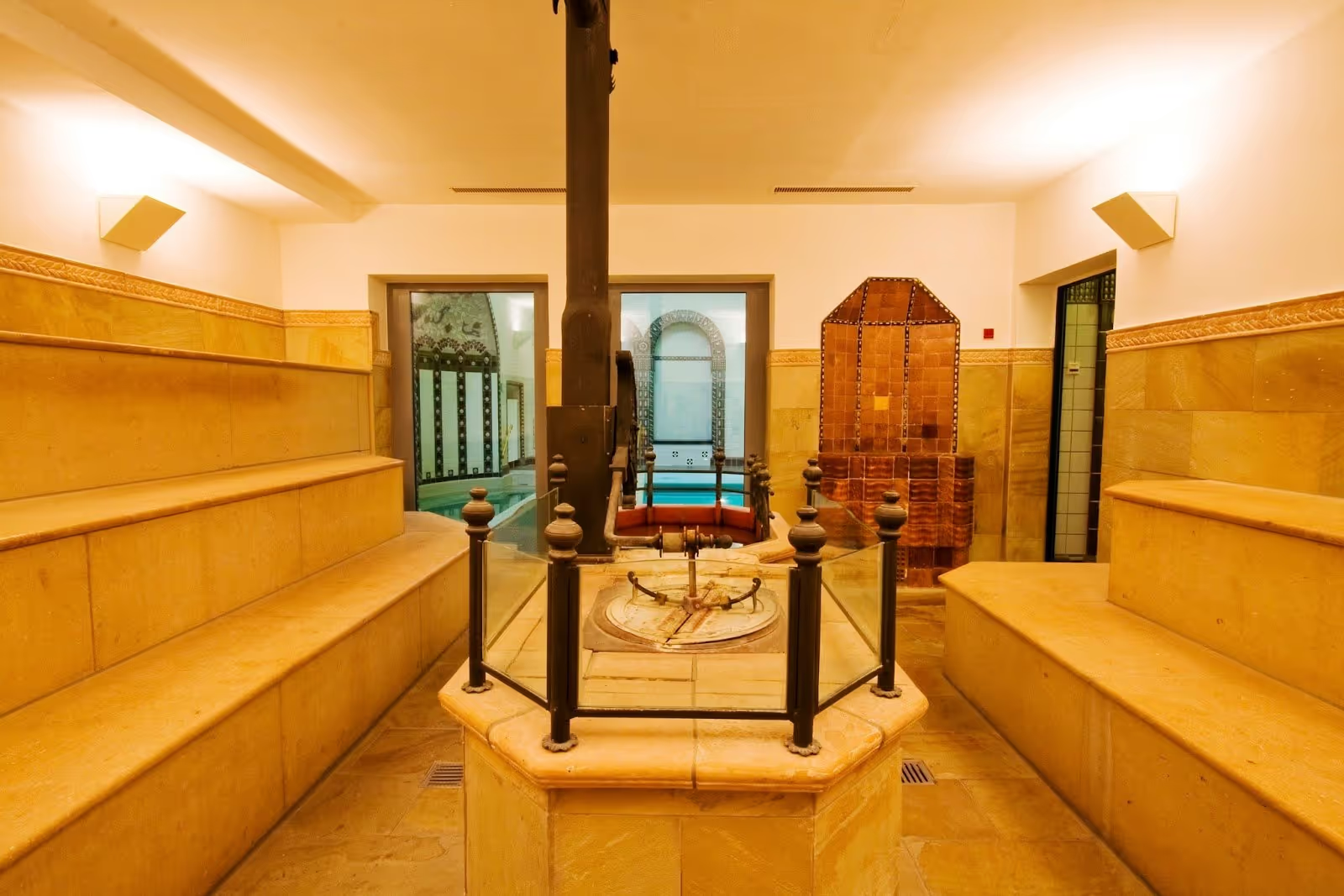
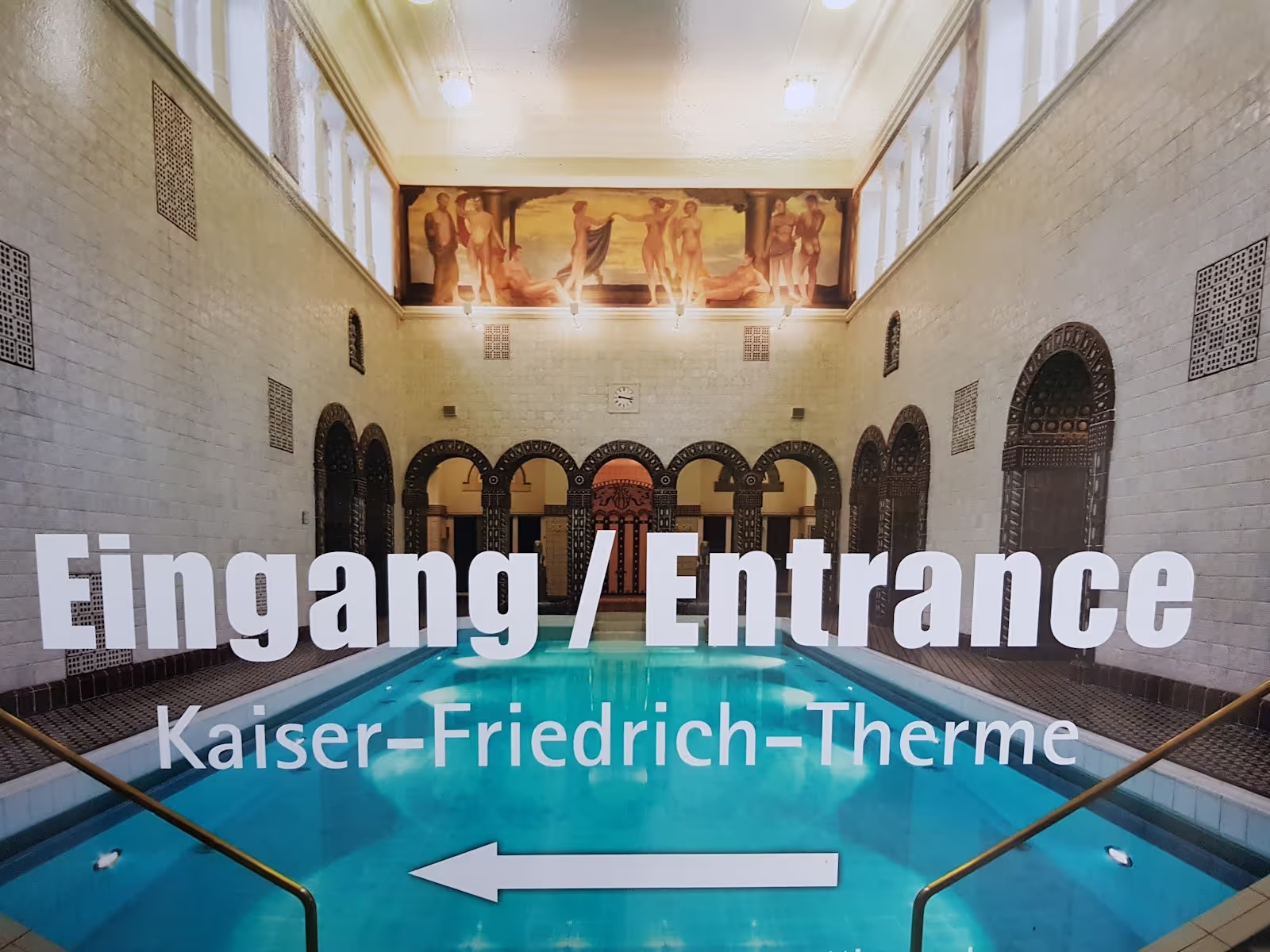
The complex operates in the Irish-Roman bathing tradition, following a circuit from a tepidarium at 40 to 45 degrees Celsius through a sudatorium at 50 to 55 degrees Celsius and into steam rooms, with cold plunge pools for cooling between stages. Original colored tile work by a pupil of Henry van de Velde and a fresco by Wiesbaden painter Ernst Wolff-Malm have been preserved in two original rooms. The facility covers 1,450 square meters and is textile-free on most days, with Thursdays designated as a clothed textile day since January 2020. For hot springs near Wiesbaden in the city center itself, this is the most centrally located option available.
Location & Access
Getting to Kaiser-Friedrich-Therme Wiesbaden
Kaiser-Friedrich-Therme is located at Langgasse 38-40, 65183 Wiesbaden, in the pedestrian zone of the city center. The nearest bus stop is Webergasse, served by lines 1 and 8. From Frankfurt, around 40 km to the east, the most direct route is by S-Bahn to Wiesbaden Hauptbahnhof followed by a ten to fifteen minute walk through the pedestrian zone. Regional trains from Frankfurt Airport reach Wiesbaden Hauptbahnhof in under an hour, making the Therme viable as a day stop for visitors based in Frankfurt. Guests staying near the Wilhelmstrasse or Kurhaus can walk to the facility in under ten minutes.
By car, Wiesbaden is connected via the A66, A3, and B455, but the Therme has no dedicated car park. Central car parks in the pedestrian zone area are the practical option for drivers. For visitors seeking hot springs near Wiesbaden within the city itself, arriving by public transport or on foot is more convenient than driving.
The building can reach capacity on Friday and Saturday evenings when it opens until midnight. Arriving before 18:00 on weekends gives a quieter experience. Tuesday is a ladies-only day and Thursday is the textile day. Check the official mattiaqua timetable before visiting, as hours vary by day and can change on public holidays. Tickets can be bought in advance at mattiaquacard.de.
Suitability & Accessibility
Who Is Kaiser-Friedrich-Therme Suitable For?
Kaiser-Friedrich-Therme is best suited to adults who are comfortable with textile-free bathing and want a historically immersive thermal experience. The Irish-Roman circuit format, nude-bathing convention, and absence of leisure-pool features make this explicitly not a family destination. The minimum age for entry is typically 16. For visitors seeking hot springs in Germany with genuine historic character, natural thermal spring water, and preserved Art Nouveau interiors, this is one of the most distinctive facilities in the country.
The Therme suits solo visitors and couples equally well. The bathing circuit is straightforward: follow the schedule posted at the entrance to move through rooms in the Irish-Roman sequence, or use whichever areas appeal in any order. First-time visitors often find the nudity convention unfamiliar, but the atmosphere is matter-of-fact and consistent with established German bath culture. The quality of the original tiling, frescos, and architectural detail rewards visitors who take their time.
Wheelchair accessibility is not confirmed for this historic 1913 facility. The building predates modern accessibility standards and adaptations can be limited. Anyone for whom step-free access is essential should contact the facility directly before visiting and ask specifically about entrance routes, changing areas, and pool entry. The central city location and public transport connections make arrival straightforward, but the building's internal accessibility should be verified in advance.
Safety & Etiquette
Safety and Etiquette at Kaiser-Friedrich-Therme
Kaiser-Friedrich-Therme, Germany is generally safe to visit, with the main risks being wet and slippery stone and tile floors throughout the historic building and the cumulative heat of the Irish-Roman circuit. Floor surfaces around the cold plunge basin and in the older original rooms are particularly slick. Wear grip sandals from the moment you enter the changing area, walk slowly, and keep a free hand near steps and pool entries.
The progressive heat circuit builds body temperature steadily across multiple rooms. Move from the tepidarium through the sudatorium and into the steam rooms at a measured pace, cool down fully between each stage in the cold plunge pool, and drink water throughout. Leave a room before you feel uncomfortable. First-time visitors should plan a shorter circuit and extend on return trips. Visitors with cardiovascular conditions, pregnancy, or heat-sensitive health concerns should keep sessions conservative and seek personal medical advice beforehand.
The facility is textile-free except on Thursday textile days, and this applies throughout the building including corridors and rest rooms. A large towel is required for sitting and reclining anywhere in the sauna and rest areas, and the locker system provides a wristband for cashless payments and secure storage.
Aufguss infusion sessions are led by staff at set intervals. Arrive a few minutes early to secure a good position. Standard German sauna etiquette applies: quiet, no phones, towels spread fully under you, and exit only between rounds. Massages and softpack treatments can be booked and are typically scheduled toward the end of a visit. Shower before entering any pool area and keep personal care products out of shared water.