
Quick FactsOverview
About Salto de Malacatiupan
Salto de Malacatiupan, El Salvador is the country's only thermal waterfall system, situated in the municipality of Atiquizaya within the department of Ahuachapan in western El Salvador, approximately 6 km from the town of Atiquizaya. The site sits where two rivers meet: the Agua Caliente, which is heated by underground geothermal activity and arrives at the confluence at very high temperature, and the cooler San Antonio river, whose mixing results in a combined water temperature of approximately 35 to 37 degrees Celsius at the point where the waterfalls form. This naturally occurring blend of volcanic heat and cold spring water cascades over three main waterfalls of roughly 12 meters each, dropping into a large natural pool surrounded by rock formations and tropical vegetation.
El Salvador sits within a volcanic belt and is home to twenty volcanoes, which creates extensive geothermal activity beneath the surface of the western highlands. The Agua Caliente river originates from underground springs heated by this activity and flows through the landscape at temperatures approaching boiling before mixing with cooler tributaries along its course. By the time the combined water reaches Salto de Malacatiupan, it is comfortably warm for bathing and has taken on a brownish tint from the mineral content. The name Malacatiupan derives from the Nahuatl phrase meaning round temple, referencing the site's significance to the pre-colonial Pipil and Pocomam peoples who are believed to have used the waters for ritual and healing purposes.
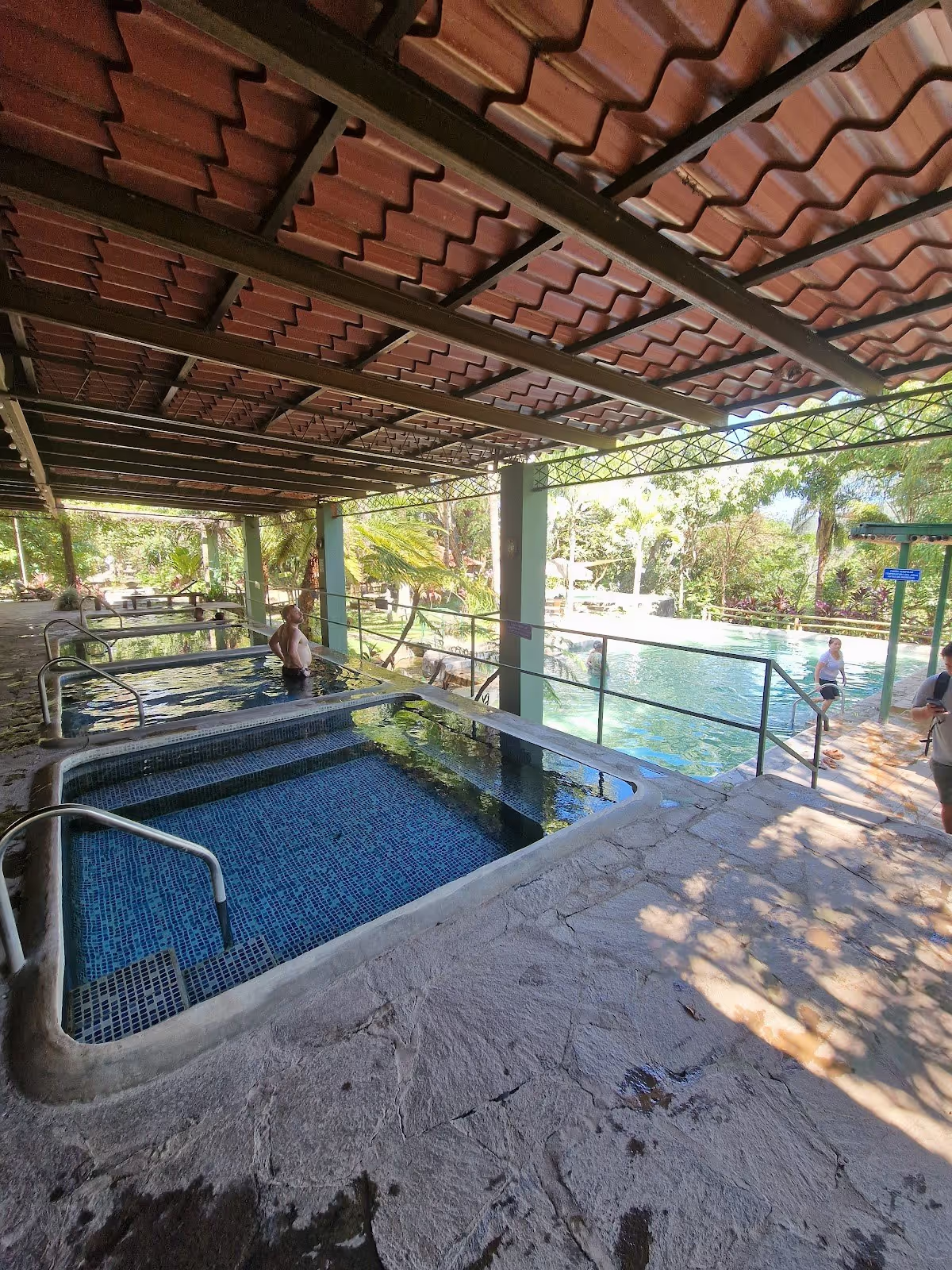
The site remains relatively undeveloped compared to managed thermal resorts in the region. A small parking area, basic changing facilities, clean flush toilets, and a recently added restaurant near the entrance are the main amenities. Beyond the entrance, visitors walk a short distance to reach the river and can choose from several spots along the thermal watercourse to swim, soak, or watch others jump from the waterfall ledges. The absence of heavy tourist infrastructure is part of what makes the site appealing to those looking for hot springs in El Salvador with a natural, unmediated feel.
Location & Access
Getting to Salto de Malacatiupan
Salto de Malacatiupan is reached by driving or taking a bus to the town of Atiquizaya, then continuing approximately 5 to 6 km west on an unpaved road that branches off near the central park, beside the parish church on 4 Calle Poniente. The unpaved stretch takes around 10 to 15 minutes by car or mototaxi and is passable by standard vehicles in dry conditions, though the surface can become rough after heavy rain. A narrow bridge marks the approach to the site, and the entrance is a short distance beyond it on the right side of the road.
From Santa Ana, buses 210 and 214 serve Atiquizaya with a journey time of approximately 45 minutes. From San Salvador, bus route 202 connects to Ahuachapan via Atiquizaya. From the Ruta de las Flores towns, take bus 249 to Ahuachapan and then a local connection to Atiquizaya. From the Atiquizaya central park, mototaxis are available and can take visitors directly to the site for a negotiated fare, typically around a few dollars each way. The waterfall is well known to all local mototaxi drivers in Atiquizaya. For those looking for hot springs near Atiquizaya or hot springs near Santa Ana, Salto de Malacatiupan is the primary natural thermal site in the area and requires no specialist transport.
By car from San Salvador the journey takes approximately two hours following the CA-1 highway to Santa Ana and then north toward Atiquizaya. The site has a small parking area, with an informal parking fee of around one to two dollars payable to local attendants. There is no advance booking required. The site is open daily, technically around the clock, though visiting after dark is not recommended due to the unlit road and remote location.
Suitability & Accessibility
Who Can Visit Salto de Malacatiupan
Salto de Malacatiupan is suitable for adults, older children, and families looking for an outdoor natural swimming experience with the unusual feature of thermal water. The short walk from the parking area to the river makes the site accessible to most visitors without requiring hiking fitness. However, the site is explicitly not wheelchair accessible: reaching the main waterfall pool and the best soaking spots requires descending wet, slippery stairs and navigating rocky riverbank terrain. Visitors with limited mobility have access only to the uppermost section of the river closest to the parking area, which is the shallowest and least interesting part of the site.
The water temperature of around 35 to 37 degrees Celsius is warm and immediately noticeable but not dangerously hot at the main swimming areas, making it comfortable for most adults and older children. Young children should be closely supervised given the moving water and uneven riverbank. The cliff jumping from the waterfall ledges is popular with local visitors and some international travelers but involves a drop of approximately 12 meters into the pool below and should only be attempted by confident swimmers who are comfortable with heights. Those not wishing to jump can simply swim in the pool or soak in the natural rock channels downstream.
The site offers a distinctly local, unpolished experience among El Salvador's natural hot springs. There are no resort services, no lifeguards, no sunbeds, and no food vendors beyond the recently added small restaurant near the entrance. Visitors should be self-sufficient with water, food, sunscreen, and insect repellent. The tropical location means temperatures at ground level can be intense, particularly at midday in the dry season. The best experience for most visitors involves arriving in the morning on a weekday to avoid the larger local crowds that gather on weekends and public holidays.
Safety & Etiquette
Salto de Malacatiupan Safety Tips
Salto de Malacatiupan is classified as a site requiring mindfulness, primarily due to the flowing water conditions, the remote unpaved access road, and the cliff-jumping hazard at the main waterfall. The water in the river and pool is in constant motion, which behaves differently from static thermal pools. Visitors should assess the current before entering and should not attempt to cross the main channel in spots where the current is strong. Water depth varies significantly across the site and is not uniformly safe throughout.
The most significant safety consideration is the rainy season, which typically runs from May through October. During and after heavy rainfall, the river level can rise rapidly and the current can become dangerous, even in areas that appear calm in dry conditions. Locals and site staff are the best source of current-day information about conditions. Visiting during the dry season from December through April is generally recommended for the most predictable and pleasant experience. Flash flooding along the stream is a documented risk, and visitors should not enter the water if the river is running visibly higher or faster than usual.
Cliff jumping from the waterfall is a popular activity but carries genuine risk. The jump is approximately 12 meters, and landing position in the pool matters. Anyone attempting the jump should observe others first, confirm the pool depth at the intended landing point, enter the water feet first, and never jump while intoxicated. First-time visitors should be conservative. Children should not attempt any cliff jump at this site.
The access road is unpaved and poorly lit. Driving after dark on this road is not recommended. Valuables should not be left unattended in vehicles in the parking area. The site is patrolled at times by local police or tourist police (PNC Tourism Unit), and the municipality of Atiquizaya has worked to improve security at the site in recent years. Visiting with a group or with a local guide adds an additional layer of security for unfamiliar visitors. Bring insect repellent for the tropical riverbank environment, particularly for afternoon visits when mosquito activity increases.