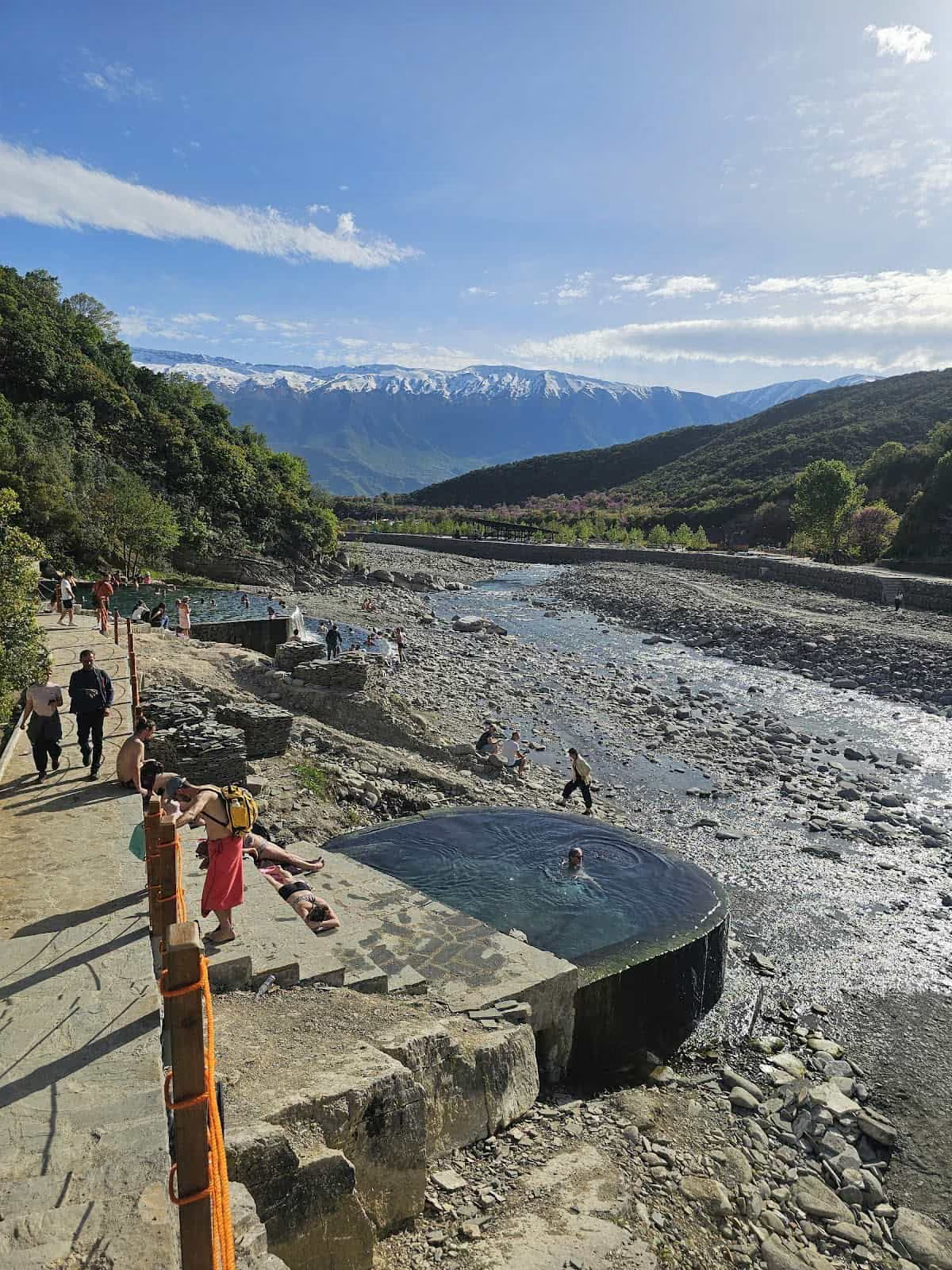
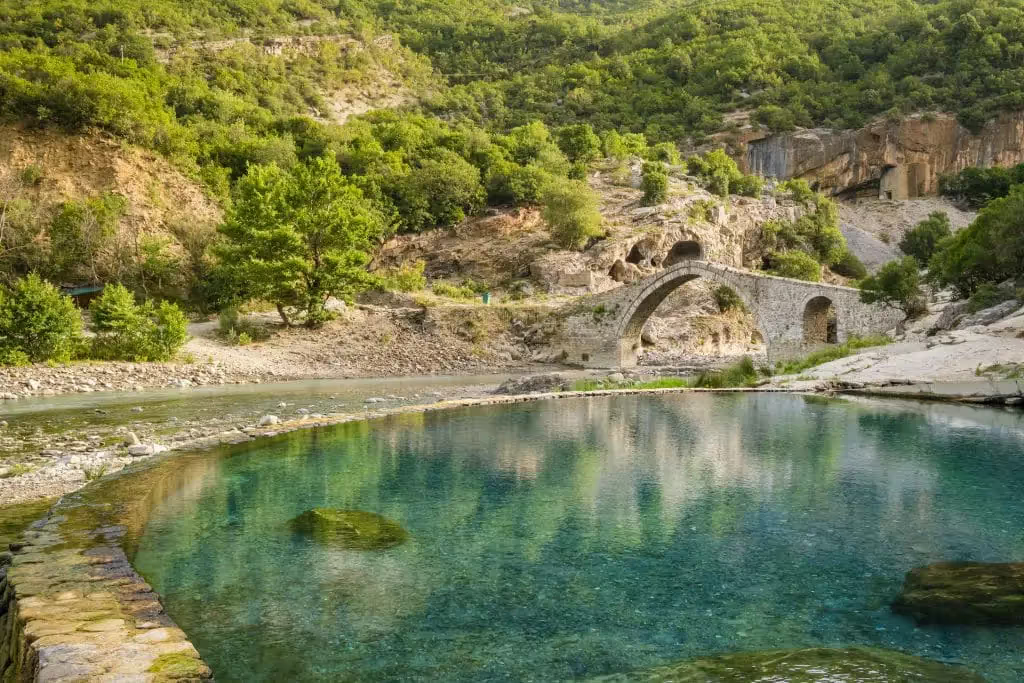
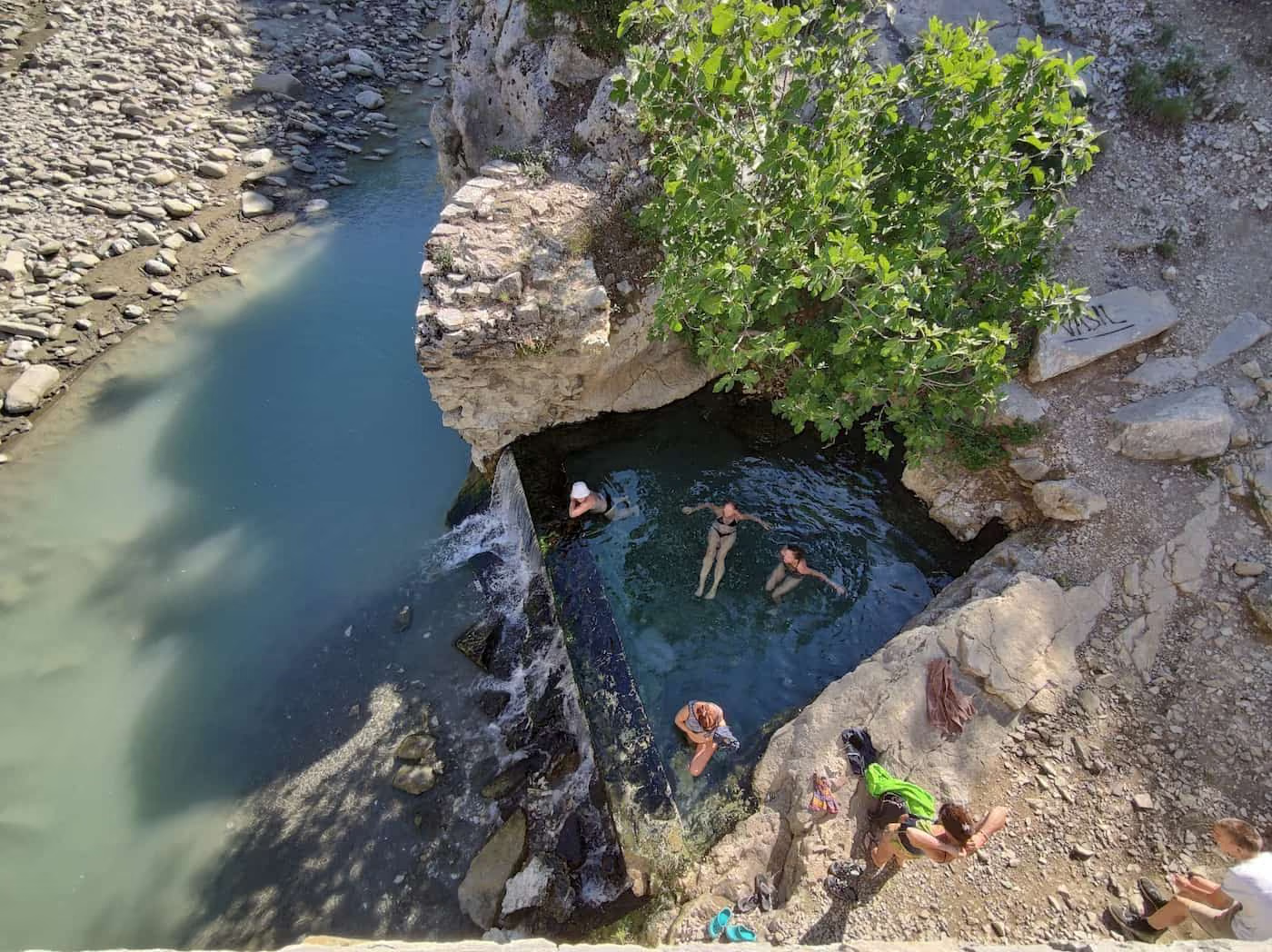
Albania's hot springs are mostly free wild pools, and at least 10 of them sit in this directory, unusually many of them undeveloped. The sulphur pools of Benja Thermal Baths sit beside an Ottoman bridge near Permet, while Elbasan Thermal Springs keep a llixha spa tradition used since Roman times. 7 of the 10 listed here are free to reach. Wild natural pools, not resorts, define the country.
Central Albania around Elbasan and Tirana holds a mix of llixha spa villages and free wild springs. The Roman-era Elbasan Thermal Springs offers indoor mineral pools, while the free hot water of Hidraj Thermal Springs rises to 58 degrees Celsius on Banja mountain, the Llixhat Bilaj Thermal Baths complex adds mud therapy, and Holta Thermal Springs fills a milky-watered canyon near Gramsh. Five of the directory's Albanian springs cluster across this central region.
The south, around Permet and Leskovik, holds the country's best-known free wild springs. The stone pools of Benja Thermal Baths sit beside the Kadiut Bridge near Permet, while the sulphur springs of Sarandoporo Thermal Springs fill a gorge near the Greek border, the Postenani Steam Spring vents steam from a cliff, and Selenice Thermal Springs rises in the Vlora hills. Four of the listed Albanian springs lie across this southern region.
The northeast mountains around Peshkopi hold a developed state spa. The sulphur-rich pools of Llixhat e Peshkopise run at 35 to 43 degrees Celsius just outside Peshkopi, reached by minibus from town, with such strong mineral water that bathers remove jewellery first. This northern spring rounds out the directory's Albanian entries.
Albanian thermal bathing is unusually wild for Europe, with most springs free, undeveloped, and reached on foot through canyons and gorges. A few llixha spa villages add indoor pools and mud therapy, but the character is natural rather than resort, which sets Albania apart from its spa-heavy neighbours. 7 of the 10 springs listed in this directory are free to reach. Many sites have no facilities at all, so bring everything you need. These sit within the wider hot springs in Europe.