
Quick FactsOverview
About Mamurras Thermal Springs
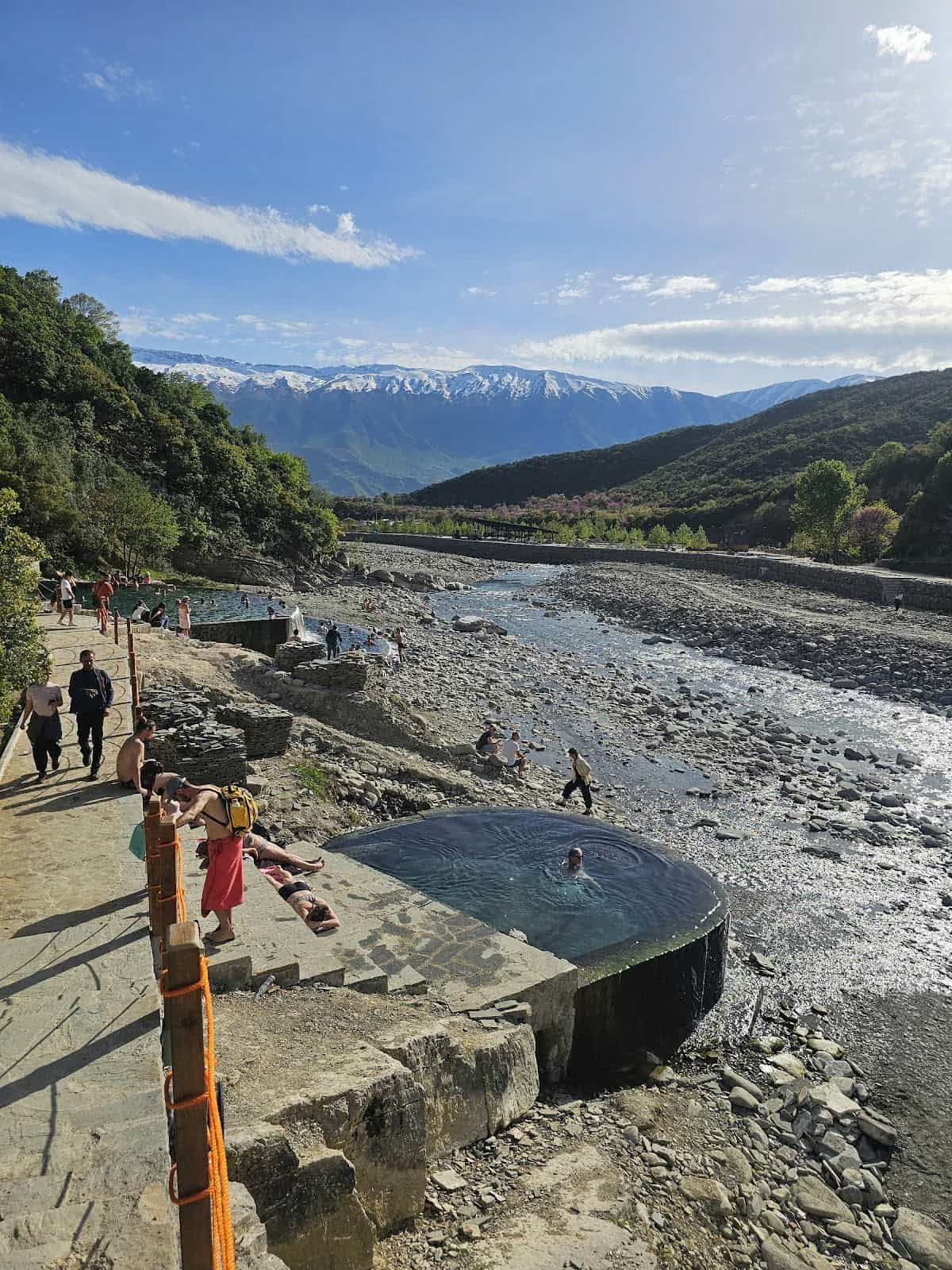
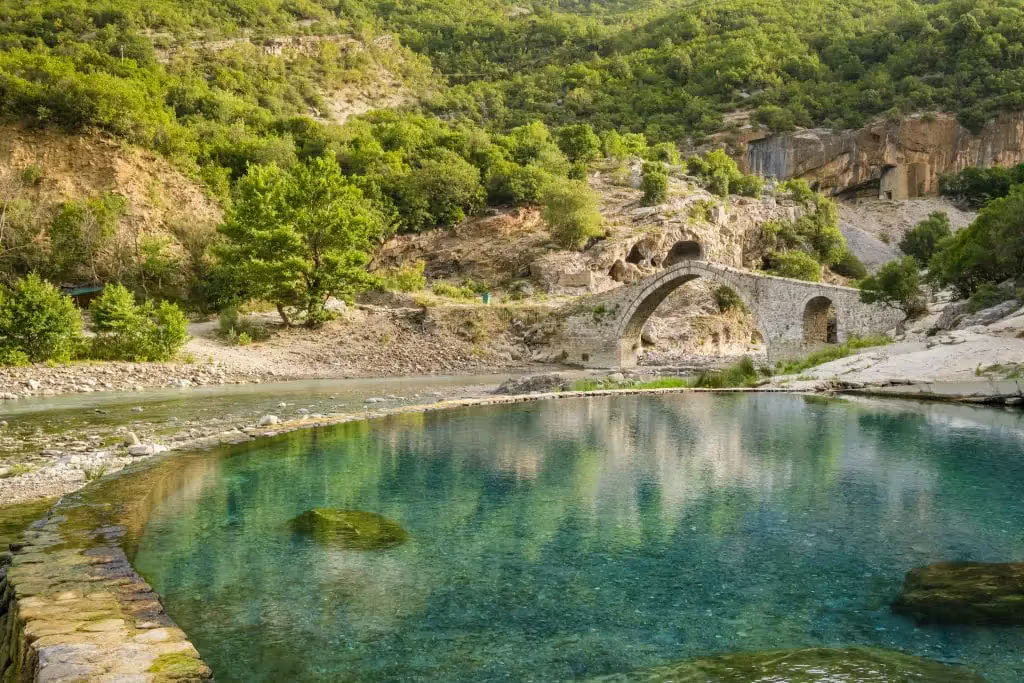
Mamurras Thermal Springs, Albania are free-access natural mineral springs on the bed of the Zheji torrent northeast of the town of Mamurras in Lezhë County, northwestern Albania. Two springs emerge from the Makaresh karst massif at water temperatures of 21 to 22 degrees Celsius with a notable concentration of hydrogen sulphide. Also known as Uji Bardhe, meaning White Water, the springs give the torrent a distinctive appearance. They are part of the Kruja geothermal province. The site has no visitor facilities and is not developed for tourism or therapeutic use.
Scientific Character and Limitations
Research on the Makaresh karst massif notes that the Uji Bardhe spring is not used for curative purposes, as 21 to 22 degrees Celsius is insufficient for balneological treatment despite the hydrogen sulphide content. Studies have identified that boreholes of around 1,000 metres could potentially yield water temperatures of around 30 degrees Celsius with higher balneological value, suggesting undeveloped geothermal potential. The spring issues from a cave-like karst cavity with a notable discharge. The Makaresh massif also supplies cold water for the town of Mamurras. A cement factory on the karst plateau affects the landscape character of the wider area.
Location & Access
Getting to Mamurras Thermal Springs
Mamurras town is in Lezhë County, northwestern Albania, approximately 8 kilometres from the Adriatic coast and around 60 kilometres north of Tirana on the SH1 national road. The drive from Tirana takes approximately one hour. Regular buses connect Tirana and Shkodër via Mamurras. The Zheji torrent springs are northeast of the town centre within the Makaresh karst massif area, and the site is not signposted. Local inquiry in Mamurras is the most reliable way to find the springs. No formal path or visitor infrastructure exists between the town and the spring site, so a local guide or directions from a resident are useful.
Practical Access Notes
The springs are free to access with no entrance fee. No facilities of any kind are available on site. Mamurras town has basic services and simple accommodation options appropriate to a small Albanian town. The natural hot springs near Mamurras Albania are rarely documented in tourist literature and are not on any established thermal tourism route. The Mamurras area is close to the Adriatic coast, to Lezhë city with its historical sites, and to the beaches of the Lezhë coastline, all of which can be combined with a visit to the springs as part of a day in northwestern Albania.
Suitability & Accessibility
Who Mamurras Thermal Springs Suit
Mamurras Thermal Springs suit visitors with a specific interest in Albania's natural geothermal resources and karst hydrology, or those already in the Mamurras area who want to explore the local landscape. The springs do not offer a bathing experience comparable to the hotter springs at Elbasan, Benja, or Peshkopia, given that 21 to 22 degrees Celsius is cool rather than soaking-warm. For those seeking natural hot springs near Mamurras Albania as part of a broader exploration of northern Albania, the springs offer a genuinely undiscovered and scientifically interesting geothermal site. Mamurras is also a convenient stopping point on the drive between Tirana and Shkodër, allowing a brief detour without major route changes.
Planning Your Visit
The springs are accessible year-round. The Makaresh karst area is best visited in spring or autumn when temperatures are mild. Local inquiry in Mamurras is the most practical way to get directions to the Zheji torrent spring site. The nearby town of Lezhë, 15 kilometres south, offers a broader range of accommodation and dining options. The Albanian Adriatic coastline is close enough to Mamurras that a visit to the springs can be combined with time at the beach on the same day, making this one of the few geothermal sites in Albania within easy reach of a coastal resort.
Safety & Etiquette
Safety at Mamurras Thermal Springs
Mamurras Thermal Springs are generally safe in terms of the immediate environment: the water temperature of 21 to 22 degrees Celsius presents no scalding risk, and the site is near the town of Mamurras rather than in a remote mountain setting. The main factor to be aware of is the hydrogen sulphide content of the water, which produces a sulfurous smell. Brief exposure to hydrogen sulphide at the concentration found in natural spring water is not harmful to healthy adults, but prolonged time in or very close to the water in enclosed rock spaces should be avoided. Visitors with pre-existing respiratory conditions should keep their time at the spring site brief and move away if they notice any discomfort from the gas.
General Etiquette and Practical Notes
The springs are on a torrent bed and the terrain is rocky and uneven; appropriate footwear is advisable. No safety barriers or signage are present. The cement factory on the Makaresh plateau means the wider area is not a pristine wilderness; visitors should be aware that industrial land use exists in proximity to the karst massif. The springs are a natural geological feature and should be visited with a low-impact approach. The hydrogen sulphide smell can be noticeable on arrival; ventilation is good in the open torrent setting. Local people in Mamurras are generally helpful and can provide practical guidance on reaching the site on foot from the town. The springs have scientific value as part of the documentation of Albanian geothermal resources and any visit should avoid disturbing the spring outlets or surrounding rock formations.