Quick FactsOverview
About Balneario de Alange
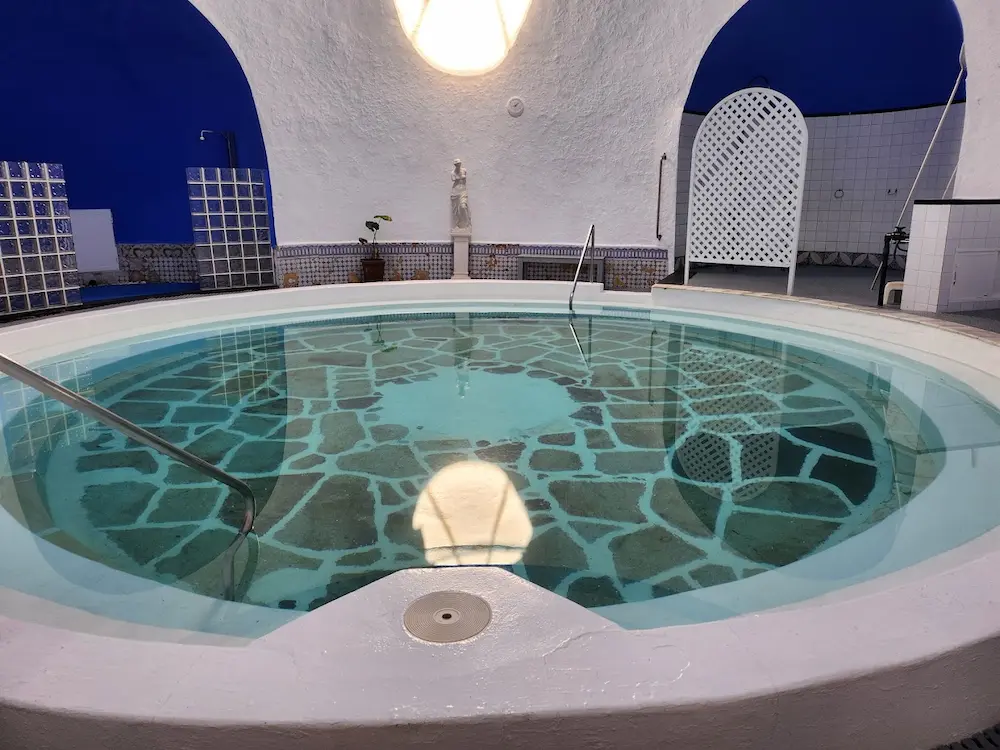
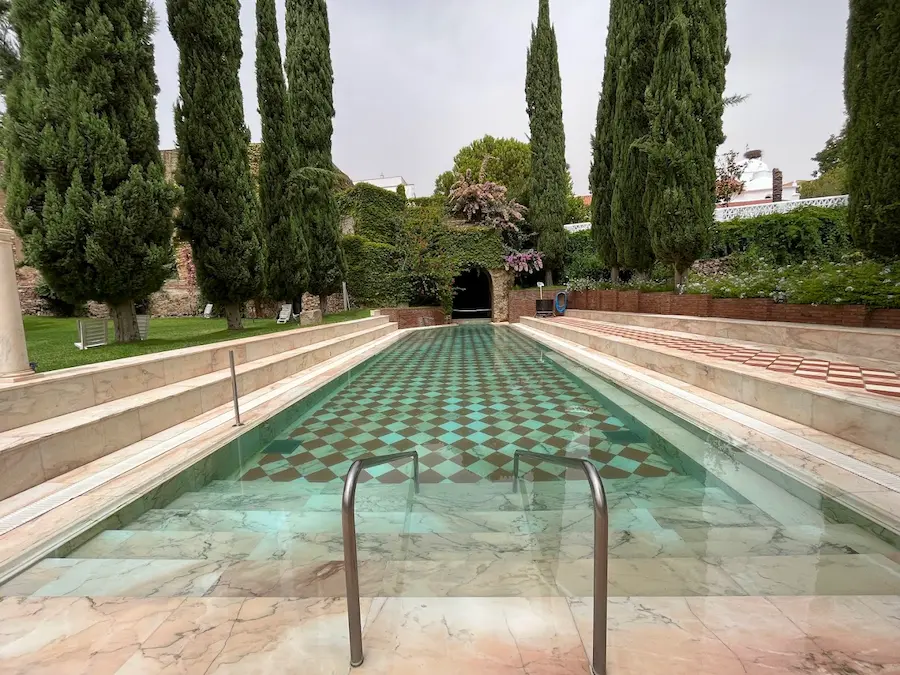
Balneario de Alange, Spain is a historic thermal spa in the small village of Alange in Badajoz province of Extremadura, approximately 20 minutes by car from the Roman city of Merida. The resort is built around two circular domed Roman baths dating to the third century AD that remain in use today and were inscribed as a UNESCO World Heritage Site in 1993 as part of the Archaeological Ensemble of Merida. The mineral water is oligometallic with carbonates and bicarbonates of sodium, magnesium, and calcium, emerging at a constant temperature of approximately 28 degrees Celsius.
These termas have been used continuously since Roman times. An ancient altar stone records that in the third century AD, Licinio Sereniano dedicated the baths to the goddess Juno after his daughter Varinia Serena recovered her health here. The town name Alange is derived from Arabic and traditionally said to mean "water of Allah," reflecting continuous use through the Moorish period. The modern complex, restored by Dr. Abdon Berben from 1863, includes two on-site hotels, treatment facilities, and the preserved historic baths.
Balneario de Alange is widely considered the oldest continuously operating hot spring resort Spain has preserved from the Roman era.
Location & Access
Getting to Balneario de Alange
Balneario de Alange is reached by a short drive of approximately 20 minutes from Merida south on the EX-209, through gentle rolling country past the Alange Reservoir to the village of Alange, where the resort sits on Calle Banos in the historic centre. The resort is drive-up accessible with on-site parking. No hike is required.
From Badajoz, the drive takes approximately 1 hour east via the A-5 and EX-209. From Caceres, the drive is approximately 1 hour southwest. From Seville, the drive is approximately 2 hours north on the A-66. From Madrid, the drive is approximately 3.5 hours southwest via the A-5. Merida has rail connections from Madrid, Caceres, and Seville, with buses continuing from Merida to Alange. For visitors seeking hot springs near Merida, this is the only developed thermal resort in the immediate area and the only one anywhere in Spain built directly around a UNESCO-listed Roman bathhouse.
Merida World Heritage Region
Merida was founded in 25 BC as Emerita Augusta, the capital of Roman Lusitania, and holds one of the most complete sets of Roman remains in Spain. The Roman Theatre, Amphitheatre, Aqueduct of Miracles, and Temple of Diana are all a short drive north of Alange and share the same 1993 UNESCO World Heritage inscription as the Alange baths.
Suitability & Accessibility
Who Should Visit Balneario de Alange
Balneario de Alange suits travellers, families, and wellness visitors seeking a historic thermal bathing experience in a continuously operating Roman spa, combined with the Merida World Heritage archaeological route. The two circular domed Roman baths at the heart of the resort are the oldest working thermal structures in Spain, and the mild 28 degree Celsius water is comfortable for extended soaking across all seasons. The combination of Roman archaeology, operational thermal baths, and the mild Extremadura climate makes this a strong two or three day destination rather than a quick day stop.
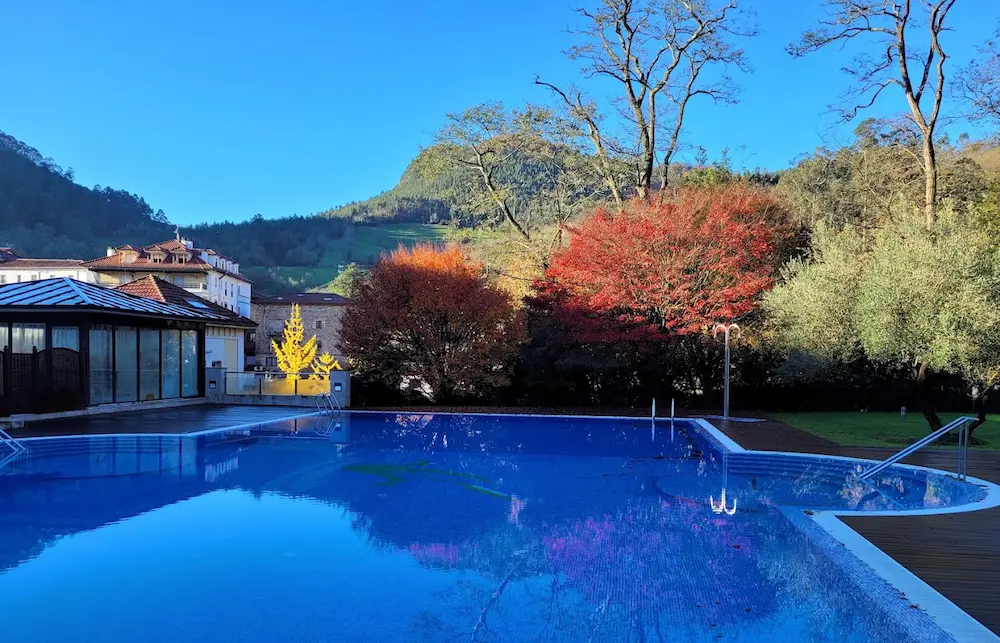
Treatments at these aguas termales are indicated especially for musculoskeletal, respiratory, nervous system, circulatory, and gynaecological conditions, delivered as medically supervised multi-day thermal courses. Day visitors are welcome in the thermal pool areas. This established hot spring resort Spain travellers return to is particularly rewarding in spring and autumn, when air temperatures are mild and the Alange Reservoir landscape is at its most scenic.
Accessibility at Balneario de Alange
The resort reports accessible facilities for guests with reduced mobility, though some historic areas within the Roman baths have inherent limitations. Contact the resort directly for current specifics and advance booking of adapted facilities. Those seeking free thermal alternatives in Extremadura should visit the free pools of Banos de Montemayor to the north of the region.
Safety & Etiquette
Balneario de Alange Safety Tips
Balneario de Alange is generally safe for soaking as a fully managed historic thermal resort with on-site medical staff, but visitors should move through the pools and treatment areas at their own pace, hydrate regularly, and respect any posted guidance from staff. The natural source temperature of 28 degrees Celsius is comfortable rather than hot, so hypothermia risk rises on cool days with very extended immersion. Supervise children at all times near the water. The two historic Roman baths have inherent architectural characteristics (domed low-light interiors, narrow entry) that call for careful footing and awareness.
Treatments are contraindicated for pregnant and breastfeeding guests and for people with certain serious cardiovascular, respiratory, or neurological conditions. On-site medical staff can review individual histories and recommend appropriate programmes.
Rules and Etiquette
Shower before entering the pools, following the resort rules. Do not use soap, shampoo, or detergents in the thermal pools. Swimsuits, bathrobes, and flip-flops are typical for moving between the thermal zones. Respect quiet relaxation areas and other guests during treatments. The historic Roman baths are both a working thermal facility and a UNESCO monument, so refrain from touching ancient surfaces beyond what pool use requires.
Climate and Travel Notes
Extremadura has a hot continental Mediterranean climate with very hot, dry summers (daytime highs often above 35 degrees Celsius in July and August) and mild winters with occasional frost. Spring and autumn offer the most comfortable conditions for both thermal bathing and Merida archaeological touring. The resort is open year-round, though some treatment programmes operate seasonally.