Key Takeaways
- The top destinations for hot springs worldwide are Iceland, Japan, and the western United States, where dense geothermal activity has produced thousands of natural and developed thermal pools.
- The Banff Upper Hot Springs in the Canadian Rockies is one of the highest developed hot springs in North America and one of the most searched-for soaking destinations globally.
- California, Montana, Idaho, Oregon, and Colorado collectively contain the largest concentration of free natural hot springs in the United States, many accessible by short walks or roadside pullouts.
- Lesser-known European destinations including Norway, Ireland, and Albania are emerging as legitimate alternatives to Iceland for visitors who prefer fewer crowds.
- This guide draws on the Hot Springs Guides directory of over 1,000 documented hot springs across more than 60 countries.
The best places for hot springs in the world are Iceland, Japan, the western United States, Canada, New Zealand, Hungary, and Italy, where dense geothermal activity has produced large numbers of accessible natural pools and developed thermal facilities. These seven destinations rank highest across the four criteria used in this guide: water quality, scenery, cultural tradition, and ease of access. The following ranked list covers the top 15 hot spring destinations worldwide, including emerging destinations in Norway, Ireland, and Albania that offer comparable soaking experiences with fewer visitors.
How We Chose the 15 Best Places for Hot Springs
This ranking is based on the Hot Springs Guides directory of over 1,000 documented hot springs across more than 60 countries. Each destination was evaluated against four criteria, weighted equally:
- Number and variety of hot springs in the country or region
- Water quality, mineral content, and natural setting
- Accessibility, including the mix of free natural pools and developed facilities
- Cultural tradition or distinctive bathing experience
Destinations were ranked using the combined score across these four criteria. The full directory and underlying listings for each country are linked from each entry in the list. This guide is updated quarterly as new springs are added and visitor conditions change.
Comparison
1. Iceland: The Top Destination for Hot Springs Worldwide
Quick Facts
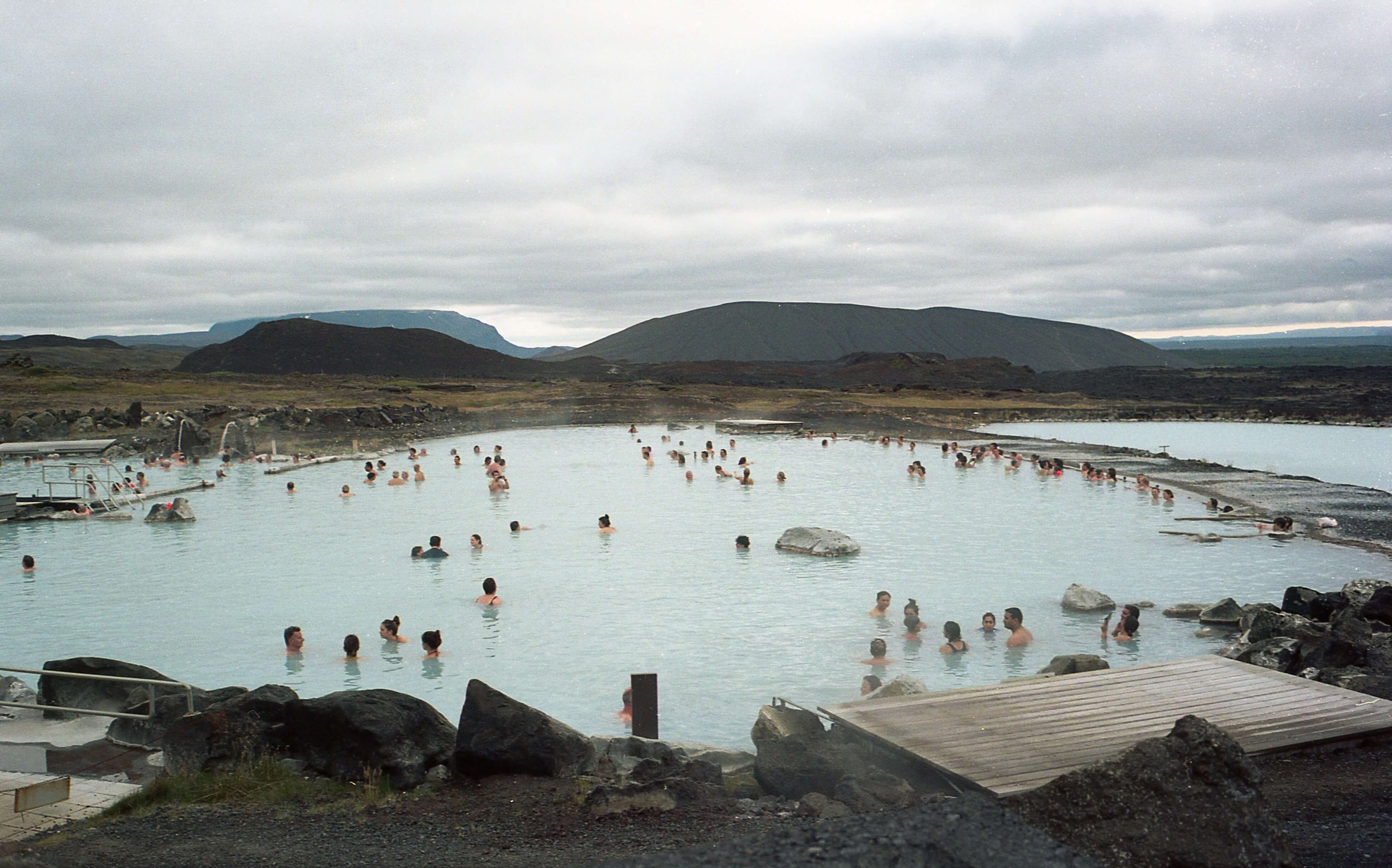
Iceland ranks as the best place for hot springs in the world thanks to a combination of high geothermal density, scenic volcanic setting, and a mix of free natural pools and famous developed lagoons. The country sits on the boundary of two tectonic plates, producing geothermal water across most of the island, with documented hot springs in every region from Reykjanes to the Westfjords. Visitors can soak in over 200 documented natural and developed sites without leaving the country.
What makes Iceland different from any other destination is the variety. The Blue Lagoon and Sky Lagoon offer premium spa experiences with mineral-rich seawater. Reykjadalur is a geothermal river you hike to and soak in. Smaller pools like Hellulaug on the Westfjords coast cost nothing and have no facilities. Hrunalaug Hot Spring provides a quiet countryside soak near the Golden Circle, and Laugarfell Hot Springs offers stone-built mountain pools in the East Iceland highlands.
What is the most famous hot spring in Iceland?
The Blue Lagoon is the most famous hot spring in Iceland and one of the most recognised geothermal destinations worldwide. The milky-blue water comes from a nearby geothermal power station and contains silica, algae, and minerals. Booking ahead is required, and the lagoon is open year-round.
Are Iceland's hot springs free?
Many of Iceland's hot springs are free, particularly the natural pools in rural and remote areas such as the Westfjords, the Highlands, and the Snaefellsnes Peninsula. Developed sites like the Blue Lagoon, Sky Lagoon, and Myvatn Nature Baths charge entry fees, typically between 60 and 150 dollars depending on the time of day and ticket type. Most Icelandic towns also operate municipal geothermal pools with day entry under ten dollars.
Browse all hot springs in Iceland on Hot Springs Guides.
2. Japan: The World's Largest Hot Spring Culture
Quick Facts
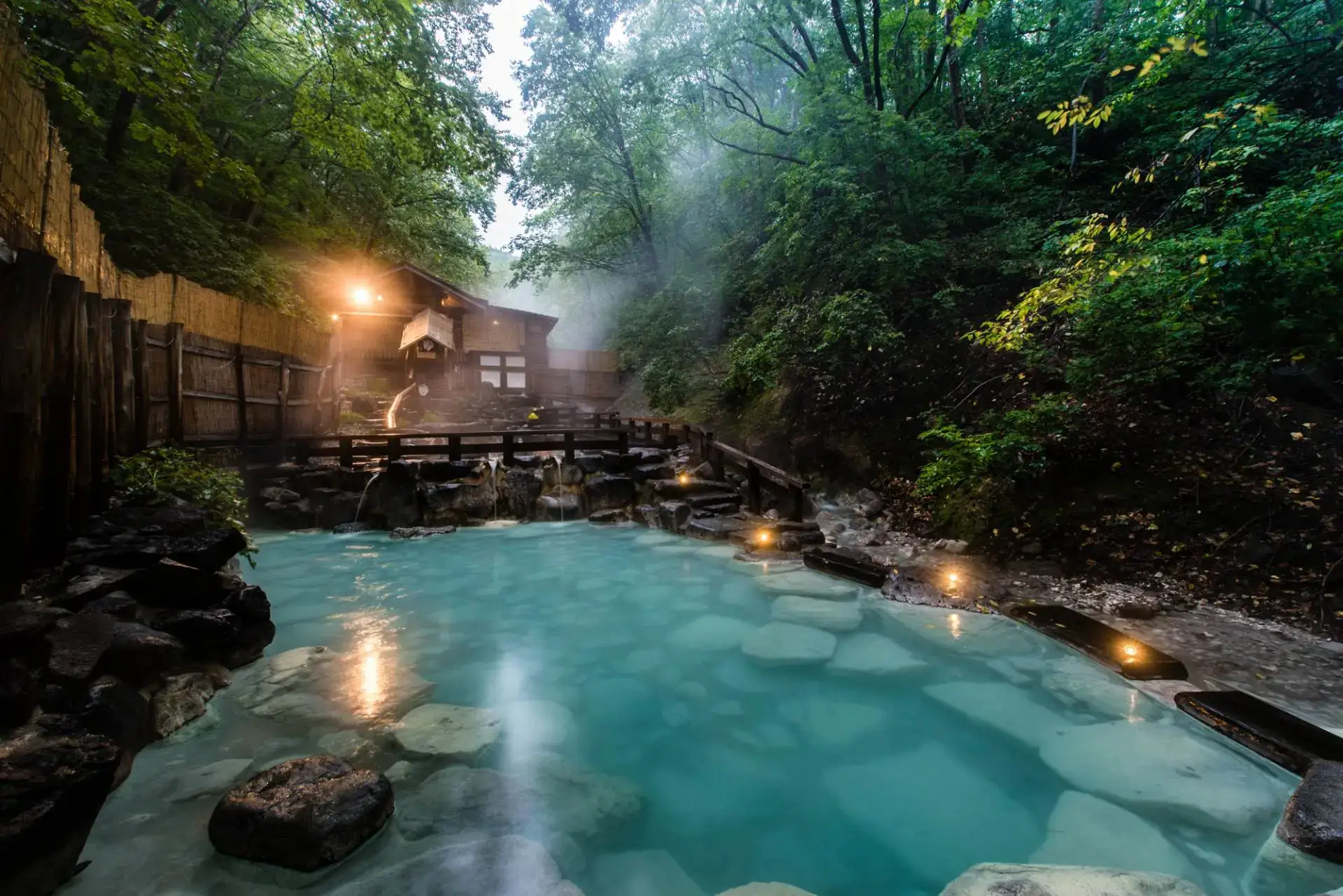
Japan ranks second among the best places for hot springs because it has the largest number of documented hot springs of any country in the world, with over 27,000 thermal sources and approximately 3,000 onsen towns. The bathing tradition dates back more than a thousand years and shapes every aspect of how hot springs are experienced, from the temperature etiquette to the towel rituals to the architecture of the bathhouses.
Visitors can choose between traditional ryokan onsen with private tatami rooms, public sento bathhouses in cities, and rotenburo open-air pools in mountain settings. Famous onsen towns include Beppu on Kyushu with its eight distinct hells, Hakone near Mount Fuji, Kusatsu in Gunma Prefecture with its high-temperature water and traditional yumomi water-cooling performance, and Noboribetsu on Hokkaido.
What is the difference between an onsen and a sento?
An onsen is a hot spring bath fed by natural geothermal water that meets specific mineral and temperature criteria under Japanese law. A sento is a public bathhouse heated by conventional means and is found in most Japanese cities. Onsen towns are typically rural and built around the springs themselves, while sento serve as everyday neighbourhood facilities.
Do Japanese onsens allow tattoos?
Most traditional Japanese onsens prohibit visible tattoos due to their historical association with organised crime, though attitudes are changing. Many onsens now allow small tattoos or provide cover stickers, and a growing number of tattoo-friendly onsens cater specifically to international visitors. Some private ryokan rooms with in-room onsens avoid the issue entirely.
Browse all hot springs in Japan on Hot Springs Guides.
3. United States: America's Western Hot Springs Belt
Quick Facts
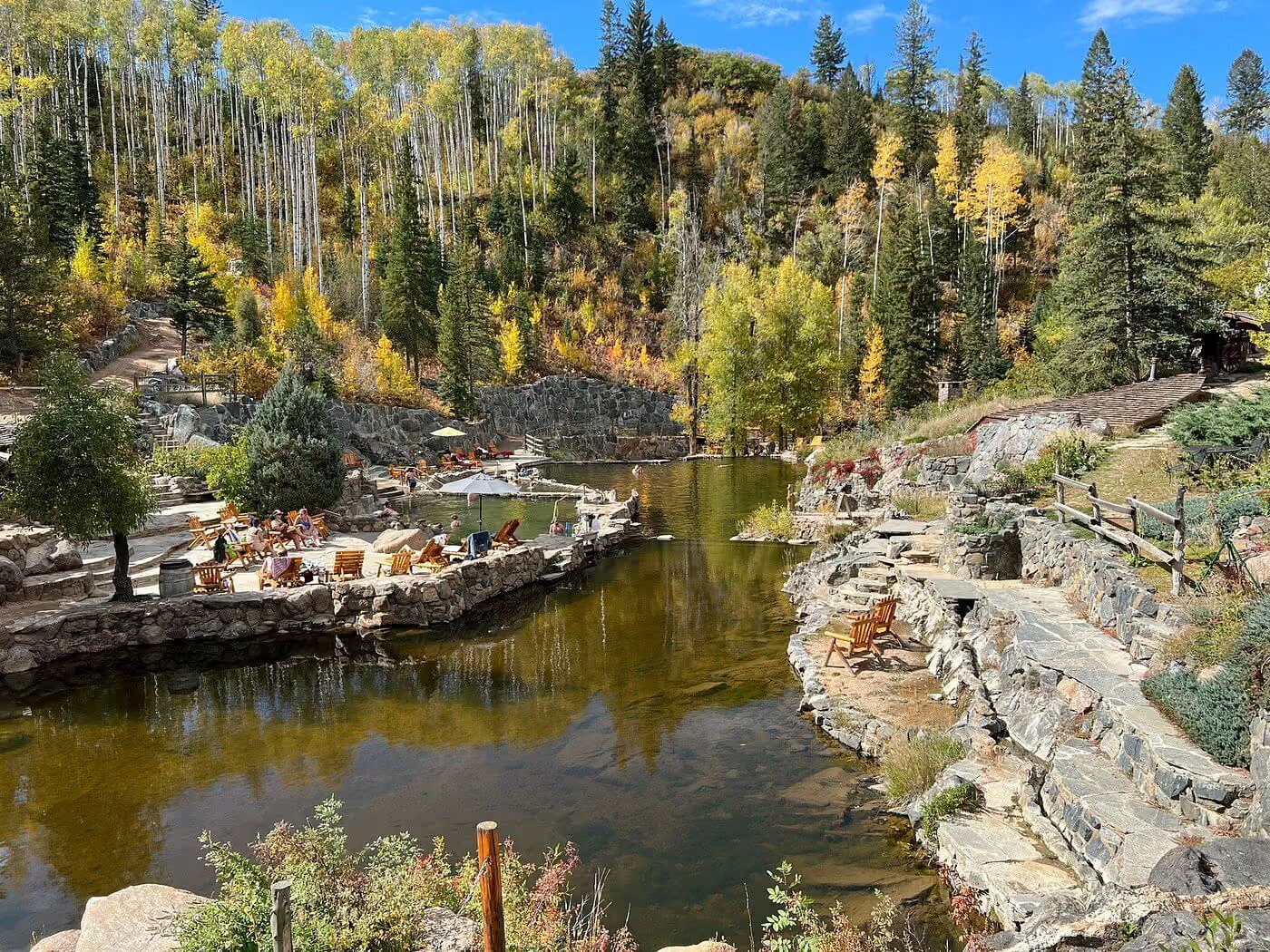
The western United States ranks third among the best places for hot springs because it contains the largest and most varied concentration of hot springs in North America, with major clusters in Colorado, California, Montana, Idaho, and Oregon. The geothermal corridor along the Rocky Mountains and the Sierra Nevada produces hundreds of natural and developed hot springs ranging from free roadside pools to large family-friendly resorts. The combination of free natural pools, drive-up access, and luxury resort options makes the United States unmatched for variety.
Colorado anchors the region with Glenwood Hot Springs Pool, the largest geothermal pool in North America, and The Springs Resort in Pagosa Springs which draws from the Mother Spring, the deepest measured geothermal hot spring in the world. California adds dozens of natural pools including Travertine Hot Springs near Bridgeport, Buckeye Hot Springs, and Remington Hot Springs in Kern County. Montana contributes roadside soaks like Big Medicine and Sleeping Child. Idaho has more documented hot springs than any other state, including Sacajawea, Kirkham, Challis and Loftus. Oregon's Cascade Range adds Breitenbush and the natural pools along the McKenzie River.
Which US state has the most hot springs?
Idaho has the largest number of documented hot springs of any US state, with over 130 mapped natural and developed sites concentrated along the Salmon River and Boise River drainages. Colorado, California, and Nevada also rank among the top US states for total hot spring count.
What is the largest hot spring pool in the United States?
Glenwood Hot Springs Pool in Glenwood Springs, Colorado is the largest hot spring pool in the United States. The main pool measures over 400 feet long and is heated by mineral-rich water from the Yampah Spring. The facility has been operating in some form since 1888 and combines a large warm pool with a smaller hotter therapy pool.
Browse all hot springs in United States on Hot Springs Guides.
4. Canada: Banff and the Canadian Rockies
Quick Facts
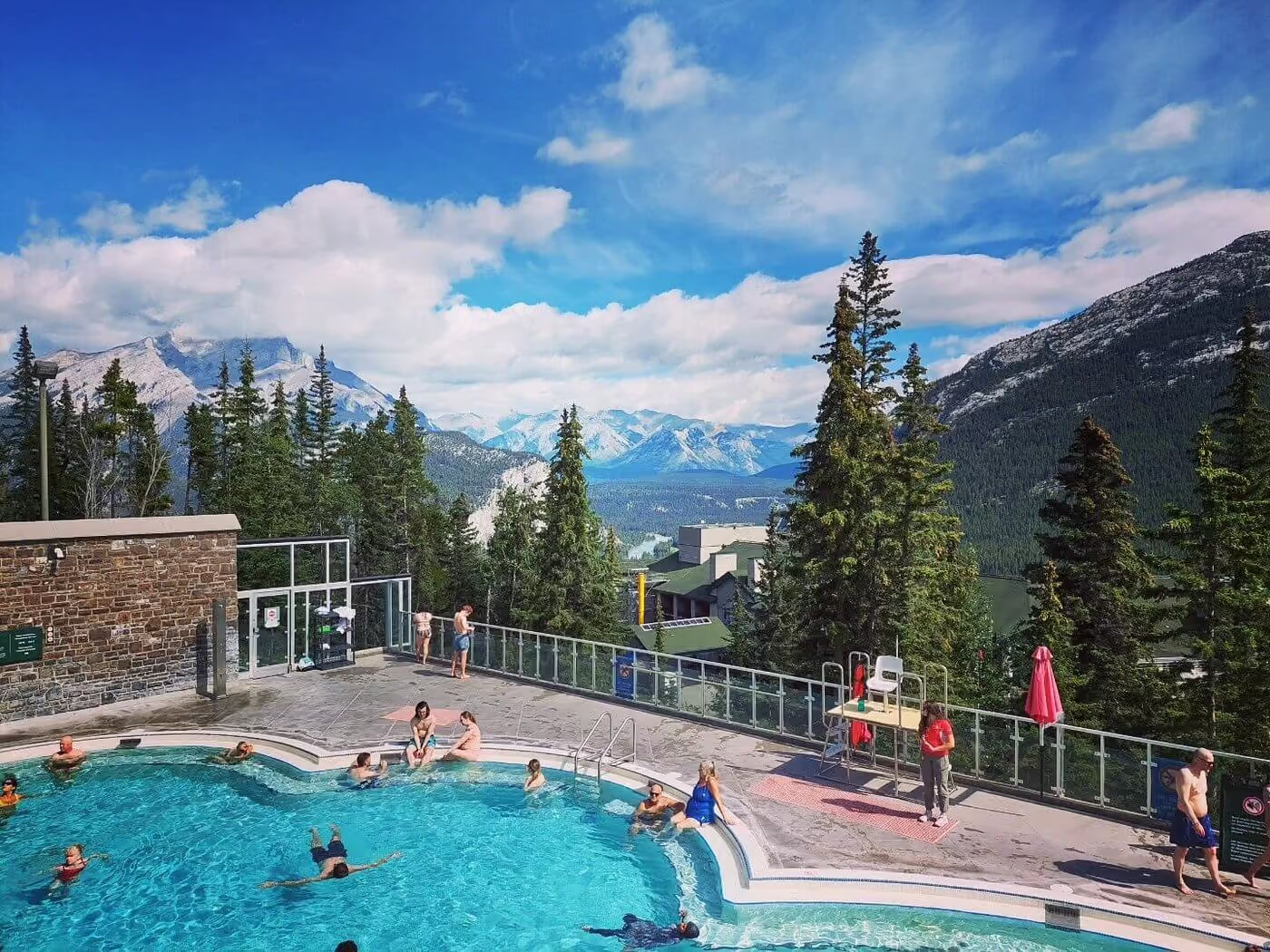
Canada ranks fourth among the best places for hot springs because the Canadian Rockies contain some of the highest elevation developed hot springs in the world, with Banff Upper Hot Springs sitting at 1,585 metres above sea level inside Banff National Park. The country combines heritage developed pools inside national parks with remote backcountry springs in British Columbia and the Yukon, offering a wider access range than almost any other destination on this list.
Banff Upper Hot Springs is the most visited and most photographed hot spring in Canada, with a heritage bathhouse and Mount Rundle views, operating since the 1880s. Radium Hot Springs in Kootenay National Park sits 90 minutes south of Banff and offers a larger swim pool plus a smaller hot pool. Miette Hot Springs in Jasper National Park reaches the highest source temperature in the Canadian Rockies at 54 degrees Celsius. British Columbia adds Lussier Hot Springs in Whiteswan Lake Provincial Park, Liard River Hot Springs in the north with its abundant wildlife, and the remote Hot Springs Cove on Vancouver Island accessible by boat or floatplane.
How much does it cost to visit Banff Upper Hot Springs?
Banff Upper Hot Springs is operated by Parks Canada and charges a modest day-use fee. Tickets are typically under 20 Canadian dollars for adults with reduced rates for children and seniors. The pool is open year-round though seasonal closures occur for maintenance.
What are the hours of Banff Upper Hot Springs?
Banff Upper Hot Springs is generally open daily from morning through late evening, with hours varying by season. Summer hours typically run longer than winter hours, and the pool occasionally closes for maintenance in autumn. Check current hours directly with Parks Canada before visiting to confirm operating times.
Browse all hot springs in Canada on Hot Springs Guides.
5. New Zealand: Geothermal Activity and Maori Bathing Tradition
Quick Facts
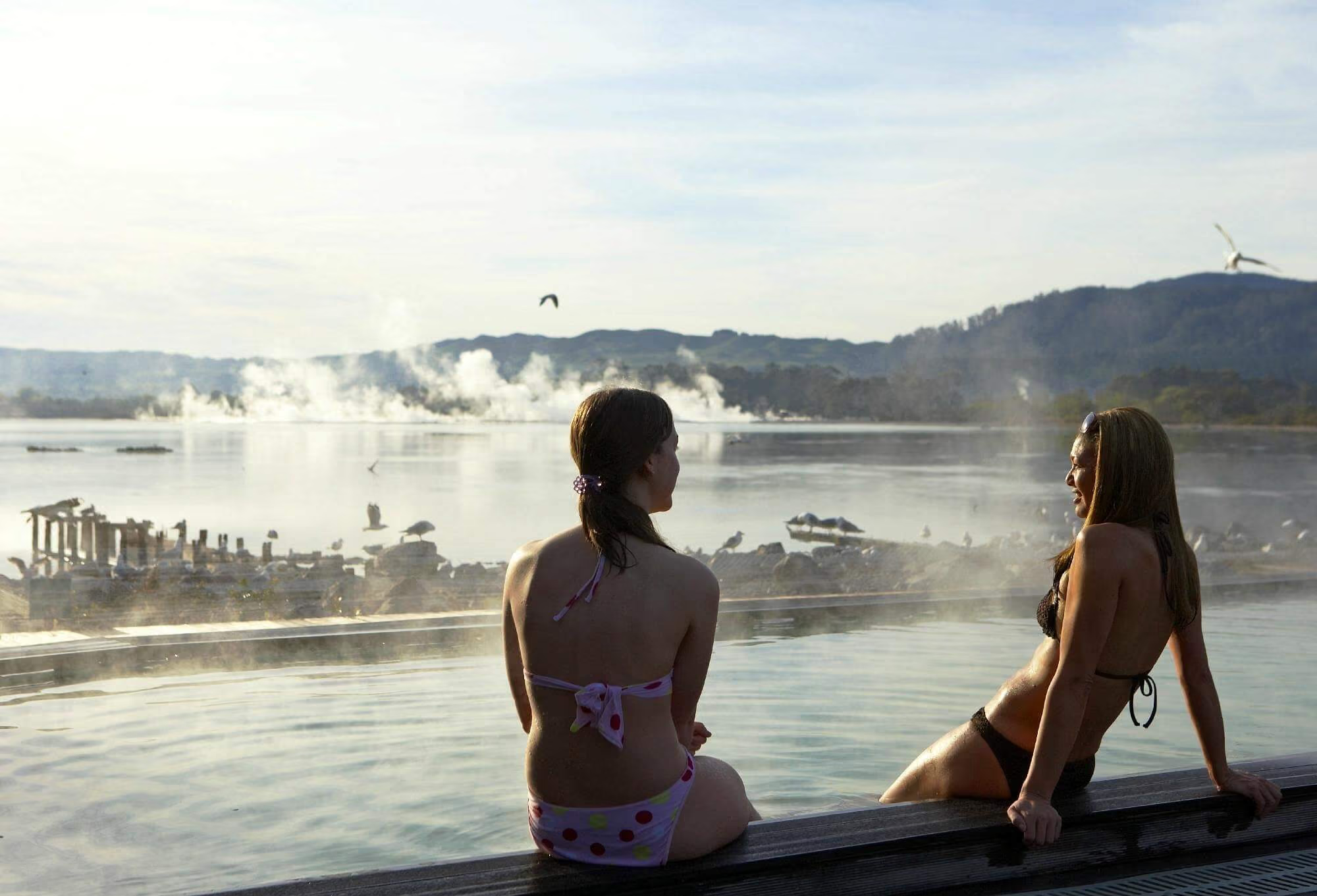
New Zealand ranks fifth among the best places for hot springs because the country sits on the Taupo Volcanic Zone, a geothermally active region that has produced hundreds of hot springs across the central North Island and parts of the South Island. The North Island town of Rotorua alone has dozens of thermal sites, and the bathing tradition extends back over 700 years to the Maori people who first used these springs for cooking and healing.
The most famous hot spring destinations include Polynesian Spa in Rotorua with 28 mineral pools overlooking Lake Rotorua, Hot Water Beach on the Coromandel Peninsula where visitors dig their own pools in the sand at low tide, Kerosene Creek which is a free natural soaking spot south of Rotorua, Hanmer Springs in the South Island with developed thermal pools, and Te Aroha Mineral Spas with their historic Edwardian bathhouse.
What is the most popular hot spring in New Zealand?
Hot Water Beach on the Coromandel Peninsula is one of the most visited hot springs in New Zealand, drawing visitors who dig their own thermal pools in the sand at low tide. Kerosene Creek near Rotorua is similarly popular as a free natural soak. The geothermal water at both sites is heated by underlying volcanic activity.
Is Kerosene Creek safe to swim in?
Kerosene Creek is a natural geothermal stream that is generally safe for soaking, though visitors should be aware that water temperatures vary along the stream and entry should be tested before fully submerging. The site has no facilities and visitors should not put their head under the water due to natural microorganism risk. Park your vehicle in the designated area as theft has been reported at the trailhead.
Browse all hot springs in New Zealand on Hot Springs Guides.
6. Hungary: Europe's Bathhouse Capital
Quick Facts
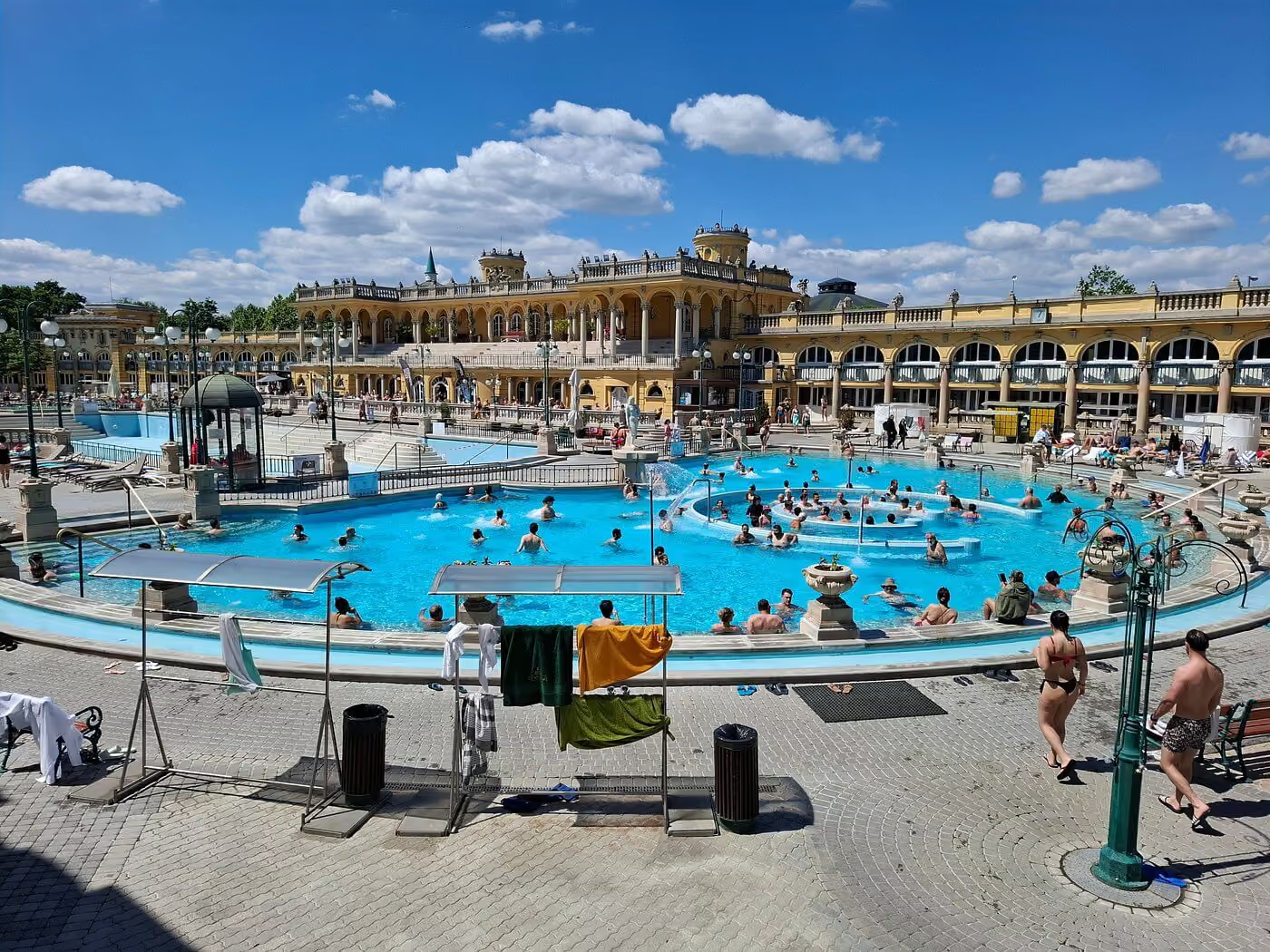
Hungary ranks sixth among the best places for hot springs because Budapest alone has 123 thermal springs and the country has over 1,300 thermal water sources documented across its territory. The Hungarian bathhouse tradition is the oldest continuous public bathing culture in Europe, dating from Roman times through Ottoman influence and into the grand Habsburg-era bathhouses that still operate today.
The major destinations include Szechenyi Thermal Bath in Budapest with 18 pools and neo-baroque architecture, Gellert Baths with art nouveau interior and segregated thermal halls, Rudas Baths with an Ottoman-era octagonal pool dating from 1550, and the Lake Heviz spa town built around the world's second-largest thermal lake. Eger and Miskolc-Tapolca offer cave bath experiences outside the capital.
What is the best thermal bath in Budapest?
Szechenyi Thermal Bath is the most visited thermal bath in Budapest and the largest medicinal bath complex in Europe, with 15 indoor pools and 3 outdoor pools fed by two thermal springs. The complex opened in 1913 and remains open year-round. Day tickets typically cost between 20 and 30 euros.
Can you swim at Lake Heviz in winter?
Lake Heviz is open for swimming year-round, with the thermal water maintaining a temperature between 24 and 38 degrees Celsius even in winter. The lake's underwater spring discharges around 410 litres per second, ensuring the water remains warm during the coldest months. Winter is considered an excellent time to visit because the temperature contrast between water and air enhances the experience.
Browse all hot springs in Hungary on Hot Springs Guides.
7. Italy: Ancient Roman Thermal Heritage
Quick Facts
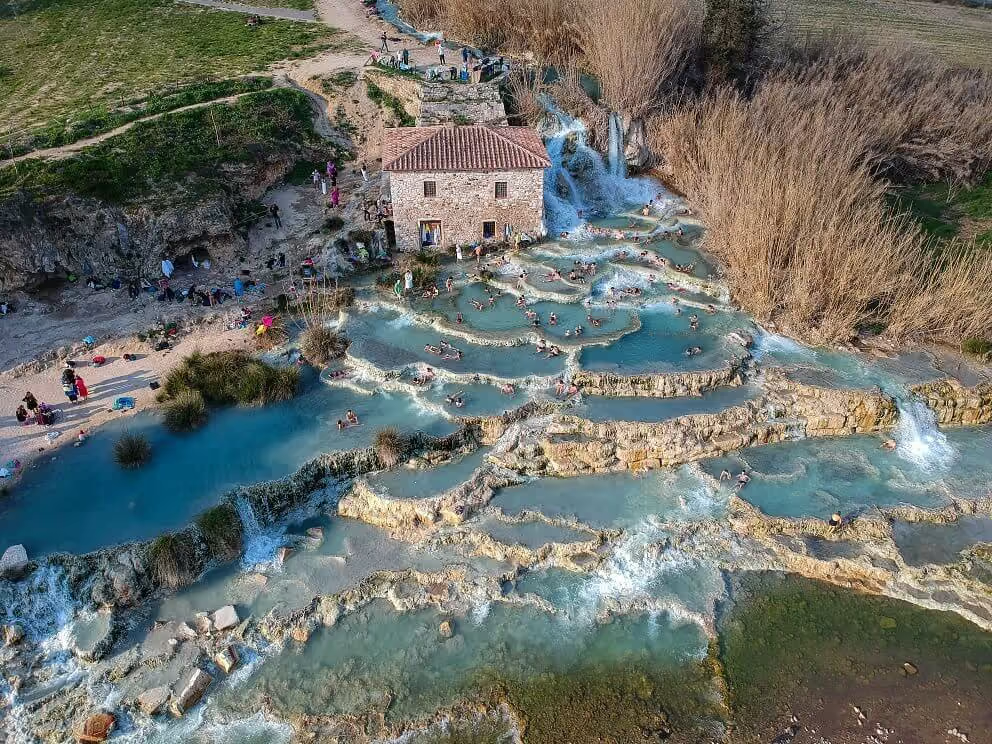
Italy ranks seventh among the best places for hot springs because the country combines free natural travertine pools with luxury thermal resorts and over 2,000 years of documented bathing tradition dating from the Roman Empire. Hot springs occur across multiple regions, from the Tuscan terme at Saturnia to the volcanic island of Ischia near Naples with over 100 thermal sources.
The major destinations include the free Cascate del Mulino travertine waterfalls at Saturnia, the luxury Terme di Saturnia resort one kilometre away, Bagno Vignoni with its medieval thermal piazza, the volcanic island of Ischia with multiple thermal parks, and the historic Roman baths still operating at Bagni di Lucca. Bormio in the Italian Alps combines mountain skiing with thermal baths.
What is the most famous hot spring in Italy?
The Cascate del Mulino at Saturnia is the most famous hot spring in Italy, with sulphurous thermal water at 37 degrees Celsius flowing over natural travertine pools. The site is free, open 24 hours, and has no booking requirement. It is located in the Maremma region of southern Tuscany about 180 kilometres north of Rome.
Are the Saturnia hot springs free?
The Cascate del Mulino at Saturnia are completely free and open 24 hours a day with no booking required. The luxury Terme di Saturnia resort one kilometre away charges entry fees for its developed thermal facilities. Both share the same source water but offer different experiences, from rustic outdoor pools at the cascade to landscaped resort grounds at the spa.
Browse all hot springs in Italy on Hot Springs Guides.
8. Turkey: Travertine Terraces and Hammam Tradition
Quick Facts
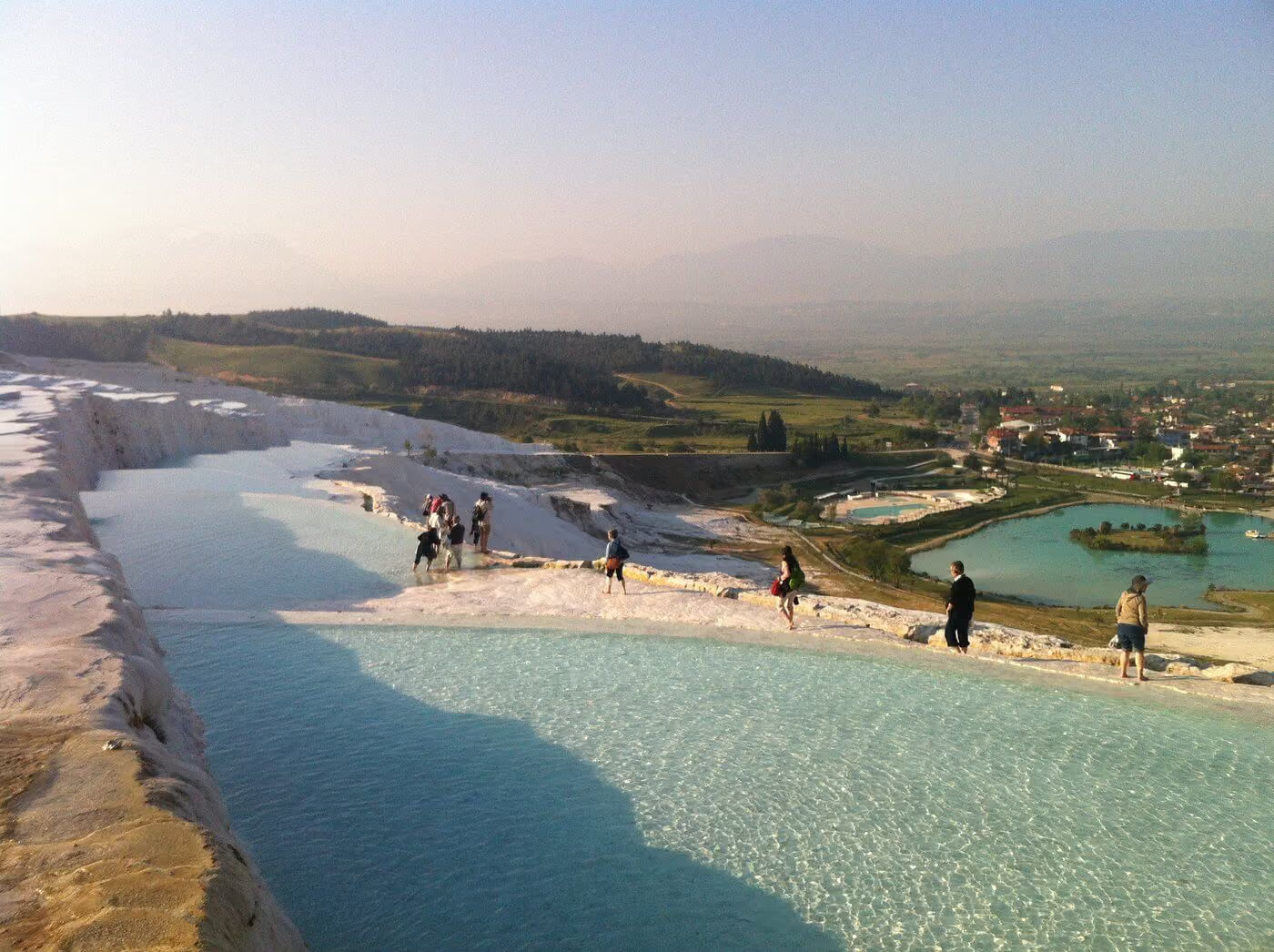
Turkey ranks eighth among the best places for hot springs because the country combines geologically dramatic travertine landscapes with thousands of years of bathing tradition including Roman thermae, Ottoman hammams, and modern thermal spa towns. The most famous site, Pamukkale, is a UNESCO World Heritage site where calcium-rich thermal water has built up white travertine terraces over hundreds of thousands of years.
The major destinations include the Pamukkale travertine terraces and the adjacent ancient city of Hierapolis with its Roman bath ruins, Cleopatra's Pool inside the Hierapolis complex with submerged Roman columns, the thermal resort town of Yalova near Istanbul, the spa town of Cesme on the Aegean coast, and Karahayit with its iron-rich red springs near Pamukkale. The country has over 1,000 documented thermal sources.
What is the best time to visit Pamukkale?
The best time to visit Pamukkale is between April and June or September and October, when temperatures are mild and crowds are smaller than in summer. The travertine terraces are open year-round. Visitors must remove shoes before walking on the white terraces to prevent damage to the limestone formations.
Can you swim at Pamukkale?
You can swim in the travertine terraces at Pamukkale only in designated pools where bathing is permitted. Most upper terraces are protected and barefoot walking only is allowed. The adjacent Cleopatra's Pool inside the Hierapolis complex permits full swimming among submerged ancient Roman columns for an additional entry fee.
Browse all hot springs in Turkey on Hot Springs Guides.
9. Mexico: Cave Spas and Volcanic Hot Springs
Quick Facts
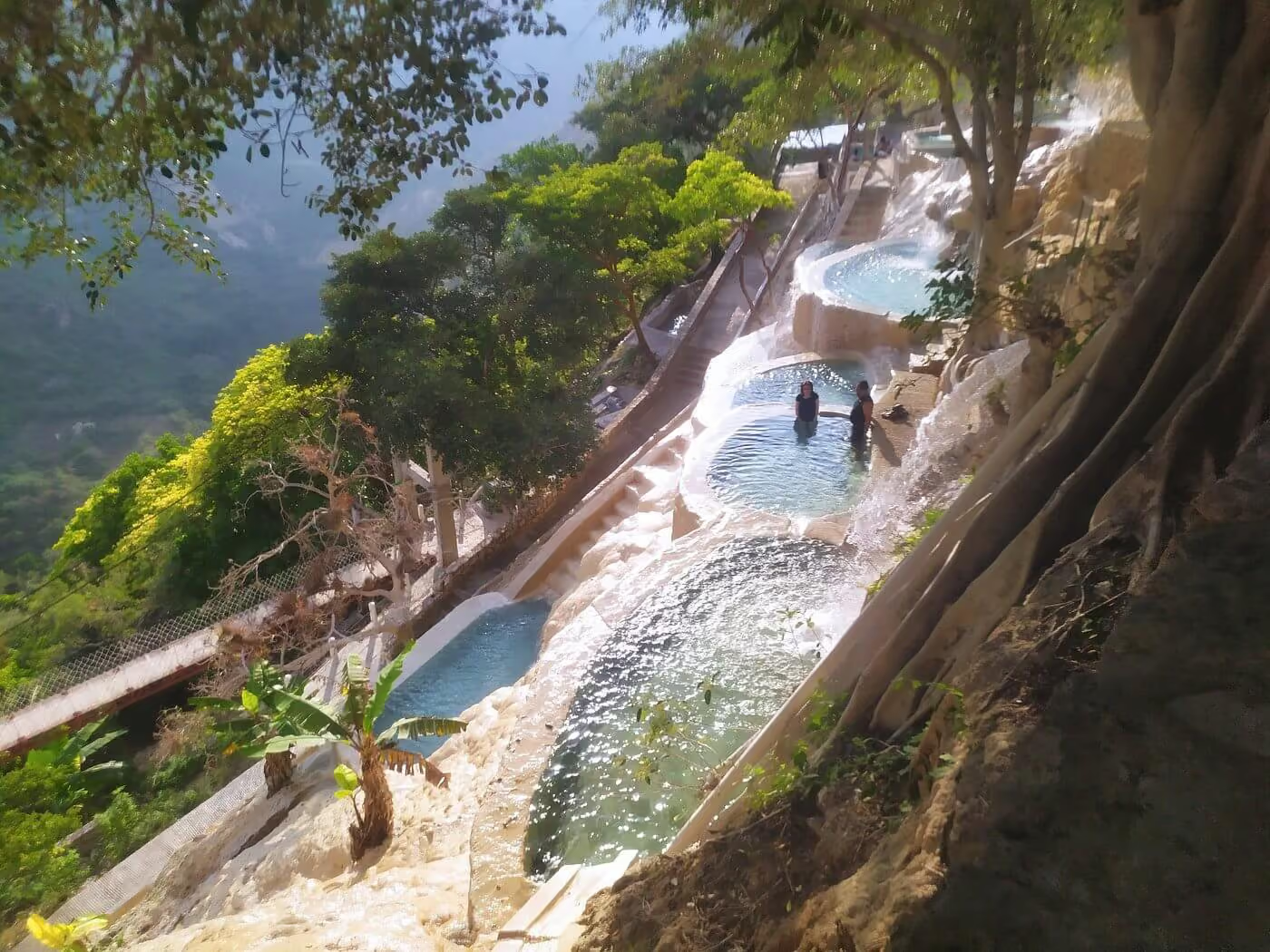
Mexico ranks ninth among the best places for hot springs because the country combines distinctive cave-grotto thermal pools with volcanic hot springs across multiple states, from the central highlands around San Miguel de Allende to the volcanic Trans-Mexican Belt and the high-altitude pools near Mexico City. The variety of settings is wider than most other countries on this list.
The major destinations include Grutas de Tolantongo in Hidalgo with hot waterfalls, river soaking, and cave tunnels, La Gruta Spa near San Miguel de Allende with a signature underground cave pool reached by stone tunnel, Hierve el Agua in Oaxaca with its mineral water petrified waterfall and natural soaking pools, Las Estacas eco-park near Cuernavaca, and the volcanic springs near Ixtapan de la Sal.
What is the most famous hot spring in Mexico?
Grutas de Tolantongo in Hidalgo is the most famous hot spring complex in Mexico, with thermal waterfalls, a hot mineral river, terraced pools, and cave tunnels. The site is roughly four hours by road from Mexico City and entrance fees are modest. It typically attracts more visitors at weekends and during Mexican school holidays.
Is La Gruta Spa worth visiting from San Miguel de Allende?
La Gruta Spa is one of the most popular day trips from San Miguel de Allende, located approximately 10 kilometres outside the city. The signature underground cave pool is reached through a 50-metre stone tunnel partially submerged in thermal water, creating a distinctive cave-bathing experience. Day entry fees are modest and the facility includes multiple outdoor pools at varied temperatures.
Browse all hot springs in Mexico on Hot Springs Guides.
10. Germany: Spa Towns with Centuries of Wellness Tradition
Quick Facts
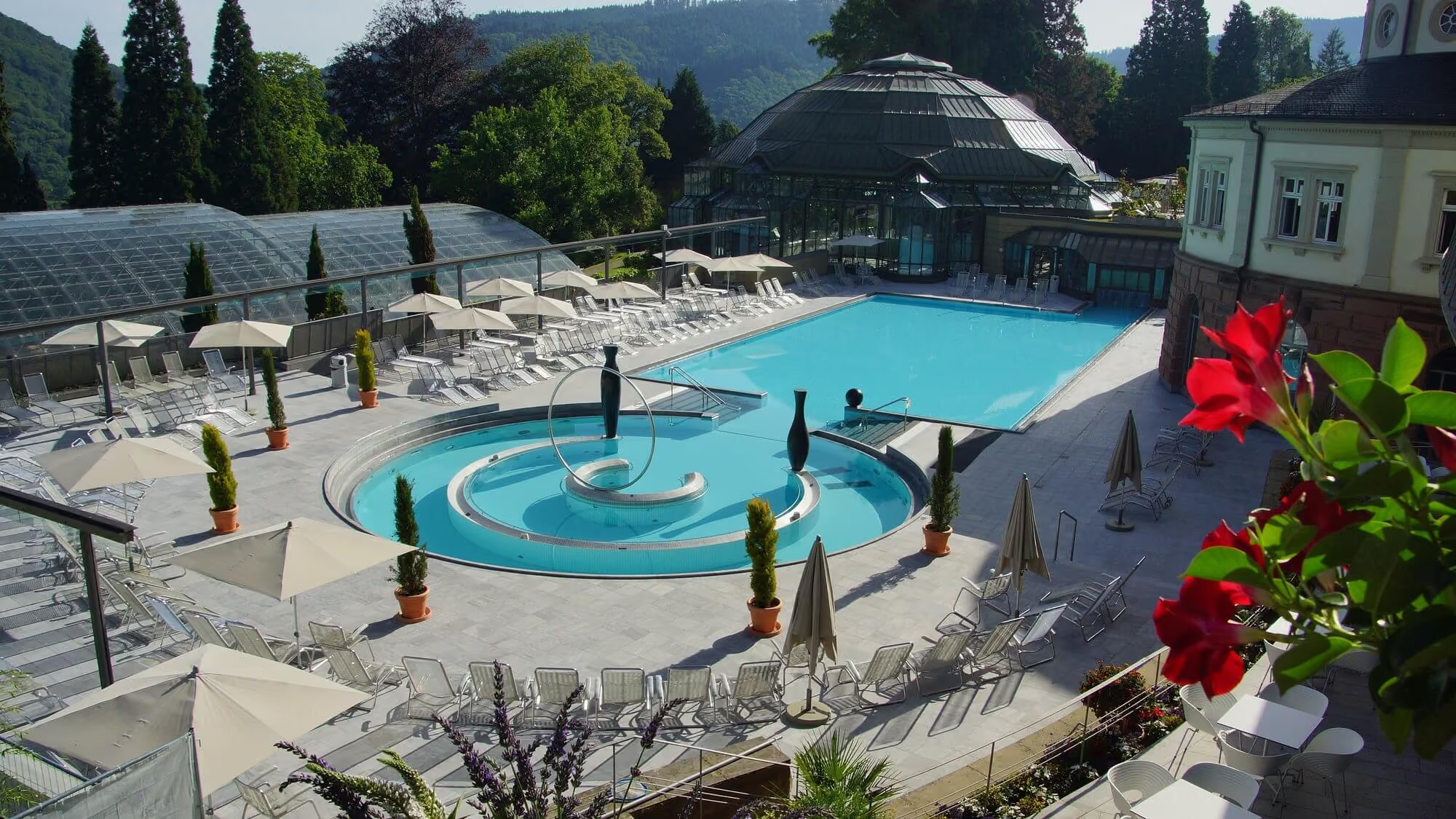
Germany ranks tenth among the best places for hot springs because the country's Therme and Wellness-Therme tradition is among the most developed wellness infrastructures in the world, with dozens of spa towns built around thermal water sources that have been used for over 2,000 years. The Roman occupation introduced organised bathing, and the practice continued through medieval cure houses and the Belle Epoque era to today's large thermal complexes.
The major destinations include Baden-Baden with the Friedrichsbad Roman-Irish bath and the modern Caracalla Therme, Bad Ems with its 19th century imperial bathhouse heritage, Wiesbaden with the Kaiser-Friedrich-Therme, the Therme Erding near Munich which is one of the largest thermal complexes in the world, Taunus Therme outside Frankfurt, and Thermen and Badewelt Sinsheim. Aachen has thermal water at 74 degrees Celsius that has been used since Roman times.
What is the best thermal bath in Germany?
Friedrichsbad in Baden-Baden is widely regarded as the best traditional thermal bath in Germany, offering a 17-stage Roman-Irish bathing ritual in a 19th century building. The Therme Erding near Munich is the largest thermal park in the world and ranks similarly high for variety. Both are open year-round with day tickets ranging from 25 to 50 euros.
What is the difference between a Therme and a Wellness-Therme?
A Therme is a thermal bath complex using natural thermal water for medicinal and recreational bathing, typically with pools at varied temperatures and basic sauna facilities. A Wellness-Therme extends this format with an emphasis on relaxation amenities including expansive sauna landscapes, treatment menus, lounge areas, restaurants, and longer dwell times. The Wellness-Therme format is the dominant style of new German thermal complexes built over the past two decades.
Browse all hot springs in Germany on Hot Springs Guides.
11. Norway: Arctic Soaking and Lofoten Hot Tubs
Quick Facts
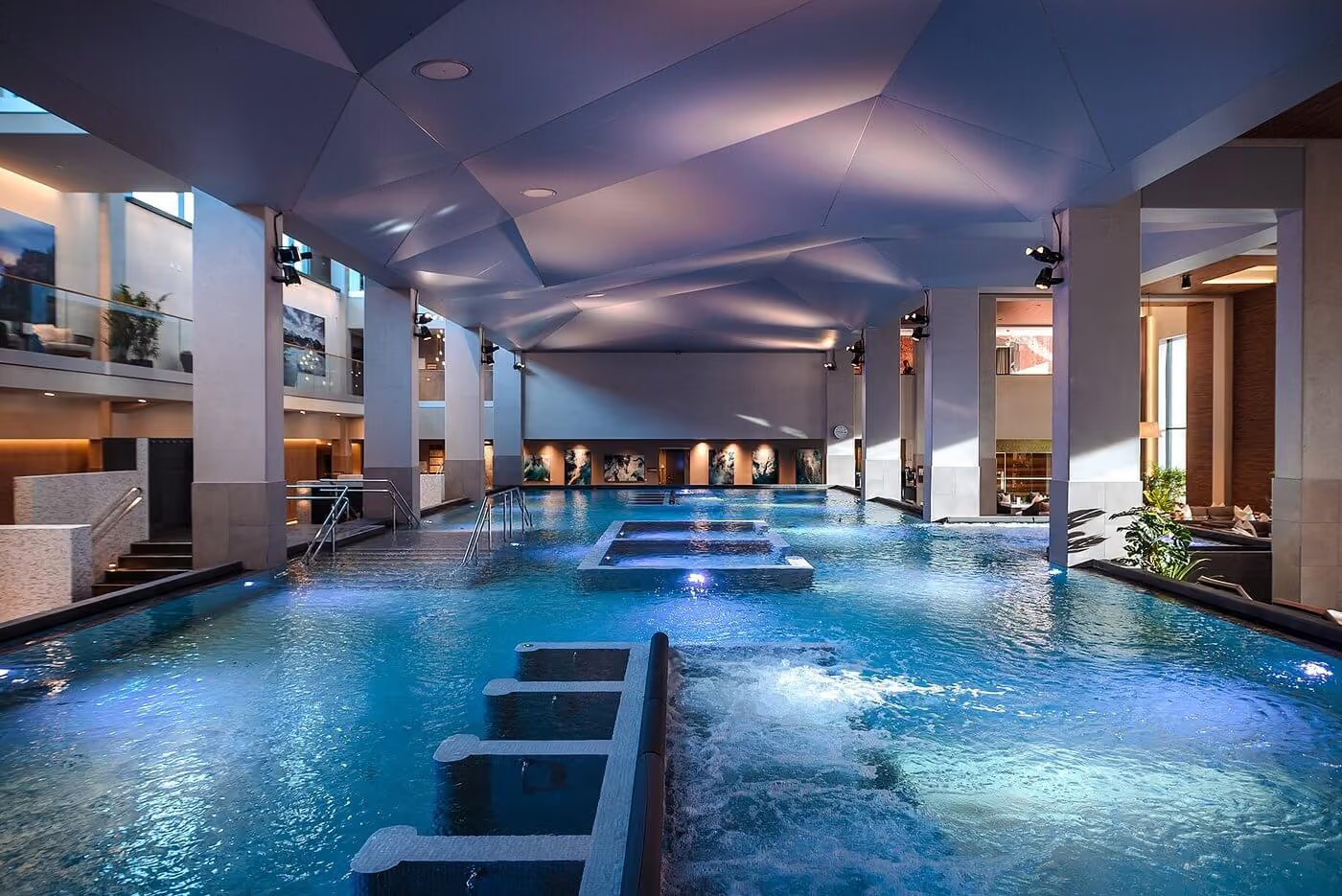
Norway ranks eleventh among the best places for hot springs because the country offers a different kind of soaking experience than the geothermally active destinations on this list. Norway has limited natural hot springs because of its stable continental crust, but a growing network of seawater-fed hot tubs, fjord-side wooden saunas, and developed Nordic spa facilities has positioned the country as one of the most distinctive cold-climate soaking destinations in Europe.
The major experiences include coastal seawater soaks on the Lofoten Islands, where wood-fired hot tubs sit at the edge of fjords with views of midnight sun in summer and northern lights in winter. The Vorma River bathing area near Eidsvoll and the natural pools at Reinheimen National Park offer wild soaking options. Developed Nordic spa facilities such as The Well outside Oslo and Farris Bad in Larvik provide multi-pool thermal complexes. Several Arctic hotels in Tromso and Bodo offer hot tubs paired with aurora-viewing packages between November and March.
Are there natural hot springs in Norway?
Norway has very few natural geothermal hot springs because the country sits on stable continental crust without significant volcanic activity. The hot soaking experiences in Norway are typically seawater-fed wood-fired hot tubs, river bathing spots, and developed Nordic spa facilities. The Svalbard archipelago contains some of the only true geothermal features in Norwegian territory.
Where can you see the northern lights from a hot tub in Norway?
The best places to combine hot tub soaking with northern lights viewing in Norway are the Lofoten Islands, the Tromso region, Bodo and the Helgeland coast, and parts of Finnmark above the Arctic Circle. Aurora season runs from late September to early April, with the strongest viewing typically between November and February. Many coastal hotels and cabins offer outdoor hot tubs positioned for unobstructed sky views.
Browse all hot springs in Norway on Hot Springs Guides.
12. Costa Rica: Volcanic Hot Springs in the Tropics

Quick Facts
Costa Rica ranks twelfth among the best places for hot springs because the country's volcanic geology, particularly around Arenal Volcano in the northern interior, has produced one of the densest concentrations of resort-style hot springs in Central America. The thermal water is heated by ongoing volcanic activity, and the resorts have been built to take advantage of natural mineral creeks and waterfalls.
The major destinations cluster around La Fortuna at the base of Arenal Volcano: Tabacon Thermal Resort with its natural thermal river through landscaped gardens, Eco Termales La Fortuna with smaller and quieter pools, Baldi Hot Springs with 25 thermal pools and water slides, and The Springs Resort with eighteen pools overlooking the volcano. The Rincon de la Vieja area in Guanacaste offers additional volcanic hot springs.
Are the hot springs in Costa Rica natural?
The hot springs in Costa Rica are fed by natural volcanic thermal water, but most are accessed through developed resorts where the water has been channelled into constructed pools. Tabacon is one of the few resorts where the natural thermal river runs unchanged through the property. The water typically ranges from 36 to 40 degrees Celsius.
What is the best hot spring resort near Arenal Volcano?
Tabacon Thermal Resort is generally considered the most authentic hot spring experience near Arenal Volcano, with a natural thermal river running through landscaped tropical gardens. Eco Termales La Fortuna offers a smaller and quieter alternative with stricter visitor limits. The Springs Resort provides the largest pool complex with eighteen pools at varied temperatures overlooking the volcano.
Browse all hot springs in Costa Rica on Hot Springs Guides.
13. Ireland: Seaweed Baths and Coastal Spa Heritage
Quick Facts
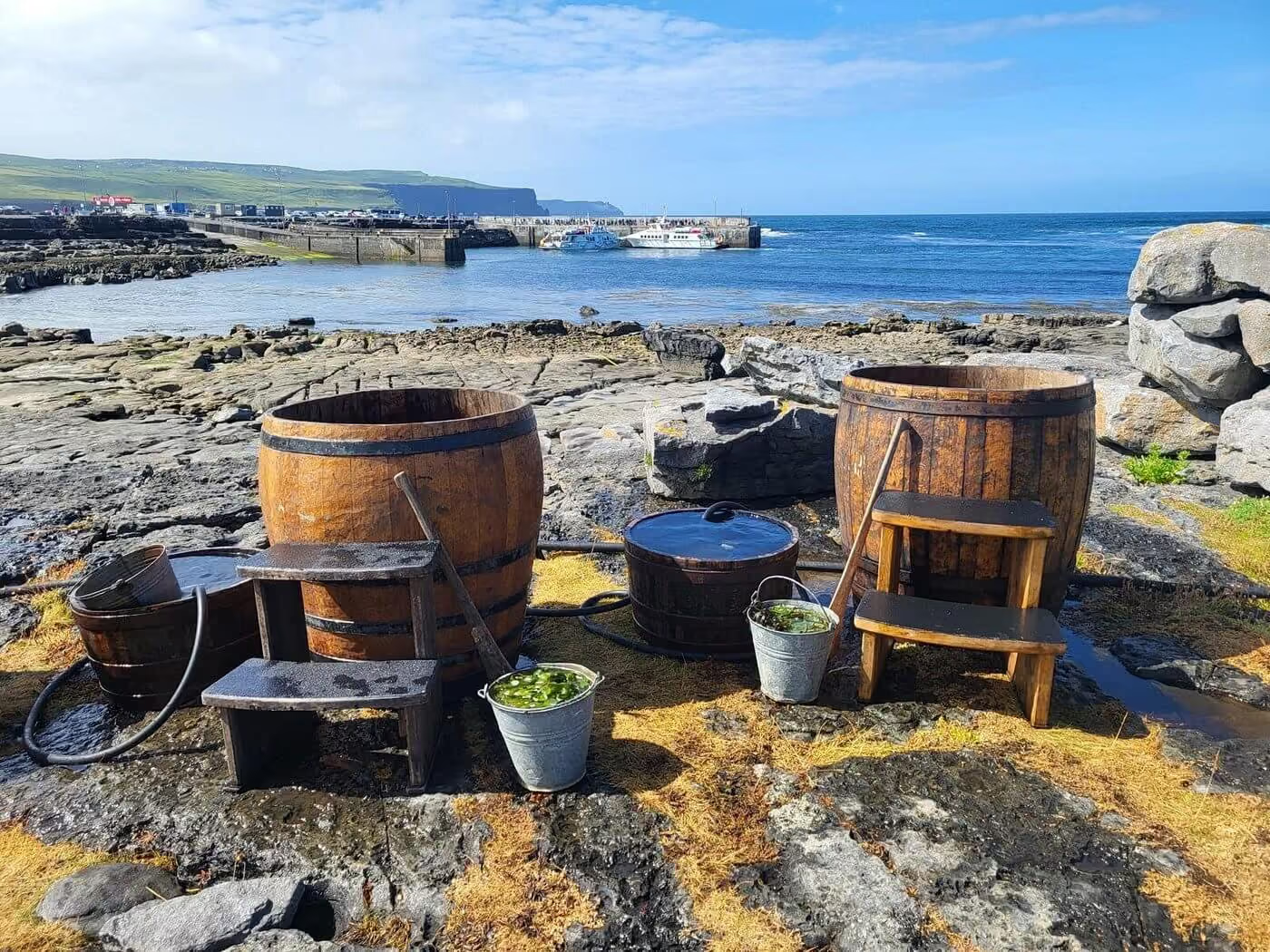
Ireland ranks thirteenth among the best places for hot springs because the country has built a distinctive spa heritage around seaweed baths rather than geothermal water, with a tradition dating back over 200 years along the western coast. While Ireland has no natural hot springs in the geothermal sense, the seaweed bathhouse format offers a unique mineral-rich warm-water soaking experience that no other country in the world has scaled to the same degree.
The major destinations include Voya Seaweed Baths in Strandhill, County Sligo, with restored Edwardian copper bathtubs filled with seaweed-infused hot seawater, Kilcullen's Seaweed Baths in Enniscrone with original 1912 tilework and oak vats, and Wild Atlantic Seaweed Baths in Doolin overlooking the Atlantic ocean. Inland spa hotels such as Monart Destination Spa in Wexford and Inchydoney Island Lodge in Cork offer thalassotherapy thermal facilities.
Does Ireland have natural hot springs?
Ireland does not have natural geothermal hot springs in the volcanic sense because the country sits on stable continental crust. The Irish spa tradition is built around seaweed bathhouses where seawater is heated and infused with locally harvested seaweed for its mineral content. This format is unique to the Irish coast and dates to the late 1800s.
What is a seaweed bath and what does it do?
A seaweed bath is a heated saltwater bath infused with freshly harvested local seaweed, typically Fucus serratus or Fucus vesiculosus, which releases minerals and natural oils into the water. The traditional Irish format uses individual copper bathtubs with private rooms. The bath is generally taken at body-warm temperatures around 38 degrees Celsius for sessions of 45 minutes to an hour. The mineral content is associated with skin conditioning and relaxation.
Browse all hot springs in Ireland on Hot Springs Guides.
14. Chile: Andean Volcanic Springs and Patagonia
Quick Facts
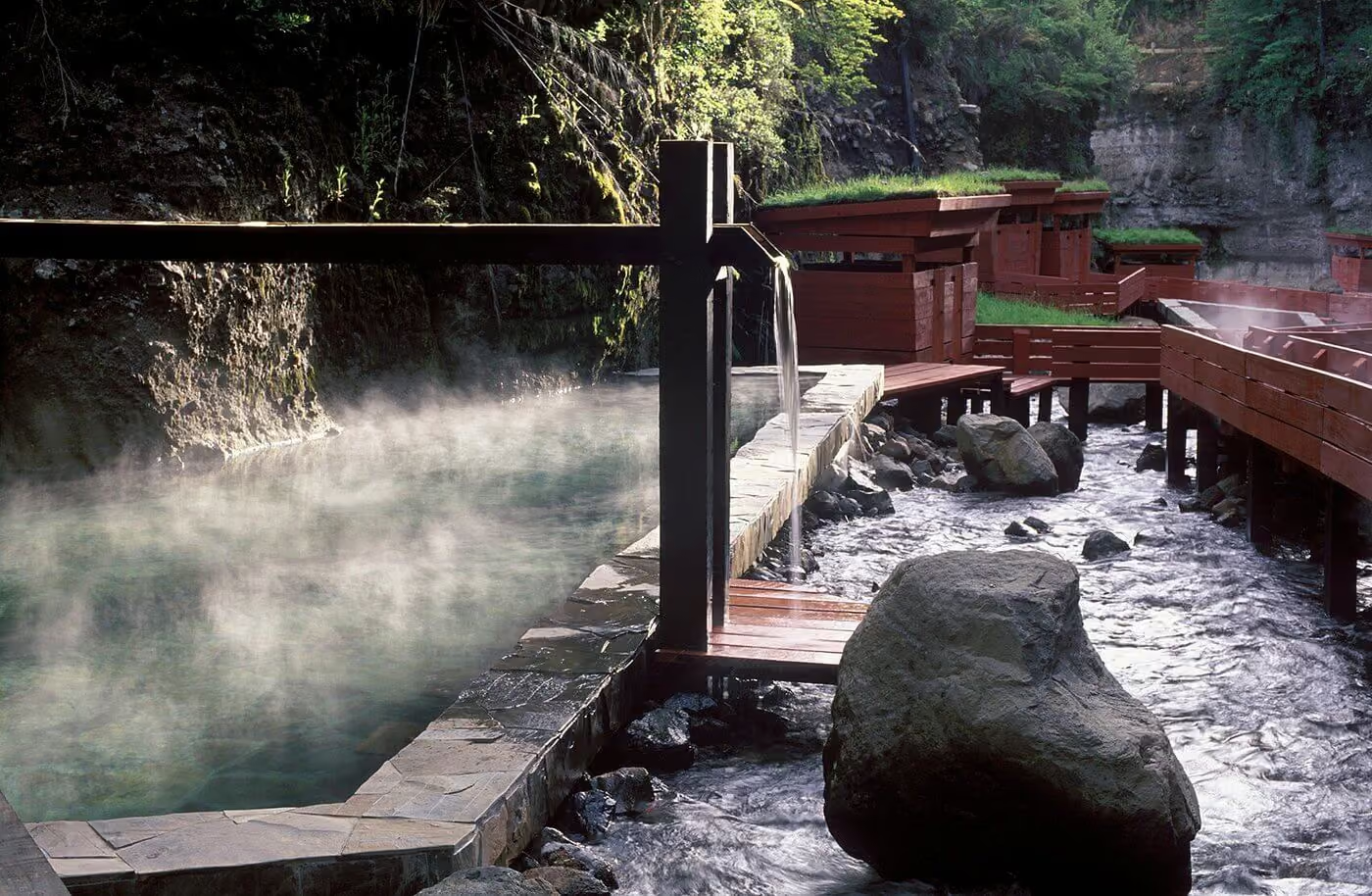
Chile ranks fourteenth among the best places for hot springs because the country's position along the Andean volcanic arc produces hundreds of natural hot springs from the Atacama Desert to Patagonia, with concentrations near the Pucon-Villarrica region and the Aysen region in the south. The springs range from completely undeveloped pools to architect-designed thermal complexes set in dense southern forest.
The major destinations include Termas Geometricas near Pucon with 17 pools connected by red wooden walkways through a forested ravine, Termas de Puyuhuapi accessible only by boat in the Aysen region, the high-altitude Termas de Polloquere on the Bolivian border, Termas de Chillan combined with a ski resort, and the remote Cahuelmo hot springs reached by boat in Pumalin Park.
When is the best time to visit Chilean hot springs?
The best time to visit hot springs in Chile is between November and March, the southern hemisphere summer, when roads are open in the Andes and weather is mild. The Pucon region is accessible year-round, while remote Patagonia springs may be closed in winter due to snow. Some northern desert springs are best visited in cooler months.
How do you get to Termas Geometricas?
Termas Geometricas is located in Villarrica National Park about 75 kilometres east of Pucon in southern Chile. The drive takes roughly 1.5 to 2 hours on a combination of paved and gravel roads. A standard rental car can manage the route in dry weather, though winter conditions may require four-wheel drive. Day visits typically include reserved time slots so booking ahead is recommended.
Browse all hot springs in Chile on Hot Springs Guides.
15. Albania: Europe's Most Underrated Hot Spring Destination
Quick Facts
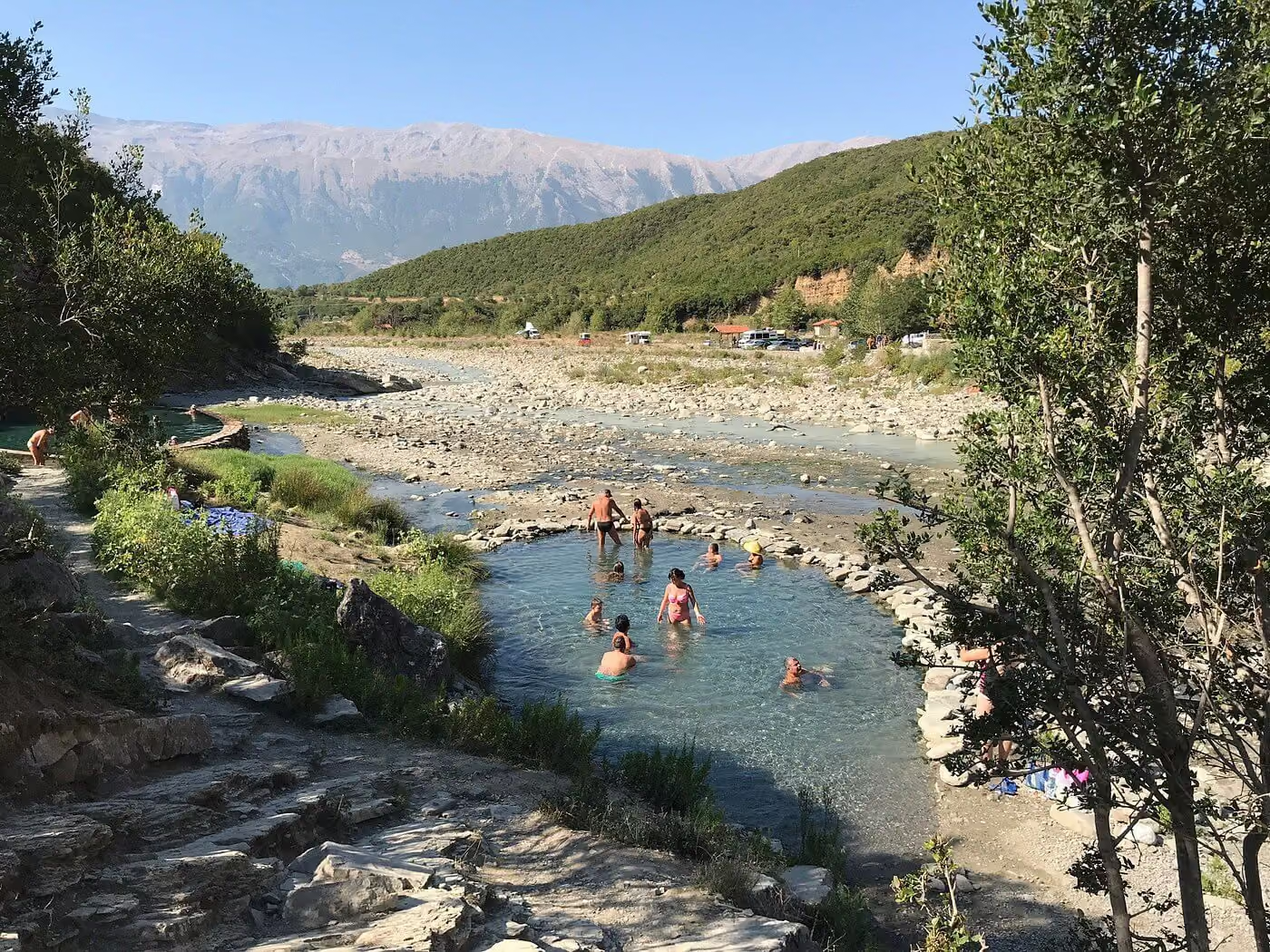
Albania ranks fifteenth among the best places for hot springs because the country offers one of the most underrated thermal bathing experiences in Europe, with sulphurous mineral springs across the central regions that have been used since Ottoman times. The springs receive a fraction of the visitors that comparable Hungarian or Turkish thermal sites attract, making them an appealing option for travellers who prefer authentic local bathing without crowds.
The major destinations include Llixhat e Elbasanit, the thermal bath complex outside Elbasan in central Albania with multiple sulphurous pools and basic spa facilities, Banja e Elbasanit which is the older traditional bathhouse in the same region, the Postenan thermal springs in the Korce region near the Greek border, and the Permet thermal springs along the Vjosa River in southern Albania with free natural pools beside a wild river. The thermal bathing tradition spans Albania, Kosovo, and North Macedonia, making the Western Balkans a connected regional soaking destination.
Are there hot springs in Albania?
Albania has multiple natural hot springs concentrated in the central and southern parts of the country, with the largest concentration around Elbasan. The springs are sulphur-rich, typically warm rather than hot, and historically used for medicinal bathing. Most facilities charge a small entry fee while natural pools beside rivers are free.
How do you get to Llixhat e Elbasanit?
Llixhat e Elbasanit is located approximately 12 kilometres north of Elbasan in central Albania and roughly 50 kilometres southeast of the capital Tirana. The drive from Tirana takes around 1.5 hours via the SH3 motorway. The site is accessible by public bus from Elbasan, with multiple daily departures. Entry fees are modest and basic spa facilities are available on site.
Browse all hot springs in Albania on Hot Springs Guides.
How to Choose the Right Hot Spring Destination for You
The best destination depends on what kind of soak you want. Use these scenarios as a starting point.
For families with children: Hungary, Germany, and the western United States offer the most family-friendly developed pools with maintained facilities and shallow soaking areas. Iceland's municipal pools are also family-oriented and inexpensive.
For luxury and spa experiences: Iceland's Blue Lagoon and Retreat, Italy's Terme di Saturnia, and Japan's premium ryokan onsen represent the top of the wellness category. The Springs Resort in Pagosa Springs and Murrieta Hot Springs in the United States offer comparable resort experiences.
For free natural soaks: California, Idaho, Montana, Oregon, and Colorado in the United States combined offer the largest concentration of free natural hot springs anywhere. Iceland's Westfjords and Highlands and parts of New Zealand have similar free natural pool networks.
For cultural immersion: Japan, Turkey, and Hungary provide bathing experiences with deep cultural roots, including specific etiquette and architectural traditions worth learning before visiting.
For backcountry hot springs: Colorado, Idaho, British Columbia in Canada, and Chile have the most documented backcountry hot springs that require hiking or remote travel to reach.
For destinations without the crowds: Norway, Ireland, and Albania offer distinctive soaking experiences with a fraction of the visitor numbers found at the better-known destinations.
Frequently Asked Questions
What country has the most hot springs?
Japan has the highest concentration of documented hot springs in the world, with over 27,000 thermal sources and roughly 3,000 traditional onsen towns. The United States, Iceland, and New Zealand also rank among the countries with the largest number of documented natural and developed hot springs.
Where are the best natural hot springs in the world?
The best natural hot springs in the world are concentrated in Iceland, the western United States (especially California, Colorado, Idaho, Montana, and Oregon), New Zealand, Japan, and Norway. These destinations combine abundant geothermal activity, free or low-cost access, and scenic settings.
What is the most famous hot spring in the world?
The Blue Lagoon in Iceland is widely considered the most famous hot spring in the world. It is a geothermal seawater spa near Reykjavik known for its milky-blue mineral water and large lava-field setting. Other globally recognised hot springs include Pamukkale in Turkey, Banff Upper Hot Springs in Canada, and the Terme di Saturnia in Italy.
Are hot springs free to visit?
Some hot springs are free, especially undeveloped natural pools in the western United States, Iceland, Norway, and New Zealand. Developed thermal baths, resorts, and public pool facilities typically charge entry fees ranging from a few dollars at municipal facilities to over 100 dollars at premium spa resorts.
What is the best time of year to visit hot springs?
Winter is generally the best time to visit hot springs because the temperature contrast between hot water and cold air enhances the experience. Many hot spring destinations including Iceland, Japan, and the Canadian Rockies see their peak visitation between November and March. Some remote natural springs become inaccessible during winter due to road or trail closures.
What should I bring to a hot spring?
Bring a swimsuit, towel, water bottle, sandals or water shoes, and a dry bag for valuables. For natural springs, also bring a flashlight, a small trash bag for pack-out, and cash for any entry fees. Many remote springs have no facilities so plan to change at your vehicle.
Are hot springs safe?
Most developed hot springs are safe when basic guidelines are followed: test water temperature before entering, limit soaks to 15 to 20 minutes, stay hydrated, and avoid alcohol. Natural and remote hot springs require additional caution because temperatures can vary widely and no lifeguards are present. Some geothermal areas, such as parts of Yellowstone National Park, contain water that is dangerously hot and not safe to enter.
Can you visit hot springs year-round?
Most developed hot spring resorts and public thermal facilities are open year-round. Remote natural hot springs may be seasonal due to snow, road closures, river levels, or wildlife considerations. Check current access conditions before planning a trip to undeveloped springs in mountain or backcountry locations.