Quick FactsOverview
About Travertine Hot Springs
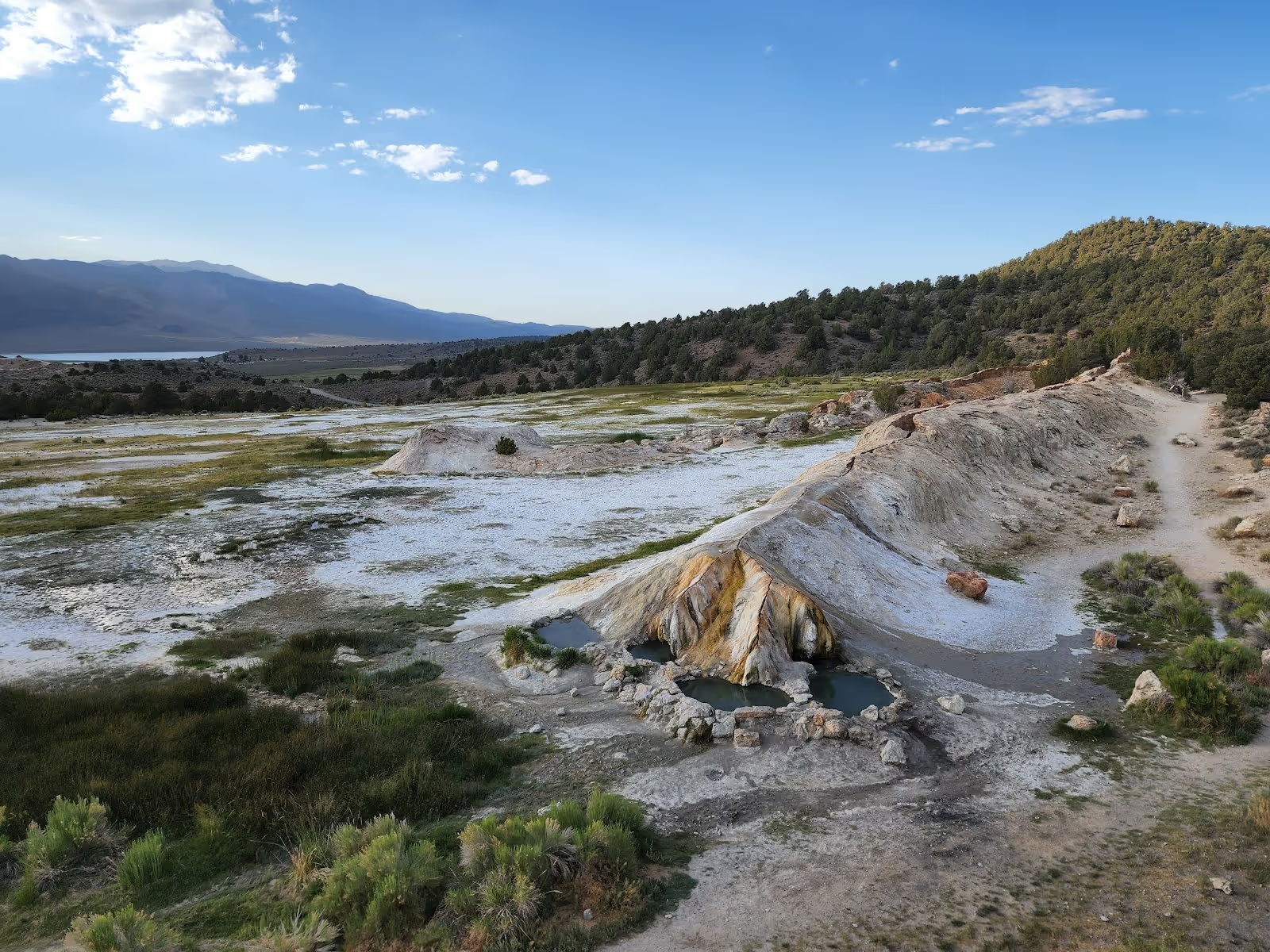
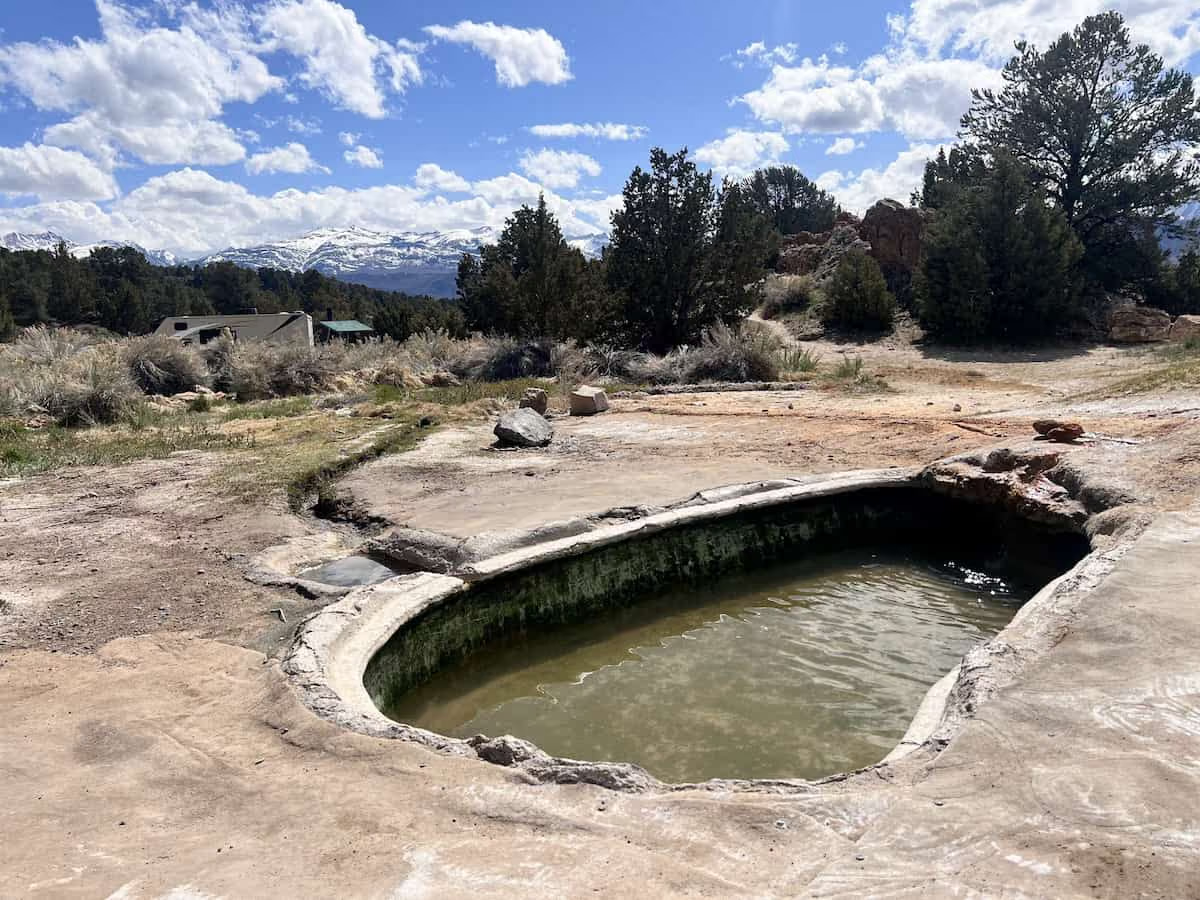
Travertine Hot Springs, California is a free geothermal spring system on public land near Bridgeport in the Eastern Sierra, approximately one mile off Highway 395 via a dirt road. Multiple primitive soaking pools cascade down distinctive white travertine terraces at an elevation of around 6,700 feet, offering views across the Bridgeport Valley toward the Sierra Nevada mountains.
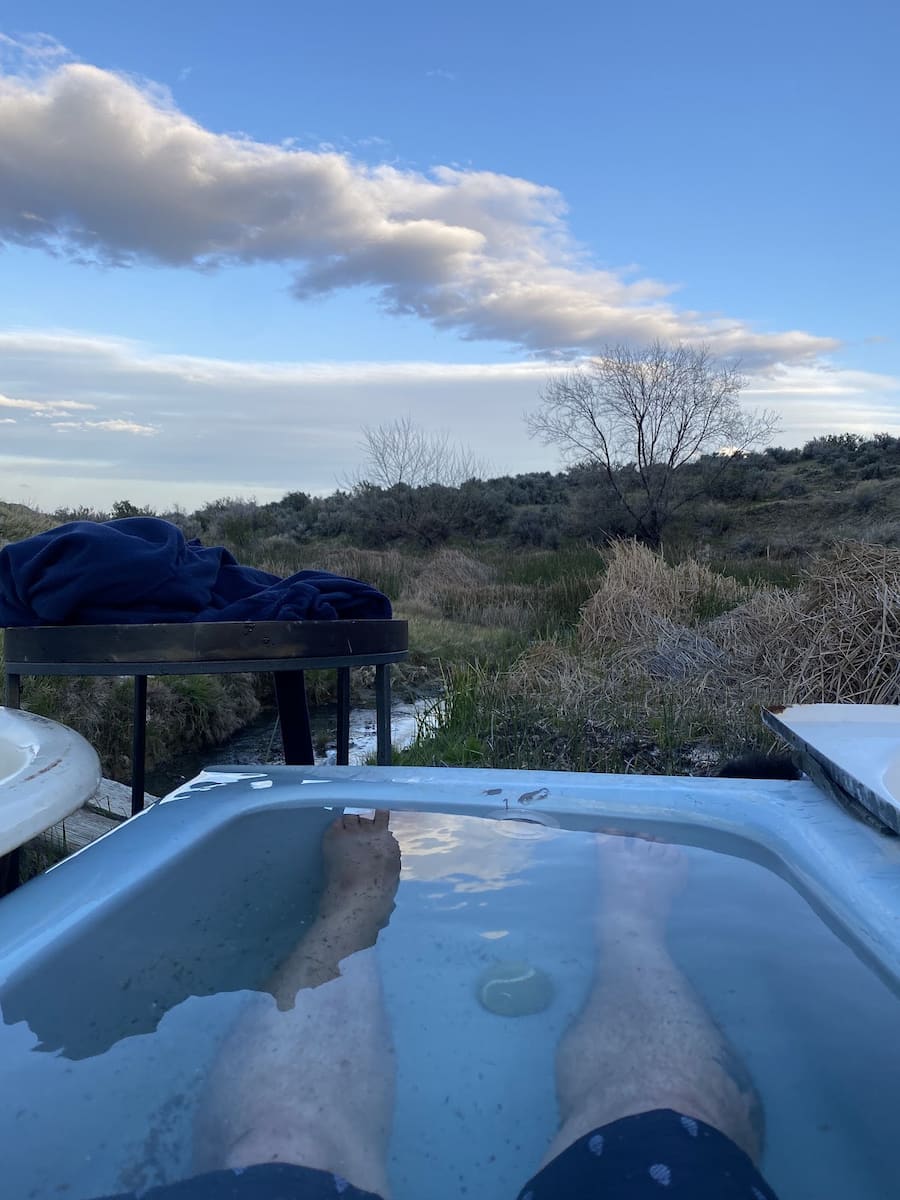
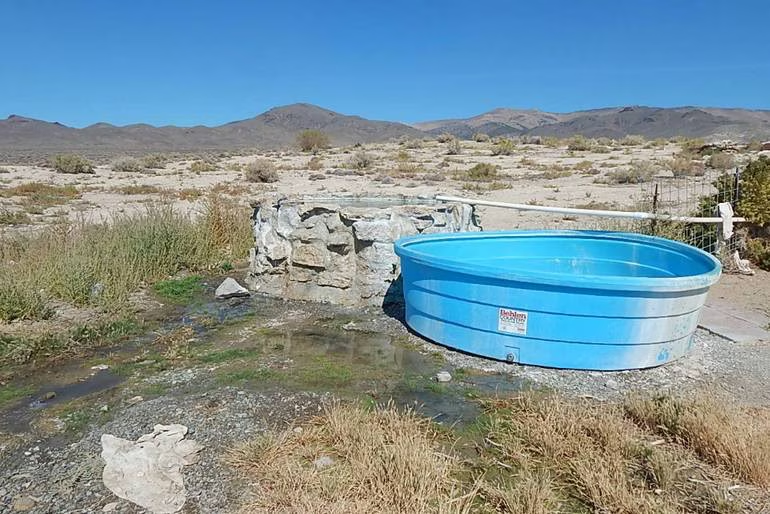
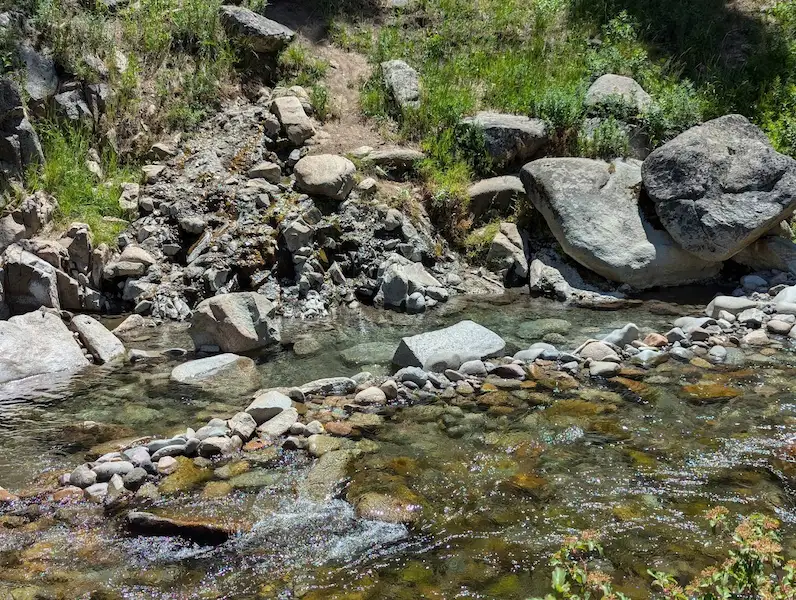
The spring water emerges at temperatures near 180 degrees Fahrenheit from fissures in the ground. It flows down the travertine terraces through stepped channels, cooling as it progresses into a series of rock-bottomed pools and one concrete tub near the parking area. Volunteers built and maintain most of the pools by shaping local rock and diverting flows. Pool temperatures vary depending on distance from the source and seasonal conditions, ranging from warm to near-scalding at the upper tiers.
The travertine formations that give the springs their name are composed of calcium carbonate deposited by mineral-rich water over time. These distinctive pale terraces are both the geological feature and the aesthetic signature of the site. The springs are among the most accessible and most visited natural hot springs in California, and are a well-known roadside stop for travelers on Highway 395.
Location & Access
Getting to Travertine Hot Springs
Travertine Hot Springs is reached by driving south on Highway 395 from Bridgeport for approximately one mile, then turning left onto Jack Sawyer Road just before the Forest Service Ranger Station. After about 0.2 miles the road meets Travertine Road; follow the signed left fork and continue approximately 1.1 miles down the dirt road to the parking area at the end. The drive from downtown Bridgeport takes about five minutes.
The dirt road is passable for standard passenger vehicles in dry conditions, though it has significant potholes and a high-clearance vehicle is advisable. After rain or snow the road can become impassable; the road is not maintained in winter. A pit toilet is located at the parking area. No fee is required; parking is free and no permit is needed.
Bridgeport is the nearest town, with gas, food, and accommodation on Highway 395. Buckeye Hot Springs is located across the Bridgeport Valley and makes a natural second stop for visitors in the area. Bodie State Historic Park, the well-preserved gold-rush ghost town, is approximately 13 miles northeast and is a common paired destination for hot springs near Bridgeport. The springs are open year-round when road conditions allow.
Suitability & Accessibility
Who Travertine Hot Springs Suits
Travertine Hot Springs suits adults comfortable with an undeveloped, clothing-optional outdoor hot spring. The setting is rustic with no facilities beyond a pit toilet, and nudity is common and long-established as the norm at the site. Families with young children may find the environment unsuitable given the clothing-optional culture and the absence of safe warm-temperature pools for young children, as upper pools can be dangerously hot.
The site is not wheelchair accessible. The dirt access road is rough and unpaved, and the terrain from the parking area to the pools is uneven rock and mineral deposit. No adapted infrastructure exists at the site.
Dogs are welcome on leash but are not permitted in the pools. The Eastern Sierra setting means weather changes can be dramatic; temperatures drop sharply at night at 6,700 feet elevation, and the spring and fall shoulder seasons can bring cold winds. Summer days at the site can be hot in the sun, though the high elevation moderates temperatures compared to the desert valleys below. Visitors seeking free hot springs in California without a long hike but with dramatic Eastern Sierra scenery will find Travertine one of the most rewarding roadside options on Highway 395, especially when combined with Buckeye Hot Springs across the valley.
Safety & Etiquette
Safety and Etiquette at Travertine Hot Springs
Travertine Hot Springs warrants mindfulness on temperature. The source water reaches near 180 degrees Fahrenheit and upper pools can remain dangerously hot; testing pool temperature before entering is essential. The hottest pools are unsuitable for soaking and should be treated as observation points only. Cooler pools lower on the terrace are generally the appropriate soaking pools, but conditions shift with season and water flow, so never assume a pool is safe without testing.
The travertine terraces and natural formations are fragile. Walking on or across the travertine deposits damages both the formations and the microbial mats that live in and around the pools. Staying on established paths and not disturbing the flow channels protects the site for future visitors and the ecosystem that depends on the springs.
Glass containers are not permitted. Broken glass has contributed to closures at other Eastern Sierra hot springs and is taken seriously by the management office. The springs have repeatedly faced the threat of closure due to overuse and poor visitor behavior; trash left on site and camping in prohibited areas are the most common violations. All waste must be packed out; the site has no trash service.
Camping is not permitted at or near the springs or in the parking area. Dispersed camping is available on BLM public land at a distance from the springs; signs in the area indicate permitted zones. Following Leave No Trace principles and avoiding social media location tagging of the exact coordinates is encouraged by the local management community to manage visitor numbers.