
Quick FactsOverview
About Dirty Sock Hot Springs
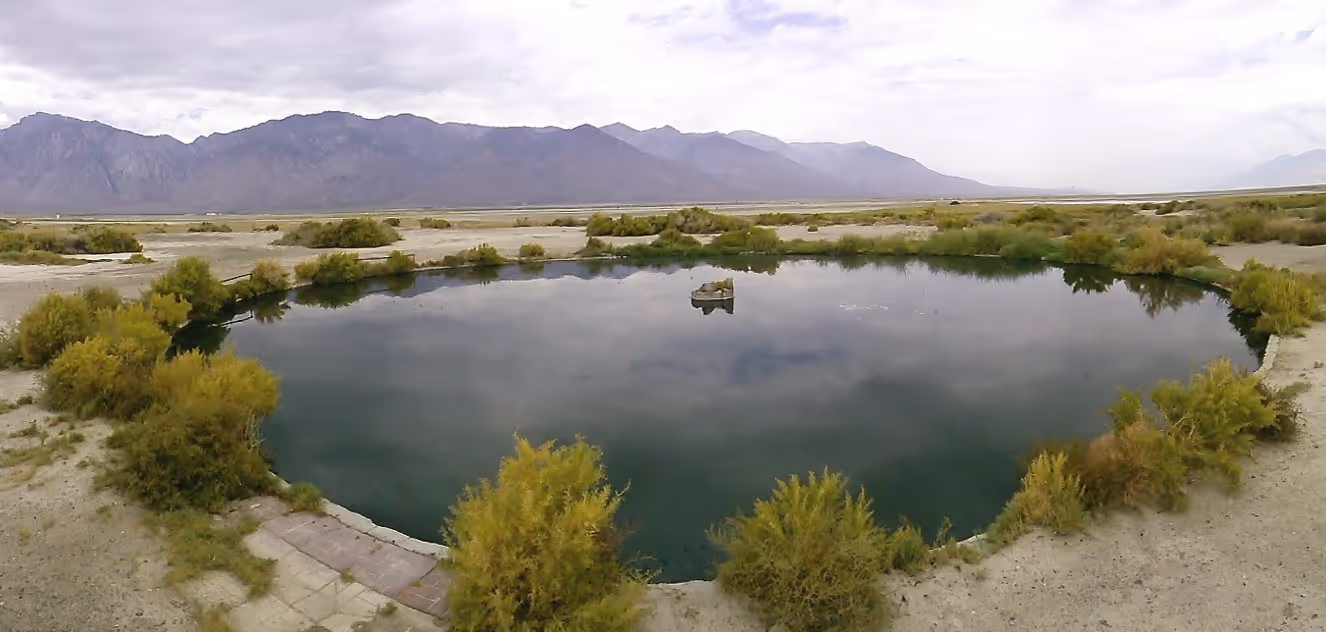
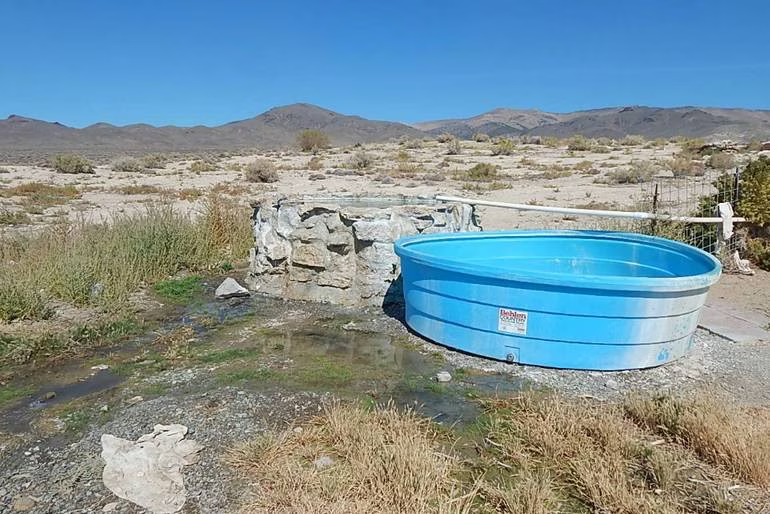
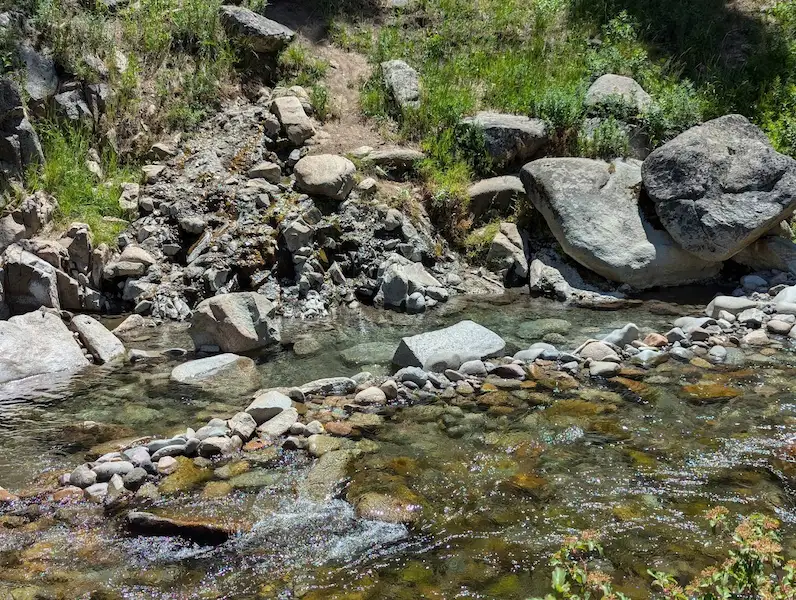
Dirty Sock Hot Springs, California is a free, undeveloped warm spring on California State Route 190 in the Owens Valley, approximately 4.7 miles east of the US-395 junction near Olancha and roughly 30 miles from Lone Pine. A large circular concrete pool approximately 78 feet in diameter is fed by an artesian well at an average temperature of around 93 degrees Fahrenheit. The spring was developed in 1927 as a small resort, but the attempt failed and all structures were removed by 1945. The pool has been unmaintained since and is now visited by birders and hot spring explorers passing through the Eastern Sierra.
The pool commonly contains algae and has a sulfur odor, which contributed to the name. It is free to visit, open year-round, with no entry fee, no facilities, and no signage on the highway. The spring is approximately 300 yards from the highway. An artesian well in the center releases water at a flow of several hundred liters per minute, and overflow runs to a nearby pond used by migratory birds on Owens Lake.
The site sits on the flat Owens Valley floor with open views of the Sierra Nevada and the Owens Lake playa. It is one of the more easily reached free natural hot springs in California near US-395, requiring only a short walk from roadside parking.
Location & Access
Getting to Dirty Sock Hot Springs
Dirty Sock Hot Springs is reached from US-395 by turning east onto California State Route 190 at the junction just south of Olancha. Drive approximately 4.7 miles east on CA-190, then turn left at a paved spur road and continue approximately 0.4 miles north to the spring. There are no highway signs for the spring, and visitors should track the mileage from the US-395 junction. Vehicles can park near the pool on level desert ground, and the spring is a short walk of approximately 300 yards from the road.
Any standard vehicle can reach the area under normal conditions. No high-clearance or four-wheel drive is required. The road to the spring can become soft after heavy rain, and visitors should avoid the area in muddy conditions. There are no facilities at the site including no toilets, no trash bins, and no potable water. Visitors must pack out all waste.
For visitors looking for natural hot springs near Lone Pine along the US-395 corridor, Dirty Sock is one of the most easily accessible roadside options in the area. Additional options include Keough's Hot Springs near Big Pine to the north. The nearest services including fuel, food, and lodging are in Olancha approximately 5 miles west or in Lone Pine approximately 30 miles north.
Suitability & Accessibility
Who Should Visit Dirty Sock Hot Springs
Dirty Sock Hot Springs suits visitors interested in unusual, undeveloped natural springs who are comfortable with the realities of an unmaintained site. The pool is warm but not hot at approximately 93 degrees, and commonly contains green algae. The sulfur odor is persistent. Some visitors find these conditions off-putting, while others are drawn to the historic character of a spring that was once a resort and has been slowly reclaimed by the desert. Expectations should be calibrated before visiting.
The site is not suitable for families with young children due to uncertain water quality, lack of any facilities, and the general condition of the pool. Birders visiting the Owens Lake area often include a stop here as part of a broader excursion, as overflow from the spring creates wetland habitat used by migratory birds. The flat terrain allows for easy walking, but the surface is uneven desert ground with no pathways or infrastructure.
Those seeking free natural hot springs in California in the Eastern Sierra and Owens Valley corridor will find Dirty Sock a distinctly unusual stop, best approached as an optional add-on to a US-395 road trip rather than a primary destination. Visitors wanting to soak in cleaner and better-maintained conditions should consider Keough's Hot Springs near Big Pine or other managed facilities in the region. The spring is more interesting as a historical and geological curiosity than as a practical soaking destination.
Safety & Etiquette
Safety at Dirty Sock Hot Springs
Dirty Sock Hot Springs requires a mindful approach due to known water quality issues. The pool commonly contains algae and has a detectable sulfur content. At approximately 93 degrees, the temperature is within a range that can support microbial growth. Visitors with open wounds, suppressed immune systems, skin conditions, or respiratory sensitivities should not enter the water. Submerging the head or allowing water to enter the nose or mouth is not advisable given the unmaintained condition of the pool.
The surrounding area has historically had broken glass and debris on the ground near the pool. Sturdy footwear is strongly recommended for walking around the site. Visitors should survey the ground carefully before sitting or placing bare feet on any surface near the concrete pool edge.
The site has no facilities of any kind. There are no toilets, no drinking water, no trash disposal, and no emergency communication infrastructure. Cell phone coverage is variable in the Owens Valley. Visitors should carry their own water, pack out all waste, and inform someone of their plans before visiting this isolated desert location.
The desert environment introduces heat risk in summer, when Owens Valley temperatures can exceed 100 degrees. The pool at 93 degrees offers little cooling effect when ambient temperatures are high. The spring is best visited in fall, winter, or spring. Overnight camping in the open desert near the spring is not prohibited but visitors should prepare for sharp temperature drops after sunset in all seasons.