
Quick FactsOverview
About Fales Hot Springs
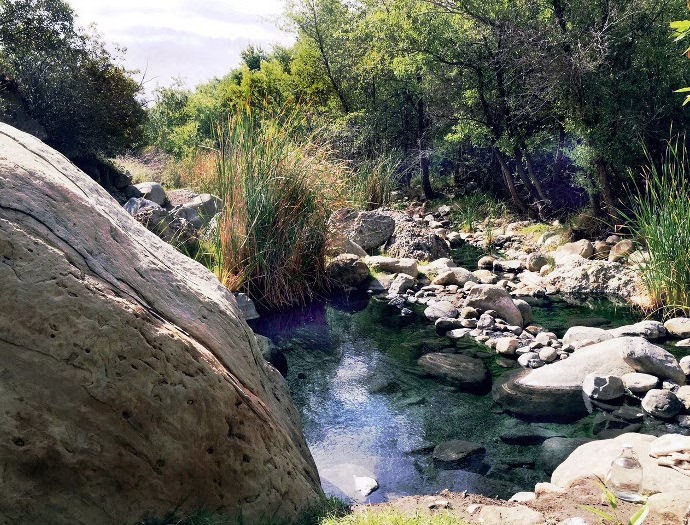
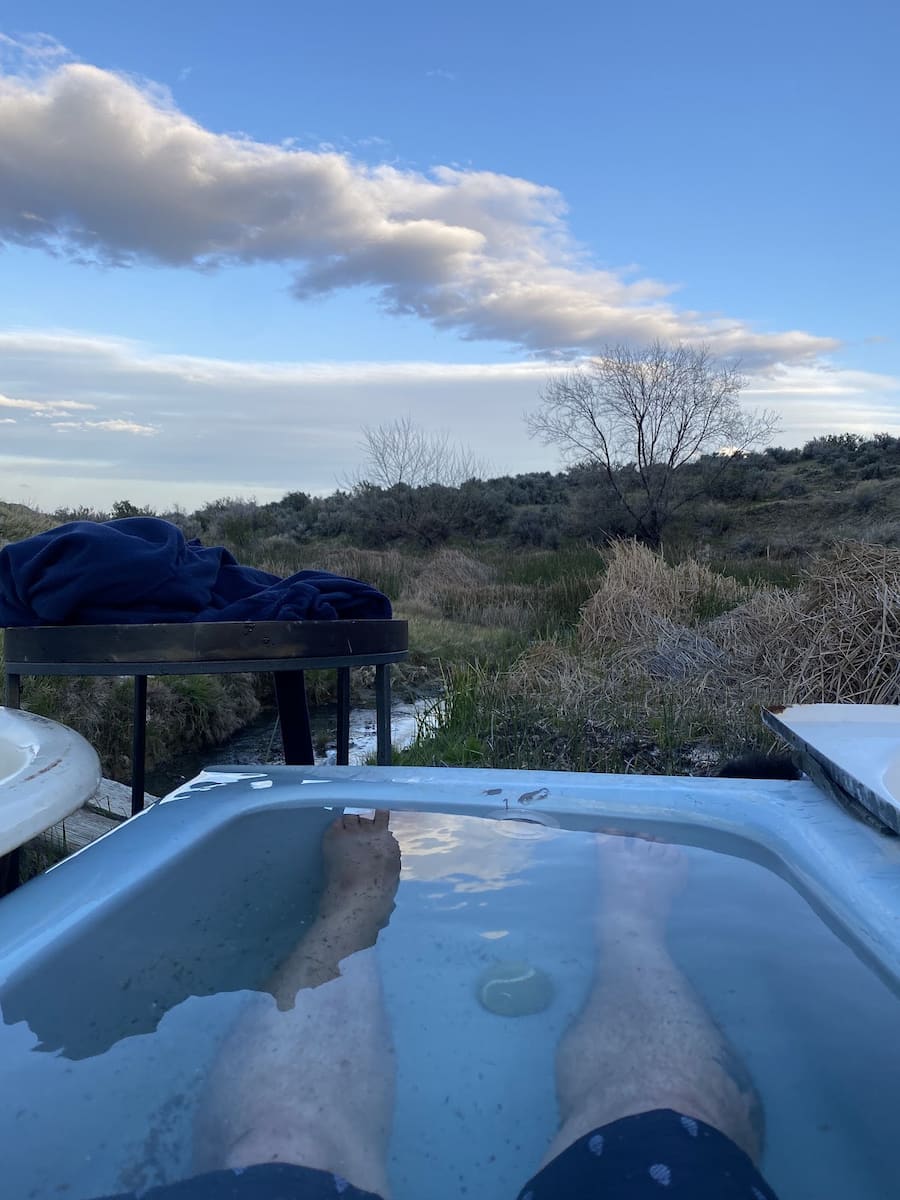
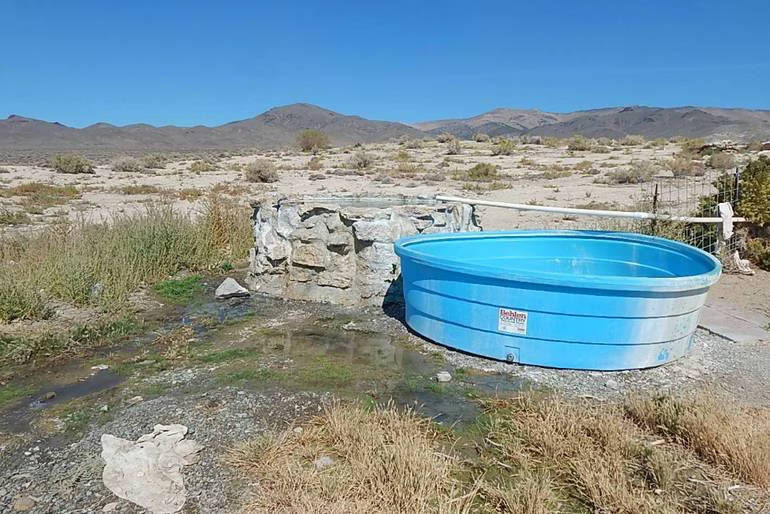
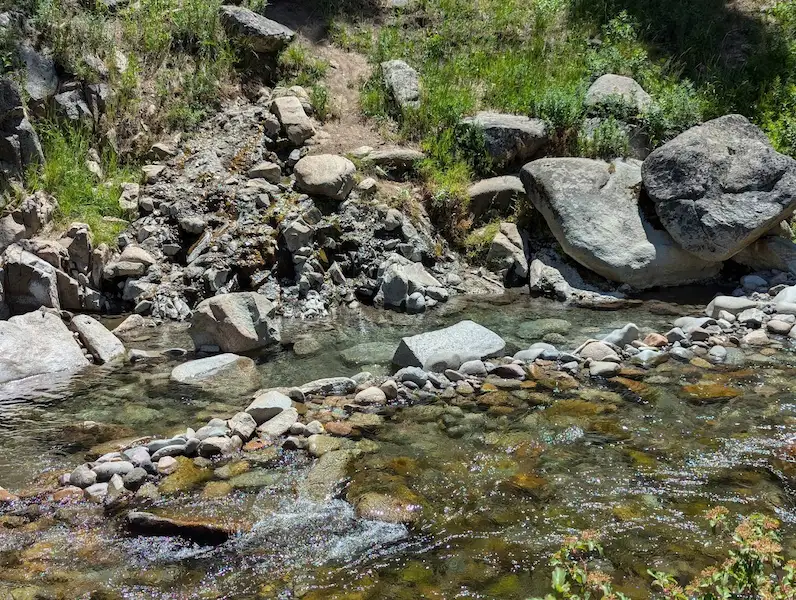
Fales Hot Springs, California is a historic former resort site on US-395 in the Sonora Junction area of Mono County, approximately 15 miles northwest of Bridgeport at an elevation of 7,319 feet. The property is privately owned and not open to the public. No Trespassing signs are posted. A natural geothermal spring on the private land produces extremely hot water at the source. Runoff flows through a pipe beneath US-395 into a small pool near the highway, which some visitors have accessed in the past, but access is not permitted without the property owner's consent.
The site has a documented history stretching to 1863, when Samuel Fales obtained the hot springs, and a resort hotel, stage stop, and bathhouses were operating by 1877. The resort served travelers on the route to the Bodie gold mines and was known for its baths, mud treatments, and steam rooms. Resort operations ceased in the twentieth century and the original buildings are now used as private residences.
The location is documented in California historical records and was noted by John C. Fremont in 1844. It represents one of the earliest developed geothermal resort sites in the Eastern Sierra, but is not an accessible destination. Visitors seeking accessible natural hot springs near Bridgeport should look to Travertine or Buckeye Hot Springs instead.
Location & Access
Getting to Fales Hot Springs
Fales Hot Springs is located along US-395 approximately 15 miles northwest of Bridgeport in Mono County. From Bridgeport, travel northwest on US-395 for approximately 13 to 15 miles toward Sonora Junction. The site is on the right side of the highway. There is no formal parking area, and US-395 carries fast-moving traffic at this location. Visitors who stop along the highway must do so with extreme care and should not park on narrow shoulders.
The property is private and not open to the public. No Trespassing signs are posted. Visitors should not enter the property, approach the source area, or use any structures without the explicit permission of the property owner. The small runoff pool near the highway has been documented by visitors in past years, but current access policies are determined by the owner and should not be assumed to be permissive. Confirm permission directly before any visit.
For visitors looking for natural hot springs near Bridgeport in the Eastern Sierra, accessible and legal alternatives exist in the same corridor. Travertine Hot Springs is a free, publicly accessible site a short drive southeast of Bridgeport. Buckeye Hot Springs is approximately 10 miles southwest of Bridgeport. These sites offer legal soaking access without the private property concerns at Fales.
Suitability & Accessibility
Who Should Visit Fales Hot Springs
Fales Hot Springs is not currently open to the public and should not be treated as a soaking destination. The property is privately owned with No Trespassing signs in place. Visitors who arrive expecting to soak will find a private property with restricted access. The site is documented here as a historical and geothermal feature of the Eastern Sierra corridor, not as a functioning visitor attraction.
Visitors with an interest in the historical significance of the site may find value in its documented history as one of the earliest developed hot spring resorts in the California Sierra. The site was in operation from the 1870s through much of the twentieth century and is documented in state historical records. This history is best explored through publicly available written sources rather than physical visitation.
Those seeking free natural hot springs in California in the Eastern Sierra near Bridgeport should direct their attention to Travertine Hot Springs and Buckeye Hot Springs, both of which offer accessible public soaking. Travertine is located just south of Bridgeport on Bodie Road and is one of the more accessible undeveloped hot spring sites in the Eastern Sierra. The Bridgeport corridor offers multiple legal hot spring options that do not involve private property access concerns.
Safety & Etiquette
Safety at Fales Hot Springs
Fales Hot Springs is a private property site with No Trespassing signs posted, and the primary safety concern is the legal and practical risk of unauthorized entry. Trespassing on private property in California is a civil and potentially criminal matter. Visitors who enter without the property owner's permission do so at their own legal risk and should not approach the source, buildings, or any structures on the private land.
US-395 runs alongside the site at highway speed, and stopping or parking near the property poses a significant traffic safety risk. The highway has limited shoulder space in this area, and pedestrians near high-speed traffic in a remote location face real danger. Visitors who stop at any point along this stretch of highway should do so only where legal and safe parking is available, and should not walk along the highway edge toward the site.
If permission to access the runoff pool area is obtained from the property owner, additional site-specific hazards apply. The water temperature in the runoff pool varies significantly by season, reported as low as 65 degrees Fahrenheit in spring and around 90 degrees in summer. Algae and ticks have been reported at the site by previous visitors. The terrain near the highway is uneven gravel and the area has no facilities of any kind.
Cell phone coverage in the Sonora Junction area is limited. Emergency services would need to be contacted through Bridgeport, approximately 15 miles southeast. Visitors traveling this stretch of US-395 should inform someone of their itinerary. The site elevation of 7,319 feet means temperatures can drop sharply, and appropriate clothing should be carried for any stop along this high desert corridor.