%20Hot%20Springs%2C%20Oregon.avif)
Quick FactsOverview
About Deer Creek Hot Springs
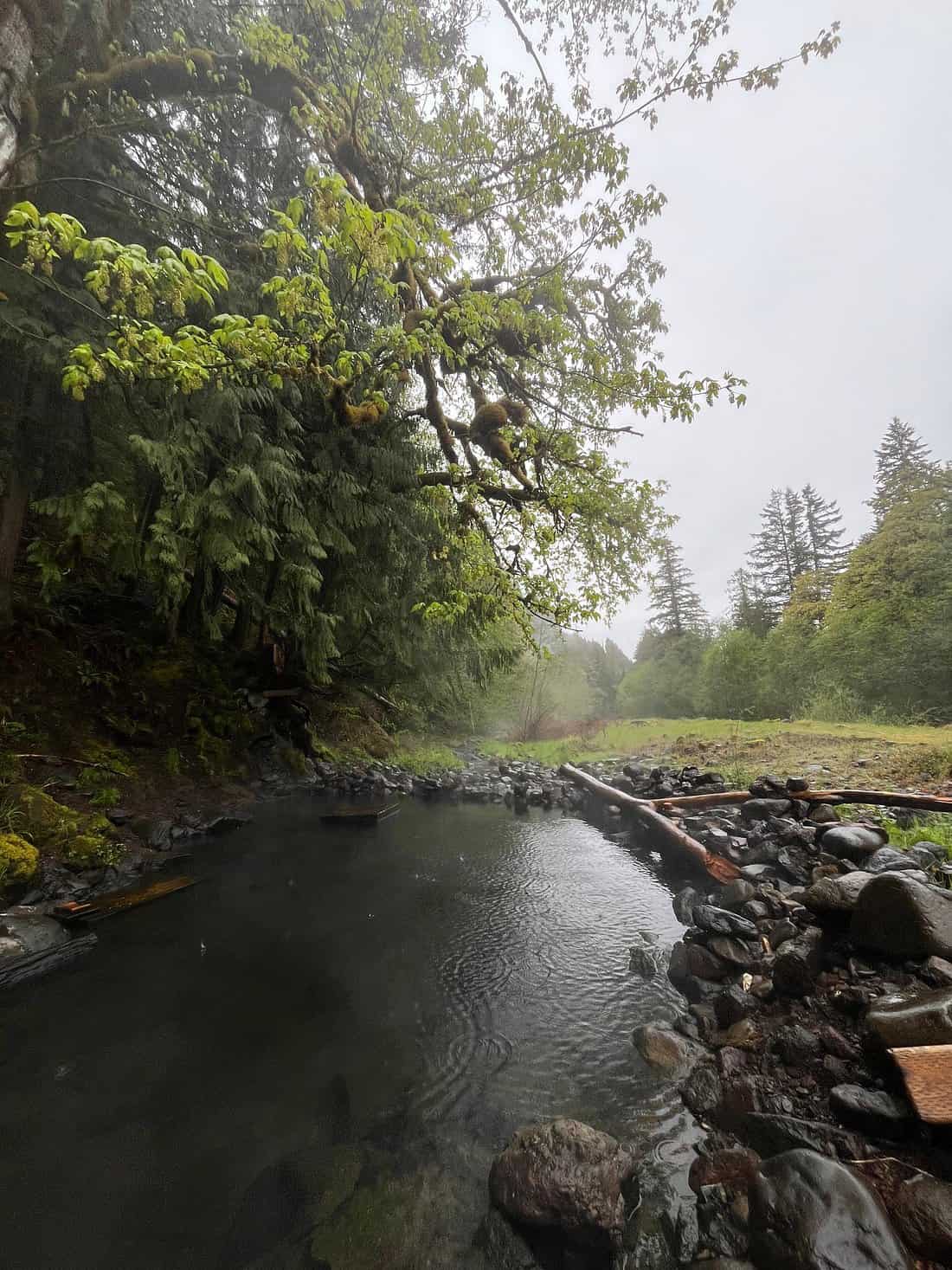
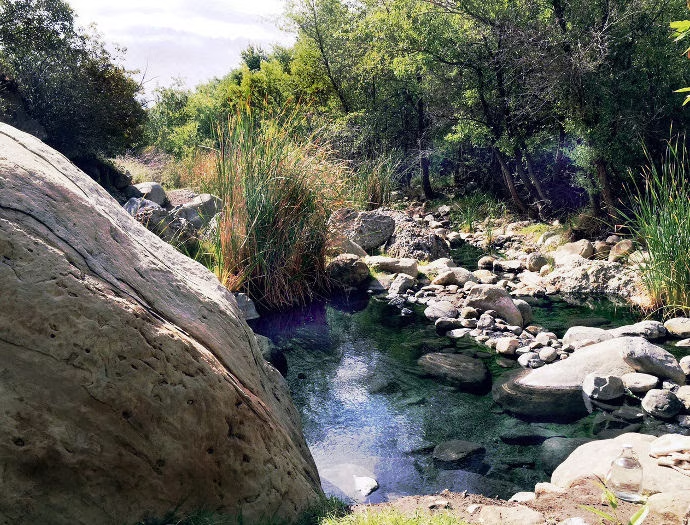
Deer Creek Hot Springs, Oregon, also known as Bigelow Hot Springs, is a free, undeveloped geothermal pool on the northern bank of the McKenzie River in the Willamette National Forest, approximately 60 miles east of Eugene near the community of Blue River. The pool is partially enclosed in a fern-lined grotto where the spring source emerges from the rock, making it one of the more distinctive natural hot springs in Oregon for its intimate scale and forested riverside setting.
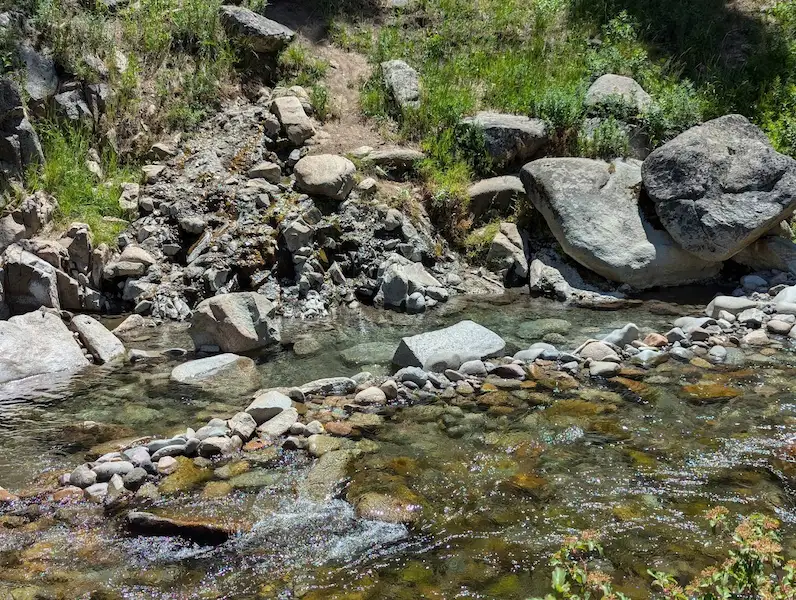
The pool measures roughly 8 by 12 feet, is 1 to 2 feet deep, and has a coarse sand and gravel bottom. A ring of rocks sections the pool from the river, allowing geothermal water to collect while some river mixing occurs. In summer and fall, when the McKenzie runs low, the pool holds temperatures between 90 and 104 degrees Fahrenheit. In winter and spring, cold river flooding makes the pool too cool to use. Summer and early fall are the most reliable seasons.
The site is open sunrise to sunset with no entry or parking fee. No facilities are present. Clothing is optional. Dogs are permitted on leash but not in the pool. Paradise Campground is nearby along Highway 126 for those wanting to stay overnight.
Location & Access
Getting to Deer Creek Hot Springs
Deer Creek Hot Springs is reached by taking Highway 126 east from Eugene for approximately 53 to 60 miles along the McKenzie River. Shortly after passing Belknap Springs, turn left onto Forest Road 2654. Cross the bridge over the McKenzie River and park on the right side just past the bridge. From the parking area, follow the trail along the west side of the bridge downstream along the riverbank for approximately 200 to 340 feet to reach the pool. The pool is not visible from the road but is easily found by following the bank trail downstream. The nearby Belknap Hot Springs resort on the opposite side of Highway 126 is a useful landmark when locating the NF-2654 turnoff.
For those looking for natural hot springs near Eugene, Deer Creek is one of the closest free primitive soaks in the Cascades, reachable in just over an hour from the city. The drive follows the McKenzie River through the Willamette National Forest and is scenic year-round.
There is no signage at the spring. The parking pullout on NF-2654 holds a handful of vehicles and no permit or fee is required. The site is open sunrise to sunset. No camping is permitted at the spring, but Paradise Campground and Olallie Campground are both nearby along Highway 126 with basic facilities and small nightly fees.
Suitability & Accessibility
Who Deer Creek Hot Springs Is Suitable For
Deer Creek Hot Springs suits visitors looking for a free, low-key primitive soak in a scenic forested river setting. The short walk from the parking area makes it accessible for most adults, and the pool's modest size creates a naturally intimate experience. Its 2 to 4-person capacity works best for small groups or solo visitors rather than large parties. The pool is clothing-optional and attracts a mix of local regulars and travelers passing through on the McKenzie River corridor.
The spring is not reliable in winter or early spring due to river flooding. Visitors planning a trip specifically to soak should check conditions before making the drive from Eugene, as a high-water event can render the pool unusable without warning. For those seeking free hot springs in Oregon that are accessible year-round, this site requires seasonal awareness rather than being a guaranteed soak on any given date.
The site is not wheelchair accessible. The trail from the parking area is an informal riverbank path with uneven, sometimes muddy terrain. No facilities of any kind are available at the spring. Visitors should carry everything they need including drinking water, as there are no services at or near the site. Dogs are welcome on leash in the area but not in the pool. The McKenzie River flows immediately alongside the pool and should not be waded casually due to its swift current and cold temperature year-round.
Safety & Etiquette
Safety at Deer Creek Hot Springs
Deer Creek Hot Springs is generally safe for soaking in summer and fall, though the pool temperature varies with river conditions and visitors should test the water before entering. In peak summer the pool can reach 104 degrees Fahrenheit near the source, so moving toward cooler outer areas or allowing some river mixing is useful if the water is too hot. The pool is 1 to 2 feet deep and the coarse sand and rock bottom can be slippery.
The McKenzie River flows immediately alongside the pool and poses a hazard independent of the spring. The river is swift and cold year-round and should not be waded or swum casually. The riverbank trail is uneven and can be slick near the water, particularly in wet conditions. Appropriate footwear for rocky, wet terrain is worth bringing.
In winter and spring the spring is typically unusable as the river floods the soaking area. Attempting to soak during high water is dangerous due to the speed and temperature of the river and the instability of the bank. Checking current McKenzie River levels before a visit outside of summer is strongly advisable.
The site has no cell service, no facilities, and no emergency services nearby. The nearest services are in McKenzie Bridge or Blue River along Highway 126. No camping is permitted at the spring itself. Pack out all trash and do not use soap or shampoo in the pool. Dogs are allowed on leash in the surrounding area but not in the pool. The site closes at sunset and overnight access is not permitted.