Terme Libere di Bagno Vignoni, Italy
Free thermal park in UNESCO Val d'Orcia below Bagno Vignoni with thermal channels and turquoise pools. Pool bathing officially prohibited since 2010.
Parco Naturale dei Mulini, Bagno Vignoni, 53027 San Quirico d'Orcia (SI), Italy
Siena
IT
43.027673
11.618757
Wild / Natural
Free
Short hike
Be mindful
Swimsuit required
true
false
Europe
terme-libere-di-bagno-vignoni-italy
What are the Terme Libere di Bagno Vignoni?
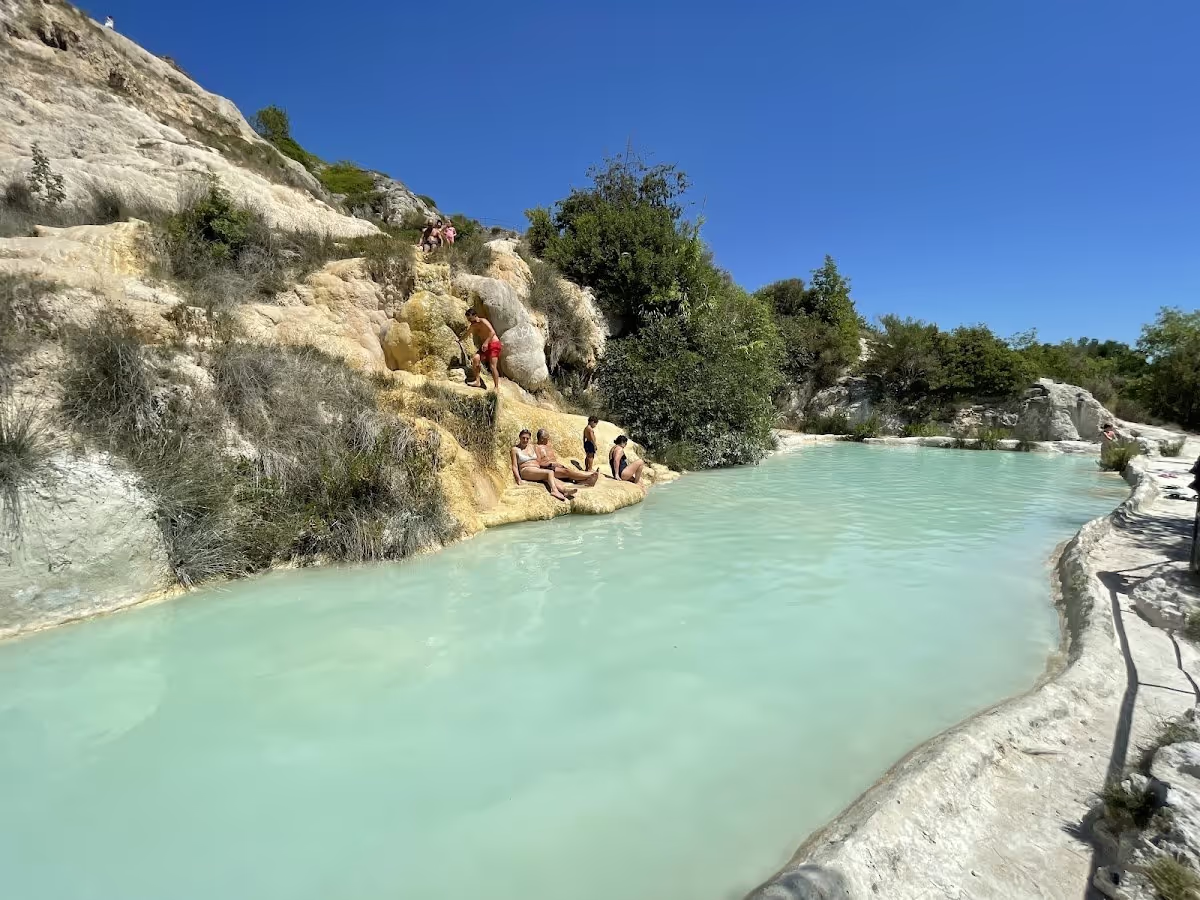
Terme Libere di Bagno Vignoni refers to the free thermal spring access at the Parco Naturale dei Mulini, a protected natural area below the village of Bagno Vignoni in the Val d'Orcia, municipality of San Quirico d'Orcia. The park contains thermal channels, ancient mill ruins, small waterfalls, and turquoise lower pools fed by the same sulphate-bicarbonate spring that fills the village's famous Piazza delle Sorgenti. The park is free to enter. However, full immersion bathing in the lower pools has been prohibited since a 2010 mayoral ordinance. Foot-soaking in the gorelli channels along the path is permitted.
Can you still bathe at Bagno Vignoni for free?
The situation is complicated. The Parco dei Mulini park is free to enter and the gorelli thermal channels are open for foot-soaking. However, a 2010 mayoral ordinance prohibits full immersion bathing in the lower pools, with fines of 25 to 500 euros for those caught. Signage is minimal and enforcement is inconsistent, which is why many visitor accounts describe bathing freely. If you want full thermal bathing for free in southern Tuscany without legal risk, Bagni San Filippo approximately 30 kilometres away offers genuinely free and unrestricted outdoor thermal pools.
What is the Piazza delle Sorgenti at Bagno Vignoni?
The Piazza delle Sorgenti is the remarkable main square of Bagno Vignoni, built directly over the original thermal spring. Instead of a typical cobblestone piazza, it contains a large Renaissance-era rectangular basin 49 metres long and 29 metres wide, filled with sulphate-bicarbonate spring water at approximately 52 degrees Celsius, the hottest thermal spring in Tuscany. Bathing in the piazza basin is prohibited for reasons of public decorum and heritage preservation. Visitors can admire the steaming water from around the edge, especially at sunset when the vapour rises against the village buildings.
Who are the famous historical visitors to Bagno Vignoni?
Bagno Vignoni has drawn notable visitors for centuries. Pope Pius II visited in the 15th century and is associated with the Renaissance development of the piazza basin. Lorenzo de Medici came to take the therapeutic waters. Saint Catherine of Siena is said to have visited the spring to practise asceticism in the very hot water. The village's position on the Via Francigena meant medieval pilgrims routinely passed through, and the spring is documented from Etruscan and Roman times. The Soviet film director Andrei Tarkovsky filmed key scenes of his 1983 film Nostalghia in and around Bagno Vignoni, and the village appears in several other Italian films.
What is the Parco dei Mulini at Bagno Vignoni?
2026-09-21
Updated September 21, 2026
Terme Libere di Bagno Vignoni, Italy
Free thermal park in UNESCO Val d'Orcia below Bagno Vignoni with thermal channels and turquoise pools. Pool bathing officially prohibited since 2010.
What to Wear
Swimsuit required
Address
Parco Naturale dei Mulini, Bagno Vignoni, 53027 San Quirico d'Orcia (SI), Italy
Find a place to stay
Compare prices near this exact spot across Booking.com, Expedia and more.
See nearby stays →
Overview
About Terme Libere di Bagno Vignoni
Terme Libere di Bagno Vignoni, Italy is the name given to the free thermal spring access at the Parco Naturale dei Mulini below Bagno Vignoni village, in the municipality of San Quirico d'Orcia in southern Tuscany. Bagno Vignoni sits in the Val d'Orcia, a UNESCO World Heritage landscape, and its central Piazza delle Sorgenti is built over the thermal source: a 49-by-29-metre Renaissance basin at around 52 degrees Celsius. Bathing in the piazza is prohibited; the Parco dei Mulini below is where free thermal access was historically available.
The park owes its name to four ancient mills, built from the 12th century, which exploited the constant thermal spring flow to grind grain until the 1950s. They are carved into the limestone cliff below the village. Today the park is a protected natural area traversed by a marked path descending past mill ruins, gorelli thermal channels, and small waterfalls to the lower turquoise pools.
The Via Francigena passes directly through Bagno Vignoni. Pope Pius II, Lorenzo de Medici, and Saint Catherine of Siena all visited. The Soviet director Andrei Tarkovsky filmed key scenes of Nostalghia here in 1983.
Location & Access
Getting to Terme Libere di Bagno Vignoni
Terme Libere di Bagno Vignoni is reached by car from the Via Cassia (SR2). From San Quirico d'Orcia, turn off the SR2 and follow the road signposted for Bagno Vignoni, approximately 4 kilometres. Parking at the village entrance is available (mostly paid, with a few disc-zone spaces); on busy days it fills quickly. Alternatively, an unpaved track on the left side of the approach road, before the village, leads down towards the Parco dei Mulini directly. From the village parking, the park path descends the cliff face below the piazza and takes around 5-10 minutes to walk down to the lower pools.
No direct public transport serves Bagno Vignoni. The nearest train station is Chiusi-Chianciano Terme, approximately 30 kilometres away, served by regional and intercity trains. From the station, a taxi or hired car is the most practical option. From Siena by car, take the SR2 south and follow signs for San Quirico d'Orcia; the journey takes approximately 45 minutes. From Florence, exit the A1 at Valdichiana-Bettolle-Sinalunga and follow the SS326 towards Pienza, then signs for San Quirico d'Orcia.
Bagno Vignoni sits along the Via Francigena and the park path forms part of the local walking network. A 12-kilometre loop (4 hours, red-white markers) starts at the Parco dei Mulini, follows the Orcia river to the Castello della Ripa, and returns via the Via Francigena. Visitors seeking free hot springs in Tuscany often combine Bagno Vignoni with Bagni San Filippo nearby.
Suitability & Accessibility
Who Terme Libere di Bagno Vignoni Suits
Terme Libere di Bagno Vignoni suits adults and families wanting a free, open-air thermal experience in the Val d'Orcia with historical depth. The park is free to enter, open year-round, and the gorelli thermal channels are used for foot-soaking along the path. Children enjoy the shallow thermal streams, and the park walk is worthwhile even without bathing.
Bathing note: full immersion in the lower pools has been officially prohibited since a 2010 mayoral ordinance, with fines of 25-500 euros. Signage is minimal and many visitors ignore the ban, but pool bathing is formally illegal. Foot-soaking in the gorelli is permitted. Those wanting legal full immersion nearby should try Bagni San Filippo, or a paid hotel spa in the village.
Wheelchair access is not possible. The path descends a steep limestone escarpment on uneven rock and earth. The gorelli and Piazza delle Sorgenti at village level can be enjoyed without descending, but the free hot springs in Tuscany at the cliff base require confident footing and sturdy shoes.
Water temperature at the lower pools is much cooler than the 52-degree source, typically around 25 degrees Celsius due to heat loss along the open channels. Winter bathing can be uncomfortable; summer and autumn are generally the better seasons for getting the most from this site.
Safety & Etiquette
Terme Libere di Bagno Vignoni Safety Tips
Terme Libere di Bagno Vignoni has several specific safety and legal considerations that visitors must understand before arriving. Full immersion bathing in the lower pools of the Parco dei Mulini is officially prohibited by a 2010 mayoral ordinance, with fines of 25 to 500 euros. The prohibition exists for reasons of public decorum and site preservation. Enforcement is irregular and many visitors disregard it, but the risk of a fine is real. Foot-soaking in the gorelli channels is permitted. Bathing in the Piazza delle Sorgenti at the village centre is also prohibited.
The gorelli channels and the upper park area carry water that is far hotter closer to the source. Do not place hands or feet in the channels near the top of the escarpment without first checking temperature carefully. The water cools progressively as it descends; gorelli at mid-path are typically comfortable for foot-soaking, but upper channels near the piazza can be very hot. Keep children away from hot inflows at all times.
The path to the lower pools is steep and surfaces are often wet from thermal runoff. Sandals and flip-flops are not suitable; use both hands on the steeper sections. The return uphill is tiring in hot weather.
No facilities exist in the park: no toilets, changing rooms, or staff. Bring water and sun protection; carry litter out. Parking near the village fills quickly on summer weekends; arriving before 10am helps. The terme libere here reward careful, respectful visitors willing to observe the site's rules.
Frequently Asked Questions
1
What are the Terme Libere di Bagno Vignoni?
Terme Libere di Bagno Vignoni refers to the free thermal spring access at the Parco Naturale dei Mulini, a protected natural area below the village of Bagno Vignoni in the Val d'Orcia, municipality of San Quirico d'Orcia. The park contains thermal channels, ancient mill ruins, small waterfalls, and turquoise lower pools fed by the same sulphate-bicarbonate spring that fills the village's famous Piazza delle Sorgenti. The park is free to enter. However, full immersion bathing in the lower pools has been prohibited since a 2010 mayoral ordinance. Foot-soaking in the gorelli channels along the path is permitted.
2
Can you still bathe at Bagno Vignoni for free?
The situation is complicated. The Parco dei Mulini park is free to enter and the gorelli thermal channels are open for foot-soaking. However, a 2010 mayoral ordinance prohibits full immersion bathing in the lower pools, with fines of 25 to 500 euros for those caught. Signage is minimal and enforcement is inconsistent, which is why many visitor accounts describe bathing freely. If you want full thermal bathing for free in southern Tuscany without legal risk, Bagni San Filippo approximately 30 kilometres away offers genuinely free and unrestricted outdoor thermal pools.
3
What is the Piazza delle Sorgenti at Bagno Vignoni?
The Piazza delle Sorgenti is the remarkable main square of Bagno Vignoni, built directly over the original thermal spring. Instead of a typical cobblestone piazza, it contains a large Renaissance-era rectangular basin 49 metres long and 29 metres wide, filled with sulphate-bicarbonate spring water at approximately 52 degrees Celsius, the hottest thermal spring in Tuscany. Bathing in the piazza basin is prohibited for reasons of public decorum and heritage preservation. Visitors can admire the steaming water from around the edge, especially at sunset when the vapour rises against the village buildings.
4
Who are the famous historical visitors to Bagno Vignoni?
Bagno Vignoni has drawn notable visitors for centuries. Pope Pius II visited in the 15th century and is associated with the Renaissance development of the piazza basin. Lorenzo de Medici came to take the therapeutic waters. Saint Catherine of Siena is said to have visited the spring to practise asceticism in the very hot water. The village's position on the Via Francigena meant medieval pilgrims routinely passed through, and the spring is documented from Etruscan and Roman times. The Soviet film director Andrei Tarkovsky filmed key scenes of his 1983 film Nostalghia in and around Bagno Vignoni, and the village appears in several other Italian films.
5
What is the Parco dei Mulini at Bagno Vignoni?
The Parco Naturale dei Mulini is a protected natural area below the village of Bagno Vignoni, established as a park in 1997 by the municipality of San Quirico d'Orcia. Its name comes from four ancient grain mills built along the limestone escarpment from the 12th century, exploiting the constant year-round flow of the thermal spring to power their millstones. The mills operated until the 1950s and are now restored for visitors to view. The park path descends past the mill ruins, thermal channels, and small waterfalls to the lower pools. Entry is free and the path is well-marked.
Gallery
No pictures available for this hot spring.
Location
Address:
Parco Naturale dei Mulini, Bagno Vignoni, 53027 San Quirico d'Orcia (SI), Italy
Find a place to stay
Compare prices near this exact spot across Booking.com, Expedia and more.
See nearby stays →
43.027673
11.618757
Terme Libere di Bagno Vignoni, Italy
Text LinkParco Naturale dei Mulini, Bagno Vignoni, 53027 San Quirico d'Orcia (SI), Italy
More hot springs in Italy
Some accommodation links on this site are affiliate links. If you book through them, we may earn a small commission at no additional cost to you. This helps keep hotspringsguides.com free to use.