
Quick FactsOverview
About Cleopatra's Pool at Hierapolis
Cleopatra's Pool at Hierapolis, Turkey is a natural thermal pool located within the ancient Greco-Roman city of Hierapolis at Pamukkale, a UNESCO World Heritage Site in Denizli Province. Also known as the Antique Pool or Pamukkale Antique Pool, the pool is fed by a geothermal spring that maintains a constant temperature of 36 degrees Celsius (97 degrees Fahrenheit) year round. The water is rich in calcium, magnesium, bicarbonate, and carbon dioxide, which creates a fizzing "champagne" sensation on the skin. It is one of the most famous termal bathing sites in Turkey.
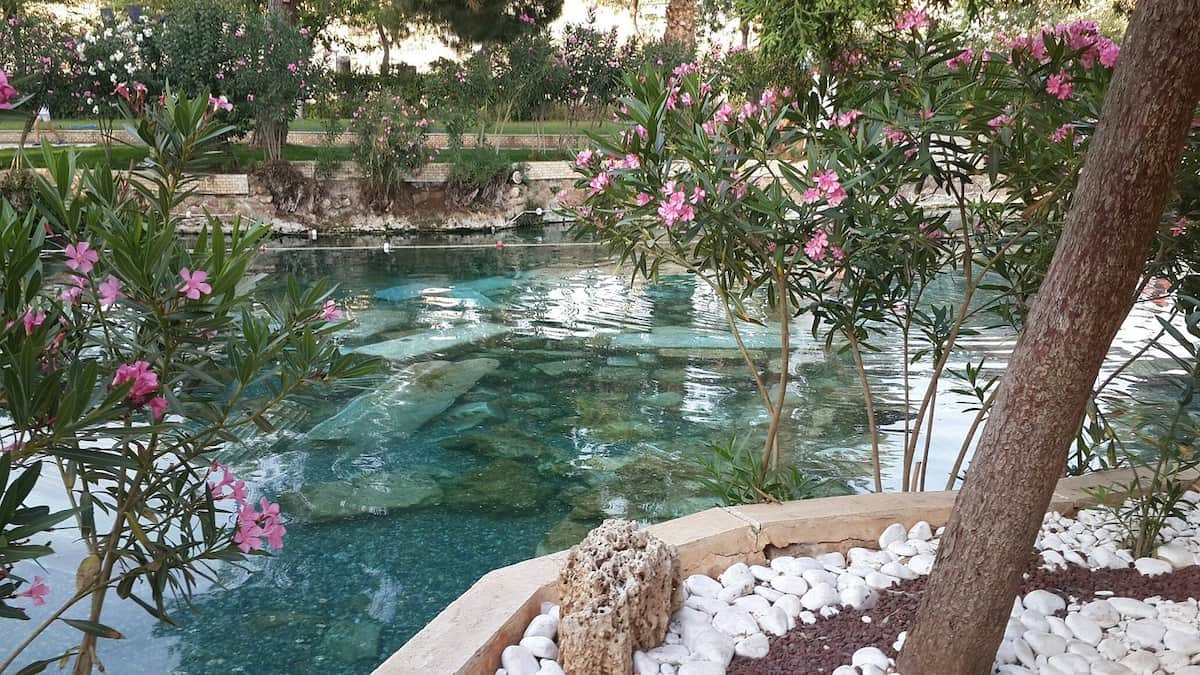
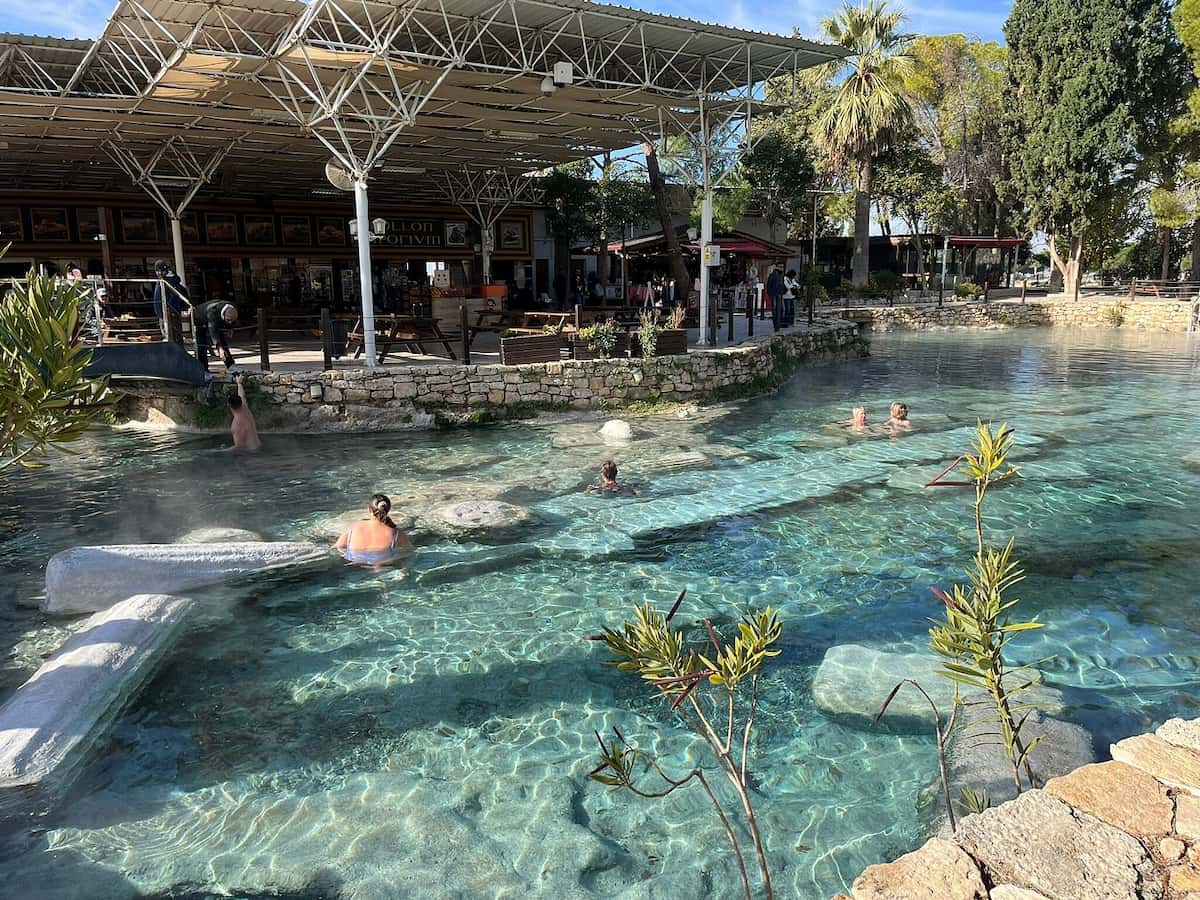
The pool takes its name from a legend that it was a gift from the Roman general Mark Antony to the Egyptian queen Cleopatra, though historians consider this connection unverified. What is certain is that Hierapolis was founded in the 2nd century BC as a spa city, and the Romans built thermal facilities directly over the geothermal springs. An earthquake, likely in the 7th century, collapsed surrounding structures and toppled marble Doric columns into the pool, where they remain today. Visitors swim among these submerged ruins, which give the pool its distinctive character. The pool sits adjacent to the famous Pamukkale travertine terraces, white calcium carbonate formations that cascade down the hillside and are visible from kilometres away.
Location & Access
Getting to Cleopatra's Pool
Cleopatra's Pool is located inside the Hierapolis archaeological site at Pamukkale, in Denizli Province in southwestern Turkey. The pool is reached by entering the Hierapolis site through either the North Gate or the South Gate and walking to the pool area within the ancient city. No hiking beyond the walk through the site is required, and the paths are paved and signed.
Directions to Cleopatra's Pool
Pamukkale is located approximately 20 kilometres north of the city of Denizli. Denizli Cardak Airport receives domestic flights from Istanbul, and Denizli is also accessible by bus from major Turkish cities. From Denizli, minibuses and taxis run to Pamukkale village. The Hierapolis site has two main entrances: the North Gate (open 8 AM to 9 PM) and the South Gate (open 6 AM to 11 PM). The pool itself operates daily from 8 AM to 8 PM, with last entry one hour before closing. Admission requires the general Hierapolis-Pamukkale site ticket plus a separate thermal pool swimming fee. For visitors looking for hot springs near Pamukkale, Cleopatra's Pool is the primary termal bathing attraction within the site. The nearby Pamukkale travertine terraces, which are included with the site ticket, offer a different water experience where visitors can wade in the shallow calcium-rich pools that cascade down the hillside.
Suitability & Accessibility
Who Should Visit Cleopatra's Pool
Cleopatra's Pool suits visitors who want to combine a thermal bathing experience with a visit to one of the most important archaeological sites in Turkey. The pool appeals to history enthusiasts, wellness travelers, and anyone drawn to the idea of swimming among ancient Roman ruins in naturally heated mineral water. Families with children are welcome, with reduced admission rates for children ages 6 to 12 and free entry for children under 6. The pool is shallow enough for wading and deep enough for floating, making it suitable for a range of ages and swimming abilities.
Accessibility at Cleopatra's Pool
The pool area includes modern changing rooms, lockers, and a restaurant. The path from the site entrance to the pool is paved, though some sections of the broader Hierapolis site have uneven terrain. Visitors with specific mobility needs should assess conditions at the pool entrance, as the entry into the water involves steps over submerged ruins. For those seeking family hot springs near Pamukkale, the Antique Pool is the most iconic destination, though it can be very crowded during peak hours in summer. Arriving early in the morning or late in the afternoon helps avoid the largest crowds. The combination of natural thermal water, ancient architecture, and the adjacent travertine terraces makes this one of the most unique termal bathing experiences in the world.
Safety & Etiquette
Cleopatra's Pool at Hierapolis Safety Tips
Cleopatra's Pool is generally safe and operates as a managed facility within the Hierapolis archaeological site, with staff present during operating hours. The water temperature is a constant 36 degrees Celsius (97 degrees Fahrenheit), which is warm but not hot enough to pose a risk of overheating for most visitors. However, the pool bottom is covered with ancient marble columns and stone fragments, which can be uneven and slippery underfoot. Visitors should enter carefully and wear water shoes if available. The pool can become very crowded during midday in summer, which increases the chance of bumping into other swimmers or submerged stones.
Visitor Etiquette at Cleopatra's Pool
Swimsuits are required. Photography is allowed around and in the pool. Visitors should not stand on, sit on, or attempt to move the submerged ancient columns and marble fragments, as they are protected archaeological material within a UNESCO World Heritage Site. Food and drinks should not be brought into the pool area, though a restaurant operates inside the enclosure. Lockers are available for valuables. Towels are not provided but can be rented or purchased on site, so bringing your own is recommended. There is no strict time limit, though most visitors spend one to two hours soaking. Among the hot springs in Turkey, Cleopatra's Pool stands in a category of its own, offering a bathing experience that is as much about history and archaeology as it is about the therapeutic properties of the mineral water itself.