Quick FactsOverview
About Dewar Creek Hot Springs
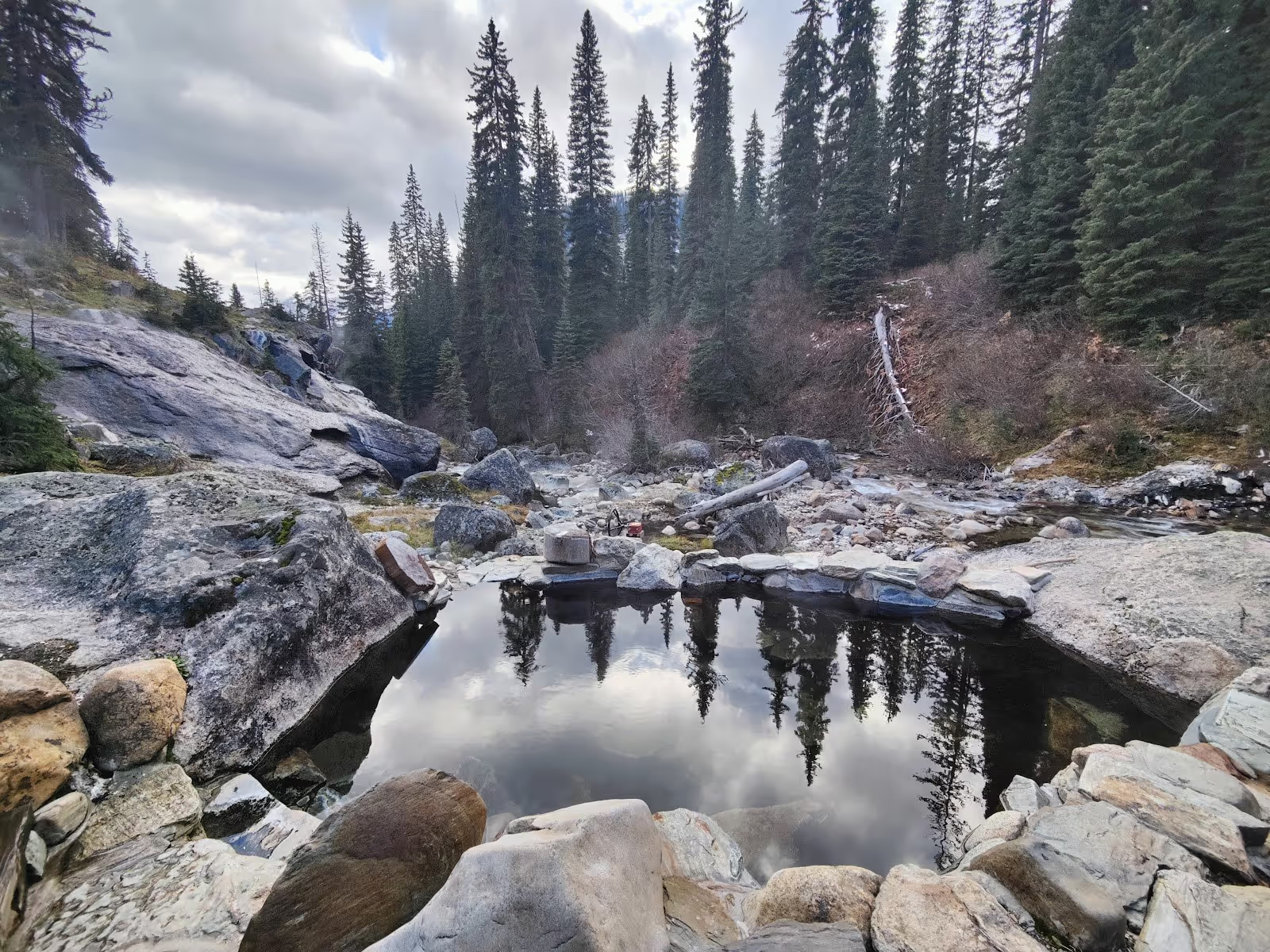
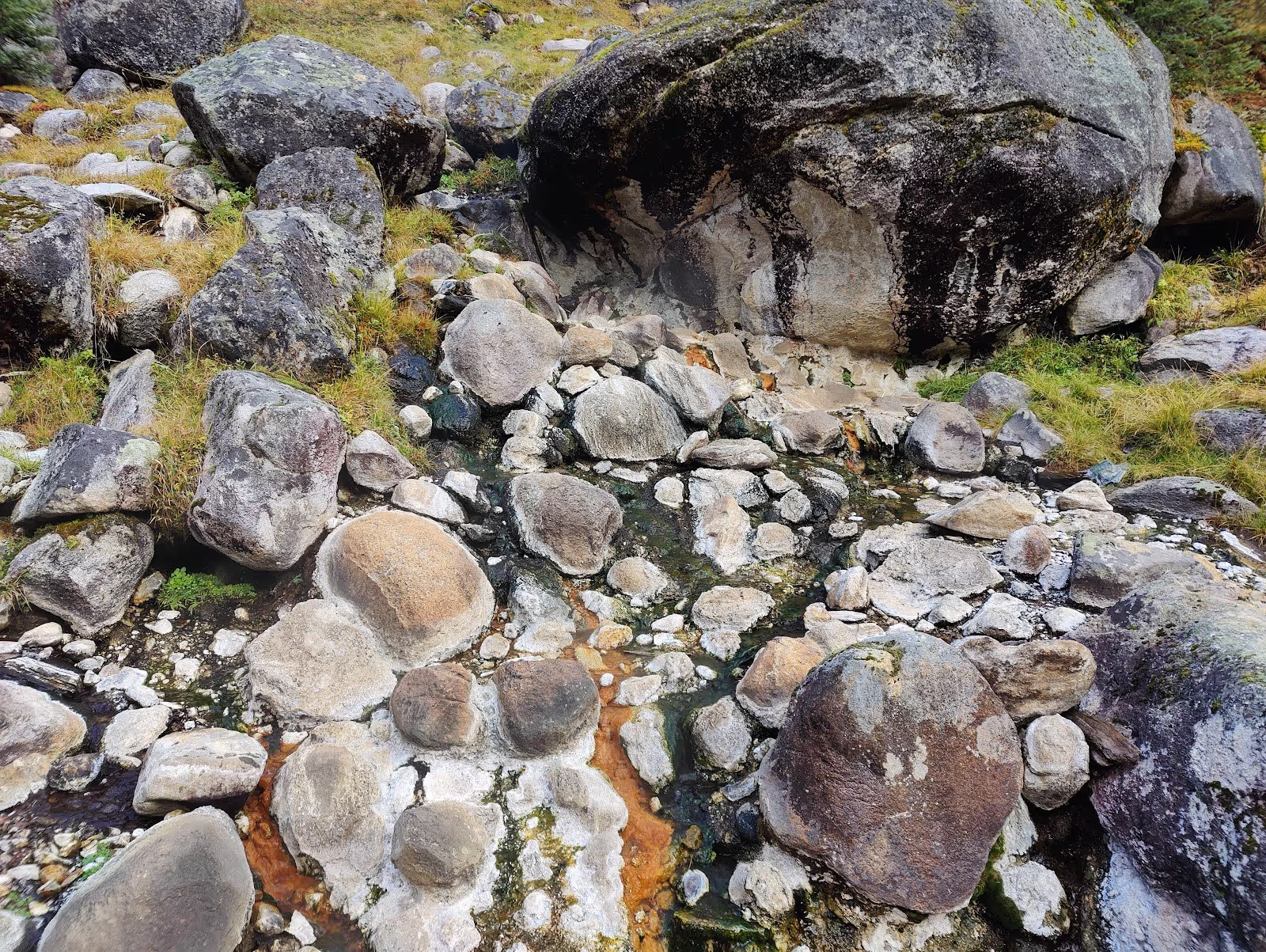
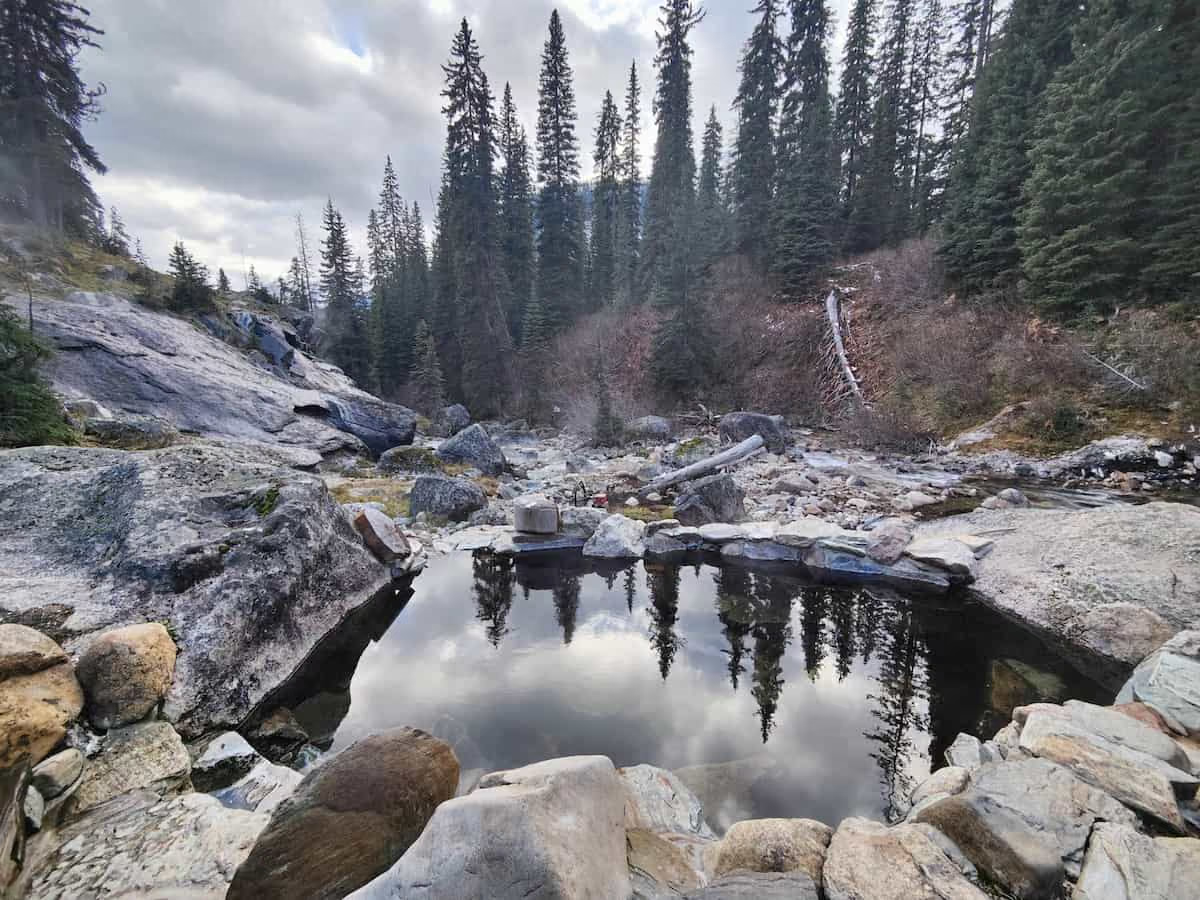
Dewar Creek Hot Springs, Canada is a natural geothermal feature located in Purcell Wilderness Conservancy Provincial Park in the East Kootenay region of British Columbia, accessed from the St. Mary's Forest Service Road near Kimberley. Water flowing through rock fractures is heated far underground and rises to the surface carrying dissolved minerals including calcium, magnesium, and sulphur compounds. At the surface vents, water temperature exceeds 80 degrees Celsius, well above the threshold for safe bathing contact.
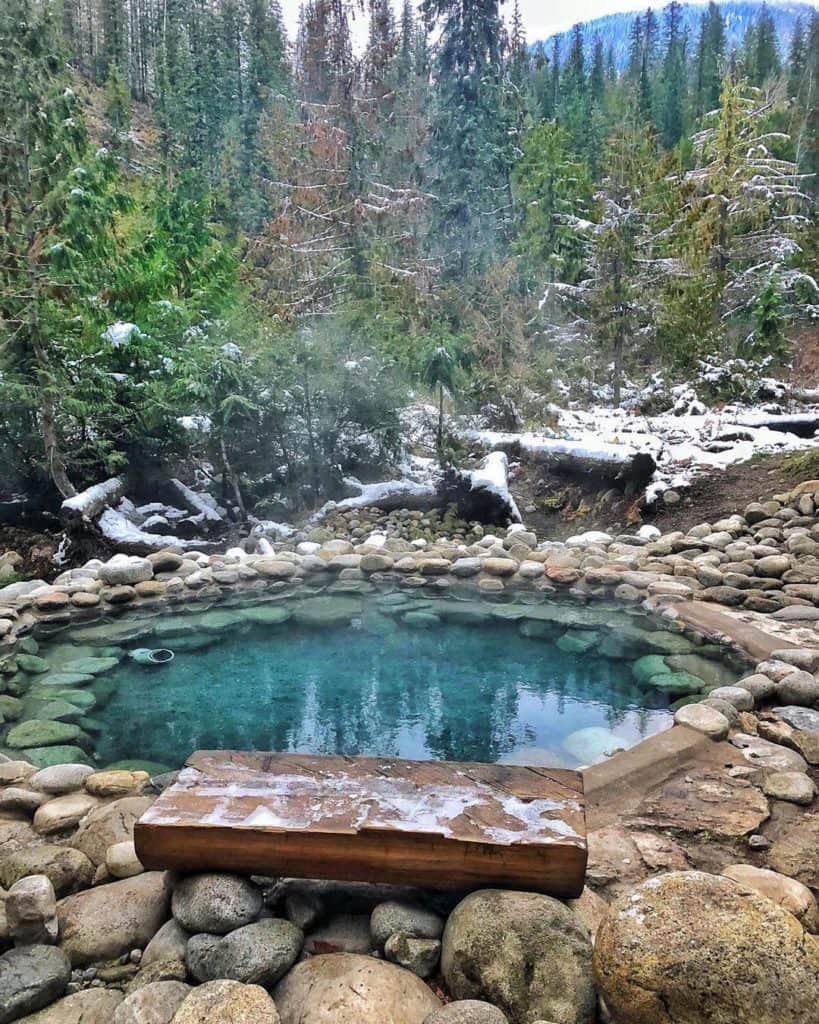
It is important to understand what kind of hot spring this is before visiting. BC Parks, the managing authority, states clearly that the vent water is too hot for bathing and has actively removed most constructed soaking pools. The intrinsic value of the site is as a wildlife mineral lick, not as a recreational facility. Five species of ungulates - elk, goat, white-tailed deer, mule deer, and moose - depend on the mineral-rich water as a nutrient source during the birthing season from May through July. Predators including grizzly bears and wolves are present in the area as a direct consequence of this wildlife activity.
For experienced hikers and naturalists interested in natural hot springs in Canada, Dewar Creek is a remarkable destination because of its remoteness and ecological significance. A small number of visitors still find cool enough water at the creek edge to soak briefly, but this cannot be counted on and the journey must be planned entirely on the assumption that soaking will not be available. The wilderness, the scenery of the Purcell Mountains, and the ecological richness of the surrounding conservancy are the real reasons to make the trip.
Location & Access
Getting to Dewar Creek Hot Springs
Dewar Creek Hot Springs is reached by driving west on the St. Mary's Forest Service Road from near Kimberley, British Columbia, to the junction with the Dewar Creek road, then following the Dewar Creek road to the end of the driveable track. BC Parks notes the final four kilometres are very rough and high-clearance vehicles are recommended. The total forestry road distance from the main highway is substantial, and visitors should treat road conditions as variable and carry a spare tire.
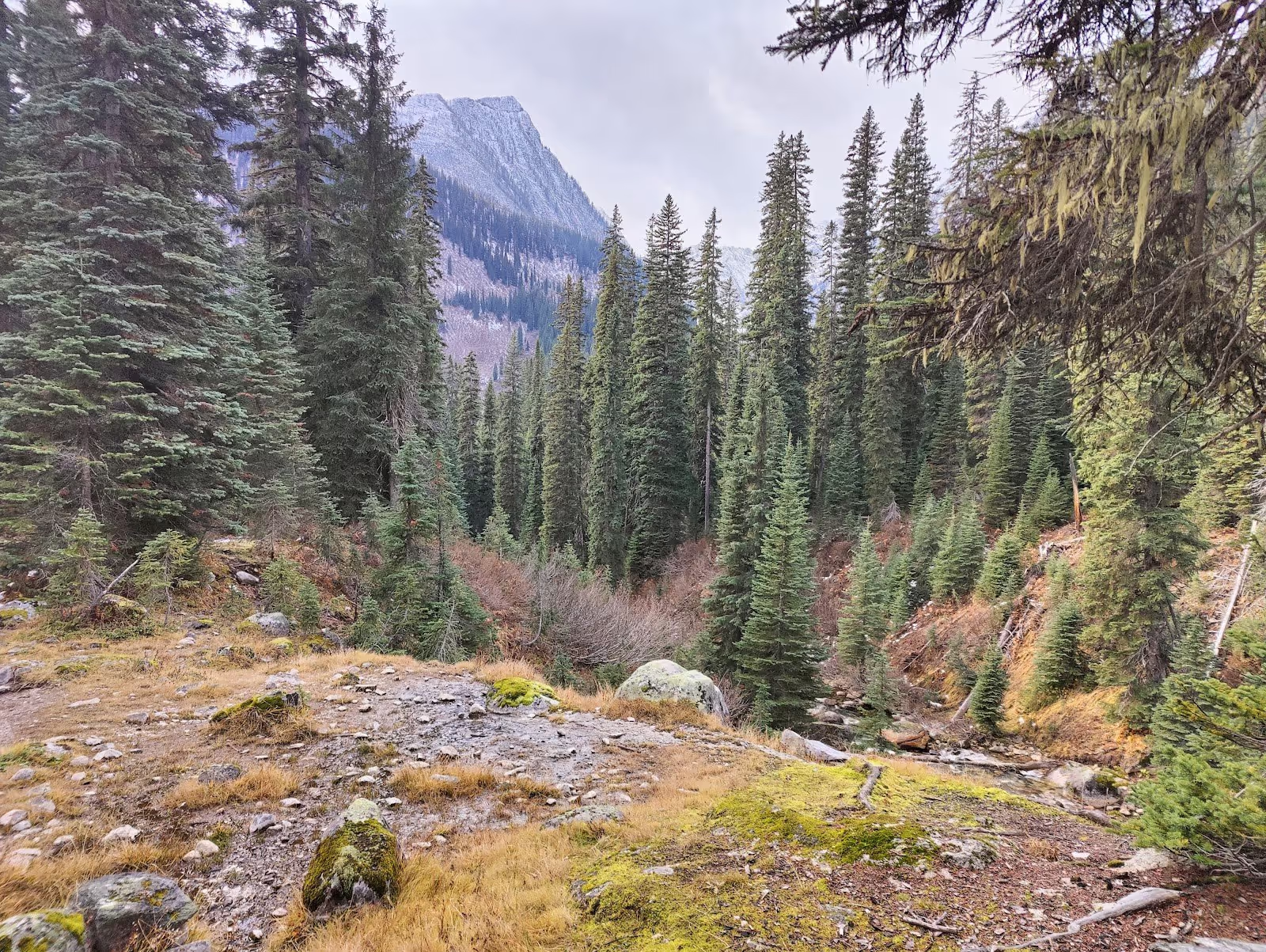
From the end of the road, a trail registry box marks the start of the hiking route. The trail follows an old outfitting track alongside Dewar Creek through forest and subalpine terrain, covering approximately 9 km one way with an elevation gain of around 225 metres. BC Parks describes the approach as taking roughly 3 to 4 hours depending on conditions, creek crossings, and individual pace. The trail is rough and frequently muddy, with creek crossings that can be hazardous in high water. BC Parks notes rivers may be impassable during flood season, often lasting into late July, so late summer and early fall are the most reliable windows. For those researching hot springs near Kimberley that involve genuine backcountry effort, this is the most demanding option in the region.
There are no marked trails, maintained facilities, or directional signage on the route. Visitors must be capable of navigation and route finding, and must be prepared to turn around if conditions deteriorate. A detailed topographic map, offline navigation capability, and genuine backcountry experience are all prerequisites. BC Parks states explicitly that the park is not regularly maintained and that visitors should be self-sufficient and proficient in backcountry travel practices.
Suitability & Accessibility
Who Dewar Creek Hot Springs Suits
Dewar Creek Hot Springs suits experienced backcountry hikers who are fully self-sufficient, comfortable with multi-hour approaches on rough unmaintained trails, and prepared for the real possibility that soaking will not be available on arrival. This is not a destination for casual visitors or those expecting a natural hot spring experience comparable to more accessible locations elsewhere in British Columbia.
This is the kind of destination where the label natural hot springs in Canada covers a very wide range of experiences, and Dewar Creek sits firmly at the demanding end of that spectrum. The combination of a long rough forestry road, an unmarked multi-hour trail, creek crossings that can be impassable early in the season, grizzly bear and wolverine activity, scalding vent water, and an official management stance actively discouraging bathing makes this suitable only for experienced wilderness travelers. Families with children are not a good fit. The drive is long, the trail is physically demanding and logistically complex, and the setting presents hazards that require experienced adult judgment at every stage.
Overnight visitors who can legally camp at the Bugle Basin area above the springs often report a more satisfying experience than day-trippers rushing a long approach, as they can move at a more considered pace and spend genuine time in the high country. Solo hiking to this location is a significant undertaking and should only be done with a trusted contact who knows your plans, your route, and your expected return window. Anyone visiting must carry bear spray, a complete first aid kit, emergency fire-starting supplies, and food and water for a day longer than planned.
Safety & Etiquette
Safety at Dewar Creek Hot Springs
Dewar Creek Hot Springs is a remote area with serious natural hazards, and visitors must approach it with full backcountry awareness rather than the expectations of a managed recreation site. The most immediate hazard is the spring water itself: BC Parks states that surface vent temperatures exceed 80 degrees Celsius, which causes severe burns on contact. Do not touch or enter water directly at or near the vents under any circumstances, and keep children and dogs completely away from the spring area at all times.
Wildlife is a serious and ongoing concern at this location. Grizzly bears, wolves, and wolverines are documented in the Dewar Creek drainage as part of a functioning predator-prey ecosystem supported by the mineral lick. BC Parks notes that increased human visitation has already displaced ungulates from the area during sensitive birthing periods, which in turn affects predator behaviour. Travel as a group, make regular noise to avoid surprising wildlife at close range, carry bear spray and know how to deploy it, and leave immediately if you encounter a bear or fresh signs of bear activity on the trail or at the springs.
Creek crossings present real danger in high water. The trail requires multiple crossings, and BC Parks notes rivers can be impassable until late July in high-snowpack years. If a crossing looks fast, unclear, or deeper than knee height, turn around. Wet clothing and cold water also create hypothermia risk even in summer. Pool building is not permitted. BC Parks has removed constructed structures and continues to remove new construction - do not add rocks, liners, channels, or walls to the spring area. Camp only in designated areas, specifically Bugle Basin above the springs, and avoid trampling the rare bog habitat surrounding the vents. Pack out everything you bring in and leave the site exactly as you found it.