
Quick FactsOverview
About Fish Creek Hot Springs (Iva Bell)
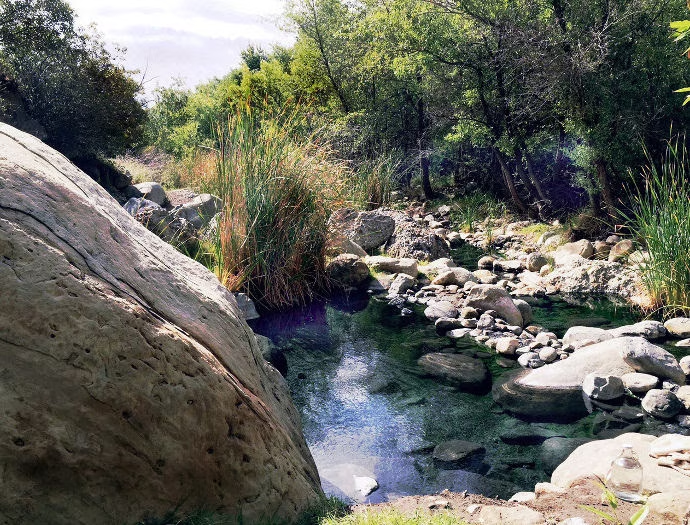
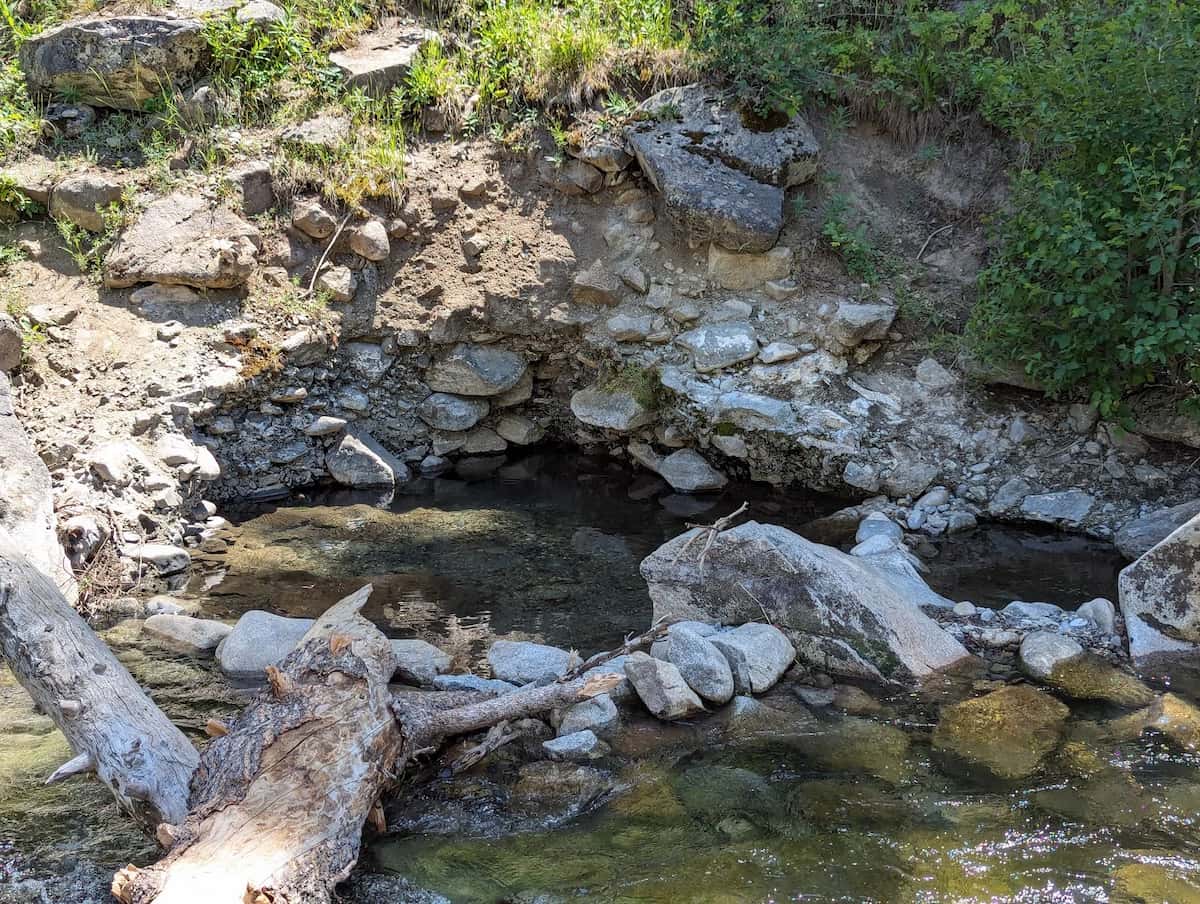
Fish Creek Hot Springs, commonly known as Iva Bell Hot Springs, California is a collection of natural geothermal soaking pools terraced on a steep hillside along Fish Creek and Sharktooth Creek in the John Muir Wilderness of the Sierra Nevada, in Fresno County. Multiple pools range in temperature from 96 to 104 degrees Fahrenheit at an elevation of 7,382 feet. Mammoth Lakes, a mountain resort town on the eastern Sierra, is the nearest community with services.
The springs sit at the southern end of the Mono-Inyo Volcanic Chain, which includes Mammoth Mountain and extends north to Mono Lake. The pools are visitor-built from rocks and sandbags at points where geothermal water surfaces on the hillside. Each pool offers a different temperature and setting, from wooded nooks to open ledges with panoramic views of granite peaks and forested canyons. Iva Bell is widely regarded as one of the finest backcountry natural hot springs in California, combining comfortable soaking temperatures with dramatic Sierra scenery.
The springs are on public land in the John Muir Wilderness, managed by the Inyo National Forest and Sierra National Forest.
Location & Access
Getting to Fish Creek Hot Springs (Iva Bell)
Fish Creek Hot Springs is reached by a 13-mile hike from the Reds Meadow trailhead via the Fish Creek Trail in the John Muir Wilderness. The trail descends from the trailhead through the Ansel Adams Wilderness along Fish Creek, past waterfalls and granite slabs, before ascending to the springs on the hillside near Sharktooth Creek. Total elevation change is approximately 2,800 to 4,000 feet depending on the route.
From Mammoth Lakes, drive to Mammoth Mountain Main Lodge and take the mandatory shuttle (summer season) to the Reds Meadow area. The Fish Creek Trail begins near the Devils Postpile and Rainbow Falls trailheads. An alternative route approaches via Duck Pass Trail through Purple Lake and the John Muir Trail.
Planning and Permits
A wilderness permit is required for overnight camping and should be reserved in advance through Recreation.gov or obtained at the Mammoth Lakes Welcome Center. For visitors seeking hot springs near Mammoth Lakes, Iva Bell is the premier backcountry soaking destination in the region. Most visitors plan a 2 to 3 day backpacking trip. The trail is typically accessible from July through September, depending on snowpack and creek crossings.
Suitability & Accessibility
Who Should Visit Fish Creek Hot Springs (Iva Bell)
Fish Creek Hot Springs suits experienced backcountry hikers and backpackers seeking one of the finest primitive hot spring soaking experiences in the Sierra Nevada. Pool temperatures of 96 to 104 degrees Fahrenheit are genuinely comfortable for extended soaking, and the hillside setting with views of granite peaks and forested canyons is among the most scenic of any California hot spring. The 13-mile approach makes this exclusively a backpacking destination.
The 25-mile round trip with thousands of feet of elevation change requires solid fitness, backcountry experience, and full backpacking gear. Creek crossings can be hazardous during high water. Mosquitoes are intense in early summer near meadows and water. Carry a bear canister (required in the John Muir Wilderness) and all food and water treatment supplies.
Accessibility at Fish Creek Hot Springs
The springs are not wheelchair accessible. The 13-mile backcountry trail is suitable only for fit, experienced hikers. No facilities exist at the springs. Those exploring natural hot springs California offers in the Mammoth area who prefer easier access should consider Hilltop Hot Spring or the commercial facilities in Mammoth Lakes, which offer thermal soaking without any hiking or backcountry preparation.
Safety & Etiquette
Fish Creek Hot Springs (Iva Bell) Safety Tips
Fish Creek Hot Springs is in remote wilderness in the Sierra Nevada, and visitors should be fully prepared for backcountry conditions. Pool temperatures of 96 to 104 degrees are comfortable for soaking, but always test before entering as temperatures can vary. The source water may be hotter than the pools.
A wilderness permit is required for overnight camping. Bear canisters are mandatory for food storage in the John Muir Wilderness. Black bears are active in the area. Mountain lions and deer also inhabit the surrounding forest. Creek crossings on the Fish Creek Trail can be dangerous during spring runoff with swift, cold water and unstable footing.
Navigation and Weather
Carry topographic maps and a GPS device. Cell service is not available in the wilderness. Afternoon thunderstorms with lightning are common from July through September. Start hiking early and plan to be below ridgelines by afternoon. Nighttime temperatures at 7,382 feet can drop below freezing even in summer. Bring warm layers and a quality sleeping bag.
Leave No Trace at Fish Creek Hot Springs
Pack out all trash and waste. Camp at least 100 feet from water and the hot spring pools. Do not build new fire rings. Minimize foot traffic through the grassy meadow areas near the springs to reduce erosion and impact on the fragile alpine ecosystem. Wildfire smoke from regional fires can affect air quality in the Sierra backcountry during late summer. Check current fire and air quality conditions with the Inyo National Forest before departing for your trip.