%252C%2520Italy%25202.avif)
Quick FactsOverview
About Fosso Bianco
Fosso Bianco, Italy, also known as Bagni San Filippo, is a free natural thermal spring in a pine and oak forest near the village of Bagni San Filippo in Val d'Orcia, Tuscany. The thermal water emerges at approximately 48 degrees Celsius from the slopes of Monte Amiata, a dormant volcano, and flows downstream over centuries-old calcium carbonate deposits that have built up into terraced formations, cascades, and soaking pools. The spring stream and its pools form the Fosso Bianco, or White Gully, named for the pale mineral deposits that line the channel. Water temperature drops progressively downstream, with the hottest pools near the source and cooler pools further along.
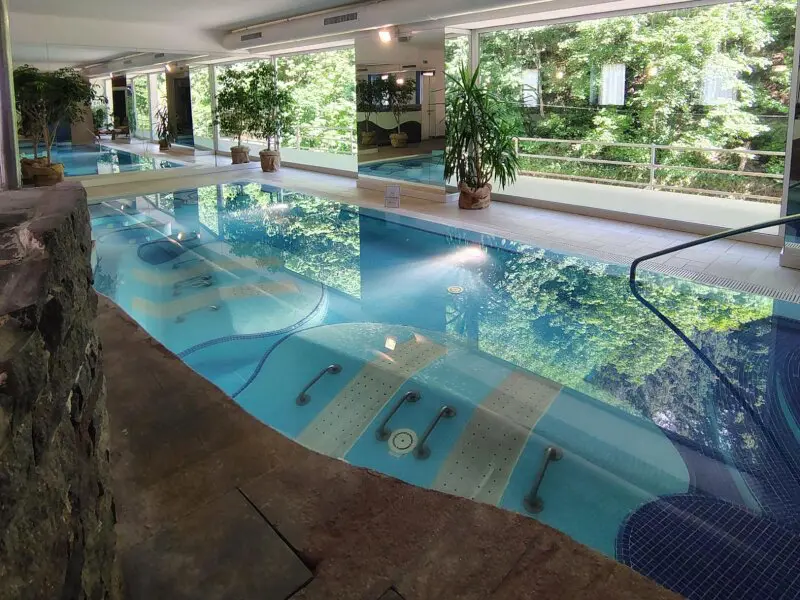
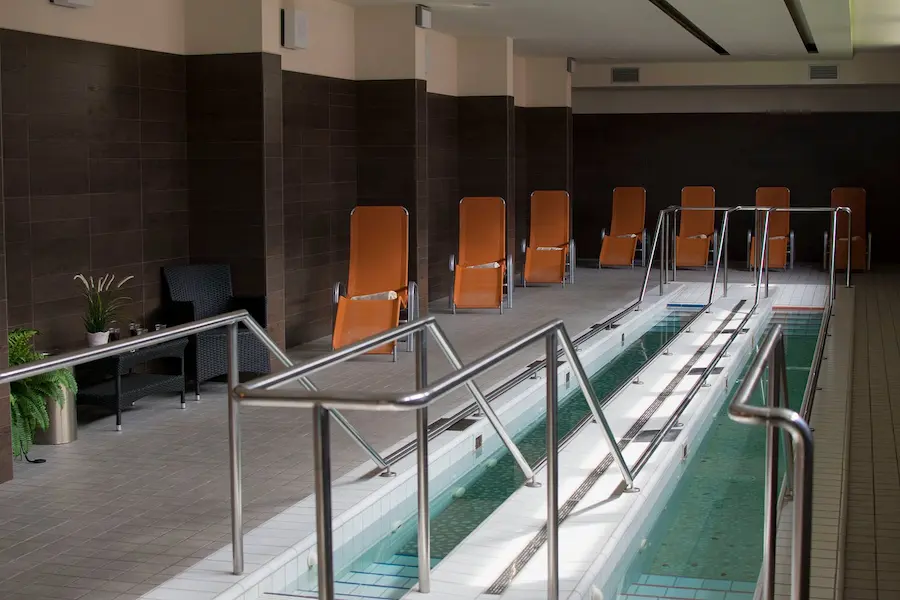
The centrepiece of the site is the Balena Bianca, or White Whale, a massive calcium carbonate formation shaped over centuries by flowing thermal water. The formation's white curved surface, with water cascading down it into a pool below, has been likened to the mouth of a whale. This is the most photographed feature of the site and one of the most distinctive geothermal formations in Italy. The thermal waters are sulphur-rich and contain calcium, magnesium, and sulphate. The village of Bagni San Filippo also has a commercial spa, Terme San Filippo, that uses the same spring water for indoor facilities.
Location & Access
Getting to Fosso Bianco
Fosso Bianco is in the village of Bagni San Filippo, Comune di Castiglione d'Orcia, Province of Siena, Tuscany. The address for navigation is Via Fosso Bianco, 53023 Bagni San Filippo SI. On Google Maps, search for Sentiero Fosso Bianco to reach the correct trailhead rather than the village centre. The site is approximately 60 km south of Siena (around one hour), 150 km from Florence (around one and a half hours), and 180 km from Rome (around two hours). No public transport serves Bagni San Filippo directly; a car is the practical option. Parking along Via Fosso Bianco is paid at approximately 1.50 to 2.50 euros per hour from mid-March to October; free white-line spaces are available further down the road past the village.
From the trailhead at Via Fosso Bianco, follow the Sentiero Fosso Bianco path into the forest. The walk to the first pools takes around five minutes; reaching the Balena Bianca takes ten to fifteen minutes on a clear but sometimes muddy and uneven path. The path crosses a small wooden bridge over the stream. There are no gates, no opening hours, and no ticket barriers. The springs are accessible at all times of year and at any hour, though visiting after dark is not recommended as the path is unlit.
Suitability & Accessibility
Who Fosso Bianco Suits
Fosso Bianco suits visitors to Tuscany and Val d'Orcia who want a free, undeveloped soaking experience in a natural forest setting. It is particularly suited to those exploring the region by car who can pair it with nearby Val d'Orcia villages such as Pienza, Bagno Vignoni, or Montalcino. The short walk from the parking area makes it accessible to most visitors in reasonable physical condition. The combination of free access, distinctive limestone formations, and year-round availability distinguishes it from Saturnia, which is better-known and more crowded.
Families with older children can visit comfortably; the path is short and the pools along the lower sections are shallow. The water temperature near the source is too hot for extended soaking but the downstream pools are more temperate. Visiting in autumn and winter gives a particularly atmospheric experience as steam rises from the warm water in the cool air. Spring and early morning weekday visits offer the quietest conditions.
Wheelchair access is not possible. The path from the parking area to the pools is an unpaved forest trail with uneven ground, roots, mud, and a wooden bridge crossing. No step-free access or paved routes exist. No facilities of any kind are present at the site: no changing rooms, no toilets, no food, no lockers, and no lighting. Bring everything you need.
Safety & Etiquette
Fosso Bianco Safety Tips
Fosso Bianco is generally safe for soaking in the downstream pools, but the main safety considerations are the very high source temperature, the calcium formations, slippery and unstable surfaces, the sulphur content of the water, the unlit forest path, and the absence of any facilities or supervision. There is no staff, no lifeguard, and no emergency vehicle access.
The water exits the ground at approximately 48 degrees Celsius: this is dangerously hot and not suitable for soaking anywhere near the source. Allow the water to cool downstream before entering, and test any pool with your hand before immersing. Upper pools can still be uncomfortably hot. Move downstream or wait for cooler conditions if a pool feels too warm. Do not stand on or climb the calcium formations: the Comune di Castiglione d'Orcia has posted official warning signs prohibiting climbing on the limestone structures, which are fragile, structurally unstable, and subject to sudden collapse. Despite this, some visitors ignore the signs; this is a genuine safety risk.
The path becomes muddy in wet weather and after rain, and both the path and the calcium surfaces around the pools are slippery when wet. Wear water shoes or sturdy sandals throughout. Do not visit after dark: the path is unlit, the forest is not navigable safely without light, and the surfaces are much more hazardous in darkness. Sulphur content will leave a faint smell on skin and hair; rinse before leaving if possible. No changing rooms, toilets, food, or water are available on site. The nearest services are in the village of Bagni San Filippo, a short walk away. A small cafe near the trailhead, La Cascata, may be open for snacks and water.
%252C%2520Italy%25201.avif)
%252C%2520Italy%25206.avif)