
Quick FactsOverview
About Kaitoke Hot Springs
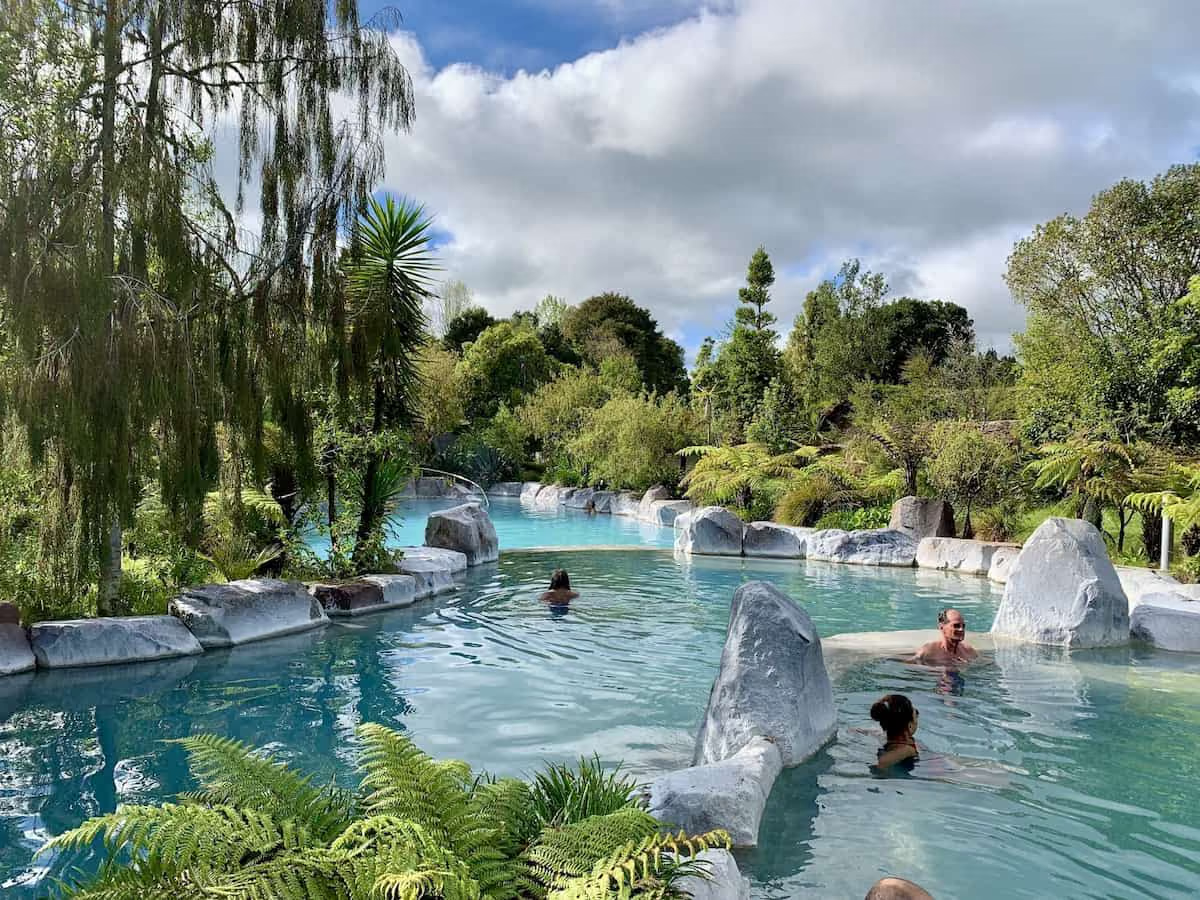
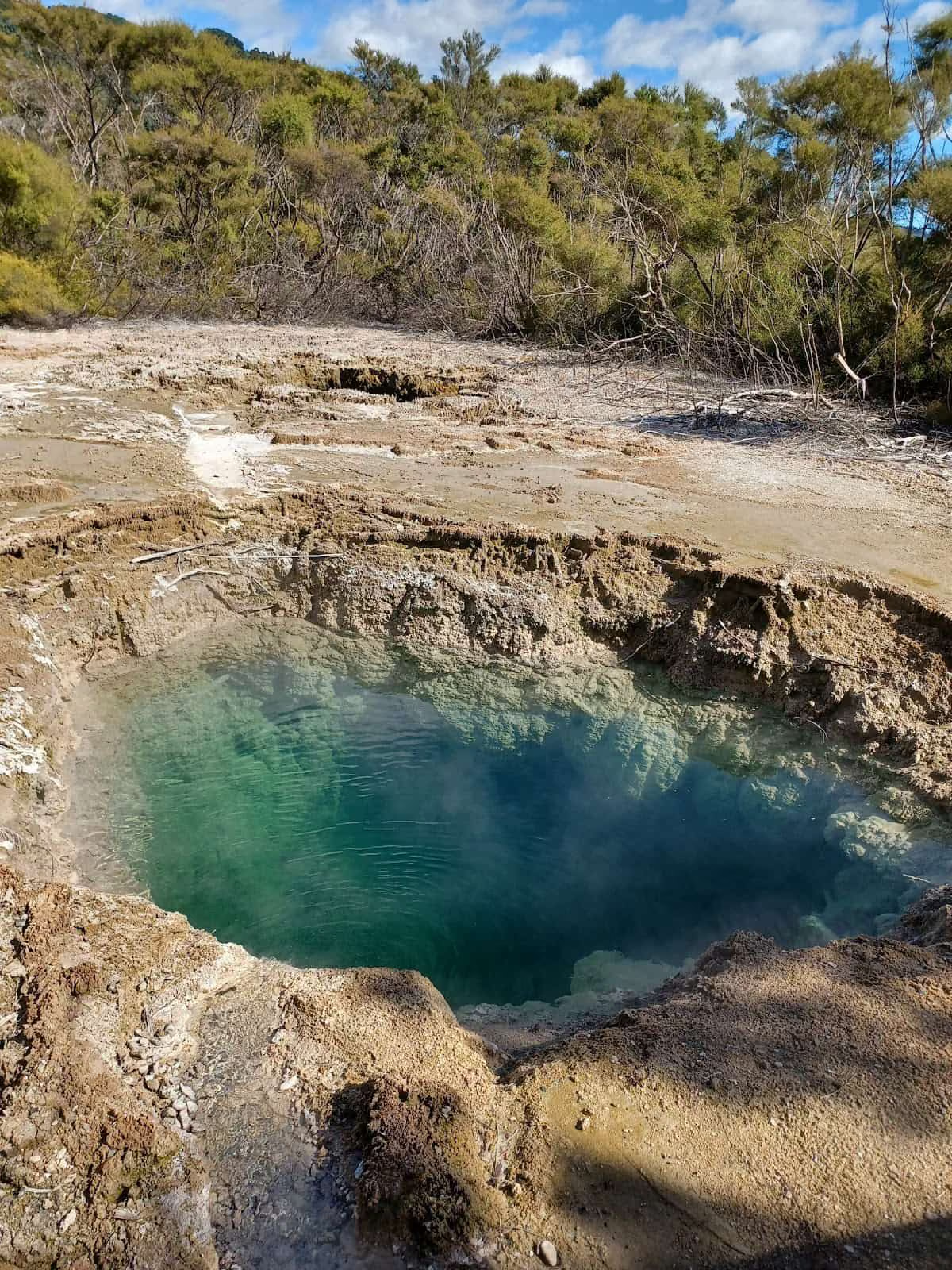
Kaitoke Hot Springs, New Zealand is a natural geothermal spring on Great Barrier Island (Aotea) in the Hauraki Gulf, reached by a 40 to 45 minute walk from the trailhead on Whangaparapara Road. The springs form shallow sulphurous pools at a dammed fork in Kaitoke Creek, within native wetland bush surrounded by umbrella fern. Entry is free and the site is managed by the Department of Conservation.
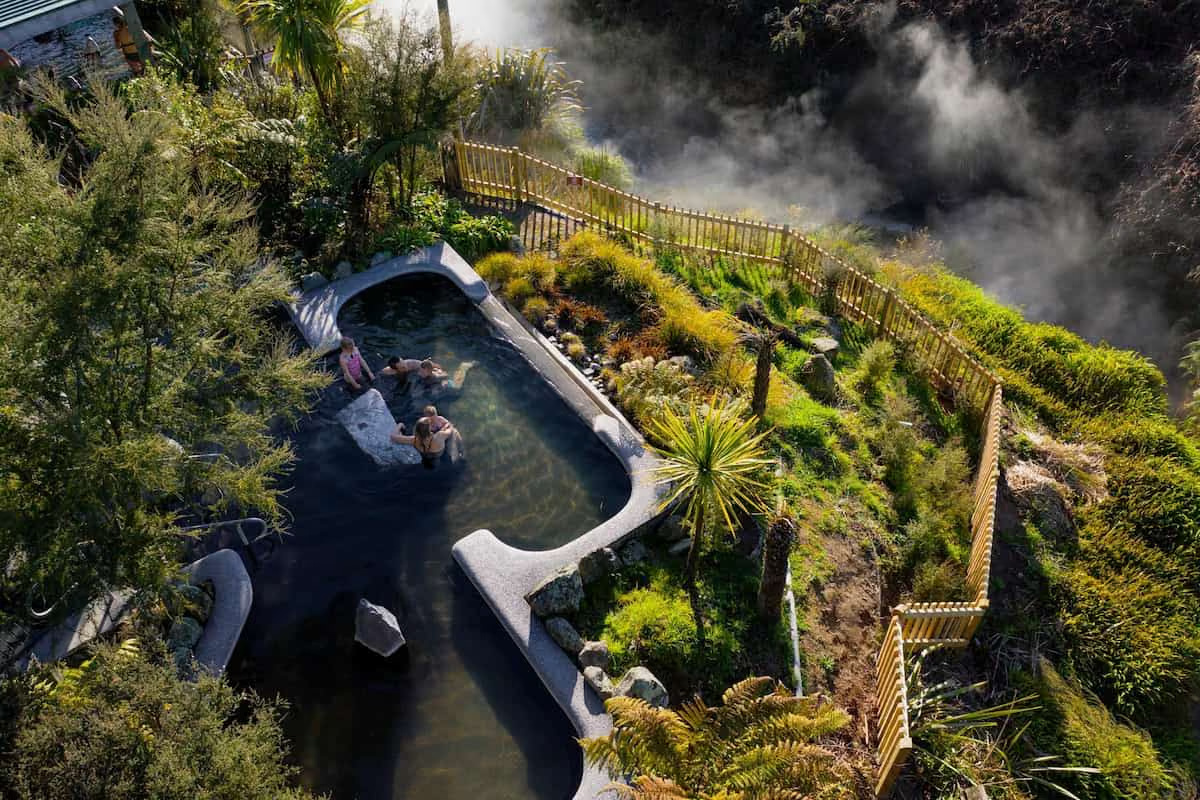
The pools are entirely natural with no tiling, pumping, or temperature regulation. The main lower pool is shallow and warm to tepid year-round and is the most accessible. Further upstream, smaller rock pools carry hotter water. Temperature varies with rainfall; heavy rain dilutes the geothermal flow and produces cooler pools. A single picnic table sits near the main pool, and public toilets are located just before the springs on the track.
The walk passes through the Kaitoke wetlands and regenerating kanuka forest, following an ancient shoreline. Native birds including fantail, grey warbler, and tui are frequently heard along the track. The springs have been used by Maori for generations and are among the more remote geothermal pools in New Zealand, reflecting Great Barrier Island's character as a place with minimal infrastructure and a self-reliant visitor culture.
Location & Access
Getting to Kaitoke Hot Springs
Kaitoke Hot Springs is on Great Barrier Island (Aotea), reached from Auckland by ferry or light aircraft. Ferry services take approximately four to five hours on standard vessels, or around two hours on faster passenger ferries. Flights from Auckland to Claris Airport on Great Barrier Island take around 30 minutes and operate regularly.
From Claris, the trailhead is a short drive along Whangaparapara Road. From Claris crossroads, head north then turn left immediately onto Whangaparapara Road and continue until the signed car park on the right. From Port FitzRoy or Okiwi in the north, cross the Kaitoke Stream, pass the art gallery on the left, then turn right into Whangaparapara Road. The car park has space for several vehicles. The flat track then covers 2.5 km to the springs, taking 40 to 45 minutes one way.
There is no public transport on Great Barrier Island; a car or bicycle is needed to reach the trailhead from ferry terminals or the airfield. Car hire is available from local operators. The island operates without mains electricity and mobile coverage is patchy, so visitors should plan with self-sufficiency in mind. Among the hot springs in New Zealand that require island travel, Kaitoke is among the most accessible once on the island, with a straightforward flat walk on a well-maintained track.
Suitability & Accessibility
Who Should Visit Kaitoke Hot Springs
Kaitoke Hot Springs suits visitors to Great Barrier Island who want a free, undeveloped natural hot spring experience within a scenic wetland walk, and who appreciate the difference between this kind of wild spring and the developed pools of Rotorua or Hanmer Springs. The experience is informal and the environment is unchanged by commercial development.
The Department of Conservation officially classifies the Kaitoke Hot Springs Track as a wheelchair accessible short walk, and visitor accounts confirm it has been completed with all-terrain wheelchairs and pushchairs. The track surface is generally flat and even. A shallow stream crossing shortly after the start may require care in wet conditions. Standard wheelchairs should be assessed against current conditions by contacting the DOC Great Barrier Island office before visiting. The main pool is shallow, which assists visitors with limited mobility entering the water. For those seeking accessible geothermal pools in New Zealand in a wild setting, Kaitoke is one of the few options with official DOC accessibility classification.
Families with children are well suited to this spring. The easy walk, natural setting, and shallow main pool make it accessible across age groups. Bring towels, a change of clothes, drinking water, and shoes suitable for a shallow stream crossing. Dogs are not permitted. No booking or entry fee is required. The absence of a commercial overlay makes this one of the most genuinely accessible hot springs in New Zealand in terms of cost.
Safety & Etiquette
Kaitoke Hot Springs Safety Tips
Kaitoke Hot Springs is generally safe to visit, but the Department of Conservation provides two specific warnings on site: the stream water may be hot, and visitors should not put their head under the water in the pools. These apply regardless of surface temperature, as geothermal flow can vary and submerging the head in sulphurous spring water is not recommended.
Temperature varies with rainfall and season. After heavy rain the pools are diluted and cooler; in dry periods they run hotter. Always test the water before entering, particularly in the smaller upper pools, which tend to be hotter than the main lower pool. Children should be monitored closely near the upper pools. The creek bed is silty and can become stirred up when the pools are busy, reducing water clarity.
The track crosses a shallow stream shortly after the start. In wet conditions this crossing can be deeper and slippery. Wear footwear that can get wet throughout the visit. Sections of the track through the wetland may be damp and muddy. Bring insect repellent in summer as the wetland environment supports sandflies and mosquitoes. Bring drinking water, as none is available at the springs and the walk back adds another 40 minutes.
Great Barrier Island has no hospital. The nearest medical facility is in Auckland. Carry a basic first aid kit and do not visit alone if unfamiliar with the area. Mobile coverage is patchy on the island. No dogs are permitted on the track. Stay on the track to avoid disturbing the sensitive wetland vegetation, and observe all wildlife without interference. The conservation area rules apply throughout the walk and at the springs themselves.