Quick FactsOverview
About Kheer Ganga Hot Spring
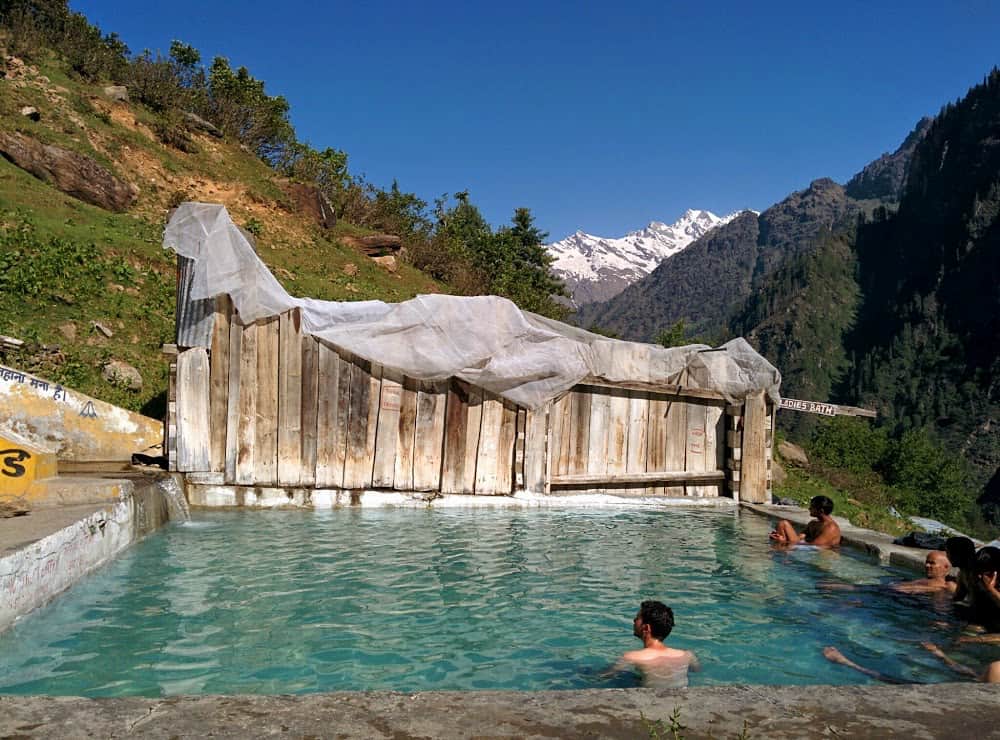
Kheer Ganga Hot Spring, India is a natural geothermal spring set in a high-altitude alpine meadow at the head of the Parvati Valley in Kullu district, Himachal Pradesh, reached only by a trek of approximately 12 kilometres from the roadhead village of Barshaini. The spring feeds a warm soaking pool near a small Shiva temple at around 2,960 metres above sea level, surrounded by dense pine forest and Himalayan peaks. It is one of the most sought-after hot springs near Kasol, known for its remote setting and the sense of reward that comes after the long climb through the valley.
The water is a sulfurous geothermal spring. Separate bathing areas for men and women sit within the temple compound. A small seasonal settlement of guesthouses and tea stalls operates during the warmer months, roughly April through November, and closes in winter when snow renders the trail impassable. There are no permanent facilities beyond the temple compound itself.
Kheerganga sits within Khirganga National Park and holds significance for Hindu and Sikh pilgrims. The trek passes through the villages of Nakthan and Rudranag before a steep final ascent to the meadow. Soaking in a geothermal pool at high altitude after a full-day hike is the experience that draws trekkers from across India and abroad to this site.
Location & Access
Getting to Kheer Ganga Hot Spring
Kheer Ganga Hot Spring is reached via a trek of approximately 12 kilometres from Barshaini village, the last motorable point in the upper Parvati Valley, with an ascent of around 750 metres. Barshaini is connected to Kasol by road, about 22 kilometres, and to Bhuntar approximately 50 kilometres, which has the nearest regional airport and regular bus connections from Chandigarh and Delhi. The drive from Bhuntar to Barshaini takes roughly two to three hours.
From Barshaini, two trail routes reach the spring. The more popular route goes via Nakthan village and the Rudranag waterfall, while a secondary route via Kalga village is shorter but steeper. Both routes pass through forested mountain terrain with some exposed sections and river crossings. The trek typically takes four to six hours uphill depending on pace, fitness, and conditions. A fit walker should plan for a full day up and down, or budget for an overnight stay at the meadow.
There is no vehicle access beyond Barshaini. Public buses and shared taxis run regularly between Bhuntar and Kasol, and local transport connects Kasol to Barshaini. For visitors looking for hot springs near Kasol, Kheerganga is the most remote option and requires a full commitment to the trek. The trail is open from around April or May through October or November each year, with the timing dependent on snowmelt and current conditions.
Suitability & Accessibility
Who Should Visit Kheer Ganga Hot Spring
Kheer Ganga Hot Spring suits fit adults and experienced trekkers comfortable with a long mountain hike at altitude, as the 12-kilometre trail with significant elevation gain is not suitable for casual visitors, very young children, or those with limited mobility. The terrain is uneven, involves steep sections, and has no accessibility provisions, making wheelchair access not possible. The rewards are significant: a soak in a geothermal pool in a high Himalayan meadow after a full-day trek is an experience that draws repeat visitors.
Families with older children accustomed to multi-hour hikes can manage the trail in good conditions, though younger children will find it very demanding. Anyone with cardiovascular conditions, altitude sensitivity, or joint problems should consult a doctor before attempting the trek. The spring sits at around 2,960 metres, which can cause mild altitude effects in those arriving from low elevations. Spending a night or two in Kasol or Manikaran before the trek is a sensible way to acclimatise.
Those seeking natural hot springs in India with a genuine backcountry experience will find Kheerganga fits that purpose well. Overnight trekkers who stay in the simple guesthouses or camp at the top are rewarded with quiet mornings and views of the surrounding peaks before day-trippers arrive. The best months to visit are May through June and September through October; monsoon months of July and August bring hazardous trail conditions and are best avoided.
Safety & Etiquette
Kheer Ganga Hot Spring Safety Tips
Kheer Ganga Hot Spring is a remote area with natural hazards, and visitors should prepare carefully before setting out from Barshaini, as the trail involves significant elevation gain, can become slippery in wet conditions, and has no rescue services or medical facilities along the route. Main risks include trail injuries, altitude effects, and rapidly changing mountain weather. Carrying sufficient water, food, a rain layer, and a basic first aid kit is essential.
The hot spring water can be very warm and temperature varies by season and point of entry. Visitors should test the water before entering and avoid submerging if it feels scalding. The sulfurous content means prolonged soaking is not advisable for those with skin sensitivities or open wounds. No lifeguard is present at the spring, and the bathing areas within the temple compound are managed informally by local attendants during the main season.
Trail safety is the primary consideration. The route involves narrow paths, river crossings on wooden bridges, and a steep final ascent. Starting early in the day is strongly recommended to allow enough time for the return journey before dark. Monsoon season, July through August, brings significant hazard from rain-soaked paths, swollen stream crossings, and landslide-prone slopes; many trekkers avoid the trail during these months.
Environmental etiquette matters at Kheerganga, which sits within a national park. Packing out all rubbish, using designated toilet areas, and respecting the religious significance of the temple compound for Hindu and Sikh pilgrims is expected. Camping has been periodically restricted by local authorities to protect the fragile meadow ecosystem, and visitors should check current rules before planning an overnight stay.