
Quick FactsOverview
About Manikaran Hot Springs
Manikaran Hot Springs, India is a geothermal spring system located in the town of Manikaran in Kullu district, Himachal Pradesh, on the banks of the Parvati River at an elevation of approximately 1,760 metres. The springs emerge at high temperature along the riverbank and within the grounds of Gurudwara Manikaran Sahib, one of the most visited Sikh pilgrimage sites in northern India. It is one of the most accessible hot springs near Kasol, reachable by road from any direction without any trekking required.
The hot spring water here is alkaline and non-sulfurous, with temperatures measured at several springs ranging from roughly 60 to over 90 degrees Celsius. The water is so hot that food, including rice and lentils, has traditionally been cooked in it by the Gurudwara community as part of the langar kitchen. Visitors can observe this practice and partake in the free communal meal served at the Gurudwara throughout the day.
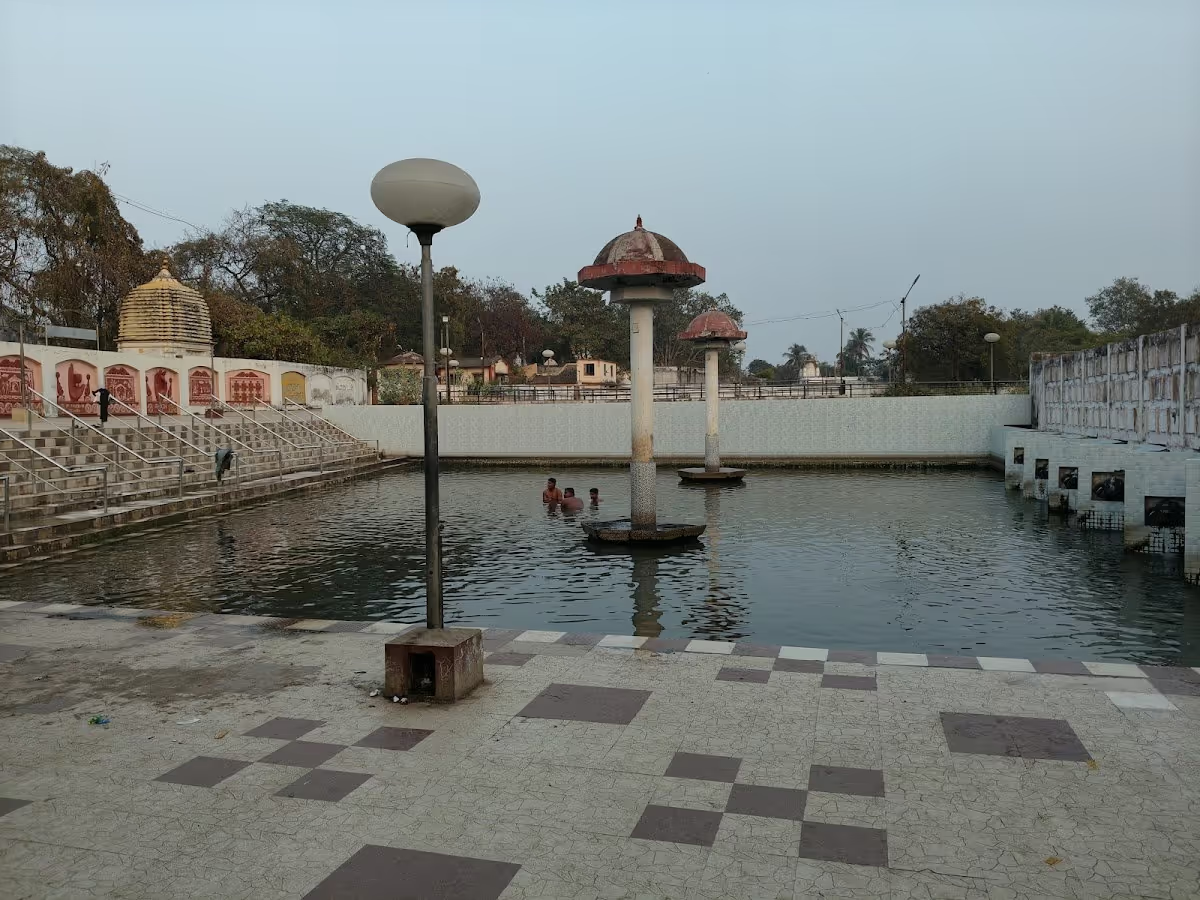
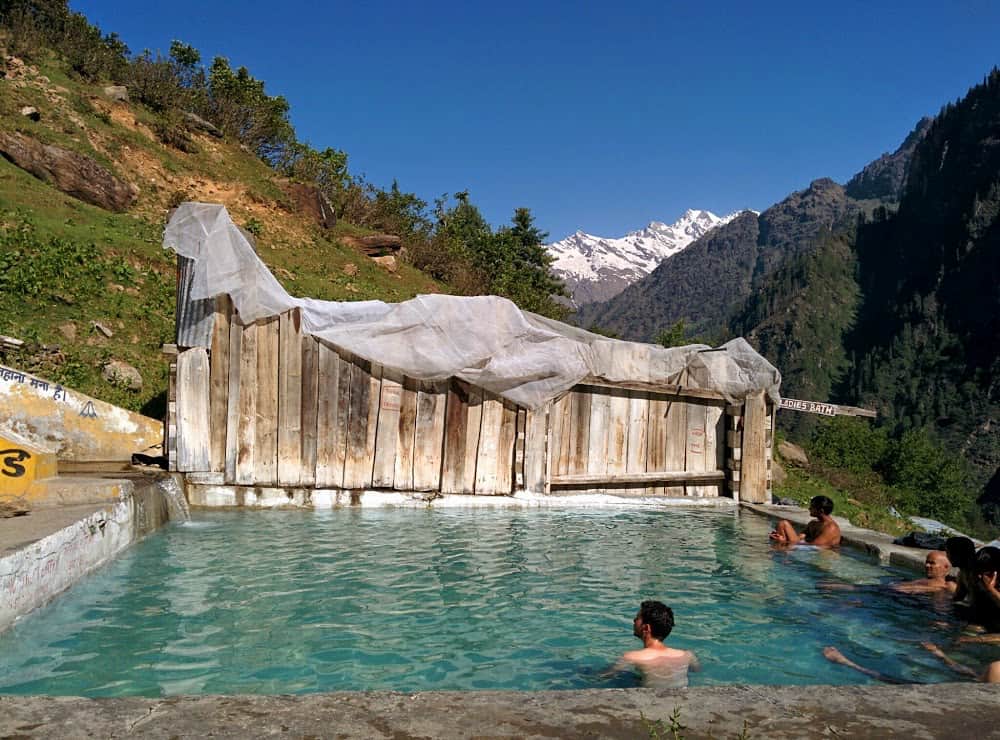
Separate public bathing pools for men and women are available within the Gurudwara compound and adjacent areas. The pools are fed by geothermal water mixed with cold water to bring the temperature to a safe soaking level. Shiva temples and other Hindu shrines in Manikaran town also have hot spring pools nearby. The site has been documented as a pilgrimage destination since at least the 17th century and attracts visitors from across India and abroad throughout the year.
Location & Access
Getting to Manikaran Hot Springs
Manikaran Hot Springs is located in the town of Manikaran on the Parvati Valley road, approximately 4 kilometres from Kasol and 45 kilometres from Kullu, accessible by road without any hiking. Buses and shared taxis connect Manikaran to Bhuntar, which is the nearest town with a domestic airport and access to the main highway to Chandigarh and Delhi. The road from Bhuntar to Manikaran runs along the Parvati River valley for approximately 35 kilometres and takes one to two hours depending on traffic.
From Chandigarh, the journey by road takes around five to six hours via the highway through Bilaspur and Mandi to Bhuntar, then along the valley road. Overnight bus services run between Delhi and Bhuntar or Kasol, and from Kasol the final stretch to Manikaran is a short taxi or local bus ride. The nearest railway station with reasonable connectivity is Chandigarh or Kalka, both several hours away by road.
Visitors looking for hot springs near Kasol will find Manikaran the easiest and most accessible option in the valley, sitting directly on the road that continues to Barshaini further up the valley. A small bridge crosses the Parvati River into the main town where the Gurudwara and temple compounds are located. Parking is available on the main road before the bridge for those arriving by private vehicle or hired taxi.
Suitability & Accessibility
Who Should Visit Manikaran Hot Springs
Manikaran Hot Springs suits a very wide range of visitors including pilgrims, families with children, elderly travellers, and casual day-trippers, as the site is fully accessible by road and requires no hiking or physical preparation. The bathing facilities within the Gurudwara compound and nearby pools are at ground level, making them accessible for most visitors, though no formal wheelchair-accessible bathing provisions have been documented by the facility operators.
For families, Manikaran is an engaging and practical destination. The soaking pools are within a managed compound, the Gurudwara provides free communal meals throughout the day, and the surrounding town has guesthouses, cafes, and shops at various price points. The combination of the hot springs with the spiritual atmosphere of the temples and Gurudwara makes it a layered experience for visitors with varied interests.
Those seeking natural hot springs in India that are easy to reach and richly atmospheric will find Manikaran fits both conditions. The site operates year-round, though the valley road can close temporarily during heavy snowfall in winter. The best visiting months are March through June and September through November, when roads are reliable and the weather in the Parvati Valley is most pleasant. Summer holidays in May and June bring larger crowds, so early morning visits are recommended for a quieter experience at the bathing pools.
Safety & Etiquette
Manikaran Hot Springs Safety Tips
Manikaran Hot Springs is generally safe to visit, though visitors must be aware that the water at source is extremely hot and can cause serious burns if touched directly from the natural spring vents. The bathing pools within the temple and Gurudwara compound use water that has been mixed with cold water, but temperatures can still vary and should be tested before entering. Water that feels too warm to hold your hand in should not be entered fully, even when others are soaking.
The springs here are non-sulfurous, but the high mineral content means visitors with skin conditions should exercise some caution and limit soak duration. No lifeguard is present at the public pools, and children should be supervised closely when near the water. The riverbank adjacent to the town also has exposed spring vents with very hot water that are not consistently fenced or marked; keeping children and pets away from these unmanaged vents is essential.
The town of Manikaran can become very crowded during major religious festivals and peak summer weekends. Visitors should be prepared for a busy environment rather than a tranquil retreat. Personal belongings should be kept secure in changing areas. The bathing areas for men and women are separate, and visitors are expected to dress modestly and remove footwear before entering the Gurudwara and temple compounds.
The Parvati River adjacent to the town runs fast and cold even in summer. Swimming in the river is not advisable. During monsoon months, July through September, river levels can rise sharply and the road through the valley can be affected by landslides. Visitors planning to travel further into the Parvati Valley should monitor road conditions during or after heavy rain.