
Quick FactsOverview
About Mangatutu Hot Springs
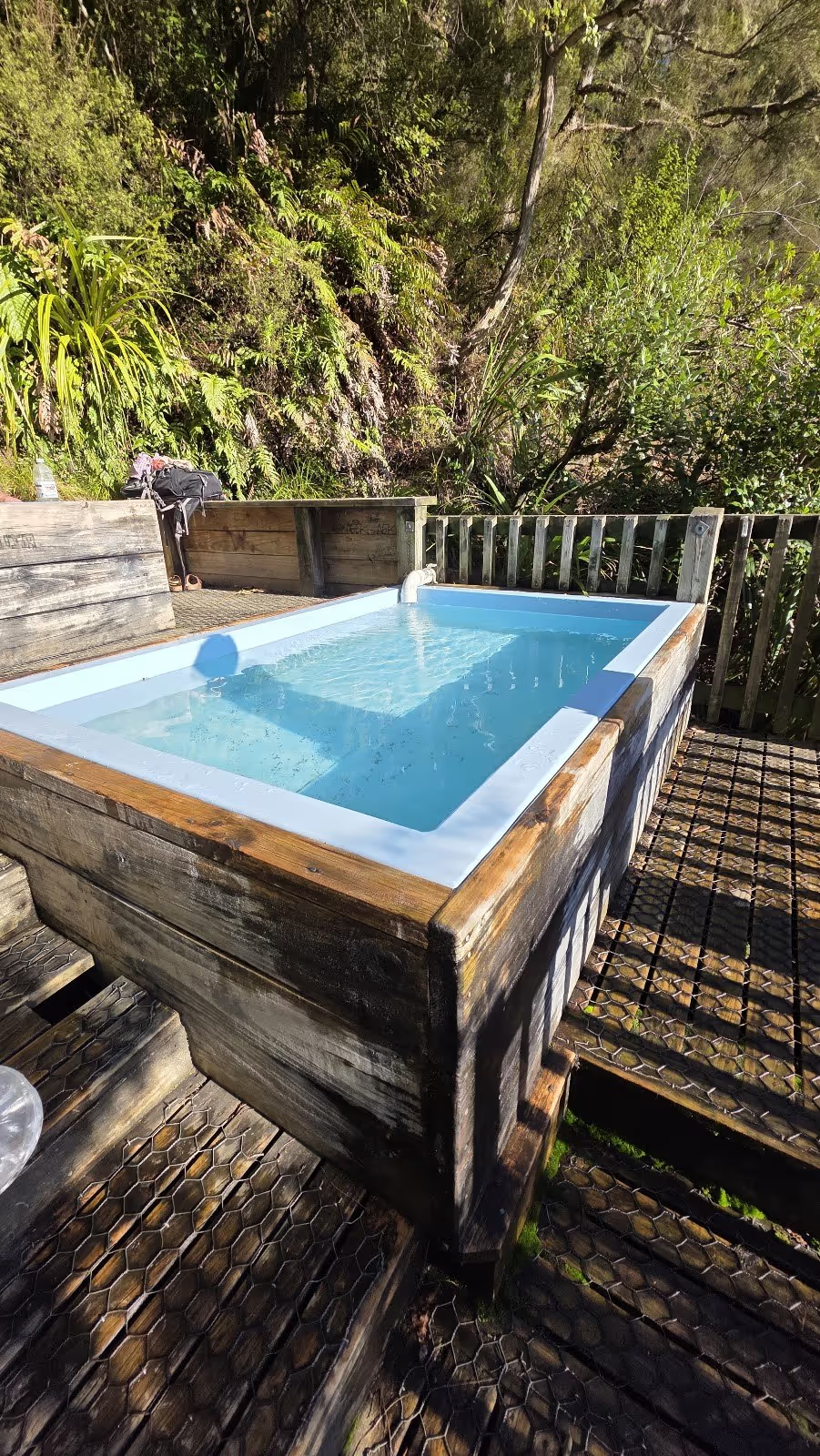
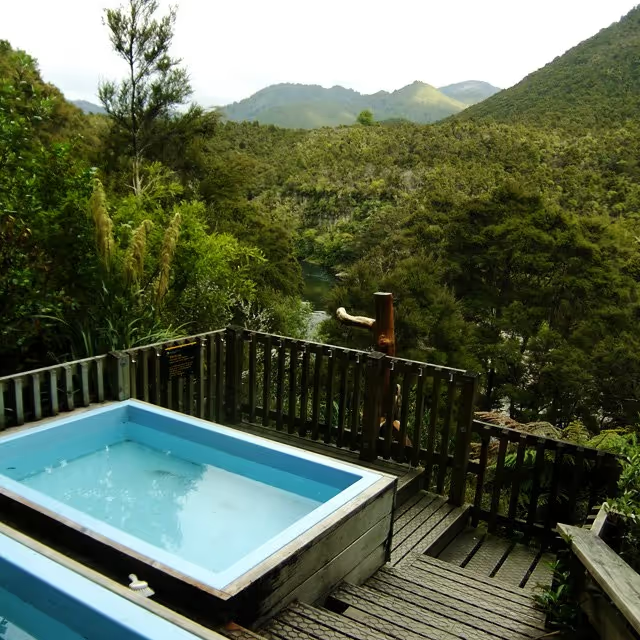
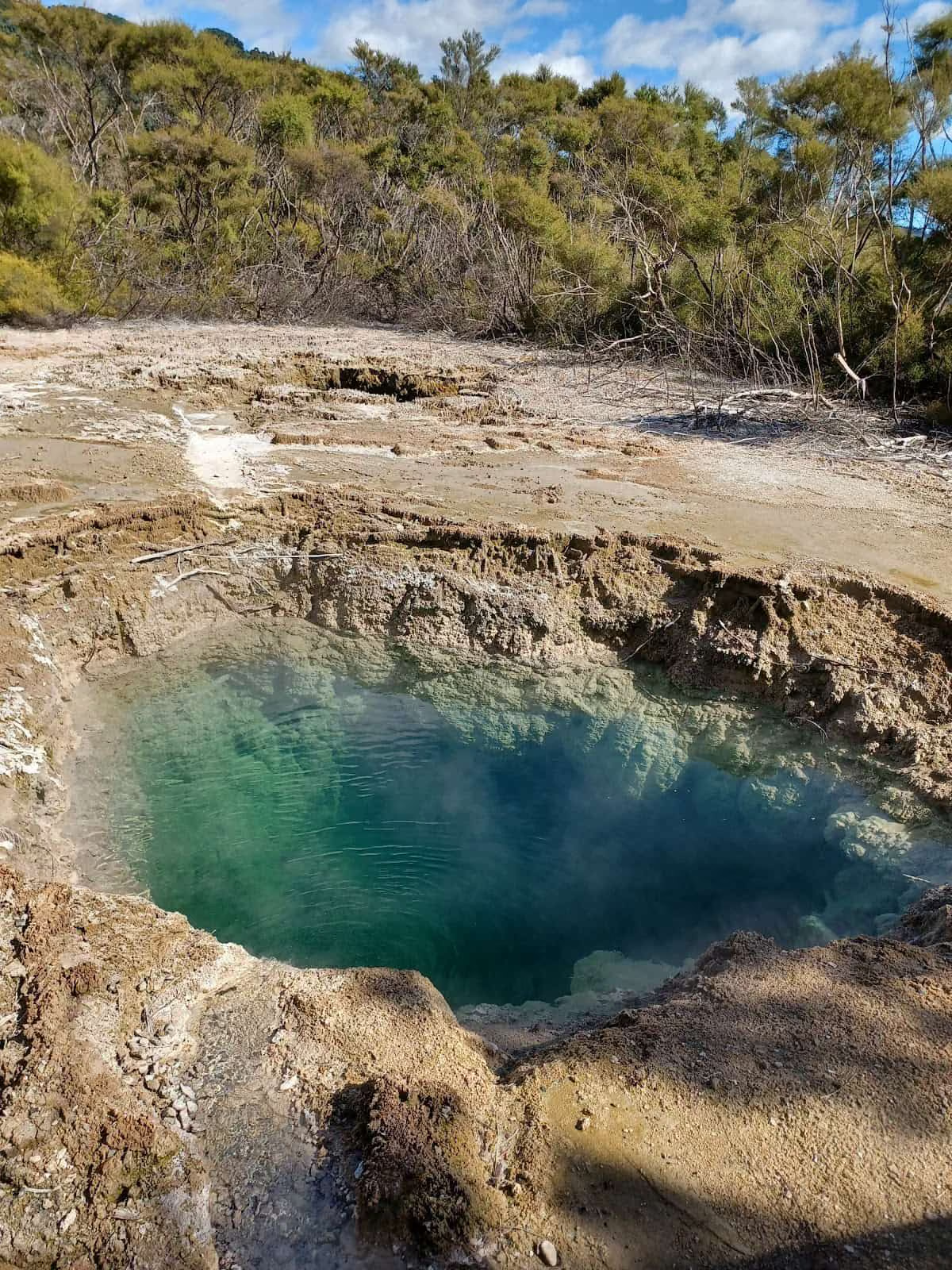
Mangatutu Hot Springs, New Zealand is a free geothermal spring in Kaweka Forest Park, Hawke's Bay, at the end of Makahu Road about 75 km northwest of Napier. Two fiberglass soaking tubs are fed by thermal water issuing from a deep undercut bank on a terrace above the Mohaka River. A DOC basic campsite sits adjacent to the pools, which are managed by the Department of Conservation.
Thermal water trickles down a riverside bluff and is channeled into two tubs on wooden decking with views over the river. The water runs hot and visitors can cool off by descending to the Mohaka River below. Clothing is optional, as is common at remote backcountry springs in New Zealand. The setting is native bush, and the campsite is used by trampers, hunters, and anglers. The park supports sika and red deer, and the Mohaka River holds rainbow and brown trout.
Mangatutu is also the starting point of the Te Puia Track, which leads up the Mohaka valley to Te Puia Lodge and the further backcountry pools at Mangatainoka Hot Springs. Among the free hot springs in New Zealand accessible by car, Mangatutu is one of the more remote, requiring a substantial drive on narrow gravel roads with a river ford to cross.
Location & Access
Getting to Mangatutu Hot Springs
Mangatutu Hot Springs is at the end of Makahu Road, 75 km northwest of Napier. The drive takes approximately 90 minutes from central Napier. The final 23 km are on unsealed gravel that narrows progressively as it enters the forest park. A river ford on Makahu Road, 7.5 km from the road end, can become impassable after heavy rain or spring snow melt. Check conditions before departing and confirm current status with Hastings District Council, which maintains road closure information.
From Napier, follow Puketitiri Road west for 40 km, then turn right onto Pakaututu Road. After 9 km turn left onto Makahu Road and continue approximately 10 km to the road end. The road is steep, narrow, and unsuitable for campervans or large vehicles. A 4WD vehicle is recommended. At the road end is a parking area and shelter called The Gums, about 500 metres from the hot springs and campsite. Water from the stream at the road end is available but should be boiled before drinking.
There is no public transport to this location; self-drive is the only practical access method. Among the hot springs in New Zealand accessible by car, Mangatutu requires the most demanding unsealed road journey of any regularly-visited site. First-time visitors should allow more time than expected and check weather forecasts for the Kaweka Ranges before heading out.
Suitability & Accessibility
Who Should Visit Mangatutu Hot Springs
Mangatutu Hot Springs suits self-sufficient outdoor visitors who are comfortable with remote access, basic facilities, and a substantial unsealed road drive. The pools themselves require almost no physical effort to reach once at the road end; the challenge is entirely in the access road. For visitors who can manage the drive, the reward is a free thermal soak in native bush with river views and very few other people.
Wheelchair access is not possible at this site. The terrain between the car park and the pools involves a short, steep, rough track descending toward the river, with no hard-surface infrastructure. The pools themselves are on a riverside terrace with uneven ground. The access road would also present challenges for vehicles adapted for wheelchair users.
Families with older children who can handle a remote setting and the drive are documented visitors to this site. Young children are best supervised closely near the pools and kept away from the steep descent to the Mohaka River below. The pools can run very hot and visitors should test the temperature before entering. Those arriving from Napier or Hastings specifically for a soak in free hot springs in New Zealand will find Mangatutu worth the effort if they have a suitable vehicle and have checked road conditions in advance. The campsite makes this a worthwhile overnight or multi-day base for those exploring Kaweka Forest Park more broadly.
Safety & Etiquette
Mangatutu Hot Springs Safety Tips
Mangatutu Hot Springs presents hazards that begin before arriving at the pools. The river ford on Makahu Road 7.5 km from the road end can be too deep to cross safely after heavy rain or during spring snow melt. Check conditions and recent rainfall before departing. Contact Hastings District Council for current road status. Be prepared to turn back if the ford looks unsafe.
The hot springs themselves can run too hot to enter directly. Test the water before getting in, and use a bucket of cold water from the river to cool a pool before immersing. Do not assume the pools will be at a safe temperature on arrival. Natural geothermal variation means the pools can be very hot one visit and more manageable on the next. Some visitors report the water as too hot to enter without significant cooling, while others find it comfortable. Take extra care in cold weather when the steam makes it easy to underestimate the actual water temperature.
The short steep track from the campsite to the pools requires careful footing, particularly when wet. Keep children away from the edge of the riverside bluff above the Mohaka River. No lifeguards are present. Apply standard backcountry precautions: avoid soaking alone in extreme heat, and ensure someone knows your location and planned return.
Car break-ins have been reported at remote DOC sites including this one. Do not leave valuables visible in your vehicle. Mobile coverage is absent at the campsite and pools. Stream water must be boiled before drinking. Fires are not permitted anywhere on conservation land at any time. Dogs are not permitted without a valid DOC permit for recreational hunting or management purposes only.