Quick FactsOverview
About Montecito Hot Springs
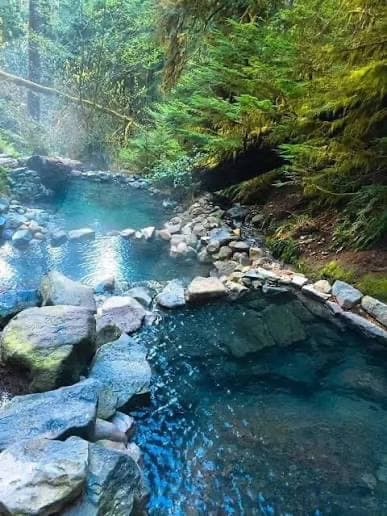
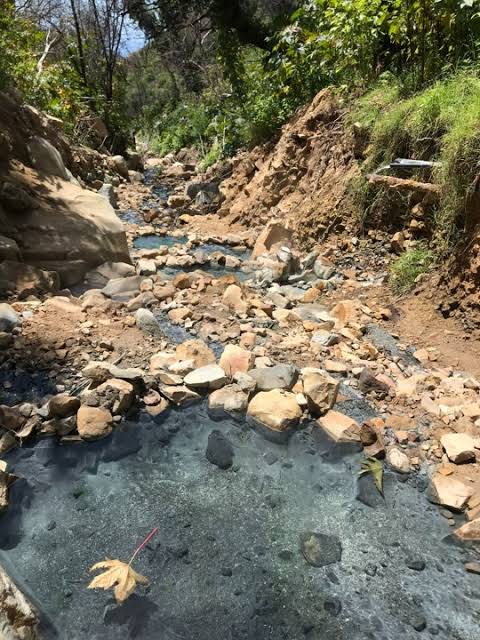
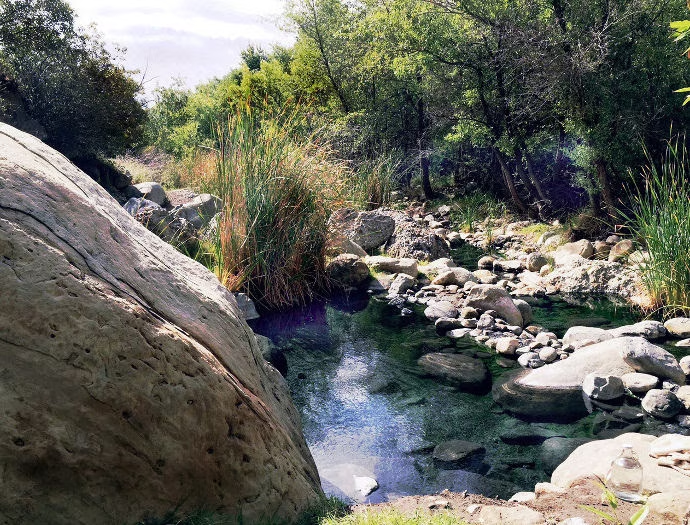
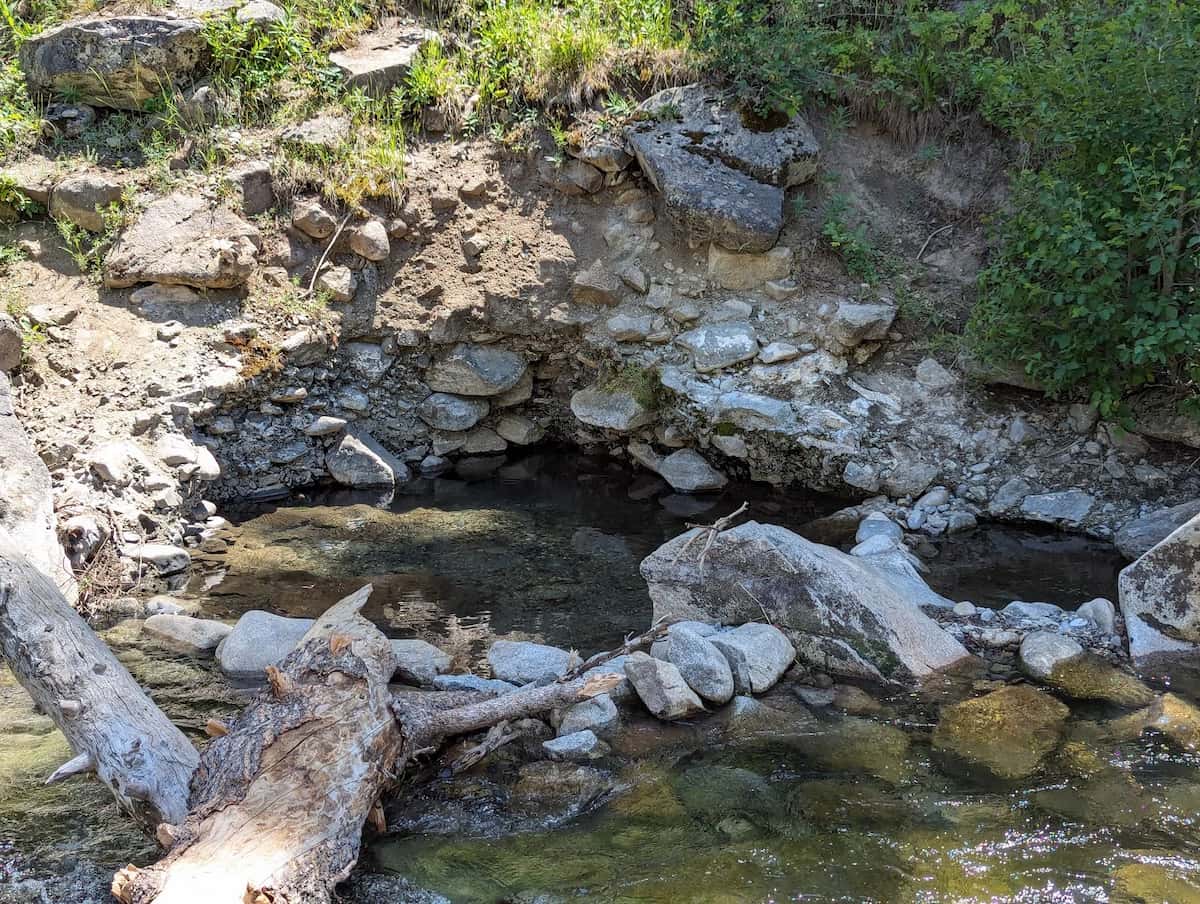
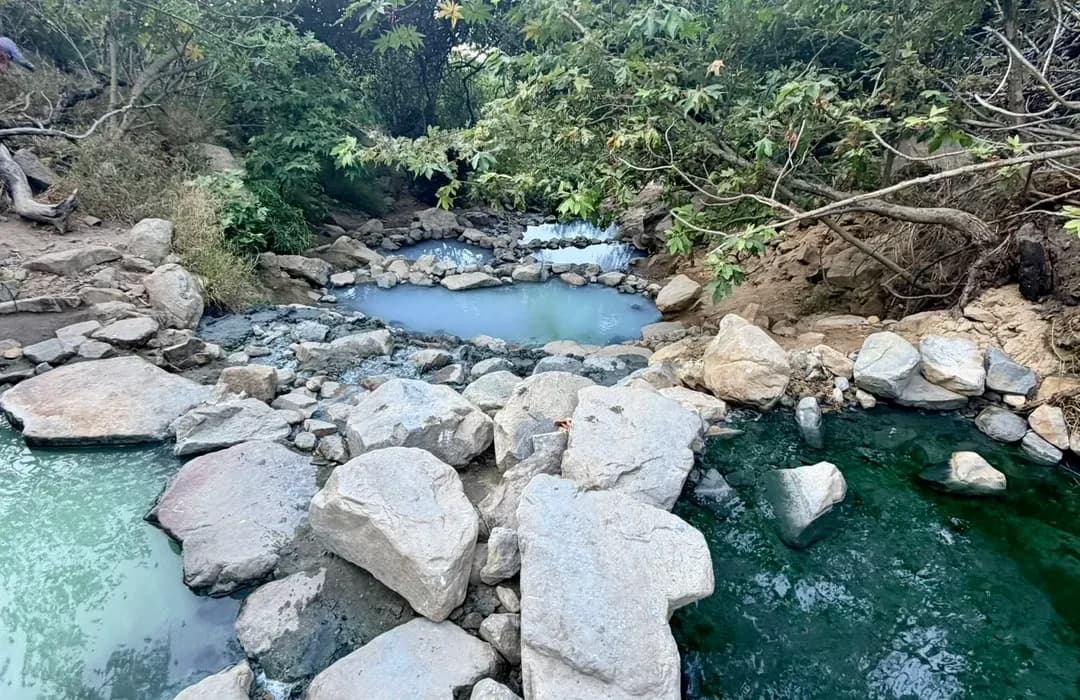
Montecito Hot Springs, California is a series of cascading geothermal pools in the Los Padres National Forest, five miles northeast of Santa Barbara. Eleven spring sources emerge from sandstone at temperatures between 111 and 118 degrees Fahrenheit, feeding rock-walled pools that cascade down Hot Springs Canyon from roughly 100 degrees at the top to 60 degrees at the lower pools. Santa Barbara is the nearest city with services.
The Chumash people called this canyon "Shalawa" and used the mineral waters long before European contact. Settlers built a health resort here by 1878, attracting visitors with mineral baths and mountain air. The 1964 Coyote Fire destroyed the buildings, and in 2013 the Land Trust for Santa Barbara County purchased the 462-acre canyon. Stone ruins from the resort remain as trail landmarks. These are among the most accessible natural hot springs in California near a major city.
The mineral water is carbonated and sulfureted, containing sodium, calcium, magnesium, and silica, with a sulfur smell and grey-blue color in the pools.
Location & Access
Getting to Montecito Hot Springs
Montecito Hot Springs is reached by a moderate 2.5 to 3 mile round-trip hike starting at the Hot Springs Trailhead on East Mountain Drive in the residential community of Montecito, approximately a 15-minute drive from downtown Santa Barbara. The trail gains 700 to 800 feet of elevation through oak and sycamore woodland along a fork of Montecito Creek.
From Santa Barbara, drive south on US-101, exit onto Hot Springs Road in Montecito, and follow it to East Mountain Drive. A small dirt parking area is available near the trailhead. Parking is limited, especially on weekends and holidays. The trail begins at a gate and passes through a residential area before entering National Forest land. Stay on the trail and respect adjacent private property.
Trail Notes
The trail is generally well-marked but can be muddy after rain. Hot Springs Falls, a small seasonal waterfall, is a landmark along the route. For visitors seeking hot springs near Santa Barbara, Montecito Hot Springs is the closest and most accessible option. Gaviota Hot Springs (99 degrees) in Gaviota State Park and Big Caliente Hot Springs (115 degrees) in the backcountry are additional thermal features in Santa Barbara County.
Suitability & Accessibility
Who Should Visit Montecito Hot Springs
Montecito Hot Springs suits visitors of most fitness levels seeking a scenic, accessible hot spring soaking experience near a major California city. The cascading pools offer a range of temperatures, with the upper pools at roughly 100 to 104 degrees providing the warmest soak and lower pools offering progressively cooler water. The moderate hike of 1.25 miles each way with 700 to 800 feet of gain is manageable for most reasonably fit adults and older children.
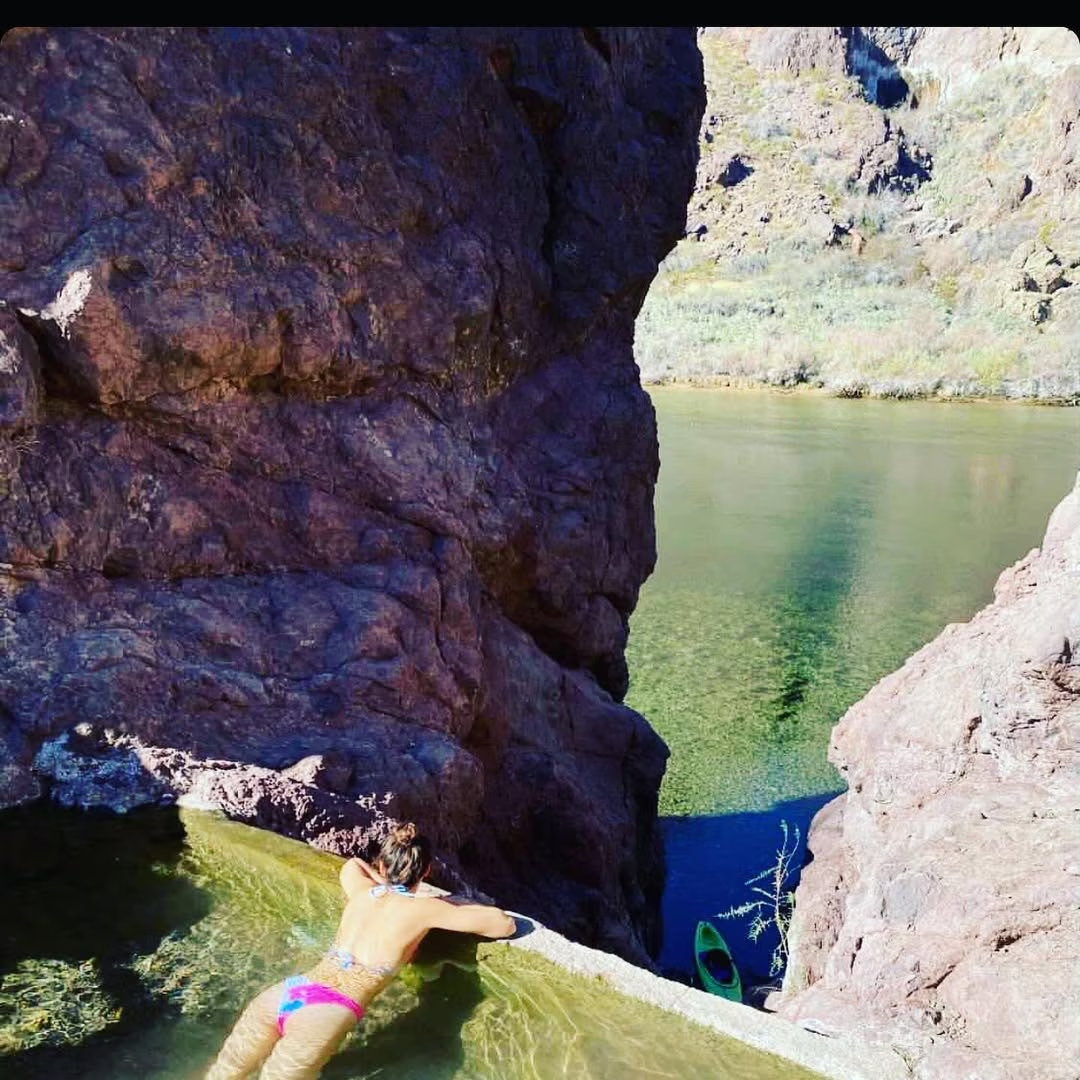
The pools are rock-walled, visitor-maintained, and each can fit roughly five to ten people. The setting in a shaded canyon with views of the Santa Barbara coastline makes this a popular destination, and weekend crowds can be significant. Visit on a weekday morning for a quieter experience. The springs are open daily from sunrise to sunset year-round.
Accessibility at Montecito Hot Springs
The springs are not wheelchair accessible. The trail has steep sections and uneven terrain. Families with older children can enjoy the hike and the lower, cooler pools. Those exploring natural hot springs California offers near the coast will find Montecito to be the most convenient option near Santa Barbara, combining a manageable hike with genuine mineral spring soaking in a protected national forest canyon setting with historic ruins to explore along the way.
Safety & Etiquette
Montecito Hot Springs Safety Tips
Montecito Hot Springs requires attention to trail safety and water temperature awareness. The upper pools can reach 100 to 104 degrees Fahrenheit, which is comfortable for most adults but may be too warm for young children. Test water with a hand before entering any pool. The spring source reaches higher temperatures and should not be touched directly.
The trail passes through a residential area at the start. Stay on the marked path and do not trespass on private property. Parking is limited and vehicles parked improperly may be towed. The canyon can be slippery after rain, and winter conditions may include icy sections. Wear sturdy shoes with good traction for the hike.
Fire and Environmental Awareness
The Santa Ynez Mountains are prone to wildfire, particularly in fall when hot, dry Santa Ana winds blow. Check current fire conditions before visiting. The canyon may close during fire season. Rattlesnakes and poison oak are present along the trail. Stay on the path and watch where you step. Ticks are common in the vegetation along the creek.
Respect the Resource
Pack out all trash. The springs have experienced overuse in recent years. Keep noise low and be considerate of other visitors. Do not use soap, shampoo, or sunscreen in the pools. The mineral water feeds the creek ecosystem downstream. The area has experienced significant overuse since 2020, and the Land Trust and Forest Service ask visitors to help preserve the site by following all posted guidelines, staying on the trail, and limiting group sizes.