Quick FactsOverview
About Nakama Hot Springs
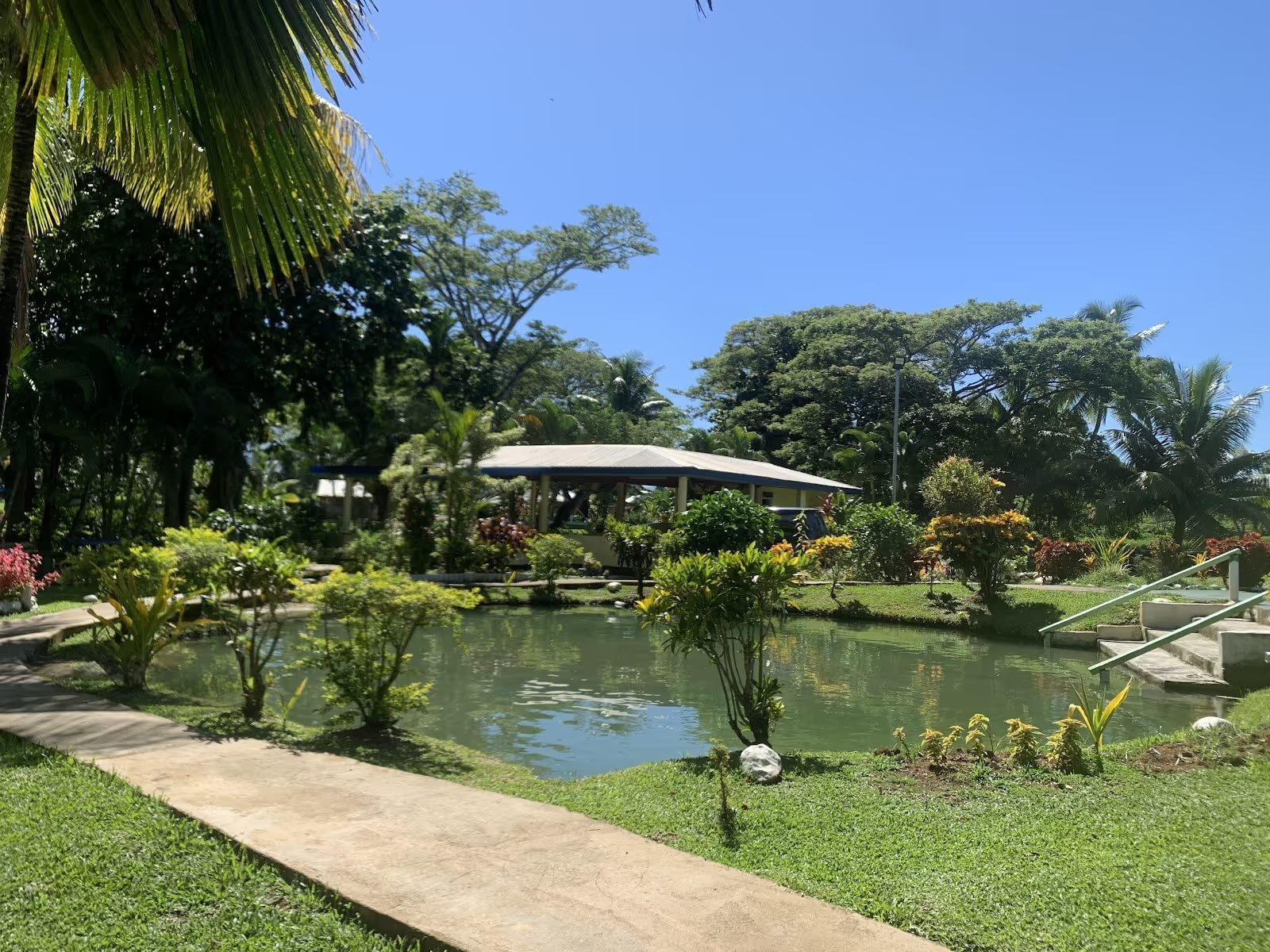
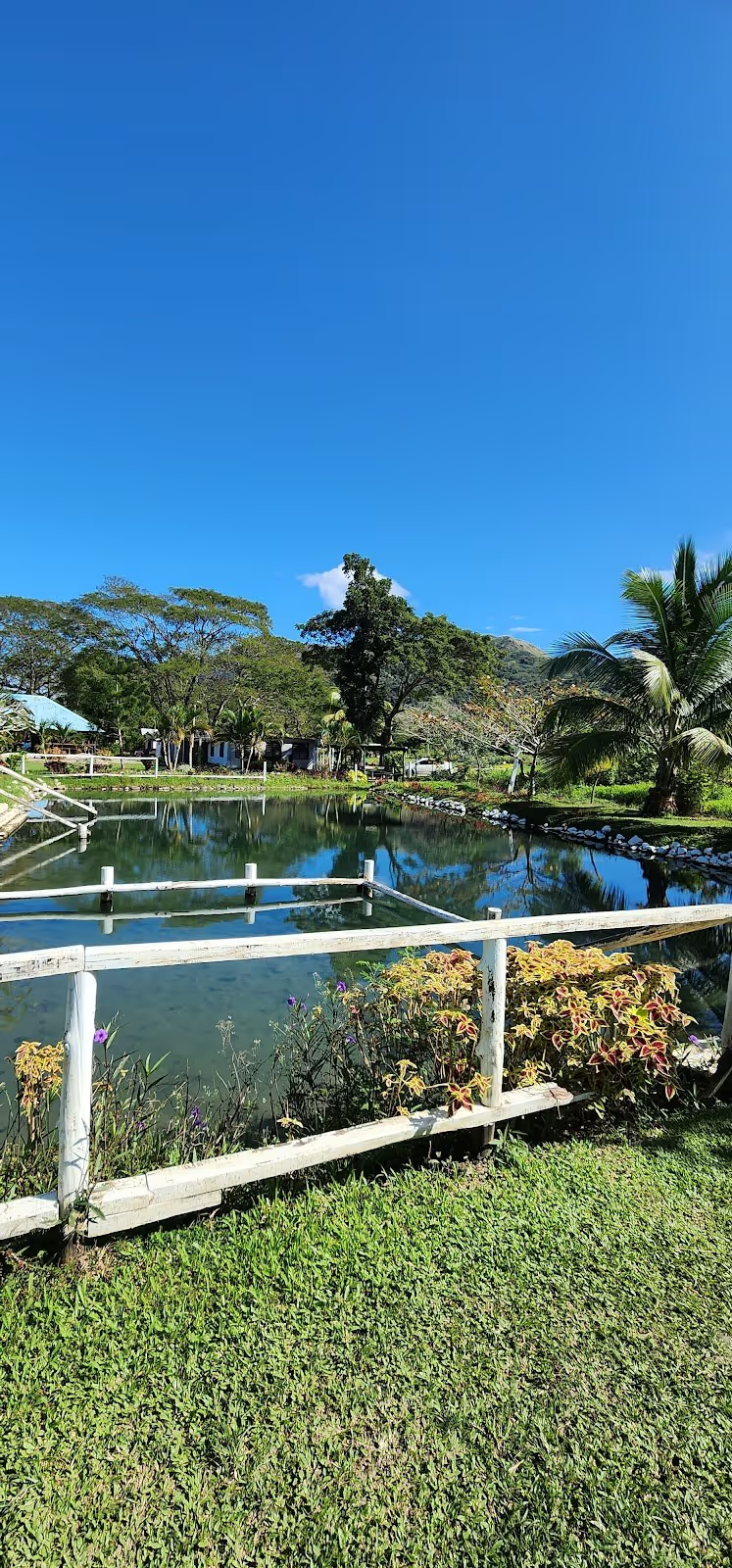
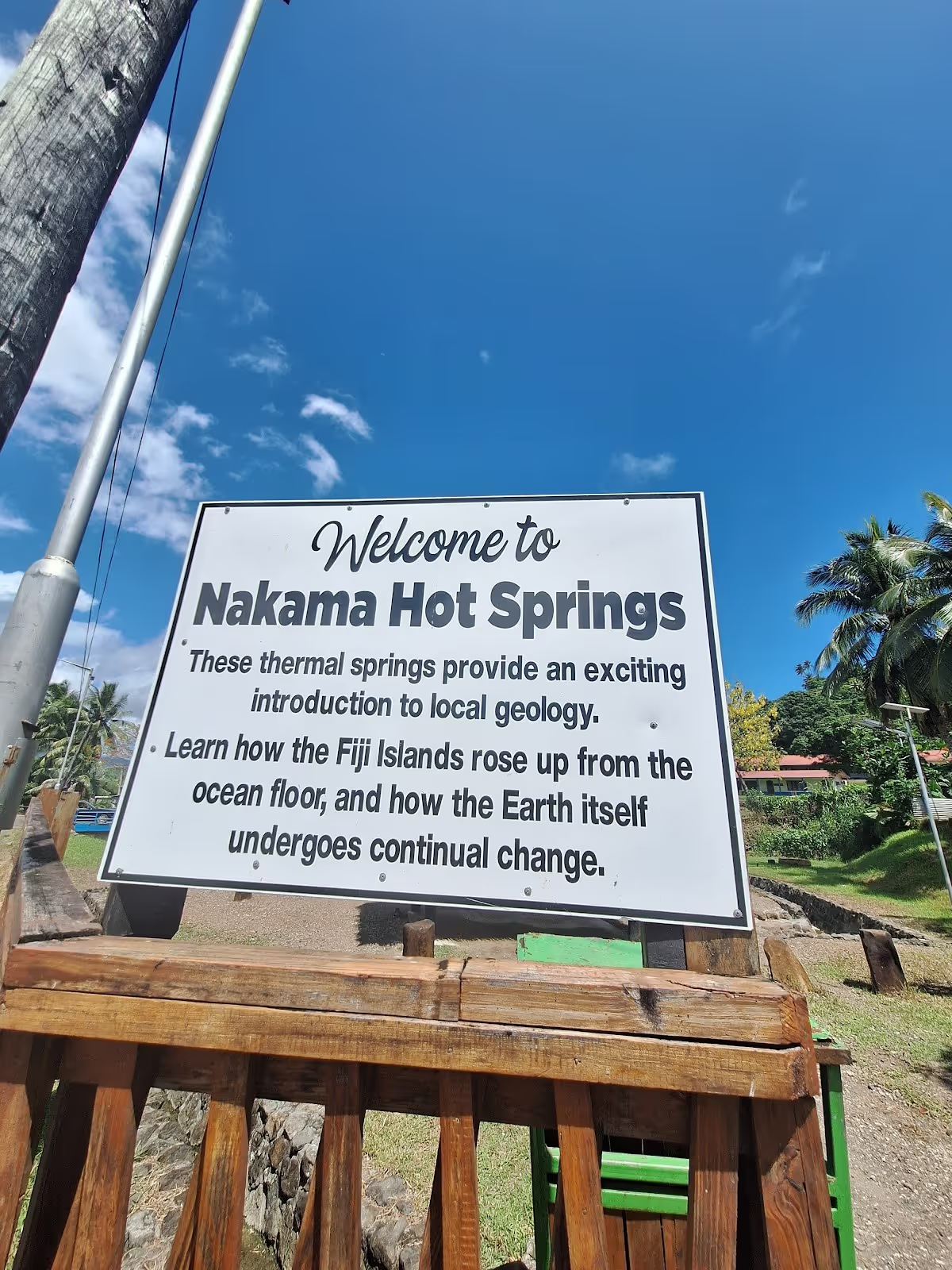
Nakama Hot Springs, Fiji is a free geothermal attraction in the centre of Savusavu, a small town on the south coast of Vanua Levu, Fiji's second largest island. The springs produce near-boiling water that rises through faults in the earth and emerges along the foreshore, creating columns of steam visible from the main road. The site was formally refurbished and reopened in August 2022 after a FJD 75,000 upgrade that introduced stone walls, landscaped paths, drainage, and informational signage explaining the local geology.
Savusavu Bay was formed from a volcanic caldera, and three major fault lines run close to the town, allowing surface water to seep deep into the earth, absorb heat from magma bodies, and return to the surface. The water at Nakama is recharged by sea water entering through a fault on the eastern side of the bay, giving it elevated sodium and chlorine content. These hot springs in Fiji are among the most accessible geothermal features in the South Pacific.
Visiting Nakama is less about soaking and more about observing geothermal heat in its most direct form. Locals have long used the vents as a natural kitchen, cooking dalo, fish, and other food using the heat and steam. Three open-sided bures provide shaded seating, and information boards give context on the volcanic geology of the area.
Location & Access
Getting to Nakama Hot Springs
Nakama Hot Springs is reached on foot from the centre of Savusavu, with the main vents located on Nakama Road behind the Max Value store and directly across from the Savusavu Hot Springs Hotel. No hike is required; the springs are within easy walking distance of most accommodation and services in the town centre. Most visitors arriving in Savusavu reach the island by domestic flight from Nadi or Suva, a journey of around one hour. Savusavu Airport is approximately 2.5 kilometres from the springs.
Visitors staying in town can walk to the site in a few minutes from the waterfront area. Those arriving by taxi from the airport will find the springs accessible without needing an additional vehicle. If arriving by car, Nakama Road is paved and runs along the foreshore, though parking near the springs is limited and visitors should approach on foot. The foreshore vents are also visible from the road at low tide, when steam rising from the waterline is easy to spot.
Savusavu is accessible from Nadi by domestic flight or by ferry from Suva or Lautoka on a longer overnight route. For those looking for hot springs near Savusavu, no special transport is needed once in town, as the springs sit in the centre itself. Guides are available locally for an additional fee, though the on-site signage makes independent visits straightforward. There are no toilet or changing facilities at the springs, so visitors should prepare at their accommodation beforehand.
Suitability & Accessibility
Who Can Visit Nakama Hot Springs
Nakama Hot Springs suits curious visitors of most ages and fitness levels, as the terrain is flat, the walk from town is short, and no physical exertion is required to reach or experience the site. The spring area was designed for easy public access following the 2022 upgrade, with paved paths, stone walls, and seating bures that make it comfortable for short visits. Children often find the steaming vents fascinating, though adults must keep young children away from the active vent areas at all times, as the water is near boiling and direct contact would cause serious burns.
The site is suitable for older visitors and those with limited mobility who can manage short walking distances on paved surfaces. However, wheelchair accessibility cannot be confirmed, as some sections near the foreshore involve uneven ground, damp soil, and potential drop-offs close to the waterline. Visitors with mobility considerations are advised to check local conditions on arrival and avoid the closest vent viewpoints if the ground appears wet or unstable.
Those looking for free hot springs in Fiji will find Nakama is a viewing and cultural experience rather than a bathing destination. The water temperature makes soaking impossible, and the site is best understood as a compact geothermal field with deep cultural roots in the Savusavu community. Nakama suits visitors with an interest in volcanic geology and authentic Fijian life, and pairs well with a broader walk through the town centre.
Safety & Etiquette
Nakama Hot Springs Safety Tips
Nakama Hot Springs is safe to visit as a viewing site, but the water temperature is near boiling and direct contact with the vents or pooling hot water will cause serious burns. This is the single most important safety fact: the springs are not a soaking pool, and no part of the active vent area or runoff channels should be touched or entered. The 2022 refurbishment included stone walls, drainage, and defined paths specifically to help visitors maintain a safe distance from the hottest zones, and these should be respected.
Children must be kept close and under direct supervision at all times near the vents. A child moving quickly or reaching toward steam or water is at serious risk of injury. The basic rule is simple: observe closely, but stay on the defined paths and keep clear of the vent zones. During and after rain, surfaces around the springs may become slippery, and steam mixing with rainfall can reduce visibility, so extra care is needed underfoot in wet conditions.
Footwear with grip is recommended. There is no lifeguard or attendant at the springs, so visitor safety is entirely self-managed. If the ground near the foreshore looks wet or unstable, observe from a slightly greater distance rather than approach the closest viewpoints. Etiquette at the site includes respecting the locals who use the springs as a cooking area. This is an active part of daily community life, and visitors are guests in a working space. Do not interfere with food or equipment being used for cooking, and give locals space. There is no cafe or shop at the springs, so bring water and sun protection.