Nga Waiariki Ngawha Springs, New Zealand
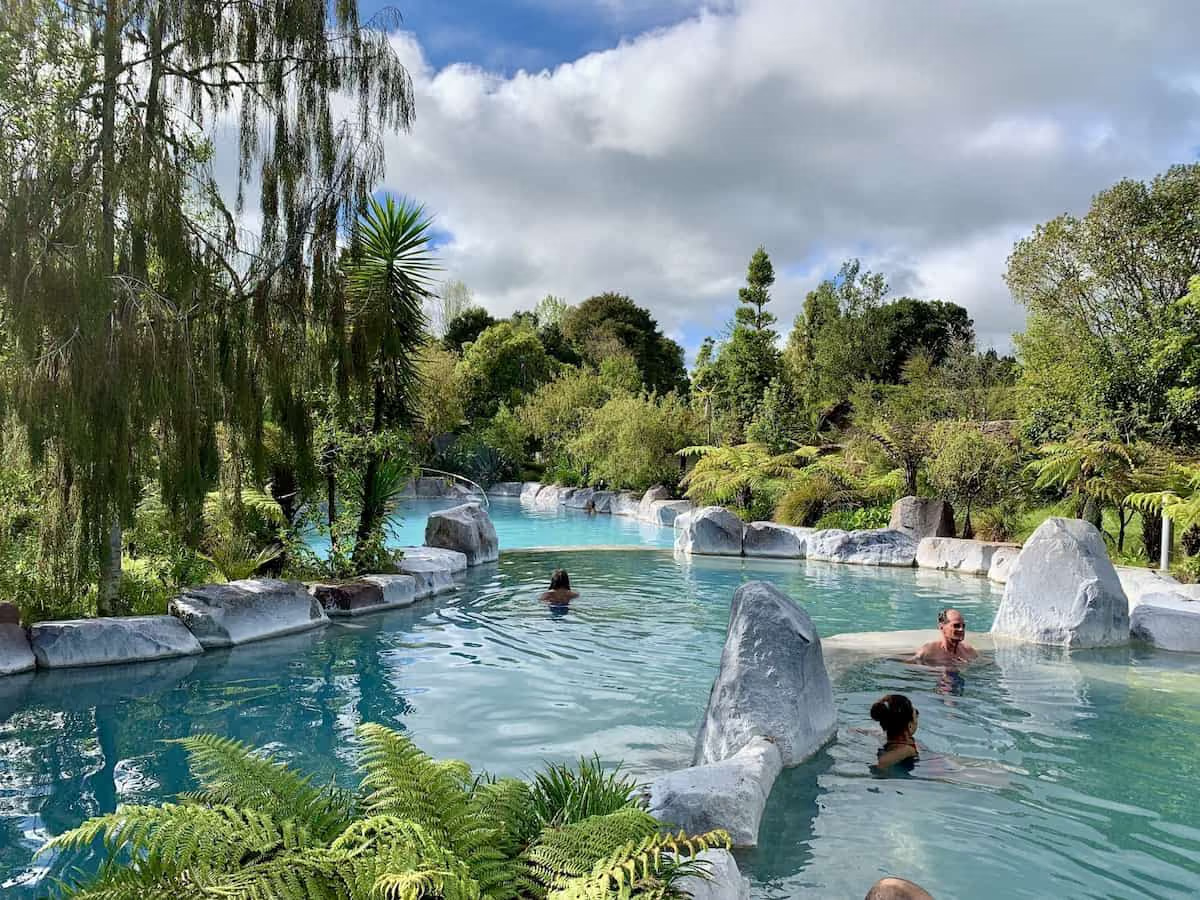
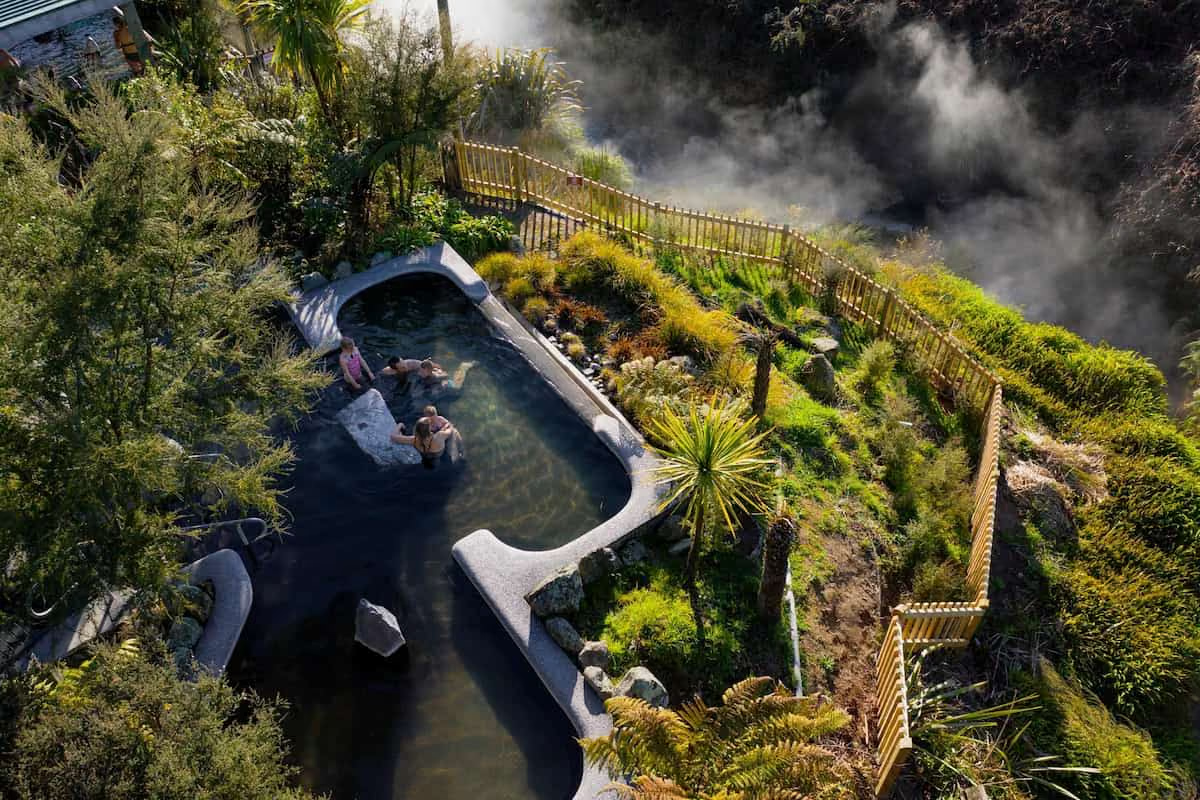
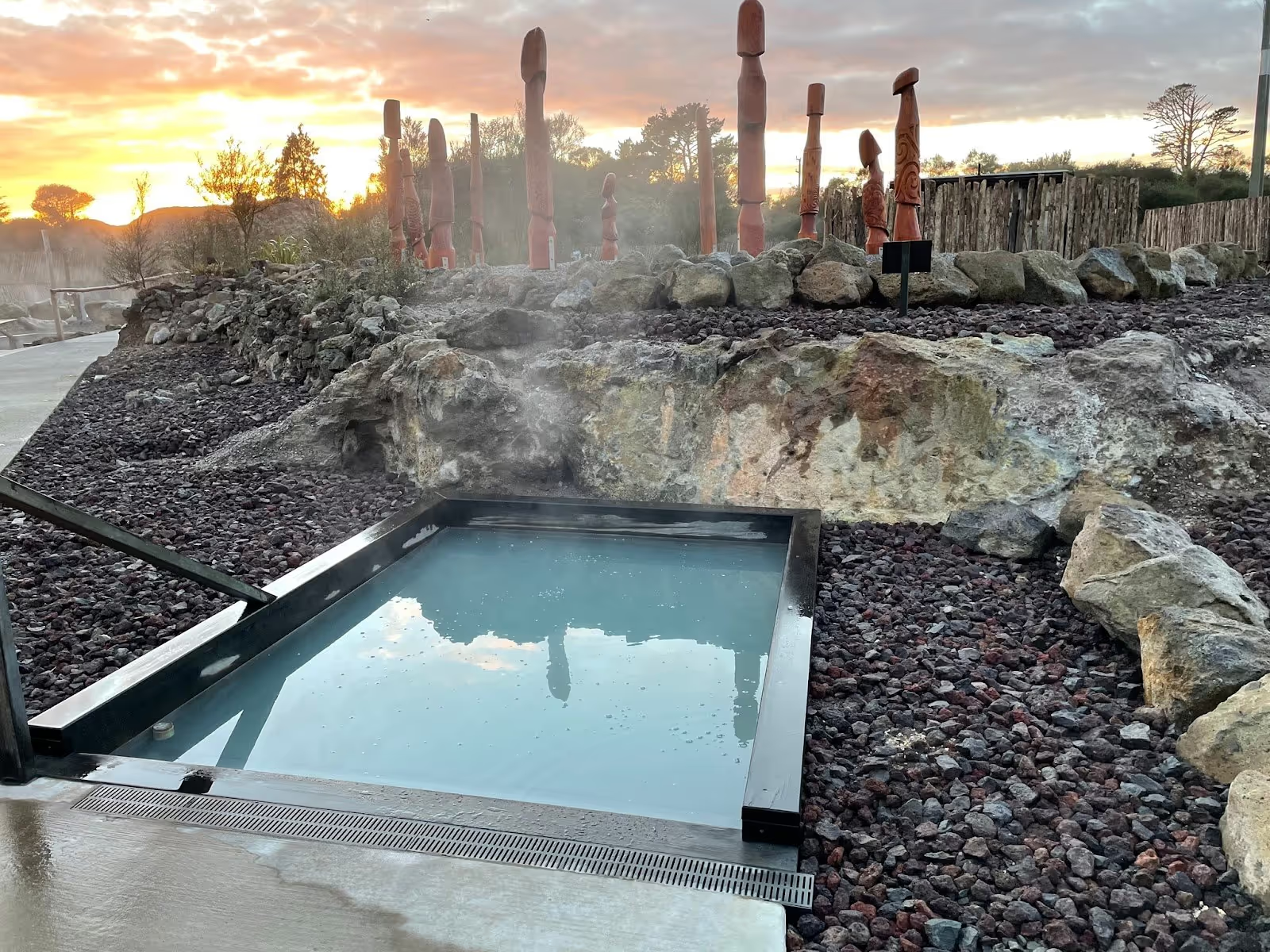
Paid Maori-owned geothermal pool complex near Kaikohe with 16 mineral pools at varying temperatures and colours. Sessions are two hours; booking recommended.
303 Ngawha Springs Road, Ngawha, Kaikohe 0473, Northland, New Zealand
Kaikohe
NZ
-35.4065151
173.857896
Public Pools & Parks
Paid
Easy to reach (no hike)
Be mindful
Swimsuit required
true
false
Australia & Oceania
nga-waiariki-ngawha-springs-new-zealand
How many pools are there at Nga Waiariki Ngawha Springs?
The Ngawha Springs complex has two separate areas. Nga Waiariki is the main public complex, open Wednesday to Sunday, with 16 geothermal pools each having its own temperature, colour, and mineral composition. Nga Puna is the smaller complex, open Monday and Tuesday, with 8 pools and a quieter, more intimate atmosphere. Both areas can be accessed via the standard session entry. Private bookings for Nga Puna are also available for groups wanting exclusive use.
What are the pool temperatures like at Ngawha Springs?
The pools at Ngawha Springs vary considerably in temperature and this variation changes from day to day based on geothermal activity. The cooler pools start at approximately 32 degrees Celsius and provide a comfortable soak for most visitors. Some pools, including those historically named Favourite and Doctor, are considerably hotter. The operator posts current pool temperatures at the entrance before each session. Always check temperatures before entering any pool and do not judge a pool by its colour or appearance alone.
Do I need to book Ngawha Springs in advance?
Advance booking is strongly recommended. The site offers five two-hour sessions each day and session numbers are managed. Booking is available online through the official Ngawha Springs website or by phone on 09 405 2245. Walk-in entry may be available but is not guaranteed, particularly during weekends, New Zealand school holidays, and public holidays. Visitors who have paid online and are eligible for a concession rate must bring proof of address to present on arrival.
Are children allowed at Ngawha Springs?
Yes, children are welcome at Ngawha Springs and families are accommodated. The operator's policies require that children wear appropriate swimwear; specifically, children must wear pants in the pools and babies must wear a swimming nappy. Children must be supervised by an adult at all times throughout the session. Some pools are extremely hot and must be kept off-limits for children. The cooler pools in the complex are appropriate for younger visitors, and the variety of pool temperatures means there is generally a suitable option for all ages.
What is the cultural significance of Ngawha Springs?
2026-09-21
Updated September 21, 2026
Nga Waiariki Ngawha Springs, New Zealand
Paid Maori-owned geothermal pool complex near Kaikohe with 16 mineral pools at varying temperatures and colours. Sessions are two hours; booking recommended.
Experience
Public Pools & Parks
Access Level
Easy to reach (no hike)
What to Wear
Swimsuit required
Address
303 Ngawha Springs Road, Ngawha, Kaikohe 0473, Northland, New Zealand
Find a place to stay
Compare prices near this exact spot across Booking.com, Expedia and more.
See nearby stays →
Overview
About Nga Waiariki Ngawha Springs
Nga Waiariki Ngawha Springs, New Zealand is a paid Maori-owned geothermal pool complex at 303 Ngawha Springs Road, Ngawha, approximately 5 km east of Kaikohe in Northland on the North Island. The site is operated by the Parahirahi Ngawha Waiariki Trust as kaitiaki (guardians) of the springs. It comprises Nga Waiariki with 16 public geothermal pools, and Nga Puna, a smaller complex of 8 pools accessible as a quieter option. Entry is paid and sessions run for approximately two hours, with five sessions each day. Advance booking is recommended.
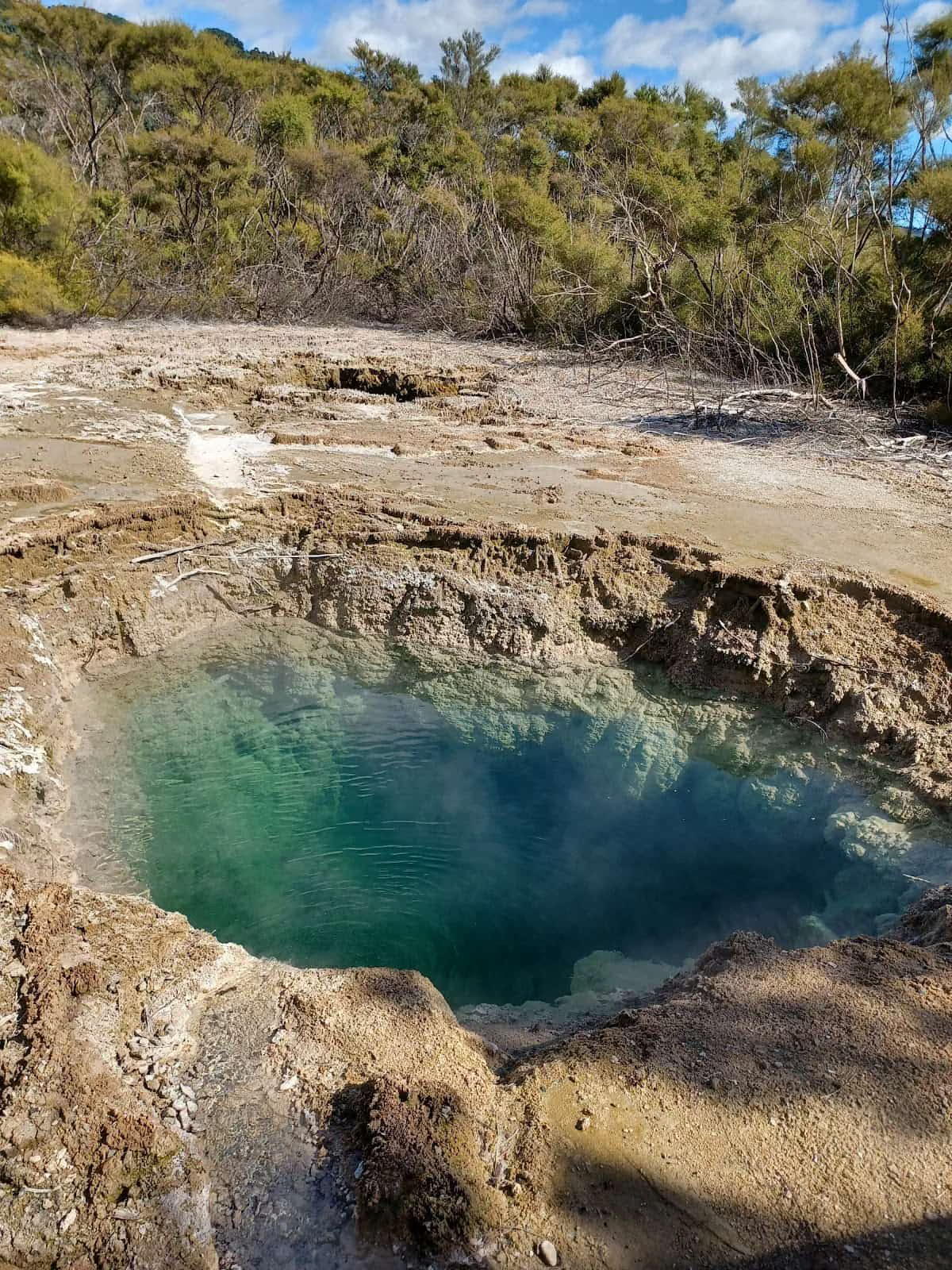
The springs are culturally significant to Ngapuhi and have been used for centuries. Historical accounts record the springs being discovered by Kareariki, an ancestress of the local Maori, in the late 1600s. The complex was renovated and reopened in April 2021 with new changing rooms, a cafe, ticket office, and restored pool surrounds. Each of the 16 pools has its own temperature, colour, and mineral composition. Among the geothermal pools in New Zealand outside the Taupo Volcanic Zone, Ngawha Springs is the most distinctive for pool variety within a single site.
Location & Access
Getting to Nga Waiariki Ngawha Springs
Nga Waiariki Ngawha Springs is at 303 Ngawha Springs Road, Ngawha 0473, approximately 5 km east of Kaikohe. From Kaikohe, head east on Ngawha Springs Road and follow signs for the springs. The site has a car park and is clearly signposted. From Whangarei, the drive takes approximately 1 hour 15 minutes via State Highway 14 to Dargaville or via State Highway 1 north to Kawakawa and then State Highway 12 toward Kaikohe. From Auckland, allow approximately 3 to 3.5 hours north on State Highway 1.
Kaikohe is the nearest town and the practical base for fuel and supplies. Opening hours are 7 am to 9 pm daily, with Nga Waiariki open Wednesday to Sunday and Nga Puna open Monday and Tuesday. Five two-hour sessions are available each day. No public transport serves the site directly; self-drive is the standard approach. The car park is flat and accessible by campervan.
For visitors seeking geothermal pools near Kaikohe in a culturally significant site with a range of pool temperatures and mineral types uncommon elsewhere in New Zealand, Ngawha Springs is the primary destination in the Northland region. Booking online or by phone before arriving is strongly recommended to secure a preferred session time, particularly during weekends and New Zealand school holidays.
Suitability & Accessibility
Who Should Visit Nga Waiariki Ngawha Springs
Nga Waiariki Ngawha Springs suits adults and families with children who want to experience a culturally significant Maori geothermal complex with genuine mineral pool variety, and who appreciate an unpretentious, community-managed setting rather than a polished tourist resort. The 16 pools at Nga Waiariki offer a range of temperatures and mineral compositions unlike any other single hot spring site in New Zealand, and the cultural context is woven through the experience.
Children are welcome and families are well accommodated. The operator's policies specifically cover children: children must wear appropriate swimwear including pants, babies must wear a swimming nappy, and children must be supervised by an adult throughout the session. The pools vary significantly in heat and some are extremely hot, so keeping children away from the hotter pools is essential. The cooler pools in the complex are suitable for children and adults with lower heat tolerance.
Wheelchair accessibility is not documented in the operator's official materials or credible third-party sources. The pools are natural mineral pools and the site has steps that the operator specifically warns are difficult to see due to pool colouring. Visitors with mobility requirements should contact Ngawha Springs before booking to discuss what is accessible at the current facility. For visitors seeking family hot springs near Kaikohe with a genuinely unique geothermal character and deep cultural roots, Ngawha Springs stands alone in the Northland region.
Safety & Etiquette
Nga Waiariki Ngawha Springs Safety Tips
Nga Waiariki Ngawha Springs is generally safe for visitors who follow the operator's guidelines, but the pools vary significantly in temperature and some are extremely hot. Always check pool temperatures before entering; the operator posts current temperatures at the entrance as these change daily. Do not assume a pool is at a comfortable temperature based on appearance alone. Children must be kept away from the hotter pools and must be supervised by an adult throughout the session.
The operator explicitly warns that pool steps and bench seats are difficult to see due to mineral water colouration. Move carefully in and out of every pool. Pathways between pools can be slippery when wet; wear footwear between pools and remove it only at the water edge. Report any accident, slip, or fall to pool attendants immediately. Keep your head above water at all times.
Wear old swimwear and towels as the mineral water causes a persistent odour and may discolour fabric. Remove rings and jewellery before entering as mineral waters can tarnish metal. Do not dig mud from in or around the pools. The operator prohibits entry for visitors with flu symptoms, diarrhoea, or menstruation. No alcohol is permitted on site. Stay hydrated throughout your session. Avoid extended soaking in the hotter pools if you have cardiovascular conditions.
Swimwear must be appropriate: the operator enforces a dress code requiring adequate coverage, and will provide an alternative if needed. Each session is two hours; plan your pool sequence to allow time in each pool without rushing. Pool attendants are present throughout sessions to assist and enforce pool rules. Towel hire is available at reception.
Frequently Asked Questions
1
How many pools are there at Nga Waiariki Ngawha Springs?
The Ngawha Springs complex has two separate areas. Nga Waiariki is the main public complex, open Wednesday to Sunday, with 16 geothermal pools each having its own temperature, colour, and mineral composition. Nga Puna is the smaller complex, open Monday and Tuesday, with 8 pools and a quieter, more intimate atmosphere. Both areas can be accessed via the standard session entry. Private bookings for Nga Puna are also available for groups wanting exclusive use.
2
What are the pool temperatures like at Ngawha Springs?
The pools at Ngawha Springs vary considerably in temperature and this variation changes from day to day based on geothermal activity. The cooler pools start at approximately 32 degrees Celsius and provide a comfortable soak for most visitors. Some pools, including those historically named Favourite and Doctor, are considerably hotter. The operator posts current pool temperatures at the entrance before each session. Always check temperatures before entering any pool and do not judge a pool by its colour or appearance alone.
3
Do I need to book Ngawha Springs in advance?
Advance booking is strongly recommended. The site offers five two-hour sessions each day and session numbers are managed. Booking is available online through the official Ngawha Springs website or by phone on 09 405 2245. Walk-in entry may be available but is not guaranteed, particularly during weekends, New Zealand school holidays, and public holidays. Visitors who have paid online and are eligible for a concession rate must bring proof of address to present on arrival.
4
Are children allowed at Ngawha Springs?
Yes, children are welcome at Ngawha Springs and families are accommodated. The operator's policies require that children wear appropriate swimwear; specifically, children must wear pants in the pools and babies must wear a swimming nappy. Children must be supervised by an adult at all times throughout the session. Some pools are extremely hot and must be kept off-limits for children. The cooler pools in the complex are appropriate for younger visitors, and the variety of pool temperatures means there is generally a suitable option for all ages.
5
What is the cultural significance of Ngawha Springs?
Ngawha Springs are a taonga (treasure) of the Ngapuhi iwi and have been used for bathing, healing, and spiritual replenishment by local hapu for centuries. Historical accounts record the springs being discovered by Kareariki, an ancestress of the local Maori, in the late 1600s. The springs have cultural, environmental, and political significance within Northland and are an important part of local Ngapuhi identity. The site is operated by the Parahirahi Ngawha Waiariki Trust as kaitiaki (guardians), with a responsibility to protect the springs and share their healing waters with future generations. Maori oral tradition connects the springs to the volcanoes of Hawaii, reflecting the broader genealogical Polynesian connections across the Pacific.
Gallery
No pictures available for this hot spring.
Location
Address:
303 Ngawha Springs Road, Ngawha, Kaikohe 0473, Northland, New Zealand
Find a place to stay
Compare prices near this exact spot across Booking.com, Expedia and more.
See nearby stays →
-35.4065151
173.857896
Nga Waiariki Ngawha Springs, New Zealand
Text Link303 Ngawha Springs Road, Ngawha, Kaikohe 0473, Northland, New Zealand
More hot springs in New Zealand
Some accommodation links on this site are affiliate links. If you book through them, we may earn a small commission at no additional cost to you. This helps keep hotspringsguides.com free to use.