
Quick FactsOverview
About Rhodes Warm Spring
Rhodes Warm Spring, Colorado is a free, undeveloped geothermal spring located in Park County near the town of Fairplay in the Rocky Mountains. The spring emerges from Leadville Limestone at an elevation of approximately 10,200 feet, making it one of the higher-altitude warm springs in the state. Fairplay, the nearest town, sits in the broad South Park basin and serves as the primary access point for visitors heading to the spring.
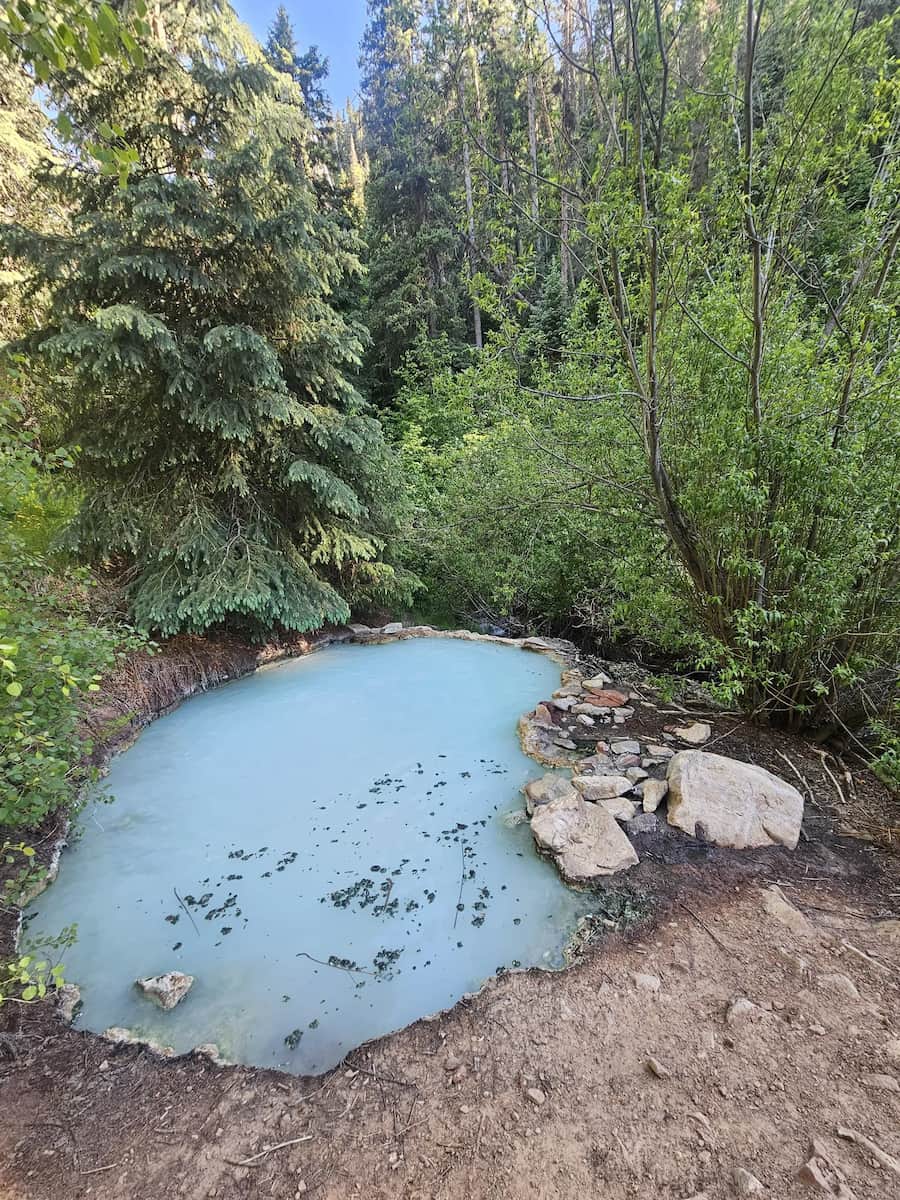
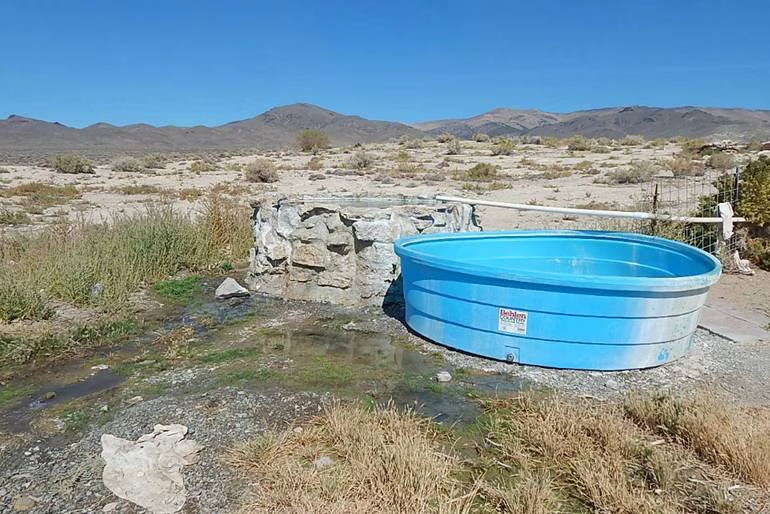
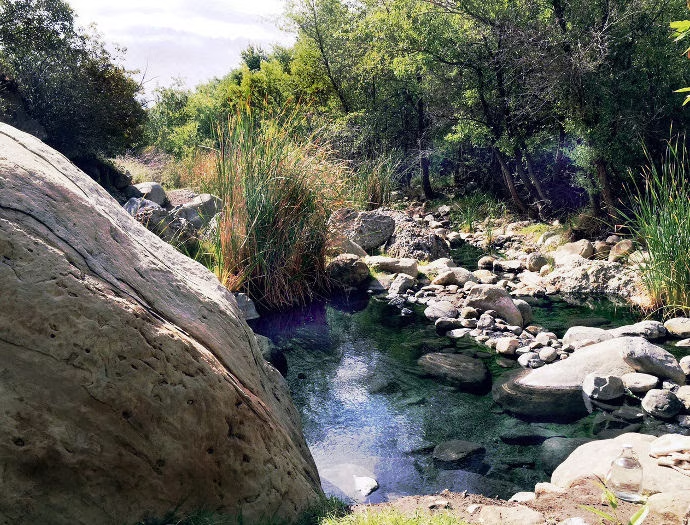
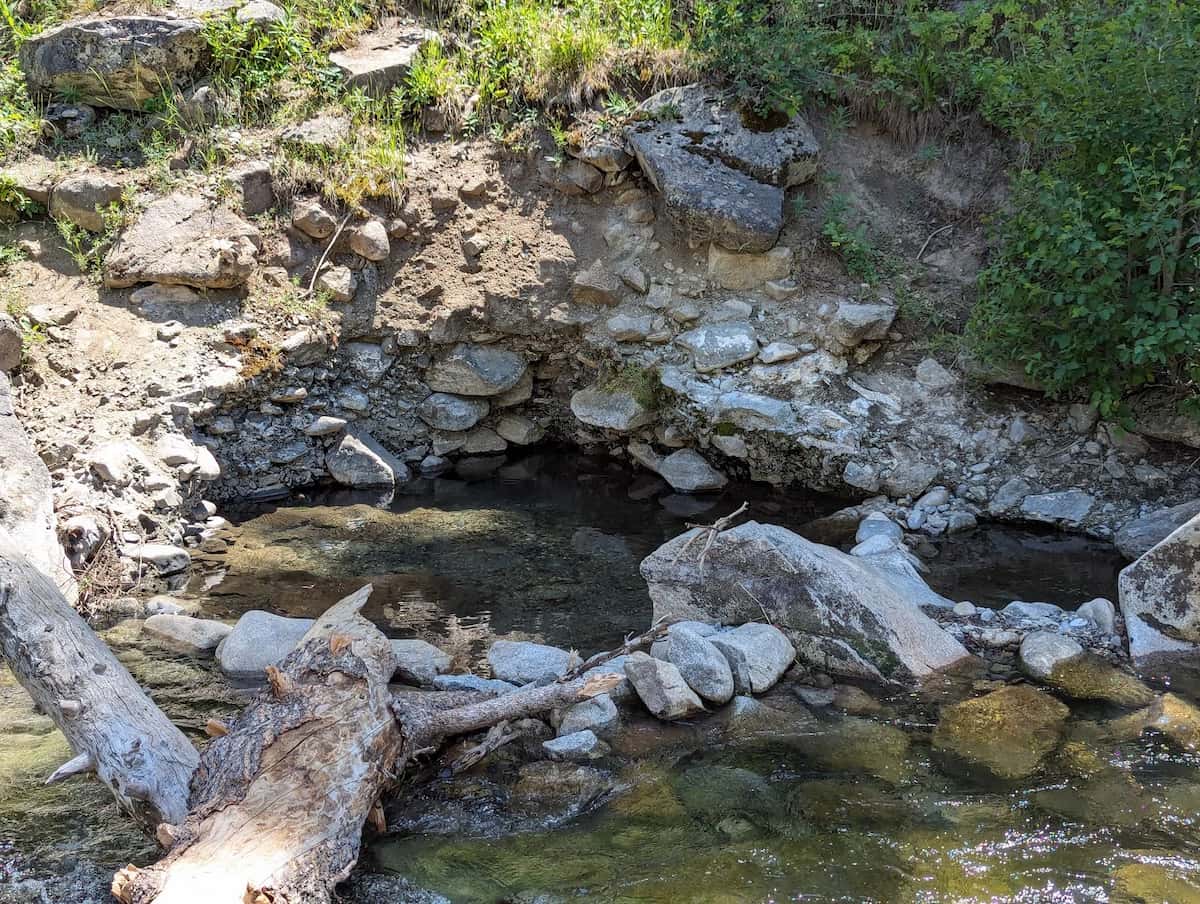
The spring is a natural seep rather than a developed soaking pool. Water surfaces at a lukewarm temperature, well below what most visitors expect from a traditional soaking experience. The geothermal source is associated with deep circulation through the Leadville Limestone aquifer, a formation common in the central Colorado Rockies.
The surrounding landscape is high mountain terrain with alpine meadows and views of the Mosquito Range. The area is part of the broader South Park region, which contains several other natural hot springs in Colorado at varying temperatures. Visitors interested in warmer soaking options may find better choices elsewhere in the region.
Location & Access
Getting to Rhodes Warm Spring
Rhodes Warm Spring is reached via the Four Mile Creek trail, a moderate loop of approximately 11 kilometers (roughly 6.8 miles) with about 300 meters of elevation gain, starting from a trailhead southwest of Fairplay in Park County. The trail follows Four Mile Creek through mountain terrain before reaching the spring area. No formal trailhead signage marks the route, and visitors should carry a topographic map or GPS device.
From Fairplay, take US Highway 285 south and look for county roads heading west toward the Mosquito Range foothills. The trail area is displayed on the USGS Fairplay West quadrangle. Road conditions leading to the trailhead vary seasonally, and high-clearance vehicles are recommended during spring snowmelt. Winter access is generally not feasible due to snow at this elevation.
Trail Conditions and Seasonal Access
The trail is rated as medium difficulty and suitable for moderately experienced hikers. Summer and early fall offer the best conditions. For visitors seeking hot springs near Fairplay, this trail provides a backcountry experience far removed from developed resort options. Cell service is limited along the trail, and the nearest services are in Fairplay. Carry adequate water and supplies for a full day hike.
Suitability & Accessibility
Who Should Visit Rhodes Warm Spring
Rhodes Warm Spring suits experienced hikers and geothermal enthusiasts rather than casual visitors looking for a warm soak, as the water temperature is too low for comfortable bathing and the hike to reach it is moderate in difficulty. The spring is best appreciated as a geological curiosity and a waypoint on a scenic backcountry loop rather than a soaking destination.
The hike requires a reasonable level of fitness and basic navigation skills. The trail gains nearly 1,000 feet over uneven terrain, and the high starting elevation of over 10,000 feet may affect visitors unaccustomed to altitude. Proper hiking footwear, layered clothing, and rain gear are recommended even in summer, as mountain weather at this elevation changes rapidly.
Accessibility at Rhodes Warm Spring
The spring and trail are not accessible to wheelchair users or visitors with limited mobility. There are no paved paths, boardwalks, or improved surfaces. The terrain is natural and unimproved throughout. Families with young children should consider the trail length and elevation gain carefully before attempting the hike. Those seeking free hot springs Colorado offers at easier access levels may find better options along the Arkansas River corridor or in the San Luis Valley to the south, where several springs are reachable by road.
Safety & Etiquette
Rhodes Warm Spring Safety Tips
Rhodes Warm Spring is located in a remote mountain area where natural hazards are present, and visitors should plan accordingly before setting out on the trail. The primary risks are related to altitude, weather exposure, and the absence of maintained infrastructure rather than the spring water itself.
At over 10,000 feet, altitude sickness can affect visitors who have not acclimatized. Symptoms include headache, nausea, and shortness of breath. Allow time to adjust if arriving from lower elevations. Afternoon thunderstorms are common in the Colorado Rockies during summer, and lightning poses a serious risk on exposed terrain. Start the hike early to return before afternoon weather develops.
Water and Environmental Safety
The spring water has not been tested for recreational safety on an ongoing basis. Do not drink the water without treatment. Wildlife in the area may include elk, mule deer, and occasionally mountain lions or black bears. Store food securely and make noise on the trail.
Leave No Trace at Rhodes Warm Spring
Pack out all trash and personal items. The spring area has no waste receptacles or restroom facilities. Land ownership in this area is not clearly documented, and visitors should be aware that portions of the route may cross private property. Check current land status with the Pike National Forest ranger district or Park County before visiting. Respect posted signs or barriers. Inform someone of your planned route and return time before departing.