
Quick FactsOverview
About Seljavallalaug
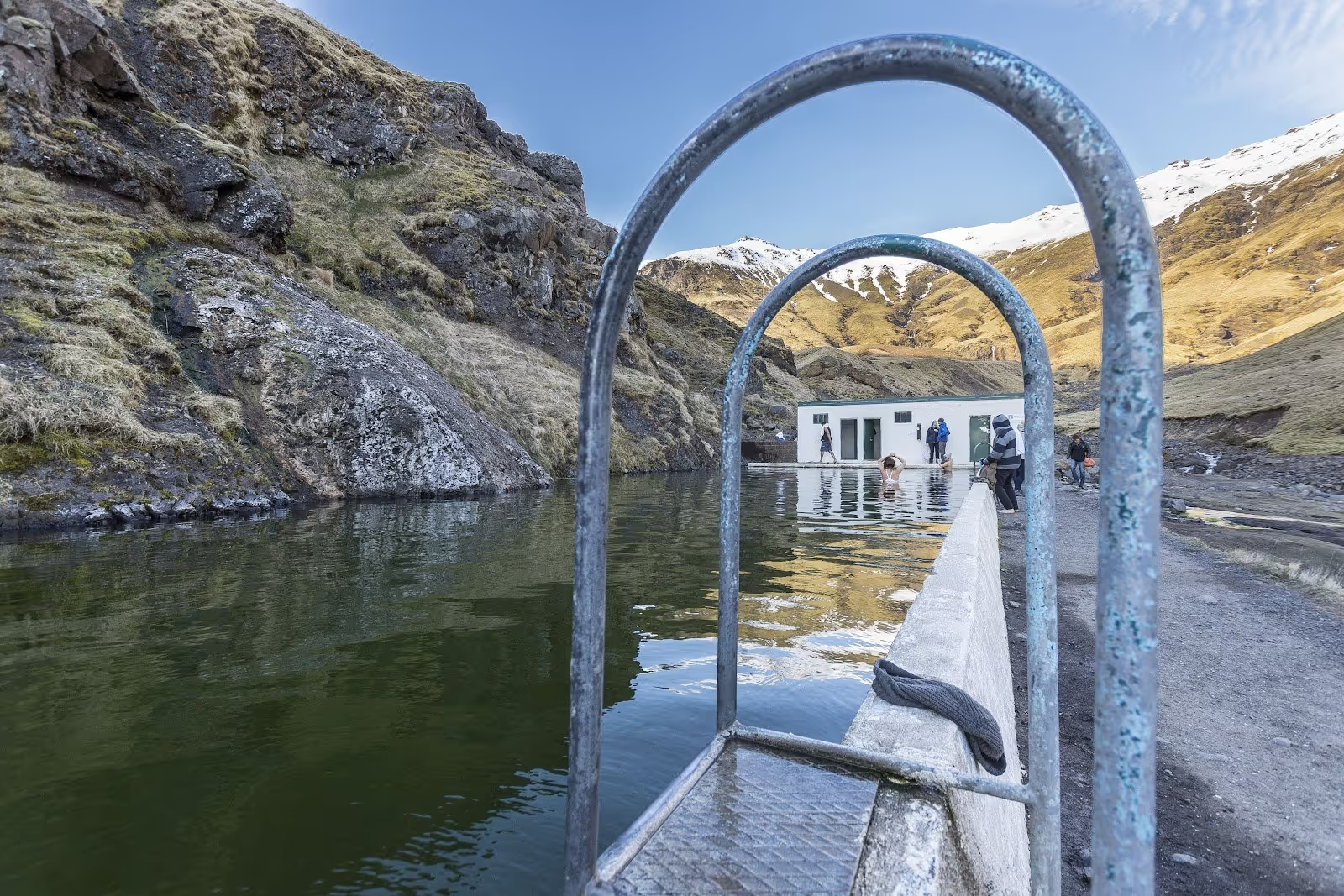
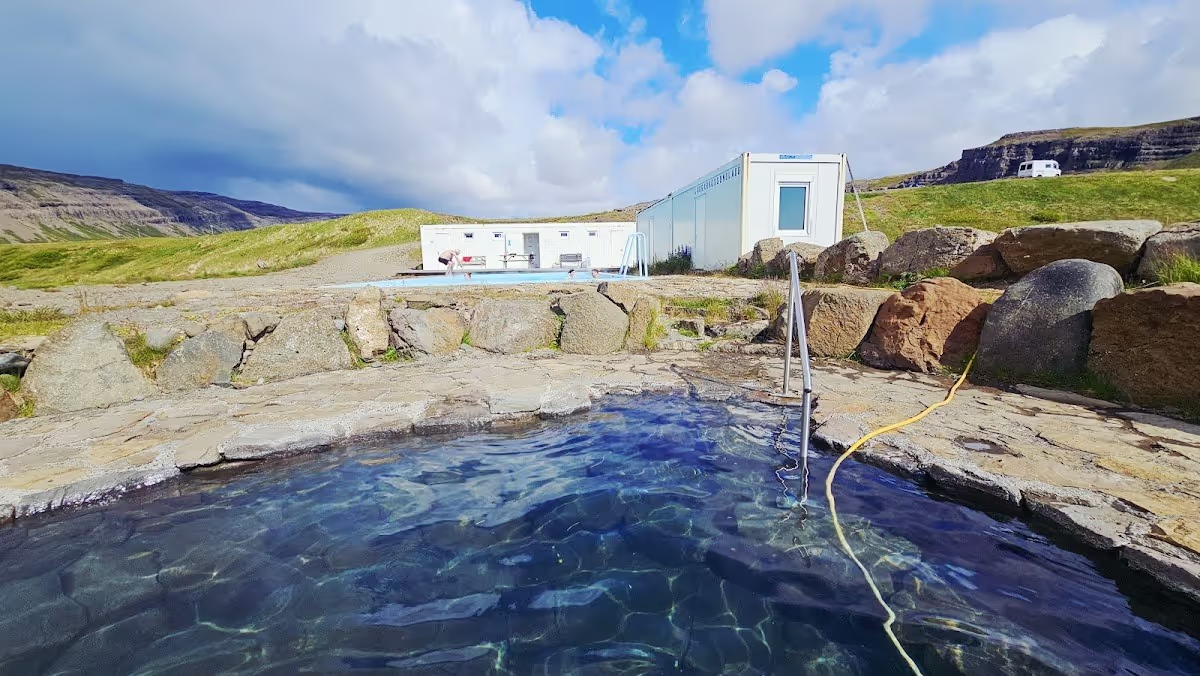
Seljavallalaug, Iceland is a free outdoor geothermal swimming pool on Iceland's South Coast, built in 1923 in a narrow valley below the Eyjafjallajokull volcano. It is one of the oldest swimming pools in Iceland, constructed by local volunteers to teach swimming to the community at a time when most Icelanders could not swim despite living close to the sea. The pool measures 25 metres long and 10 metres wide, with a depth of around 1.8 metres, and is fed by a natural geothermal spring. Water temperature typically ranges from 20 to 35 degrees Celsius depending on season, running cooler in winter and warmer in summer. A basic changing shed is on site. Entry is free year-round.
In 2010 the eruption of Eyjafjallajokull covered the pool and the surrounding valley in volcanic ash, forcing closure. Volunteers returned the following year to clean the pool by hand and restore it for use. The valley setting, with mossy cliffs rising on either side and a small stream to cross on the approach, gives the pool a remote atmosphere despite being reachable in around 20 minutes on foot from a roadside parking area. It is cleaned once per year by volunteers and relies on visitors leaving no trace to stay open.
Location & Access
Getting to Seljavallalaug
Seljavallalaug is reached from the Ring Road on Iceland's South Coast, approximately 150 km southeast of Reykjavik. Turn off Route 1 onto Route 242, signed Raufarfell, near the Þorvaldseyri farm. Follow Route 242 until the road ends at a small gravel parking area. The GPS coordinates for the pool are 63.5656 degrees north, 19.6076 degrees west. From the parking area, follow the path into the valley, keeping the river on the left side. The walk takes 15 to 20 minutes each way on a mostly flat but rocky path that can be wet and slippery after rain. A small wooden bridge crosses the stream and can become partially submerged in late winter when snowmelt is active.
The pool is not visible from the parking area and only becomes visible near the end of the walk as the path bends around a corner. There are no signs along the path or at the pool itself. Route 242 includes a short gravel section; a standard car can navigate it without difficulty in summer, though in winter the road and path can be snow-covered. The pool sits close to other South Coast attractions including Seljalandsfoss and Skogafoss waterfalls and Solheimajokull glacier, making it a straightforward addition to a South Coast driving day from Reykjavik.
Suitability & Accessibility
Who Seljavallalaug Suits
Seljavallalaug suits travelers on Iceland's South Coast who want a free, historic, and genuinely rustic geothermal soak in an undeveloped valley setting. The appeal is the combination of history, landscape, and the absence of any commercial infrastructure. It works best for people who are comfortable with variable temperatures, algae on pool surfaces, basic changing facilities, and no toilets or showers on site. Those who prefer reliably warm water and staffed pools will find it underwhelming; those who enjoy wild natural hot springs in Iceland will find it memorable.
Families can visit Seljavallalaug, but the short hike requires walking-ready children and the pool lacks supervision or dedicated child facilities. The pool floor and edges carry algae growth that makes surfaces slippery throughout. The water temperature varies; in cooler seasons it may feel tepid rather than warm. Early morning visits in summer are less crowded than midday. The pool is not suitable for visitors using wheelchairs or those who cannot manage a 15 to 20 minute walk on uneven ground.
Because Seljavallalaug is a community-maintained free resource, visitor conduct directly affects whether it remains open. Carry out all rubbish, do not use soap or shampoo in the pool, and use the changing shed. A donation box is on site for those who wish to contribute to maintenance.
Safety & Etiquette
Seljavallalaug Safety Tips
Seljavallalaug is generally safe for soaking, but it is an unmanned, unsupervised site with no lifeguard, no toilets, and no showers. The main safety considerations are the slippery algae-covered pool floor and edges, the variable water temperature, the rocky approach path which can be wet and uneven, and the absence of any emergency services in the immediate area.
The pool floor and all submerged surfaces carry algae growth that is consistently slippery throughout the year. Enter slowly using the steps, keep one hand on the edge or wall at all times when entering or exiting, and wear traction sandals on the surrounding concrete. The temperature varies by season and position in the pool; cooler water sits at the far end from the hot spring inflow and warmer water near the inlet. Test the water before settling in and avoid the immediate inflow area, which can be significantly hotter than the pool average.
The approach path follows a rocky riverbed and includes a stream crossing on the way in and out. Waterproof footwear or hiking boots are strongly recommended, especially if rain has been recent or snowmelt is active. The valley can be windy; bring a warm layer for the walk back after soaking, as the combination of wet swimsuit and valley wind can chill visitors quickly. Do not leave valuables in the car or unattended at the pool, as there are no lockers or staff on site. The nearest services including fuel, food, and medical care are in Hella, approximately 30 km west along Route 1.