Quick FactsOverview
About Soda Dam Hot Spring
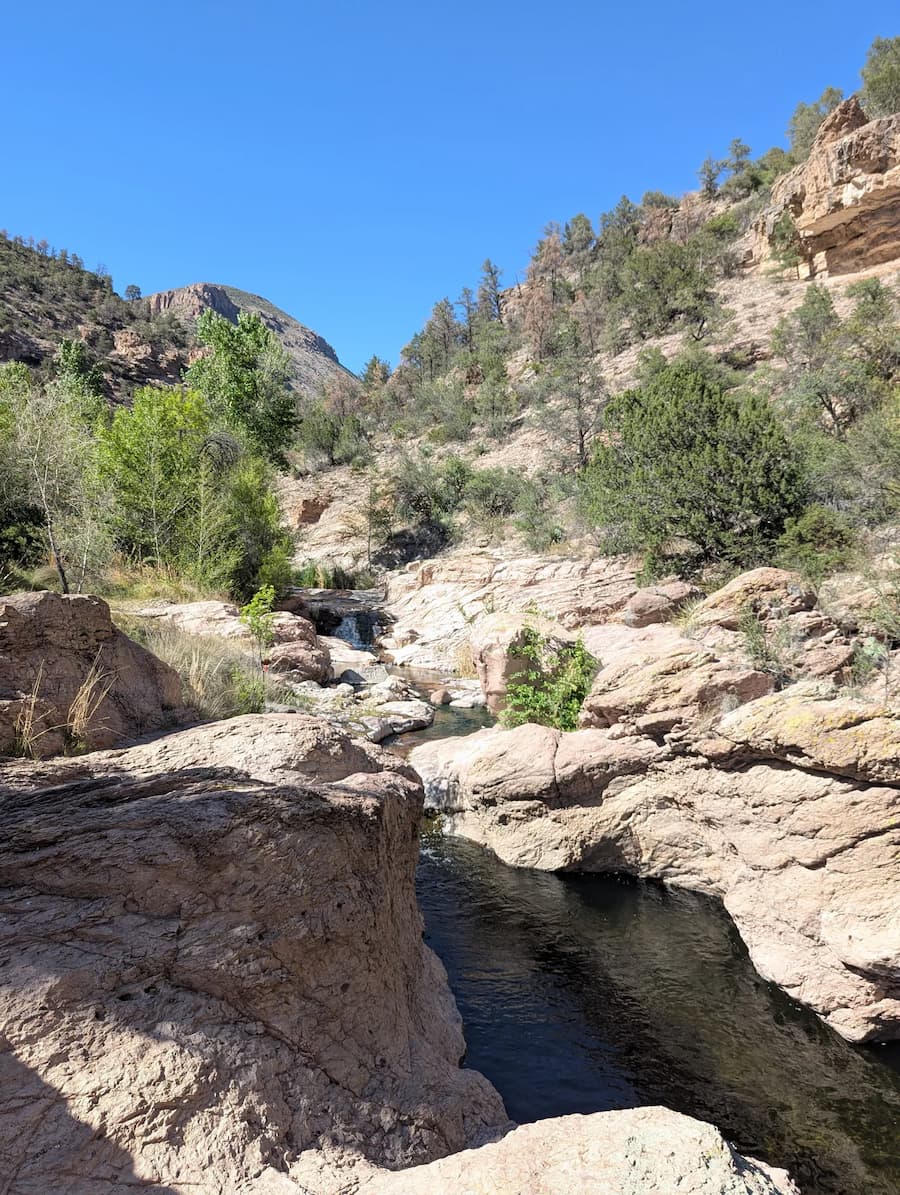
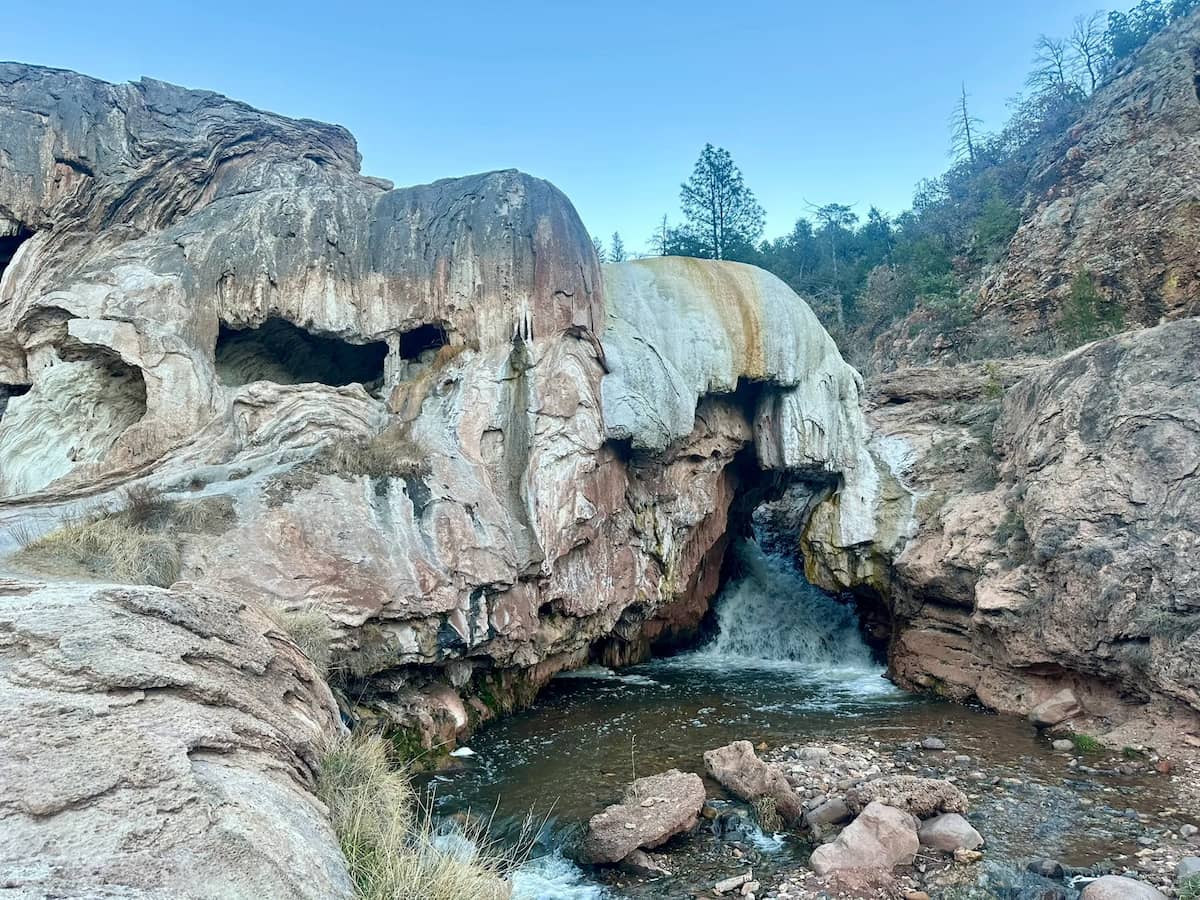
Soda Dam Hot Spring, New Mexico is a grouping of fifteen geothermal springs that have formed a unique calcium carbonate and travertine dam over the Jemez River in Sandoval County, just north of the village of Jemez Springs along State Route 4. Source water emerges at 117 degrees Fahrenheit, heated by the volcanic magma of the Valles Caldera, a dormant supervolcano. The formation is over 300 feet long, 50 feet high, and 50 feet wide at the base, built up over 7,000 years of continuous mineral deposition. The Jemez River flows through a dome-like bridge created by the deposits. Jemez Springs is the nearest community.
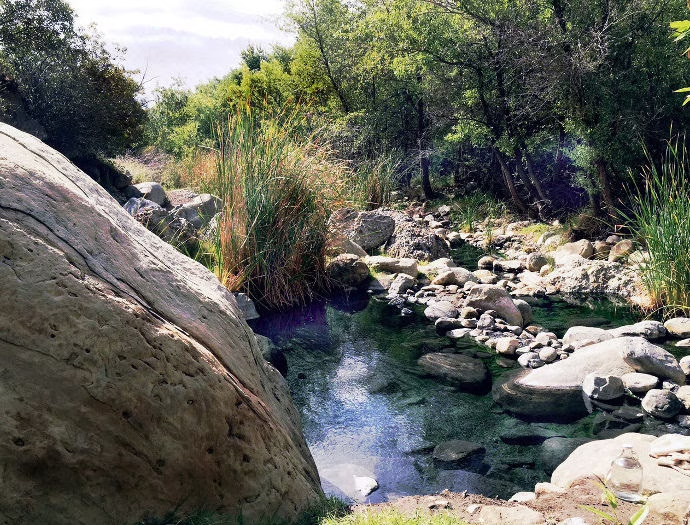
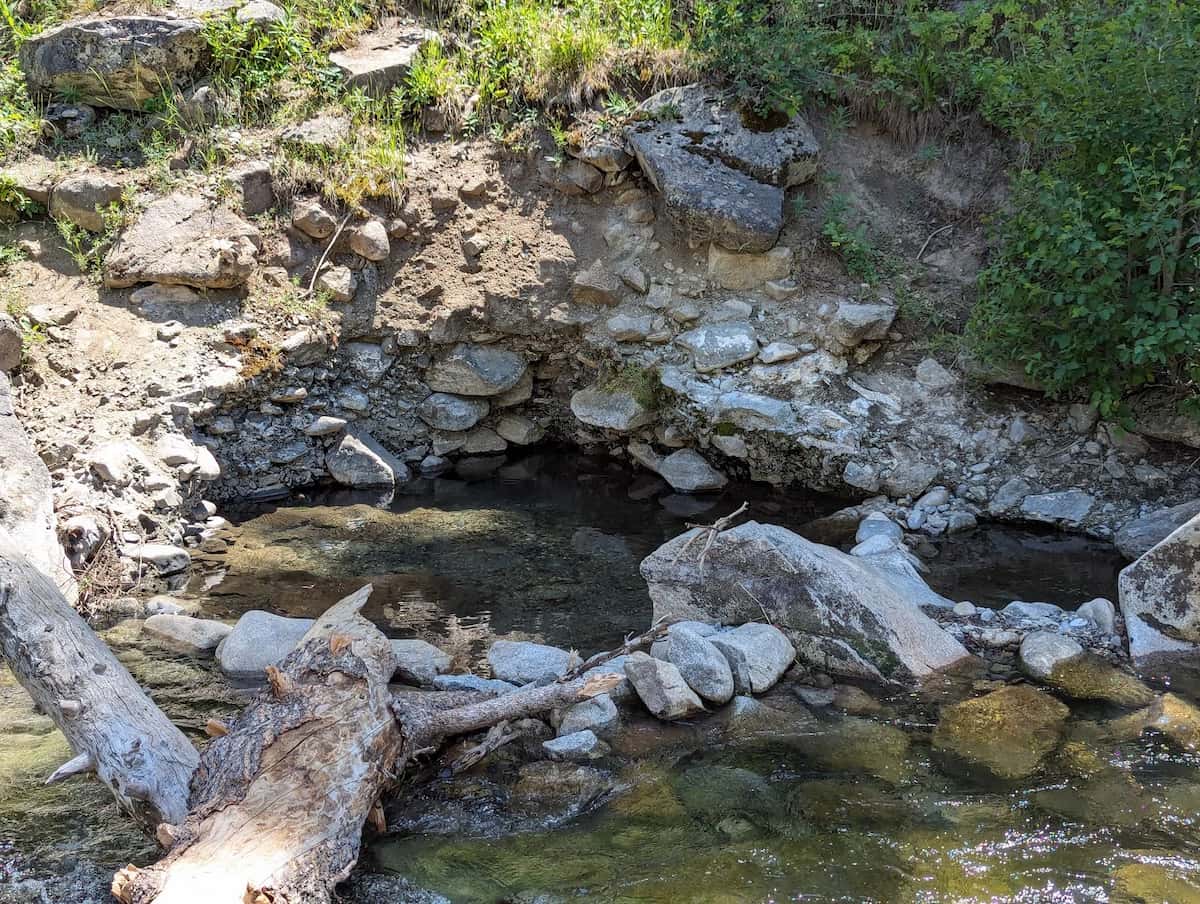
The dam features a waterfall, stalactites, stalagmites, and a small cave with a clear pool inside. Water bubbles up through the river bed near the base of the dam, creating warm pockets in the otherwise cold river. A pipe feeds hot spring water into a rocked-off pond area near the waterfall. The water has a mild sulfur scent. When State Route 4 was constructed, part of the dam was cut away, and most spring water now exits from the roadcut on the west side.
The site is used in Mars life-detection research, as algal filaments preserved in the carbonate rock are studied for clues about how ancient life on other planets might be identified.
Location & Access
Getting to Soda Dam Hot Spring
Soda Dam Hot Spring is located directly along the east side of State Route 4, just north of the village of Jemez Springs in Sandoval County. The dam is roadside with pullout parking for 8 to 10 vehicles. No hiking is required. The formation is visible from the road but a stop is needed to fully appreciate the scale and features.
From Albuquerque, drive north on Interstate 25 to Bernalillo, then west on US-550 to San Ysidro, and north on State Route 4 through the Jemez Mountains to Jemez Springs. The total drive takes approximately 1 hour and 15 minutes. The road is fully paved and scenic, passing through red rock canyon country and the Santa Fe National Forest.
Jemez Springs Area Hot Springs
The Jemez Springs corridor along State Route 4 has one of the highest concentrations of hot springs in New Mexico. For visitors seeking hot springs near Albuquerque, the Jemez area is the closest and most varied destination. Spence Hot Springs (109 degrees, hillside pools above the river, short hike), McCauley Hot Springs (99 degrees, 4-mile hike from Battleship Rock), and the Jemez Springs Bath House (commercial soaking in the village) are all along the same corridor. Soda Dam is the most accessible and visually dramatic geological feature.
Suitability & Accessibility
Who Should Visit Soda Dam Hot Spring
Soda Dam Hot Spring suits visitors seeking a dramatic geological attraction with optional warm water soaking in the Jemez Mountains. The 7,000-year-old travertine formation is visually spectacular and one of the most photographed natural features in northern New Mexico. The cave interior, the waterfall, the dome bridge over the river, and the bubbling hot spring vents in the river bed make this a compelling stop for geology enthusiasts, families, and casual travelers.
The soaking experience at Soda Dam is informal. Hot spring water mixes with the cold Jemez River, creating warm pockets that visitors can sit in. A piped hot spring pool near the base of the dam offers warmer soaking. This is not a traditional hot springs pool with controlled temperature. The experience is more about the geological wonder and the opportunity to feel geothermal heat in a natural river setting.
Accessibility at Soda Dam
The roadside location makes the formation easy to view from the parking area. Walking to the river and wading requires moderate mobility over uneven rock. Those seeking natural hot springs New Mexico offers near Albuquerque with more traditional soaking should visit Spence Hot Springs (hillside pools, 109 degrees) or the Jemez Springs Bath House (indoor commercial soaking).
Safety & Etiquette
Soda Dam Hot Spring Safety Tips
Soda Dam Hot Spring has source water at 117 degrees Fahrenheit, which is dangerously hot. The springs emerge from multiple points in and around the travertine formation. Some vents in the river bed and near the base of the dam are scalding. Test any water before entering. The cold Jemez River mixes with hot spring water, creating unpredictable temperature zones. Feel carefully before sitting down in any warm area.
The travertine formation has fragile edges. Do not climb on the dam or enter unstable areas. The cave interior has a pool of warm water but visibility is limited. The river current can be strong during spring runoff. Supervise children near the water.
Road and Environmental Notes
State Route 4 is a busy scenic highway. Use caution when pulling into and out of the roadside parking area. No restrooms are available at the site. The village of Jemez Springs is approximately one mile south with restaurants, shops, and restrooms. The Jemez Mountains can receive heavy snow in winter, so check road conditions before visiting from November through March.
Leave No Trace at Soda Dam
Do not chip, remove, or deface the travertine formation. The dam is a 7,000-year-old geological feature that is still actively forming. Pack out all trash. The site is on Santa Fe National Forest land near the Jemez Pueblo. Respect the cultural significance of the springs and the surrounding area. The Valles Caldera National Preserve, a 13-mile wide volcanic crater, is a short drive north on State Route 4 and offers hiking and wildlife viewing.