
Quick FactsOverview
About Upper Warm Spring in Saline Valley
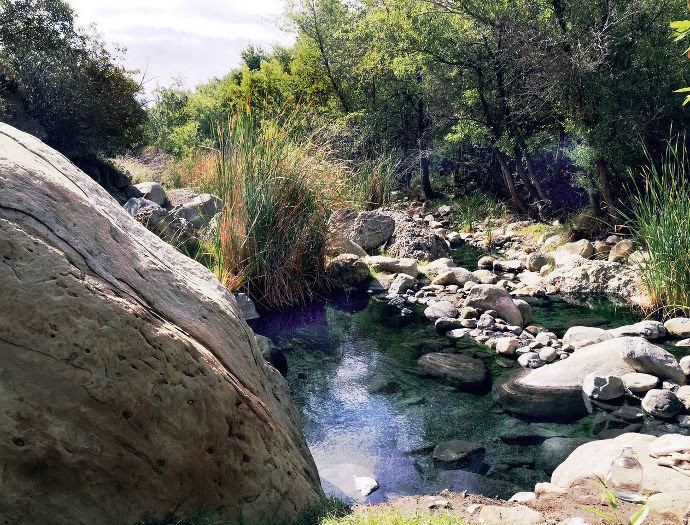
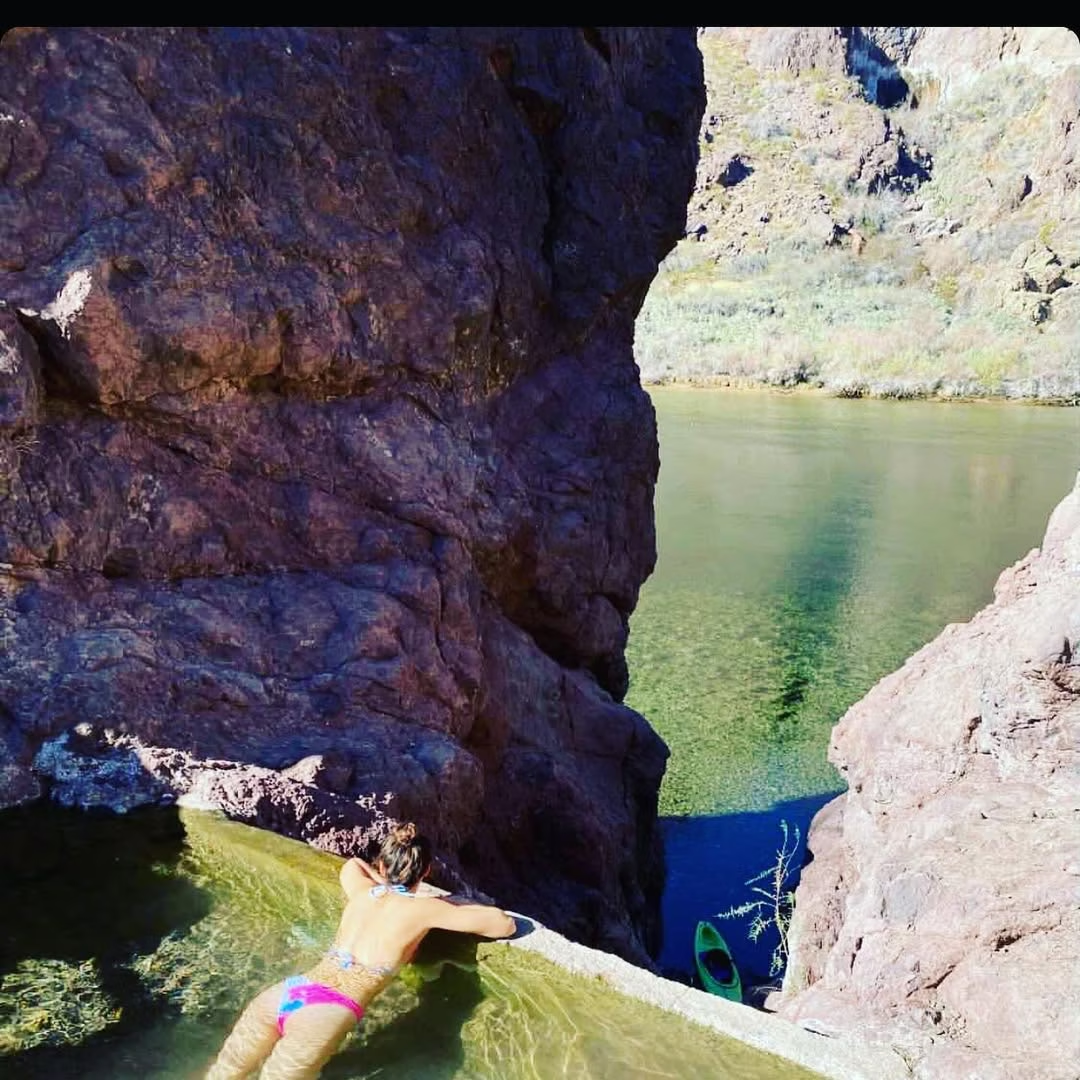
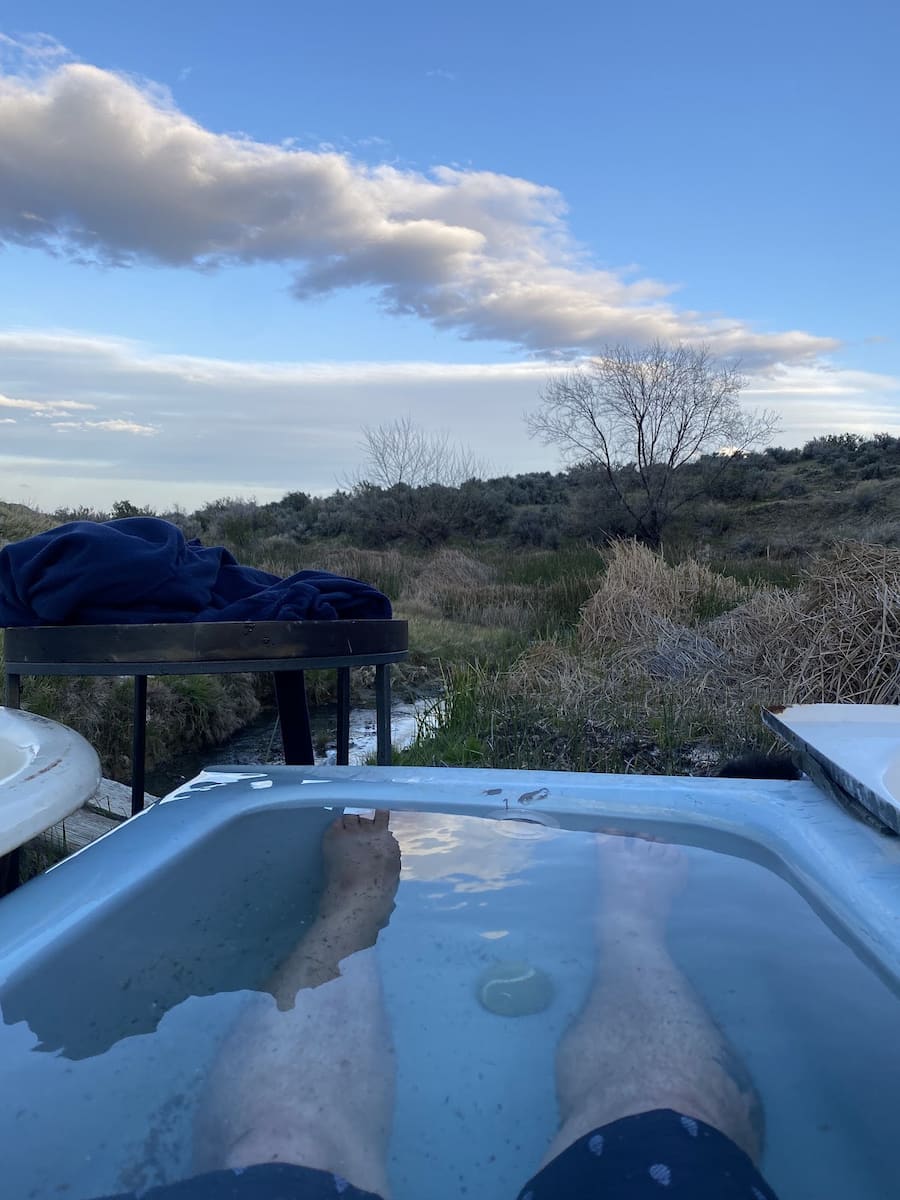
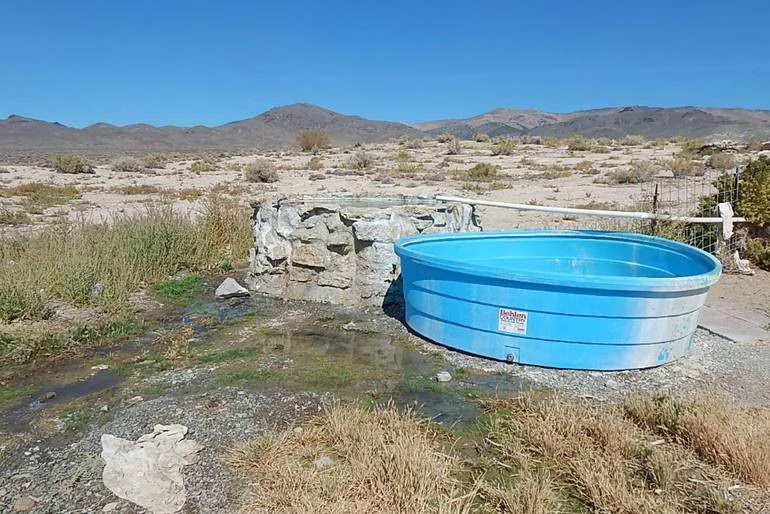
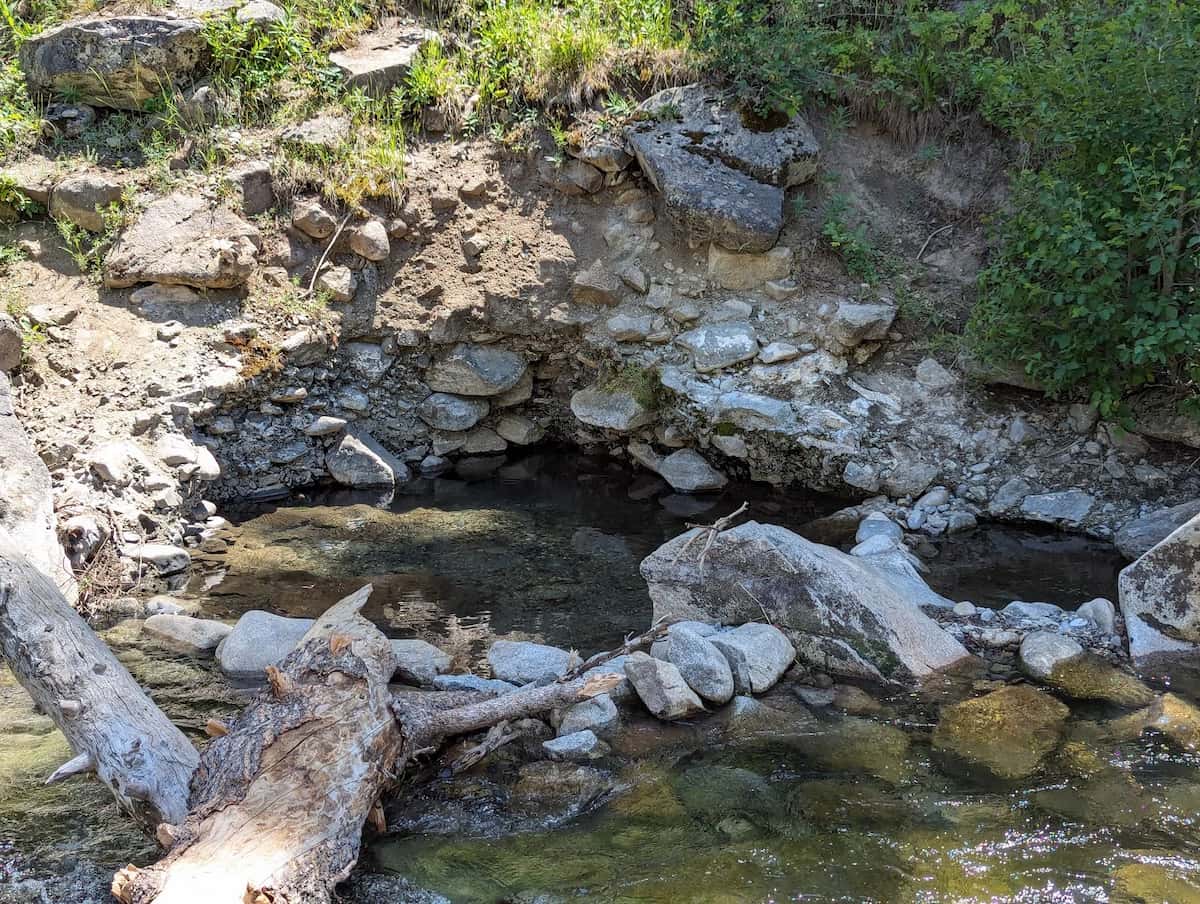
Upper Warm Spring, also known as Upper Warm Springs, in Saline Valley, California is the smallest and least disturbed of the three thermal spring areas in the Saline Valley section of Death Valley National Park in Inyo County. Source water emerges at approximately 102 degrees Fahrenheit into a deep pool of azure water surrounded by cattail, arrow-weed, and native grasses with unobstructed views of the Saline Range. Two soaking areas include a small sand-bottomed pool and a cooler pool. Big Pine, a small community on US Highway 395, is the nearest town with services.
Unlike Lower Warm Springs and Palm Spring (Middle Warm Spring), which have had concrete tubs and showers constructed by volunteers over decades, Upper Warm Spring remains in a largely undeveloped natural state. The pool is deep enough for full immersion and the lower 102-degree temperature allows for longer, more relaxed soaking compared to the hotter Wizard Pool (105 to 112 degrees) at Palm Spring. The natural vegetation surrounding the pool creates a lush oasis that stands in contrast to the barren valley floor. This is among the least visited natural hot springs California offers in the Death Valley region.
All three Saline Valley spring areas are governed by the 2019 NPS management plan for visitor use and resource preservation.
Location & Access
Getting to Upper Warm Spring in Saline Valley
Upper Warm Spring is the northernmost of the three Saline Valley spring areas in Death Valley National Park, located north of Palm Spring (Middle Warm Spring) and Lower Warm Springs along the valley road. The springs are accessible only via approximately 50 miles of undeveloped dirt road with no services. A high-clearance four-wheel-drive vehicle is strongly recommended.
From the north, drive from Big Pine on Highway 168 to the Eureka Valley Road, then south into Saline Valley. From the south, enter via the Saline Valley Road from Highway 190 in Death Valley. Either approach takes 3 to 4 hours of rough driving from pavement. There is no fuel, water, cell service, or medical assistance available in Saline Valley.
Regional Context
Most visitors to Saline Valley head to Lower Warm Springs (the largest and most popular area) or Palm Spring (the Wizard and Volcano pools). Upper Warm Spring sees the fewest visitors, offering solitude and a more natural setting. For visitors seeking hot springs near Big Pine who do not want to commit to the Saline Valley backcountry journey, Keough Hot Springs (public pool, paved road access, 20 minutes south of Big Pine on Highway 395) provides a far more accessible option.
Suitability & Accessibility
Who Should Visit Upper Warm Spring
Upper Warm Spring suits backcountry travelers who have already committed to the Saline Valley journey and want the quietest, most natural soaking experience of the three spring areas. The 102-degree temperature is milder than Palm Spring Wizard Pool (105 to 112 degrees) and better suited for long, relaxed soaks. The deep azure pool surrounded by native vegetation and framed by the Saline Range provides a setting that feels untouched.
Visitors seeking solitude will find Upper Warm Spring significantly less visited than the other two areas. The undeveloped character means no constructed tubs, showers, or dishwashing stations. The sand-bottomed pool provides a natural experience. Camping is permitted in Saline Valley for up to 30 days per year in designated areas near the springs.
Accessibility at Upper Warm Spring
The springs are not wheelchair accessible. The terrain is desert floor and natural brush. Those seeking natural hot springs California offers with easier access should visit Keough Hot Springs near Big Pine, Travertine Hot Springs near Bridgeport, or the developed resorts in Desert Hot Springs. All three Saline Valley spring areas require the same committed backcountry journey from Big Pine or Death Valley, so visitors who reach Saline Valley should plan to explore all three spring areas during their stay.
Safety & Etiquette
Upper Warm Spring (Saline Valley) Safety Tips
Upper Warm Spring is in an extremely remote location with no cell service, no medical facilities, no fuel, and no water supply. The nearest services are in Big Pine or Lone Pine on Highway 395, each 3 to 4 hours by dirt road. A satellite communication device is essential for emergencies. Carry a comprehensive first aid kit and sufficient water.
The 102-degree water is comfortable for extended soaking but stay hydrated before, during, and after use. The deep pool requires caution when entering. The natural vegetation surrounding the pool may harbor insects and small wildlife. Watch where you step.
Desert and Road Safety
Summer temperatures in Saline Valley regularly exceed 120 degrees Fahrenheit. Do not visit in summer. The best season is October through April. The 50-mile dirt road is rough, with washboard surfaces and sharp rocks. Carry at least two spare tires, extra fuel, and multiple gallons of drinking water per person. Inform someone of your travel plans and expected return date before departing.
NPS Regulations at Saline Valley
A Death Valley National Park entrance fee ($30 per vehicle) is required. Camping is limited to 30 days per year per person. Camp in designated areas at least 100 feet from spring sources. Pack out all trash. The 2019 management plan governs all visitor use at the springs. Low-flying military jets are common overhead in the Saline Valley airspace, which is part of the military R-2508 Special Use Airspace complex.