Peru
peru
South America
south-america

Updated October 10, 2026

Hot springs in Peru

Peru's hot springs are Andean banos termales, high-altitude mineral pools near Machu Picchu, the Colca Valley, and the trekking trails of the Cusco region.
All of the listed pools are paid and sit high in the mountains, several at the end of a trek, so come with layers for cold air above the waterline.

Map of hot springs in Peru

Peru's hot springs are Andean banos termales, and at least 5 of them sit in this directory, all high in the mountains. The pools of Banos Termales de Aguas Calientes steam below Machu Picchu, while Banos Termales de Lares mark the end of the Lares Trek in the Cusco region. All 5 listed here are public thermal pools, and every one is paid. High-altitude trekking soaks define the country.

Where Peru's hot springs cluster

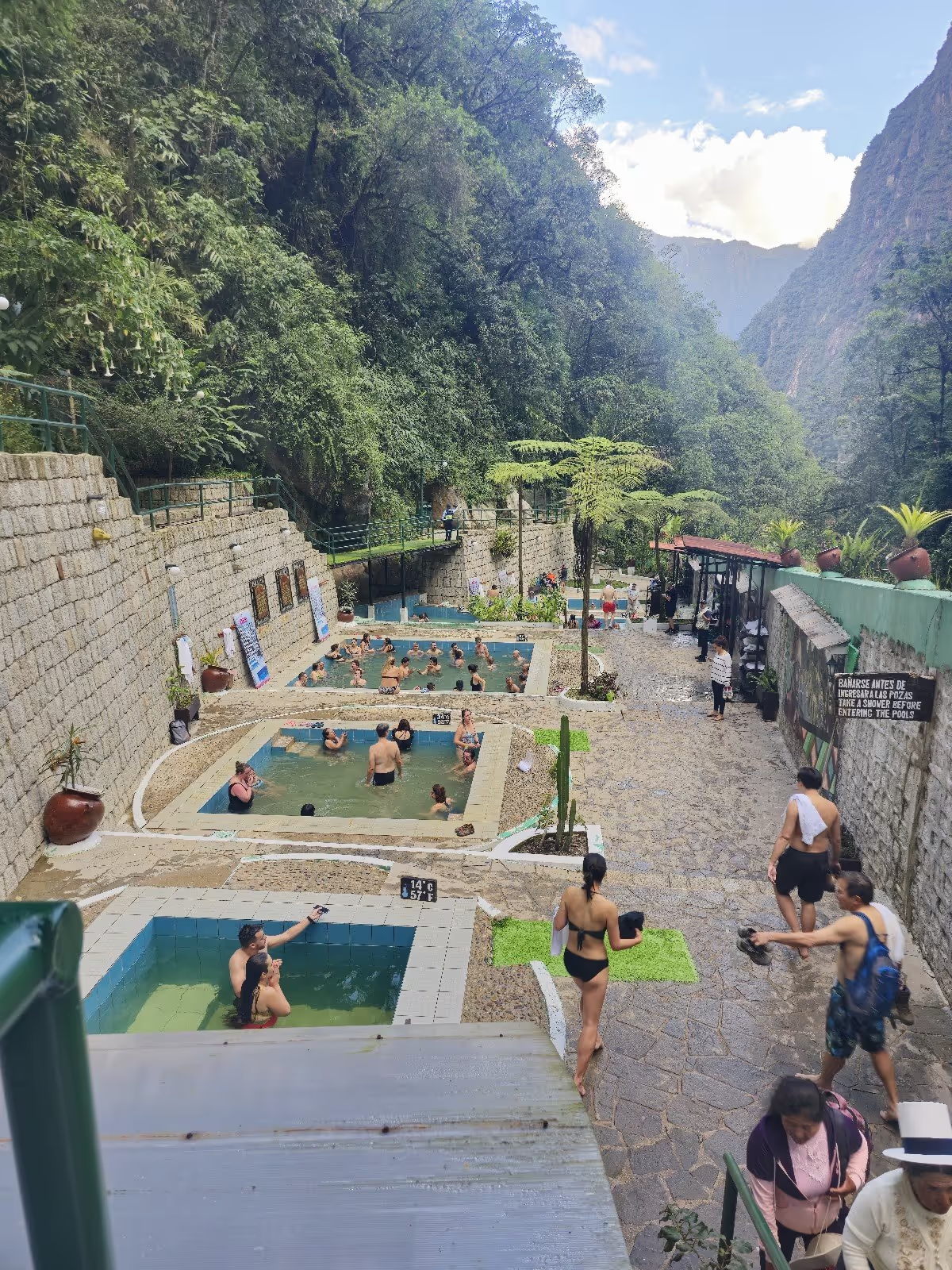
The Cusco region holds Peru's most visited thermal pools, tied to its famous treks. The hot pools of Banos Termales de Aguas Calientes sit in Machu Picchu Pueblo at the foot of the ruins, with water from 38 to 46 degrees Celsius, while Banos Termales de Lares at 3,150 metres marks the end of the Lares Trek. Two of the directory's Peruvian springs sit in this trekking heartland of the southern Andes.

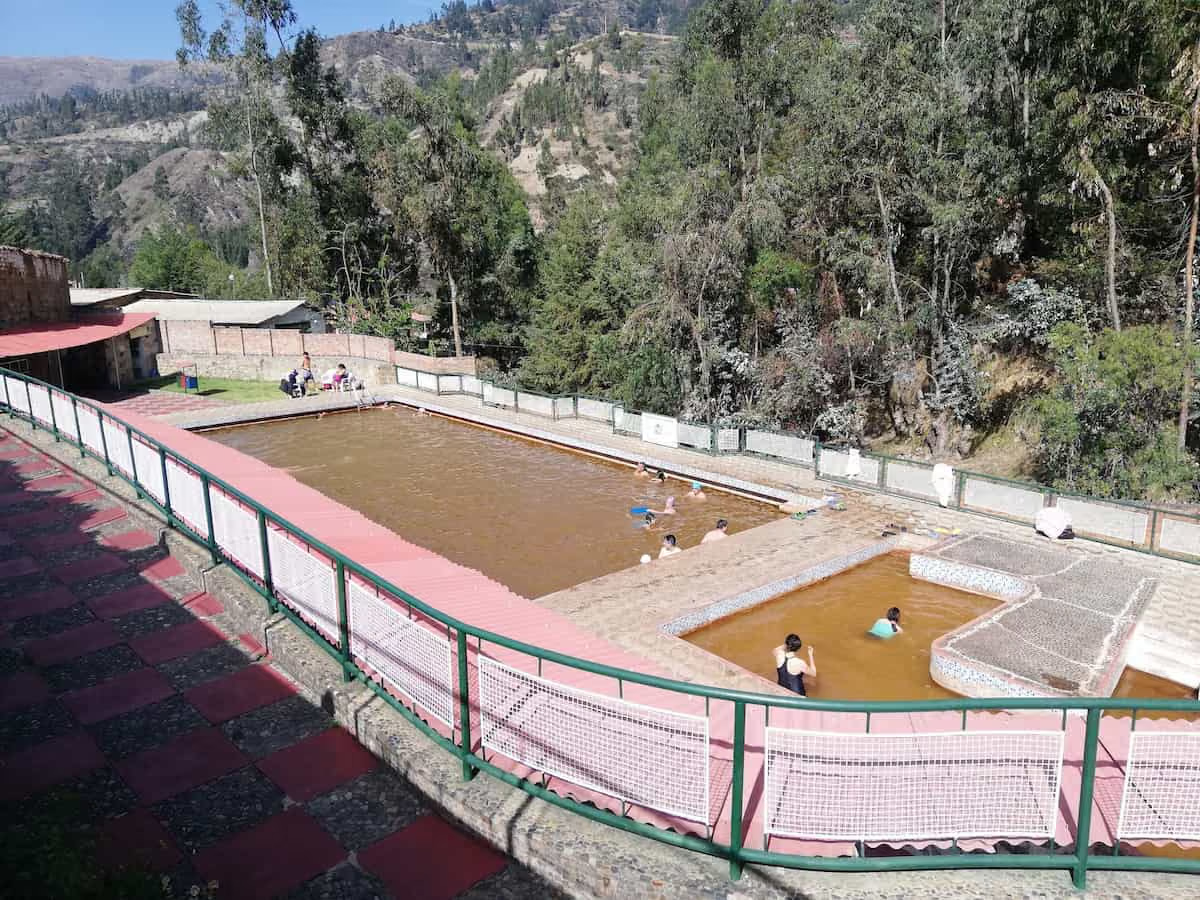
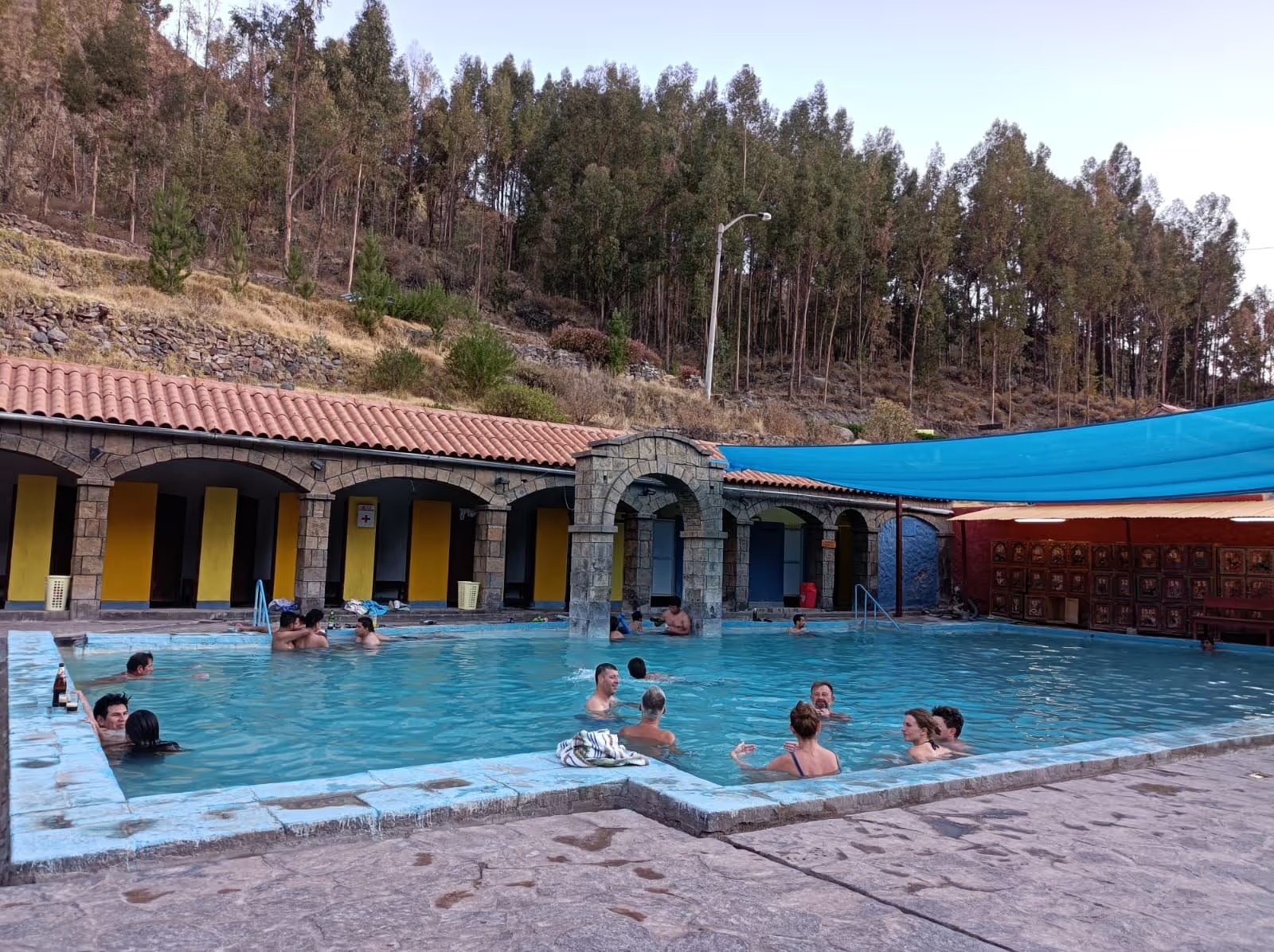
The southern highlands around Arequipa and Apurimac add canyon-country pools on the old Inca routes. The municipal pools of Complejo Turistico Banos Termales La Calera near Chivay sit at 3,610 metres in the Colca Valley, fed by volcanic heat, while Banos Termales de Cconoc lies at the foot of the Apurimac canyon at 1,780 metres. Both sit on long-travelled mountain roads through the southern Andes.

The Cordillera Blanca in the north holds a thermal town among Peru's great snow peaks. The dark mineral pools of Banos Termales de Monterrey lie 7 kilometres from Huaraz at 2,700 metres, with private soaking rooms and water reaching 49 degrees Celsius. This northern spring rounds out the directory's Peruvian entries, close to the Cordillera Blanca trails.

What makes Peru's hot springs different

Peruvian thermal bathing follows the high Andes, where mineral banos termales sit at altitude along trekking and Inca routes. Most are municipal or public pools rather than resorts, and several double as the warm reward at the end of a long trek, which sets Peru apart. All 5 springs listed in this directory charge entry, and none is free. Water ranges from warm to hot, and the thin mountain air keeps the pools welcome. These sit within the wider hot springs in South America.
Frequently Asked Questions

1
How many hot springs are in Peru?
At least 5 hot springs in Peru are listed in this directory, all high in the Andes. Others exist beyond this directory across the mountains. A good starting point is Banos Termales de Aguas Calientes below Machu Picchu. All 5 are paid public pools.
2
What is the best hot spring in Peru?
Banos Termales de Aguas Calientes is the most visited, a set of thermal pools in Machu Picchu Pueblo at the foot of the ruins, with water from 38 to 46 degrees Celsius. For a quieter soak, Banos Termales de Lares ends the Lares Trek. Both rank among the 5 springs listed here.
3
What are banos termales in Peru?
Banos termales is the Spanish term for thermal baths, and all 5 Peruvian sites listed here are developed banos termales rather than wild pools. Most are municipal complexes high in the Andes, such as Complejo Turistico Banos Termales La Calera in the Colca Valley at 3,610 metres. Several sit along trekking routes.
4
Are Peru's hot springs free to visit?
No, all 5 hot springs in Peru listed here charge for entry, as they are public and municipal pools rather than wild springs. A ticket to a site like Banos Termales de Monterrey near Huaraz covers the thermal pools and private rooms. Entry fees are low, but free wild soaking is rare.
5
When is the best time to visit Peru's hot springs?
The dry season from May to September is best for the Andean highlands, with clearer trails to pools like Banos Termales de Lares on the Lares Trek. The water runs warm year-round, and a soak is welcome after a cold day above 3,000 metres. All 5 springs listed here sit at altitude.