Complejo Turistico Banos Termales La Calera, Peru
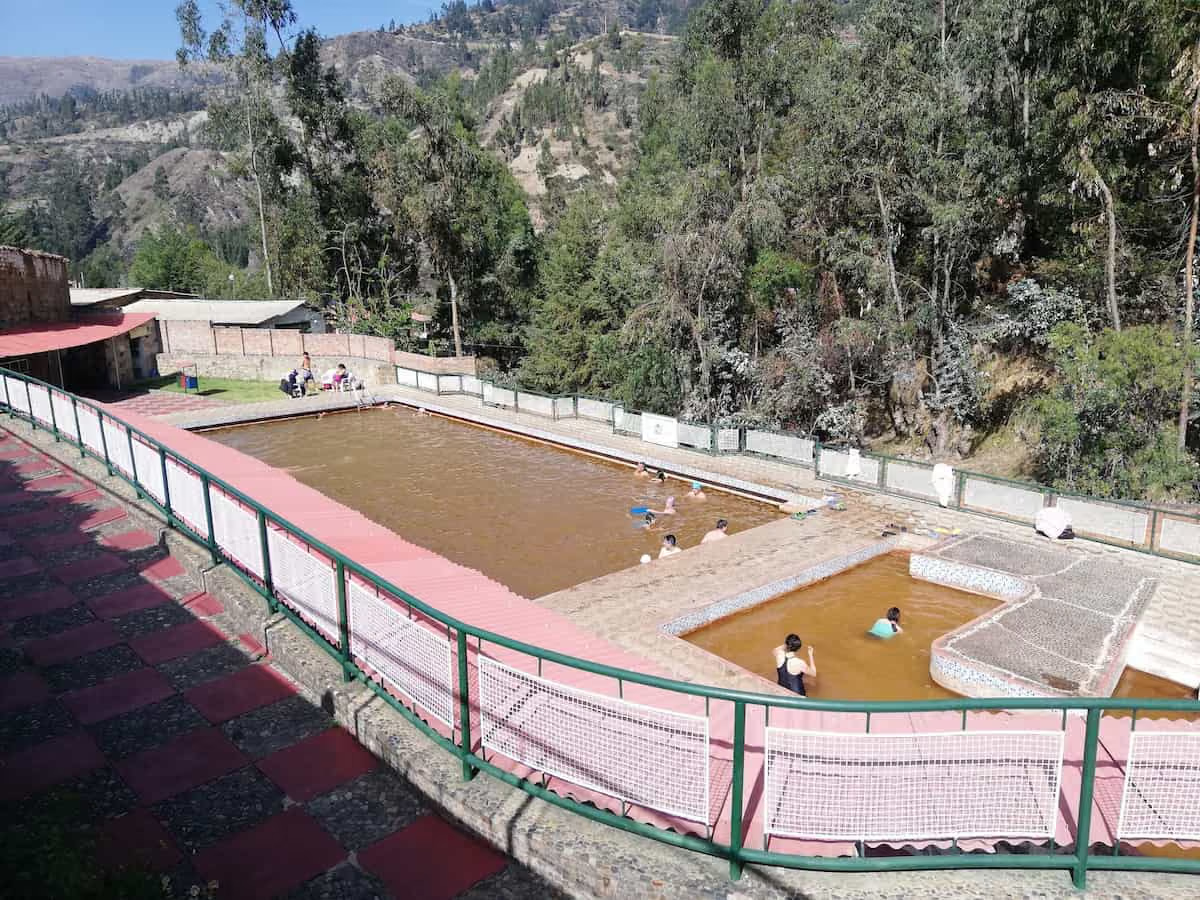
Municipal thermal pools 3 km from Chivay, Colca Valley, at 3,610 m. Five pools at 38-40C from the Cotallumi volcano. 15 soles entry. Open 4 am to 7 pm.
La Calera, 3 km from Chivay, Caylloma Province, Arequipa, Peru
Arequipa
PE
-15.6333
-71.6
Public Pools & Parks
Paid
Easy to reach (no hike)
Be mindful
Swimsuit required
true
false
South America
complejo-turistico-banos-termales-la-calera-peru
What volcano heats the La Calera springs and how are the pools kept at a safe temperature?
The thermal springs at La Calera originate from the Cotallumi volcano, which heats the water to between 80 and 85 degrees Celsius underground. Before the water reaches the bathing pools, it passes through a system of serpentines, which are cooling chambers that reduce the temperature. By the time the water arrives at the five pools, it has been cooled to between 38 and 40 degrees Celsius, warm and therapeutic but safe for bathing. This natural geothermal system means the pools are continuously fed with fresh mineral water without artificial heating. The pools are cleaned daily at the end of operating hours.
What does the name La Calera mean?
La Calera takes its name from the lime mines that historically existed in the surrounding area of the Colca Valley. The Spanish word calera refers to a lime kiln or a place where limestone is quarried and processed. The area around Chivay has a history of lime production from the local geology, and the thermal complex took the name of its immediate location. The Colca Valley itself has a much older history with pre-Inca Collagua and Cabana cultures, whose artefacts are displayed in the small archaeological museum adjacent to the thermal baths.
Is La Calera included in standard Colca Canyon tours from Arequipa?
Yes. La Calera is routinely included as the final stop on standard Colca Canyon tours from Arequipa. The typical two-day tour departs Arequipa in the early morning of day one, visits the canyon and its main viewpoints including Cruz del Condor, and then returns via La Calera on the afternoon of day two before the bus journey back to Arequipa. Tour operators generally include La Calera entry in the tour cost or as an optional stop; confirm with your tour operator before booking. If visiting independently, the entry cost is 15 soles paid directly at the complex.
What can I do near La Calera besides the pools?
The La Calera complex has a small archaeological museum displaying Colca Valley finds, several viewpoints offering panoramic canyon views, a suspension bridge over the Colca River, and a cafeteria. Just outside the complex, the Colca Extremo company operates a zip-line and canopy activity. From Chivay, 3 km away, visitors can explore the market, the colonial church, local restaurants, and take tours to other parts of the valley including the Uyo Uyo archaeological site and Inca agricultural terracing.
What is the best time of day and year to visit La Calera?
2026-09-21
Updated September 21, 2026
Complejo Turistico Banos Termales La Calera, Peru
Municipal thermal pools 3 km from Chivay, Colca Valley, at 3,610 m. Five pools at 38-40C from the Cotallumi volcano. 15 soles entry. Open 4 am to 7 pm.
Experience
Public Pools & Parks
Access Level
Easy to reach (no hike)
What to Wear
Swimsuit required
Address
La Calera, 3 km from Chivay, Caylloma Province, Arequipa, Peru
Find a place to stay
Compare prices near this exact spot across Booking.com, Expedia and more.
See nearby stays →
Overview
About Complejo Turistico Banos Termales La Calera
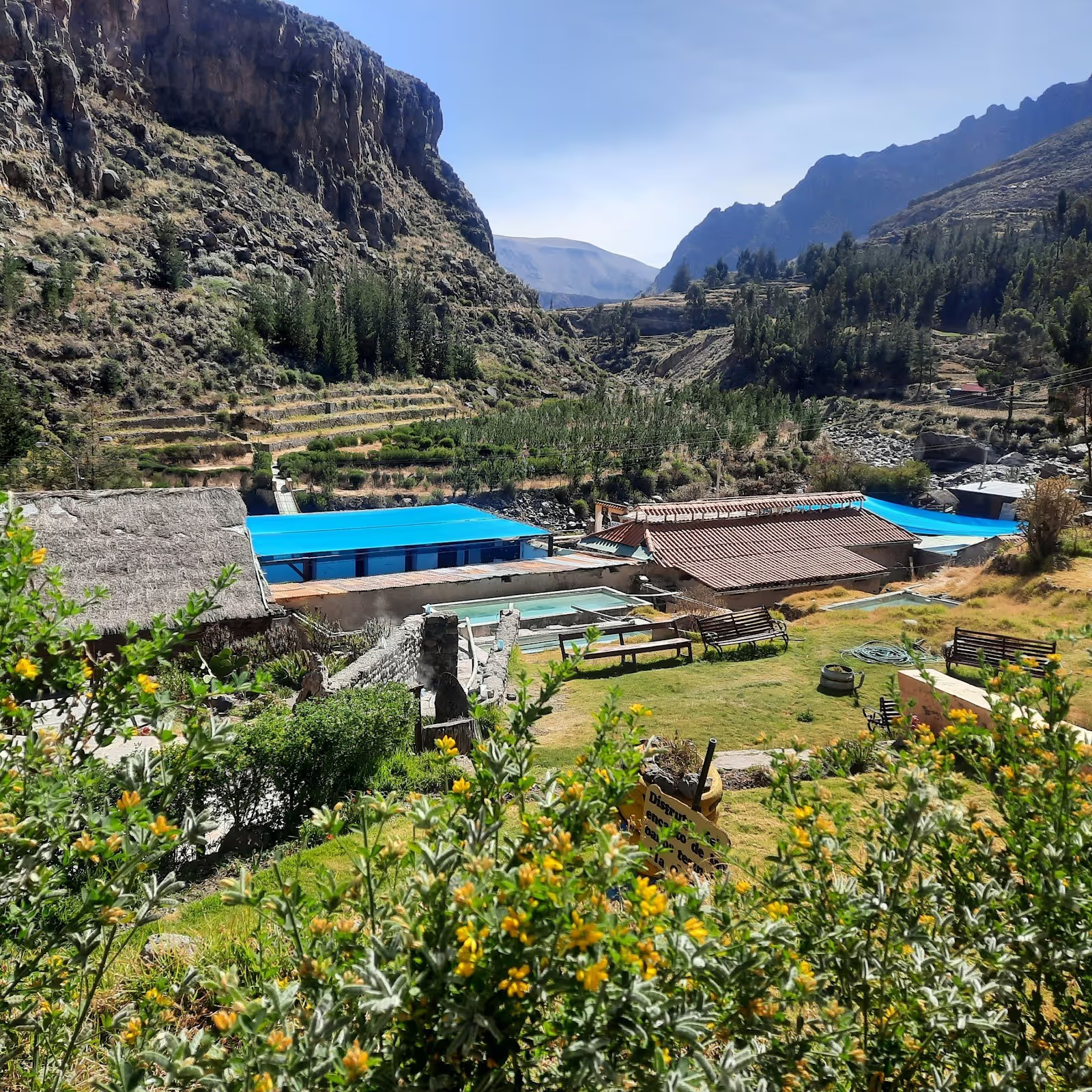
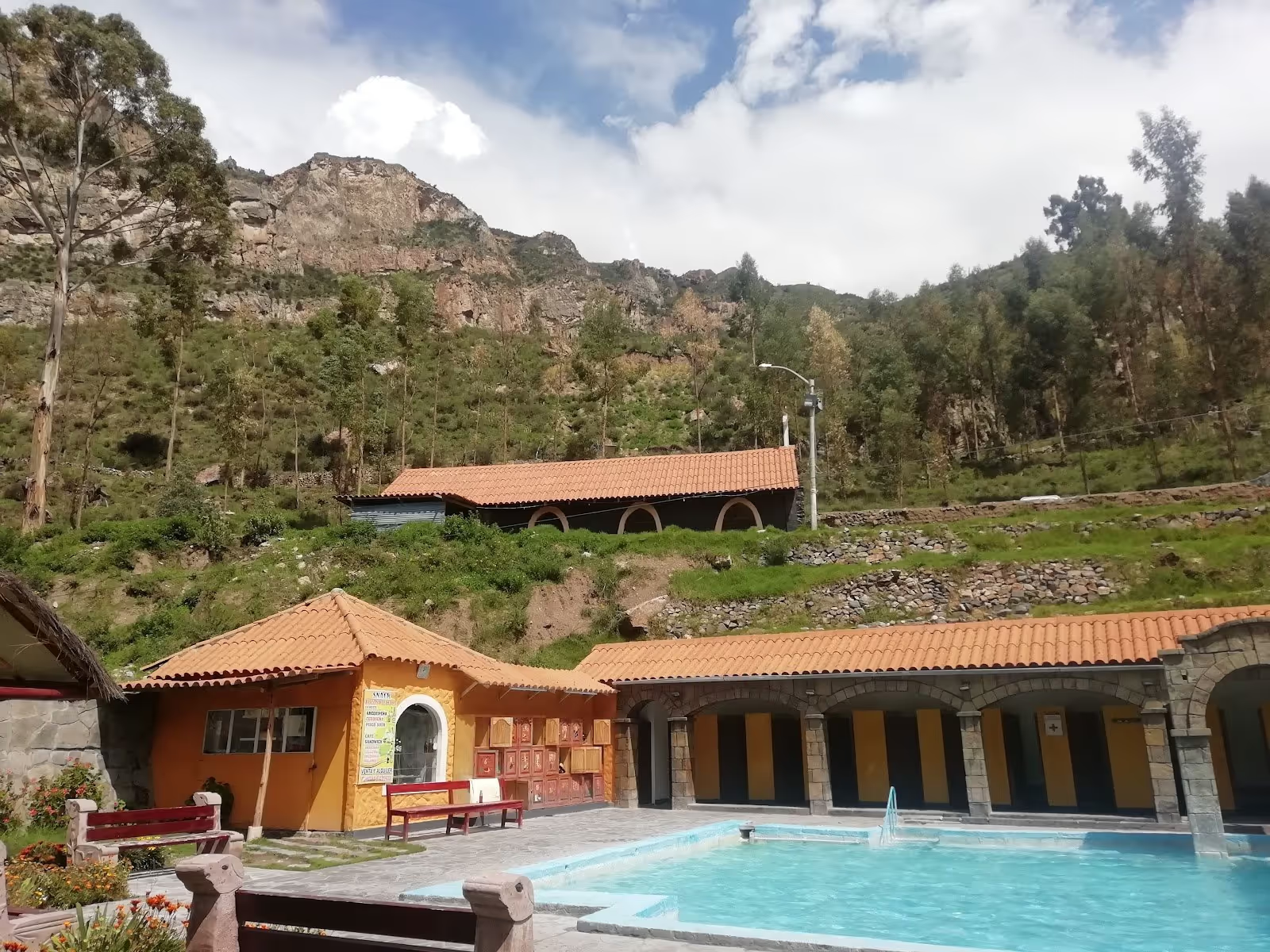
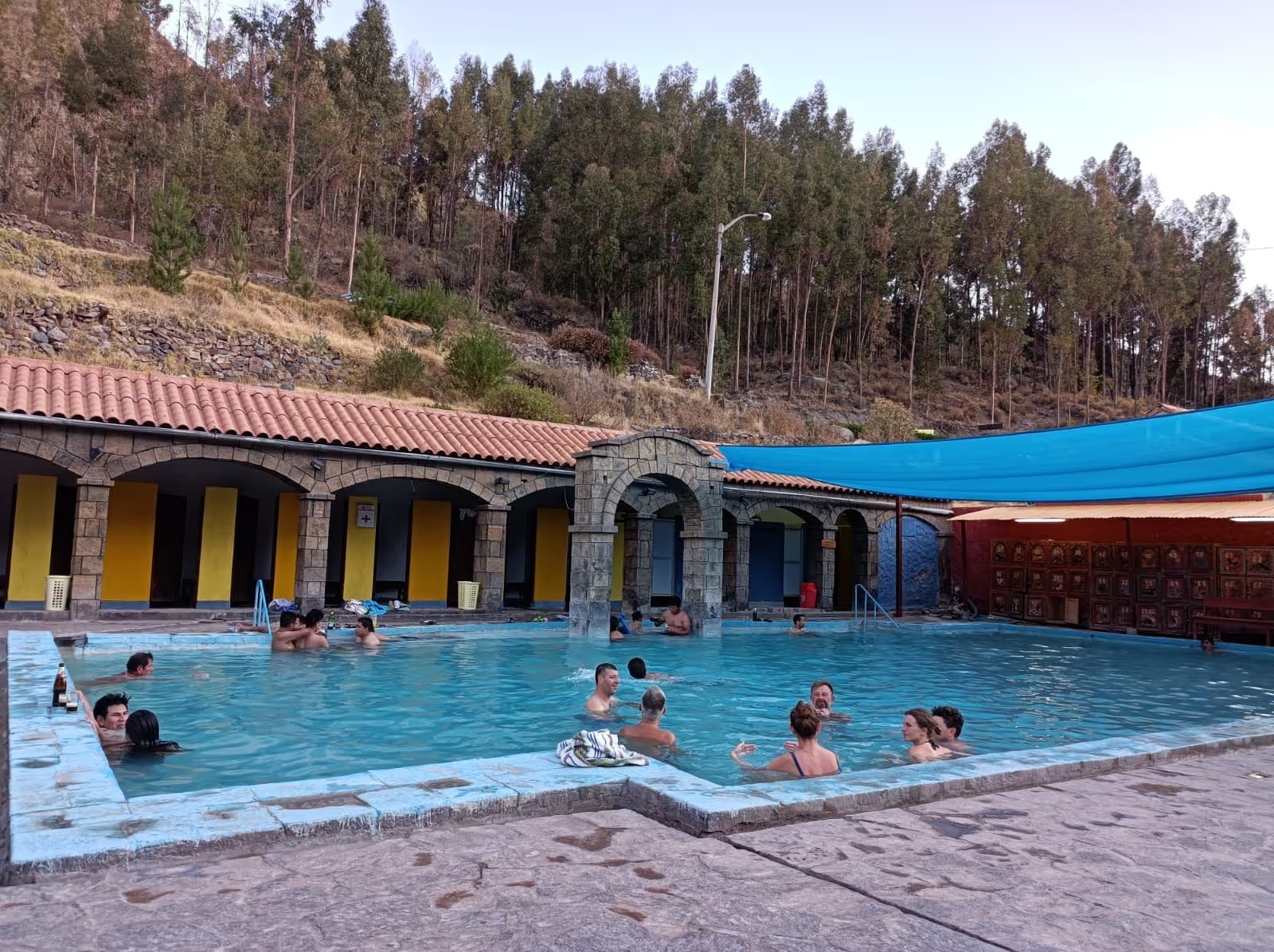
Complejo Turistico Banos Termales La Calera, Peru is a paid municipal thermal spring complex 3 km from Chivay in the Colca Valley, Caylloma province, Arequipa region, at 3,610 metres elevation. The springs originate from the Cotallumi volcano at 80 to 85 degrees Celsius and are cooled through serpentines to 38 to 40 degrees Celsius across five outdoor pools. Entry is 15 soles. Open daily from 4 am to 7 pm. The complex is administered by the Municipalidad Provincial de Caylloma.
The mineral water contains calcium, zinc, iron, sodium, potassium, magnesium, sulfates, and bicarbonates, traditionally associated with relief from rheumatism, arthritis, and muscle pain. An on-site archaeological museum displays artefacts from Colca Valley excavations. Other facilities include a cafeteria, food stalls, an artisan shop, changing rooms, and parking.
La Calera is routinely the final stop on Colca Canyon tours from Arequipa. Among the hot springs near Arequipa, it is the most accessible in the Colca Valley and the most directly integrated with a major tourist circuit.
Location & Access
Getting to Complejo Turistico Banos Termales La Calera
Complejo Turistico Banos Termales La Calera is 3 km from Chivay, capital of Caylloma province in the Colca Valley. From Chivay, the complex can be reached on foot in approximately one hour along the valley road, by taxi for about 5 soles, or by local bus for about 1 sole. Most visitors on organised Colca Canyon tours are transported to La Calera directly as the final stop before returning to Arequipa. The entrance is clearly signed from the Chivay town centre.
From Arequipa, the journey to Chivay takes approximately 3 to 4 hours by road north through the high Andes via the Patapampa pass at over 4,900 metres. Bus services from Arequipa land terminal connect to Chivay with tickets costing 10 to 15 soles. Arequipa is served by Rodriguez Ballon Airport, the main arrival point for international visitors heading to the Colca region.
Early morning visits are particularly recommended. Opening at 4 am, La Calera allows visitors to soak as the Colca Valley comes to light, with panoramic views of the canyon landscape and the possibility of spotting Andean condors from the viewpoints near the complex. For visitors seeking hot springs near Arequipa within a Colca Canyon itinerary, La Calera represents the standard thermal endpoint of the region's most popular tour route.
Suitability & Accessibility
Who Should Visit Complejo Turistico Banos Termales La Calera
Complejo Turistico Banos Termales La Calera suits families, trekkers, and visitors passing through the Colca Valley on a canyon tour or multi-day trip. The five pools with different sizes and temperatures work for solo soakers, groups, and families with children. The moderate water temperature of 38 to 40 degrees Celsius is accessible and comfortable for a wide range of visitors.
The complex is a popular recovery stop after long bus journeys through the high Andes or trekking in the Colca Canyon. At 3,610 metres altitude, the warm thermal water and scenic canyon setting provide a restorative stop. The on-site archaeological museum adds cultural depth for those interested in Colca Valley history. The five pools of different sizes allow large tour groups to be spread across the facility without severe crowding.
Wheelchair accessibility is not documented. The high-altitude Andean setting and the complex's facilities have not been confirmed as step-free in official sources for this listing; visitors with mobility requirements should contact Arequipa tour operators. The dry season from April to October is the best time to visit. Families seeking hot springs near Arequipa in a high-Andean setting will find La Calera the most accessible option in the Colca region.
Safety & Etiquette
Banos Termales La Calera Safety Tips
Complejo Turistico Banos Termales La Calera is generally safe for most visitors. The pools are maintained at 38 to 40 degrees Celsius, warm and therapeutic but not dangerously hot. Test the water temperature of each pool before entering, as temperatures vary between pools. Limit soaking sessions to moderate durations and cool down between soaks. If you feel dizzy, nauseous, or lightheaded, exit the pool immediately and rest in the open air.
The altitude of 3,610 metres above sea level is the most important safety consideration at La Calera. Combining hot water immersion, high UV exposure, and the physiological demands of altitude can accelerate dehydration and altitude-related symptoms. Drink plenty of water before and during your visit. Apply high-SPF sunscreen as UV radiation at altitude is significantly stronger than at sea level; the clear skies over the Colca Valley intensify this effect. If you are still acclimatising to Andean altitude, limit your time in the hottest pool and keep sessions short.
The complex opens at 4 am, which means early morning visits occur in cold, dark conditions. Bring warm layers for the walk to and from the complex and for waiting outside the pools; at 3,610 metres temperatures drop quickly after sunset. Pools are cleaned daily at the end of the operating day. Cash is required for entry and all services on site; the nearest ATMs are in Chivay. The narrow road between Chivay and La Calera should be navigated carefully at night. Bring insect repellent if visiting in the wet season from December to March.
Frequently Asked Questions
1
What volcano heats the La Calera springs and how are the pools kept at a safe temperature?
The thermal springs at La Calera originate from the Cotallumi volcano, which heats the water to between 80 and 85 degrees Celsius underground. Before the water reaches the bathing pools, it passes through a system of serpentines, which are cooling chambers that reduce the temperature. By the time the water arrives at the five pools, it has been cooled to between 38 and 40 degrees Celsius, warm and therapeutic but safe for bathing. This natural geothermal system means the pools are continuously fed with fresh mineral water without artificial heating. The pools are cleaned daily at the end of operating hours.
2
What does the name La Calera mean?
La Calera takes its name from the lime mines that historically existed in the surrounding area of the Colca Valley. The Spanish word calera refers to a lime kiln or a place where limestone is quarried and processed. The area around Chivay has a history of lime production from the local geology, and the thermal complex took the name of its immediate location. The Colca Valley itself has a much older history with pre-Inca Collagua and Cabana cultures, whose artefacts are displayed in the small archaeological museum adjacent to the thermal baths.
3
Is La Calera included in standard Colca Canyon tours from Arequipa?
Yes. La Calera is routinely included as the final stop on standard Colca Canyon tours from Arequipa. The typical two-day tour departs Arequipa in the early morning of day one, visits the canyon and its main viewpoints including Cruz del Condor, and then returns via La Calera on the afternoon of day two before the bus journey back to Arequipa. Tour operators generally include La Calera entry in the tour cost or as an optional stop; confirm with your tour operator before booking. If visiting independently, the entry cost is 15 soles paid directly at the complex.
4
What can I do near La Calera besides the pools?
The La Calera complex has a small archaeological museum displaying Colca Valley finds, several viewpoints offering panoramic canyon views, a suspension bridge over the Colca River, and a cafeteria. Just outside the complex, the Colca Extremo company operates a zip-line and canopy activity. From Chivay, 3 km away, visitors can explore the market, the colonial church, local restaurants, and take tours to other parts of the valley including the Uyo Uyo archaeological site and Inca agricultural terracing.
5
What is the best time of day and year to visit La Calera?
The best time of day to visit La Calera is early morning, when the complex opens at 4 am and the pools are at their freshest, the valley light is beautiful, and visitor numbers are lowest before tour buses arrive mid-morning. The dry season from April to October is recommended; clear skies give spectacular canyon views, condor sightings are more consistent, and the road from Arequipa is reliable. The wet season from December to March brings afternoon rainfall and can make the high-Andes road more challenging, though the thermal baths remain open year-round.
Gallery
No pictures available for this hot spring.
Location
Address:
La Calera, 3 km from Chivay, Caylloma Province, Arequipa, Peru
Find a place to stay
Compare prices near this exact spot across Booking.com, Expedia and more.
See nearby stays →
-15.6333
-71.6
Complejo Turistico Banos Termales La Calera, Peru
Text LinkLa Calera, 3 km from Chivay, Caylloma Province, Arequipa, Peru
Some accommodation links on this site are affiliate links. If you book through them, we may earn a small commission at no additional cost to you. This helps keep hotspringsguides.com free to use.