Quick FactsOverview
About Beulah Hot Springs
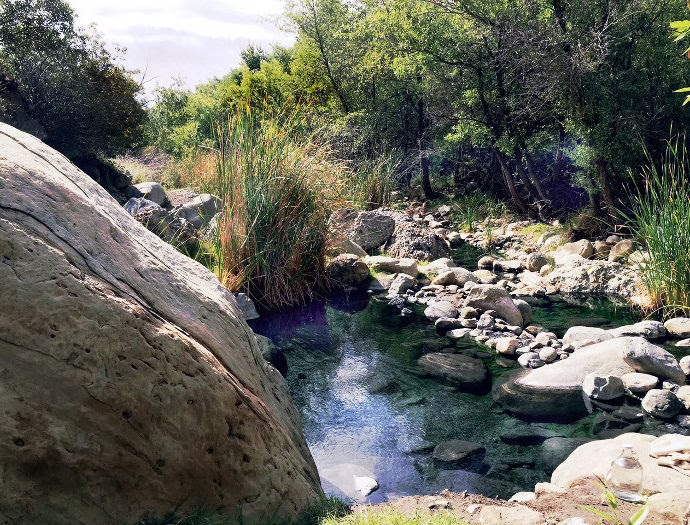
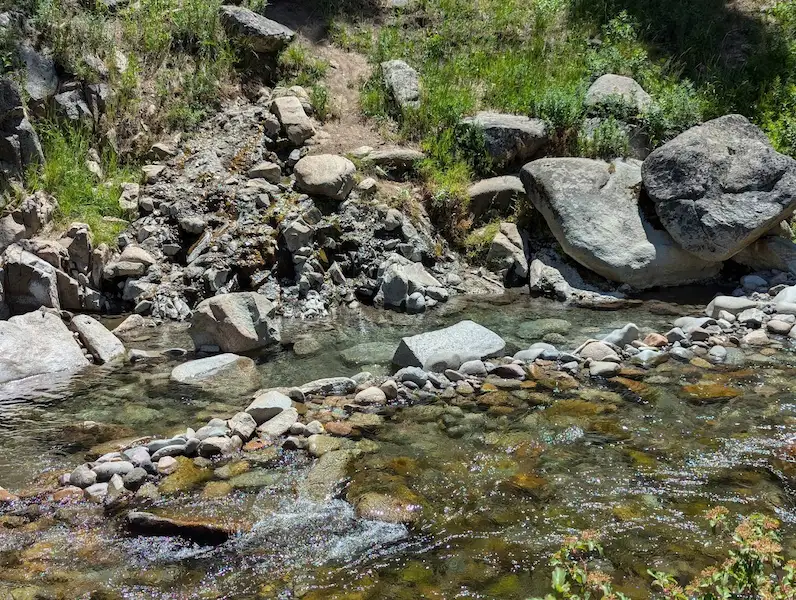
Beulah Hot Springs, Oregon is a free, undeveloped geothermal spring on BLM land in Agency Valley, approximately 18 miles north of Juntura in Malheur County, southeastern Oregon. The source exceeds 135 degrees Fahrenheit and produces vivid yellow and green thermophilic bacterial coloration around the outflow, including cyanobacteria that thrive between 130 and 165 degrees Fahrenheit. It is one of the hotter natural geothermal sources among the free hot springs in Oregon, but soaking is not currently possible due to the deteriorated state of the former delivery infrastructure.
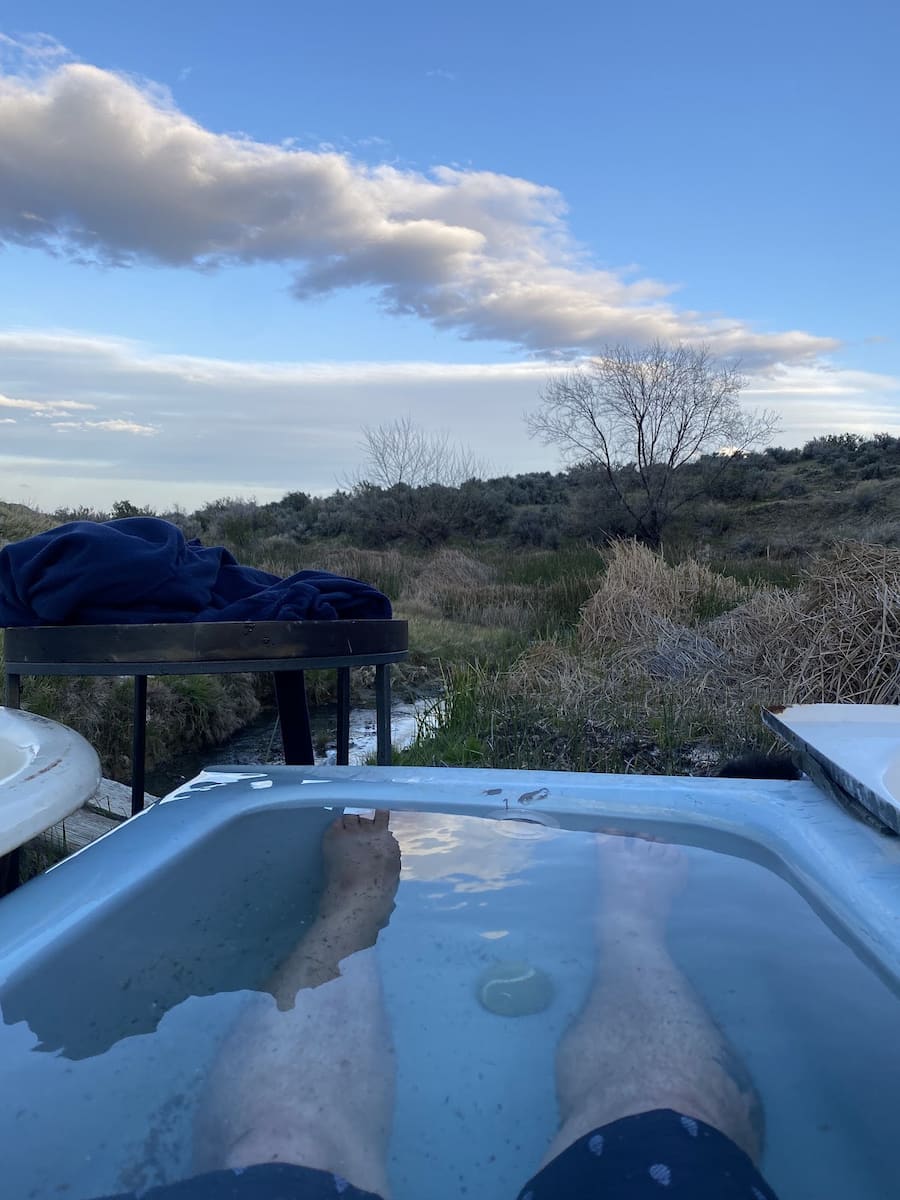
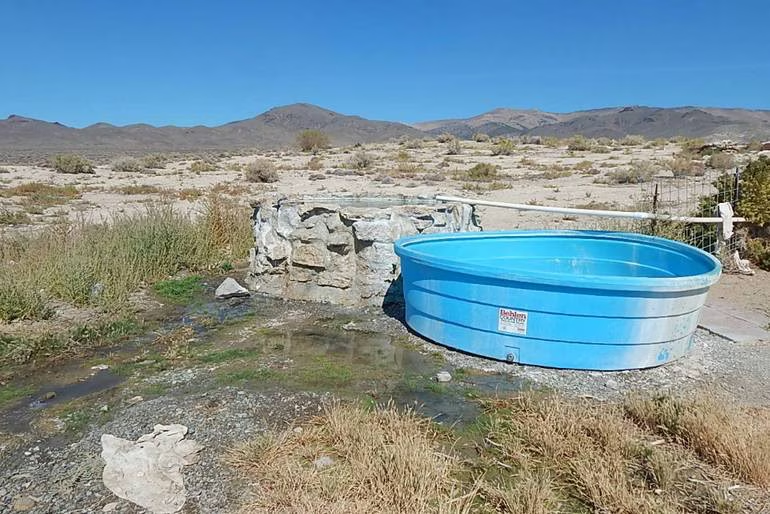
Hot water from the source was historically piped through hoses into a bathtub-style vessel inside a small structure on the BLM land. Both the hoses and the tub have corroded beyond use. The flow from the source is described as adequate but no longer directed into any usable soaking vessel. The site could potentially be rehabilitated with infrastructure replacement, but no restoration work has been undertaken.
The nearest alternative geothermal soak is Juntura Hot Springs, roughly 20 miles south in the Malheur River canyon. The surrounding landscape includes the former Beulah Reservoir basin, now used for cattle grazing, and open Agency Valley high-desert terrain.
Location & Access
Getting to Beulah Hot Springs
Beulah Hot Springs is reached by turning north onto Beulah Road from Highway 20 at Juntura and driving approximately 17 to 18 miles on unpaved gravel road through Agency Valley. The spring is located a short distance west of the road, past the dry bed of the former Beulah Reservoir. The road runs alongside cattle pastures and the North Fork of the Malheur River. There is no formal parking area, trailhead, or signage at the site, and the deteriorated structure is visible from the road.
Juntura is the starting point and the nearest town with fuel and basic supplies. The road is unpaved for its entire length and becomes mucky in wet weather, with high-clearance or four-wheel-drive vehicles recommended after rain or snow. For those looking for natural hot springs near Juntura with functional soaking, Juntura Hot Springs on the Malheur River island roughly 20 miles south is a much better option.
No facilities exist at or near the spring. Dispersed BLM camping is available a few miles south along the road toward Juntura. The more developed Chukar Park Recreation Site, managed by the BLM, is located nine miles south of the reservoir and offers RV sites, drinking water, picnic areas, and restrooms. Cell service is absent throughout the Juntura and Agency Valley area.
Suitability & Accessibility
Who Beulah Hot Springs Is Suitable For
Beulah Hot Springs is suitable for visitors interested in geothermal geology and high-desert scenery, but it is not suitable for anyone seeking a functional soak. The soaking infrastructure has deteriorated to the point where bathing is not possible, and the source water at over 135 degrees Fahrenheit is far too hot to enter without a working mixing or cooling mechanism. Visitors should treat this as an observation site and natural curiosity rather than a soaking destination.
The spring can be reached with a short walk from the road, making the access itself easy enough for most adults, but the long unpaved drive on Beulah Road requires a high-clearance vehicle and reasonable road confidence in variable conditions. The site is not wheelchair accessible and there are no facilities of any kind. Free hot springs in Oregon that currently offer a functioning soak include Snively Hot Springs near Nyssa and Juntura Hot Springs near Juntura, both within a reasonable drive of this area.
For visitors with an interest in geothermal environments and thermophilic biology, the colorful bacterial mats around the Beulah source outflow are genuinely distinctive, displaying the yellow and green hues of cyanobacterial communities that thrive at temperatures between 130 and 165 degrees Fahrenheit. This is one of the more visible examples of this phenomenon at a roadside BLM spring in Oregon's high desert and gives the site interest beyond the deteriorated structure.
Safety & Etiquette
Safety at Beulah Hot Springs
Beulah Hot Springs is a remote, undeveloped geothermal site where the primary hazard is the source water temperature, which exceeds 135 degrees Fahrenheit and can cause severe burns on contact. The deteriorated structure and rusted delivery infrastructure should not be entered or leaned on, and the former soaking vessel is not safe to use in its current state. Visitors should stay clear of the direct outflow and the area immediately around the source opening.
No potable water, shade, cell service, or emergency facilities are available at or near the site. Visitors should carry adequate water for the drive and visit. Juntura is the nearest point with any services and is 17 to 18 miles away on an unpaved road. The road deteriorates in wet weather and can become impassable. A vehicle problem on Beulah Road in wet conditions is a serious situation given the absence of cell coverage and the distance from help.
Rattlesnakes are present in the high-desert habitat throughout Malheur County. The former reservoir basin is used for cattle grazing, and livestock may be present near the spring. The site sits within a mix of BLM and private grazing land; visitors should stay within the BLM-designated area around the spring and avoid crossing onto adjacent private property.
Beulah Road is closed or impassable in winter and early spring. The best access seasons are late spring through early fall when the road surface is dry. No camping is permitted at the hot spring site. The nearest developed camping is at Chukar Park Recreation Site nine miles south of the reservoir, with RV sites, drinking water, and restrooms. Dispersed BLM camping is available a few miles south along the road toward Juntura.