
Quick FactsOverview
About Boiling River Hot Springs
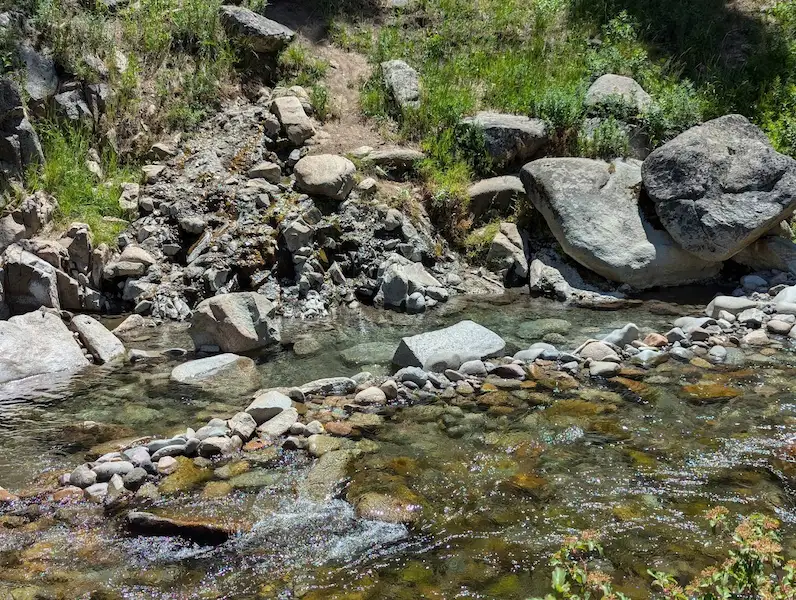
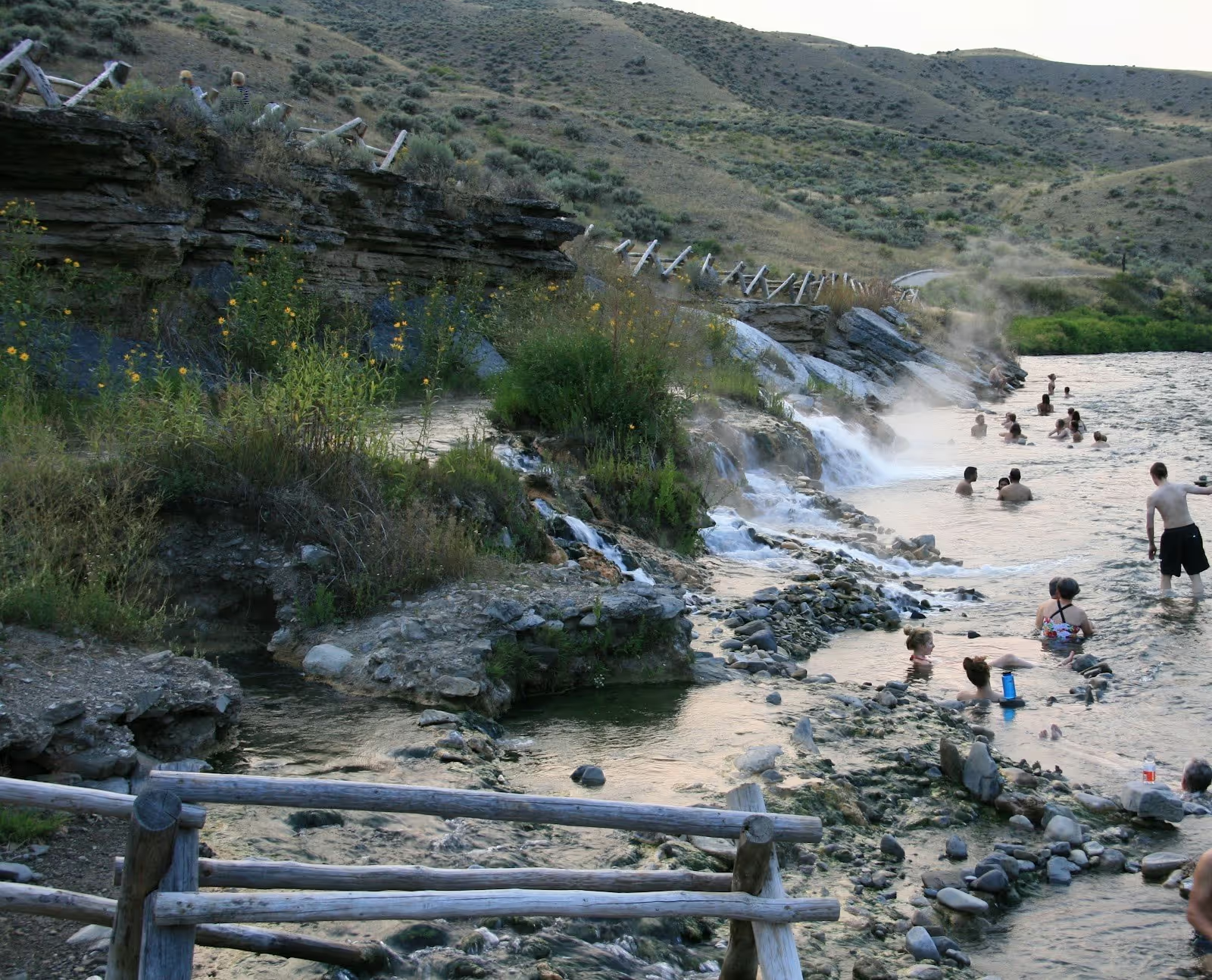
Boiling River Hot Springs, Montana is a geothermal feature within Yellowstone National Park where a large underground hot spring discharges into the Gardner River near the park's North Entrance, just inside the Montana-Wyoming state line. The trailhead is approximately 2.9 miles south of Gardiner, Montana, on North Entrance Road (US-89), near the 45th Parallel Bridge. The soaking area where hot and cold water once mixed was one of only two places within Yellowstone where thermal bathing was permitted.
IMPORTANT CLOSURE NOTICE: The Boiling River soaking area has been closed since the historic June 2022 floods in northern Yellowstone, which reshaped the Gardner River channel, destroyed the rock-lined soaking pools, and washed out the access path. As of early 2026, the National Park Service states that swimming is not possible at Boiling River due to flood impacts, and no reopening timeline has been announced. The geothermal spring still flows but no longer mixes with the river in a way that creates a safe or accessible soaking area. Visitors should check nps.gov/yell for current conditions before planning a visit. No soaking or swimming is currently permitted.
Location & Access
Getting to Boiling River Hot Springs
Boiling River Hot Springs is reached via a short flat trail from a trailhead on North Entrance Road (US-89) inside Yellowstone National Park, approximately 2.9 miles south of Gardiner, Montana, and about 2 miles north of Mammoth Hot Springs. The trailhead is near coordinates 44.9923, -110.6912, with a small car park on the east side of the road just past the 45th Parallel Bridge. From Gardiner, head south on US-89 through the Roosevelt Arch, cross the Gardner River, and turn left into the turnout just before the state line sign. From Mammoth, drive north for about 2 miles and turn right into the turnout just after crossing into Montana.
The trail to the former soaking area is approximately 0.5 miles one way, following the west bank of the Gardner River on a flat path. The hike is easy and suitable for most visitors, though the path can be muddy in wet conditions. A pit toilet is available at the trailhead. Parking is limited and fills quickly during peak summer hours. Hot springs near Gardiner outside the park boundary are available as alternatives and do not require a park entry pass.
Entry to the trailhead requires a valid Yellowstone National Park pass. This is a paid entry. For current status of the Boiling River area, check nps.gov/yell before driving to the trailhead, as the soaking area has been closed since 2022 and no reopening timeline has been announced.
Suitability & Accessibility
Who Was Boiling River Hot Springs Suitable For?
Boiling River Hot Springs, Montana was historically suitable for families, solo visitors, and outdoor enthusiasts who wanted a natural thermal soaking experience within Yellowstone National Park. The short, flat 0.5-mile trail made it one of the most accessible natural hot springs in Montana, requiring no backcountry experience. Entry was included with the standard Yellowstone park pass, and the setting at the convergence of hot spring water and the cold Gardner River was widely regarded as one of the most scenic soaking spots in the American West.
As of 2026, the soaking area remains closed following the June 2022 floods. The site is accessible on foot as a viewpoint and nature walk, and the geothermal feature can be observed from the trail, but no soaking or swimming is allowed. The trail retains value for birdwatching, wildlife observation, and views of the Gardner River canyon. For those seeking natural hot springs Montana near Gardiner, alternative soaking options outside Yellowstone remain open and do not require a park entry fee or dealing with park closure uncertainty.
When the site does reopen, the experience will suit those comfortable with an informal natural setting: no changing rooms at the soaking area, the depth is shallow, and conditions change based on river levels. Swimsuits are required at all times in this federally managed area.
Safety & Etiquette
Safety and Etiquette at Boiling River Hot Springs
Boiling River Hot Springs, Montana is currently closed to soaking and swimming, and visitors should treat the area accordingly. The soaking pools were destroyed in the 2022 floods, the access path was washed out, and the bank terrain near the spring is unstable. Attempting to access the former soaking area off-trail or past closed signs is illegal, hazardous, and may result in fines. Water temperatures at the spring source exceed 140 degrees Fahrenheit and can cause severe burns. Be mindful of these hazards if visiting the area as a viewpoint from the trail.
When the site was open, the primary safety rules were: swimsuits required at all times; no food, drink, or alcohol in the soaking area; no night use; and swimming was not permitted, only sitting in the shallow pools. The NPS required visitors to stay well clear of the hot spring source. Wildlife encounters are common on the trail, including bison, elk, and bears. Give all wildlife a wide berth and never approach or feed them.
If and when the site reopens, the logistics are simple: drive to the trailhead on US-89, park in the small lot east of the road, use the pit toilet, and walk 0.5 miles along the river. Change into swimwear before arriving, as the only option at the trailhead is a single pit toilet. Bring footwear suitable for rocky riverbanks and a towel. No valuables should be left visible in parked cars. Before any visit, verify current status through nps.gov/yell or by calling Yellowstone's visitor information line.
%252C%2520Wyoming%25206.avif)