Quick FactsOverview
About Borax Hot Springs
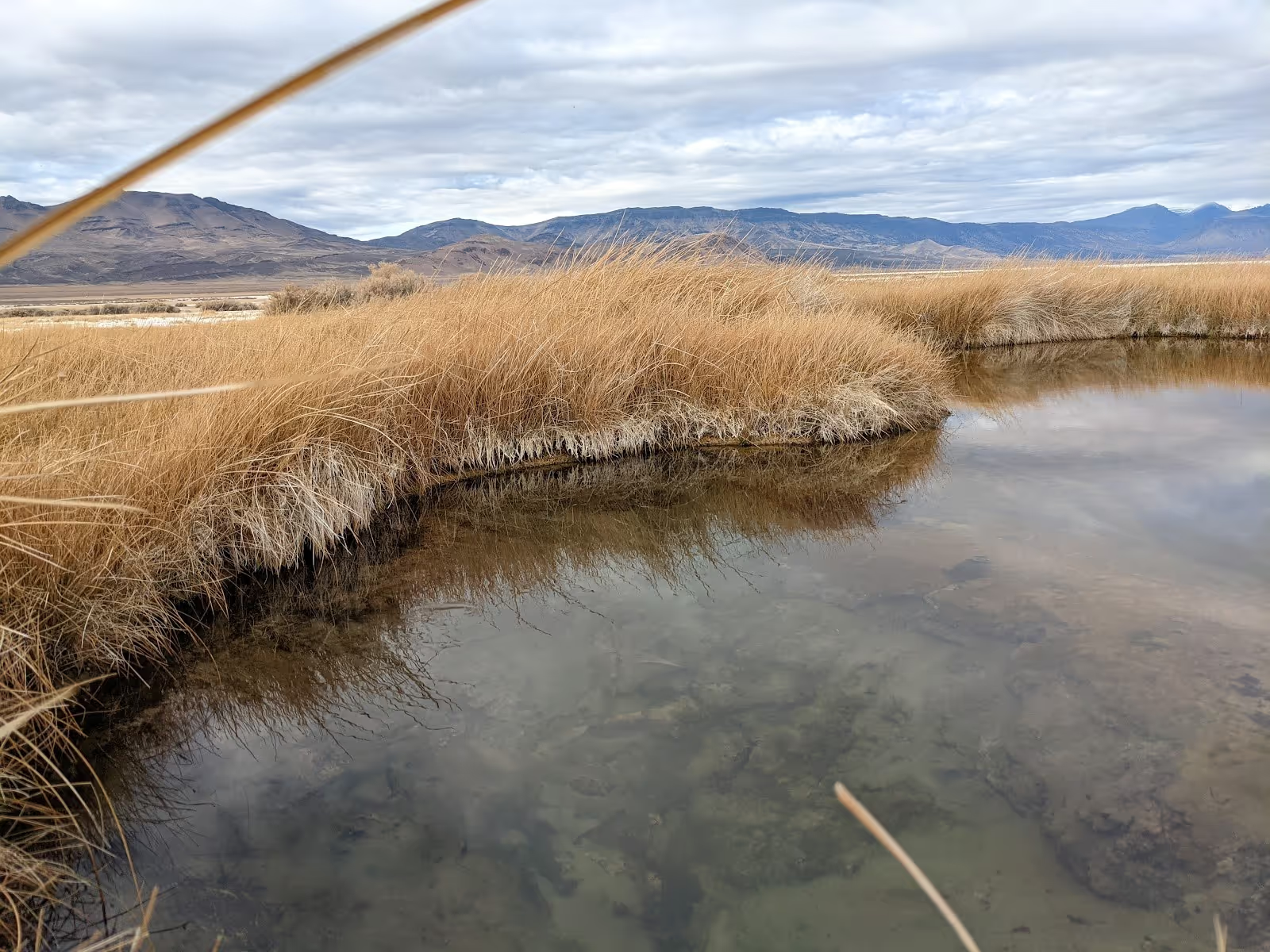
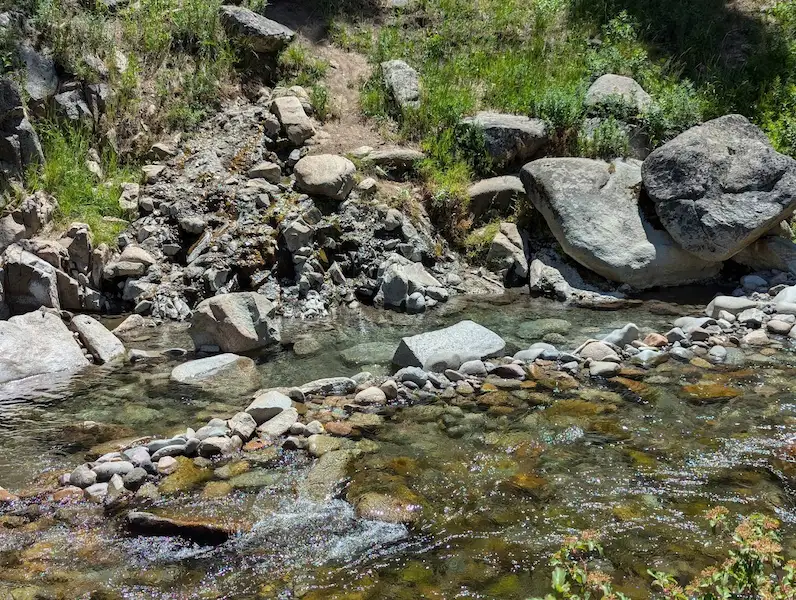
Borax Hot Springs, Oregon is a free, undeveloped geothermal area in the Alvord Desert of southeastern Oregon, approximately 7 miles north of Fields in Harney County. The site includes Borax Lake, a 10-acre geothermal lake, a series of vent pools along a half-mile fault line, and the ruins of a 19th-century borax processing operation. Soaking and swimming are strictly prohibited due to extreme temperatures, high arsenic levels, and the critical habitat status of the endangered Borax Lake chub. The area is managed jointly by The Nature Conservancy, the Bureau of Land Management, and the Oregon Department of Fish and Wildlife.
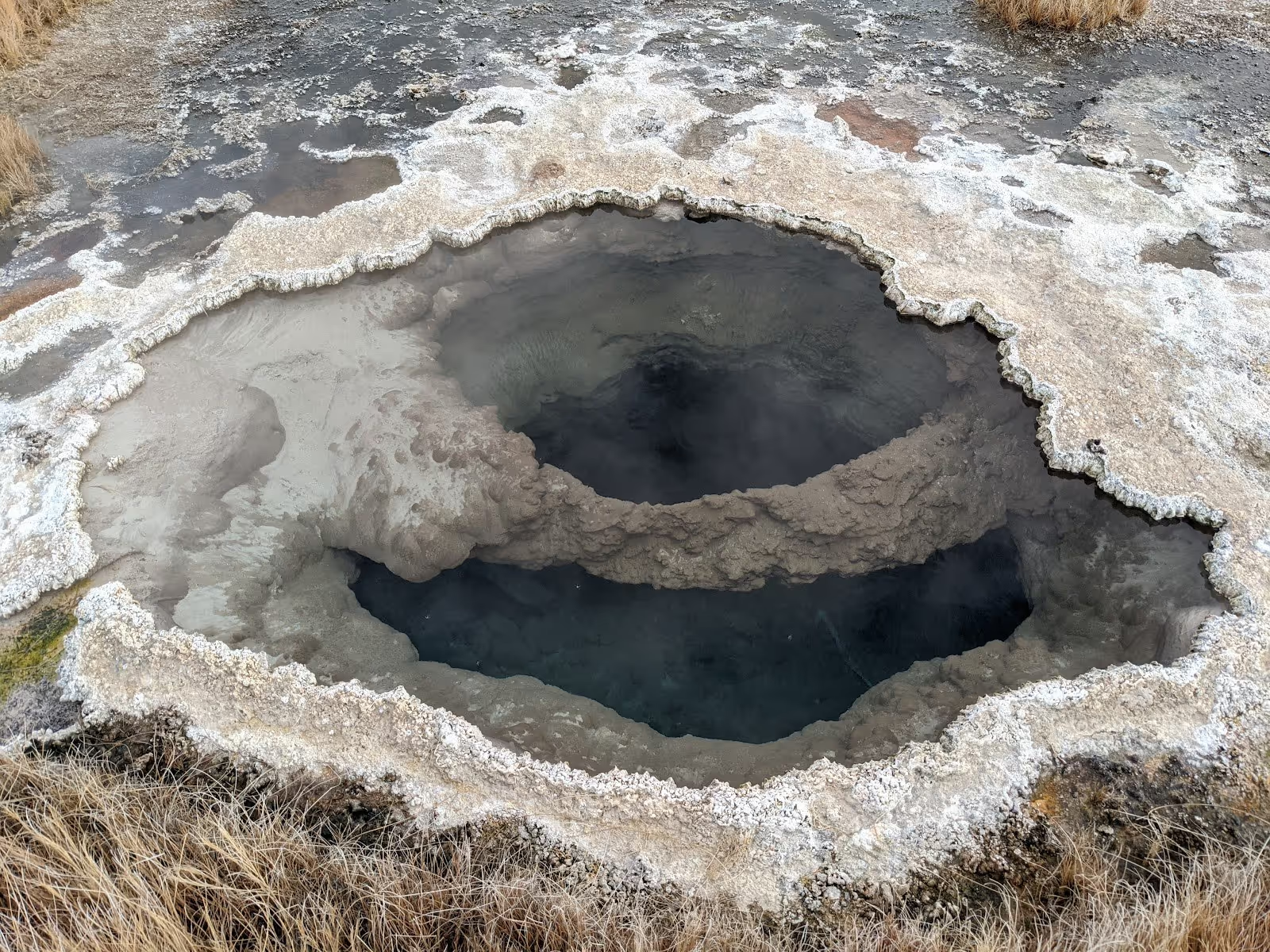
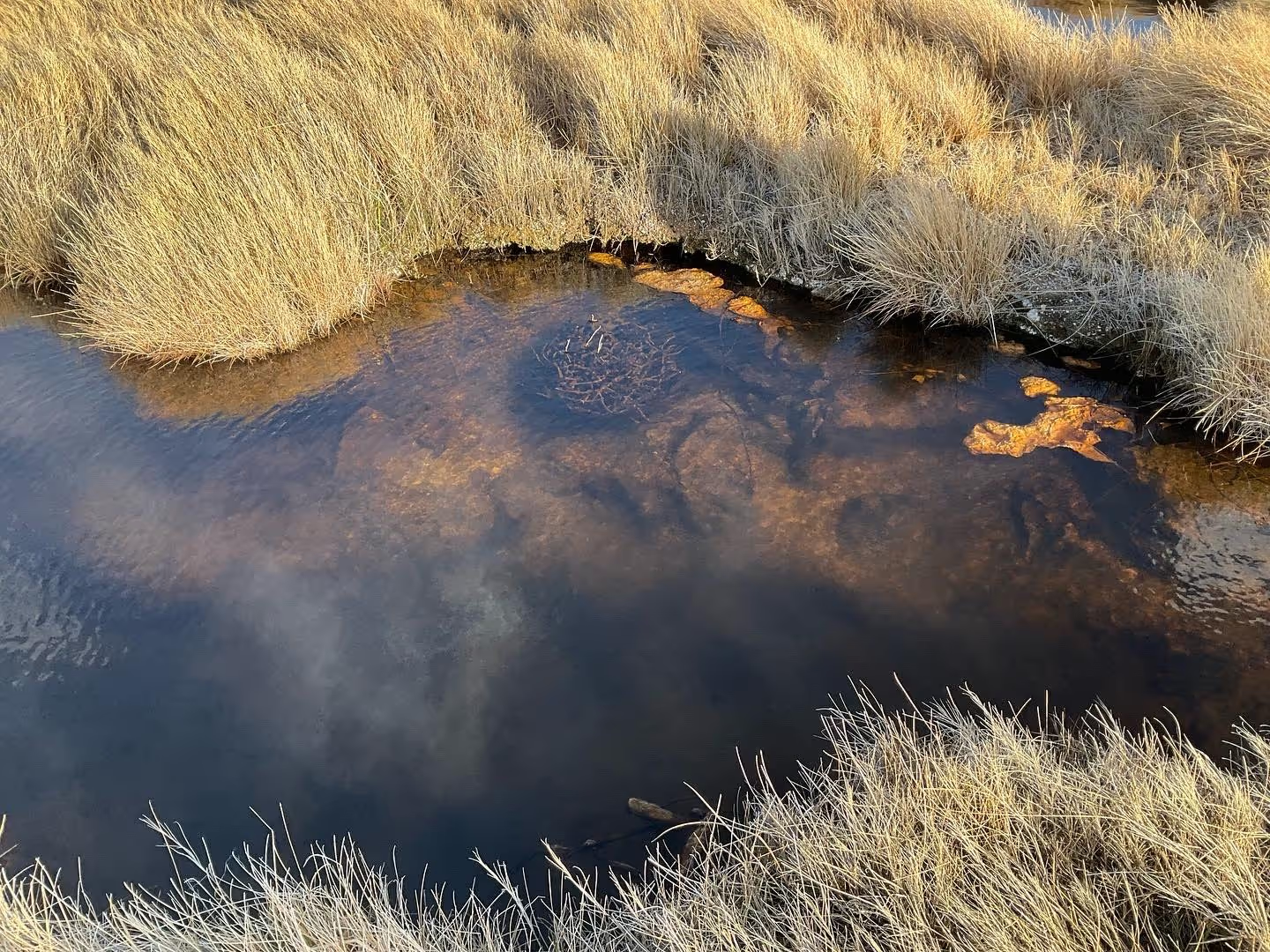
The springs and vents reach temperatures of 104 to 300 degrees Fahrenheit. The water contains arsenic levels well above safe standards, along with high concentrations of sodium, sulfate, chloride, and borax. Colorful thermophilic microbial mats produce vivid yellow, orange, and green coloration around the vents. The Borax Lake chub, found nowhere else on Earth, has survived in this extreme environment for an estimated 10,000 years. In 1993 The Nature Conservancy acquired the land specifically to protect this species and the geothermal ecosystem.
The site is open year-round for foot-traffic observation and is one of the most scientifically significant geothermal areas among the natural hot springs in Oregon.
Location & Access
Getting to Borax Hot Springs
Borax Hot Springs is reached from Fields by heading north on Highway 205 for approximately 1.4 miles to the junction with Fields-Denio Road. Bear right and drive 0.25 miles to a power substation, turn right onto a dirt road parallel to the power lines, and continue approximately 2 miles. Turn left and drive 0.9 miles to the first gate. Open and close the gate, then proceed 0.5 miles to a second gate where motor vehicles must stop. From there, visitors walk approximately 0.5 miles to Borax Lake and a further 0.5 miles to the hot spring vents. Total foot distance from the second gate to the farthest vents is roughly one mile.
The dirt road is accessible in dry conditions with a high-clearance vehicle but becomes impassable in wet weather when the fine clay surface turns to deep mud. For those looking for natural hot springs near Fields with actual soaking, Alvord Hot Springs is the closest option along the same Fields-Denio Road to the north.
Fields is the nearest community with any services. Burns, roughly 113 miles north, is the closest full-service town. Cell service is absent throughout the area. No camping is permitted within the Borax Lake area, though primitive camping is available at Mann Lake and on the Alvord Desert playa nearby.
Suitability & Accessibility
Who Borax Hot Springs Is Suitable For
Borax Hot Springs is suitable for visitors interested in geothermal geology, desert ecology, and natural history, but not for anyone seeking a soak. Entering the water at any point is prohibited for multiple overlapping reasons: temperatures reach up to 300 degrees Fahrenheit, arsenic levels are far above safe exposure standards, and the area is designated critical habitat for an endangered fish found nowhere else on Earth. There is no safe soaking location anywhere within the site.
The 0.5-mile foot approach from the second gate to the lake is flat and manageable for most visitors, though the terrain is open high desert with no shade and the access road involves a few miles of driving on a clay-surface dirt track. The site is not wheelchair accessible. Photographers, birdwatchers, and anyone with an interest in desert or geothermal environments will find the site rewarding. The visible thermophilic bacterial coloration and the steaming vent landscape against the Steens Mountain backdrop make Borax Hot Springs one of the more visually striking free hot springs in Oregon to observe.
Children can visit with supervision, provided they stay on the access path and away from the water and vents at all times. The ground near the springs is fragile and could break underfoot, exposing a person to boiling water below the surface. Dogs are permitted on leash.
Safety & Etiquette
Safety at Borax Hot Springs
Borax Hot Springs presents serious physical hazards and entering the water at any point is prohibited. Spring vents reach temperatures of 104 to 300 degrees Fahrenheit, capable of causing severe burns instantly on contact. The ground surface near the vents is thin in places and may break underfoot, creating the risk of falling into boiling water below the surface. Visitors must remain on the established access path at all times and not approach the edge of any vent or pool.
The water contains arsenic at levels more than 25 times above acceptable drinking standards, along with high concentrations of borax, lead, sodium, and sulfate. Even brief skin contact with the water carries health risks. This applies to the lake surface, the spring pools, and all vents. Ingestion of the water is extremely dangerous.
The Borax Lake chub is an endangered species protected under the Endangered Species Act. Entering the lake or disturbing the shoreline habitat is a federal violation. The Nature Conservancy prohibits entry into the water absolutely, and the prohibition is enforced jointly with BLM and the Oregon Department of Fish and Wildlife.
The access road is impassable in wet conditions. The area has no cell service, no shade, no potable water, and no emergency services within easy reach. Fields, roughly 7 miles south, is the nearest point with any services. Visitors should carry sufficient water and supplies for a remote high-desert visit and inform someone of their itinerary before departing.