Quick FactsOverview
About Cascade Falls
Cascade Falls, South Dakota is a free, spring-fed swimming hole in the southern Black Hills, located along Cascade Creek in Black Hills National Forest approximately 8 miles south of Hot Springs on SD Highway 71. The site is managed by the U.S. Forest Service and known locally as one of the more distinctive natural swimming spots in the region.
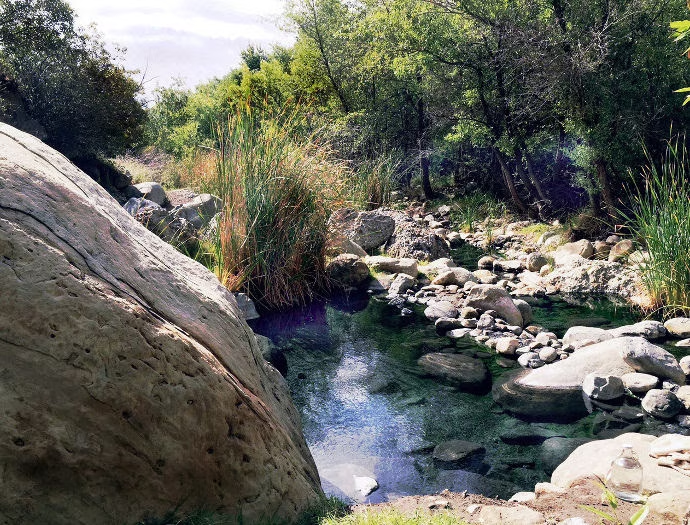
The water originates at Cascade Springs, a series of six artesian springs located about 2 miles upstream. These natural hot springs in the Black Hills produce water at a consistent 67 degrees Fahrenheit year-round, noticeably warmer than most other creeks in the area. The spring flow also supports rare plant species found nowhere else in South Dakota, including stream orchid, tulip gentian, and southern maidenhair fern.
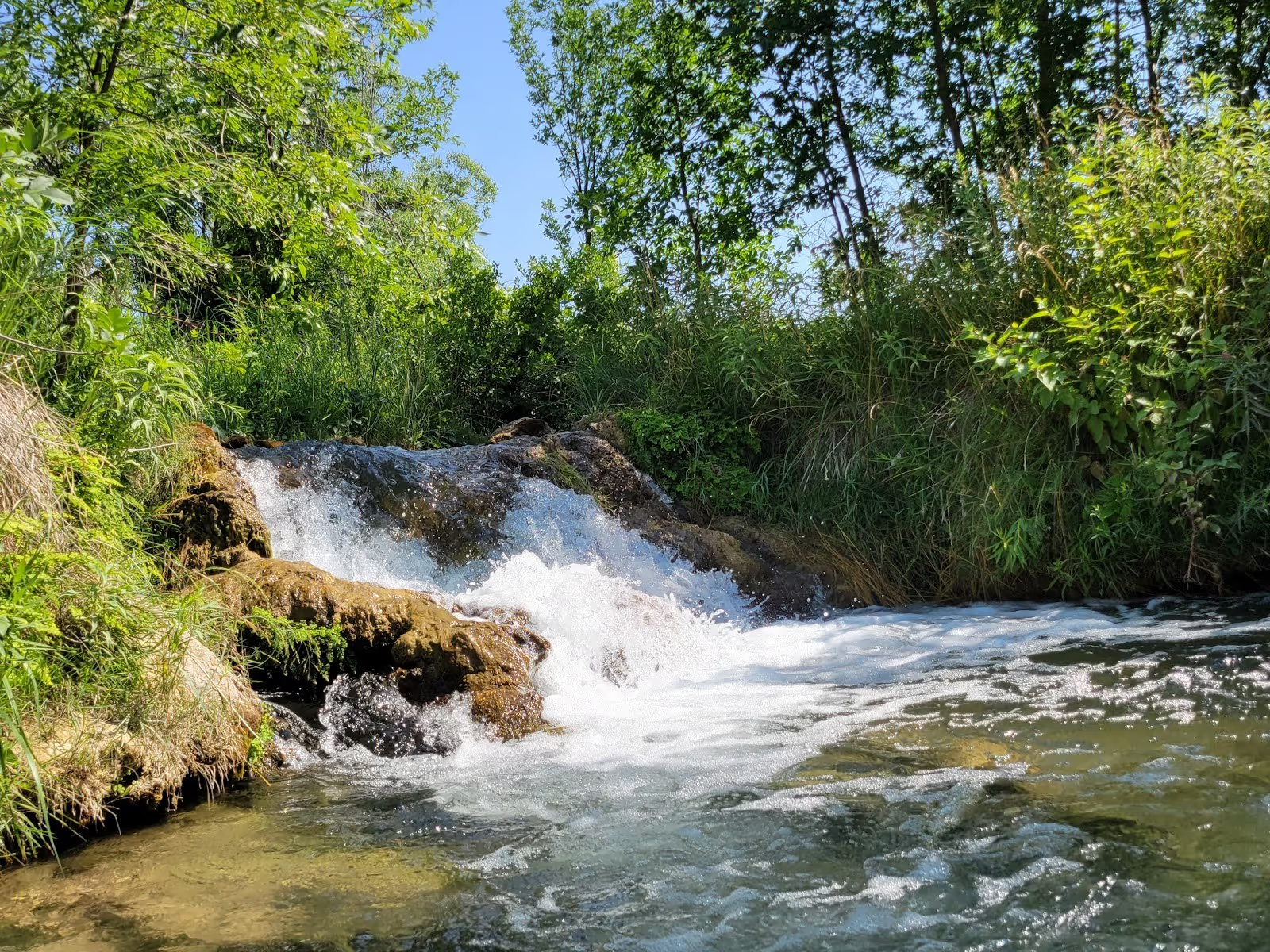
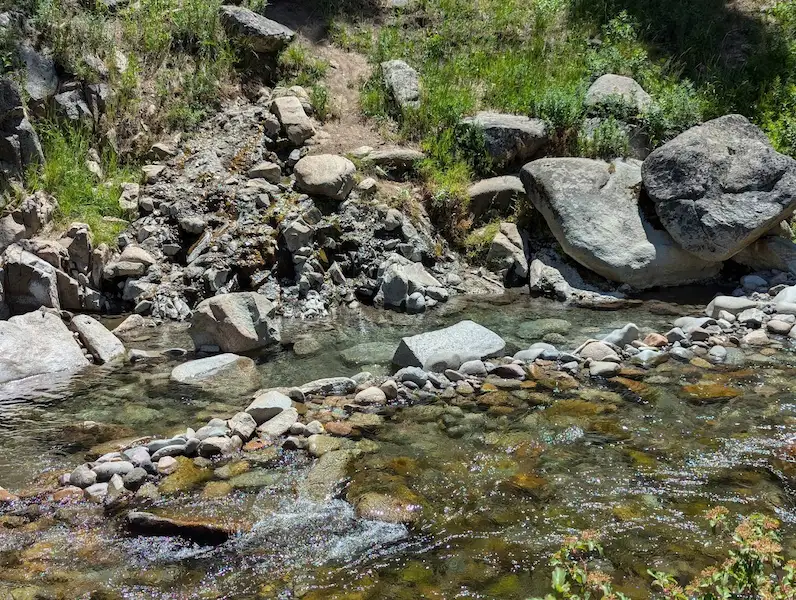
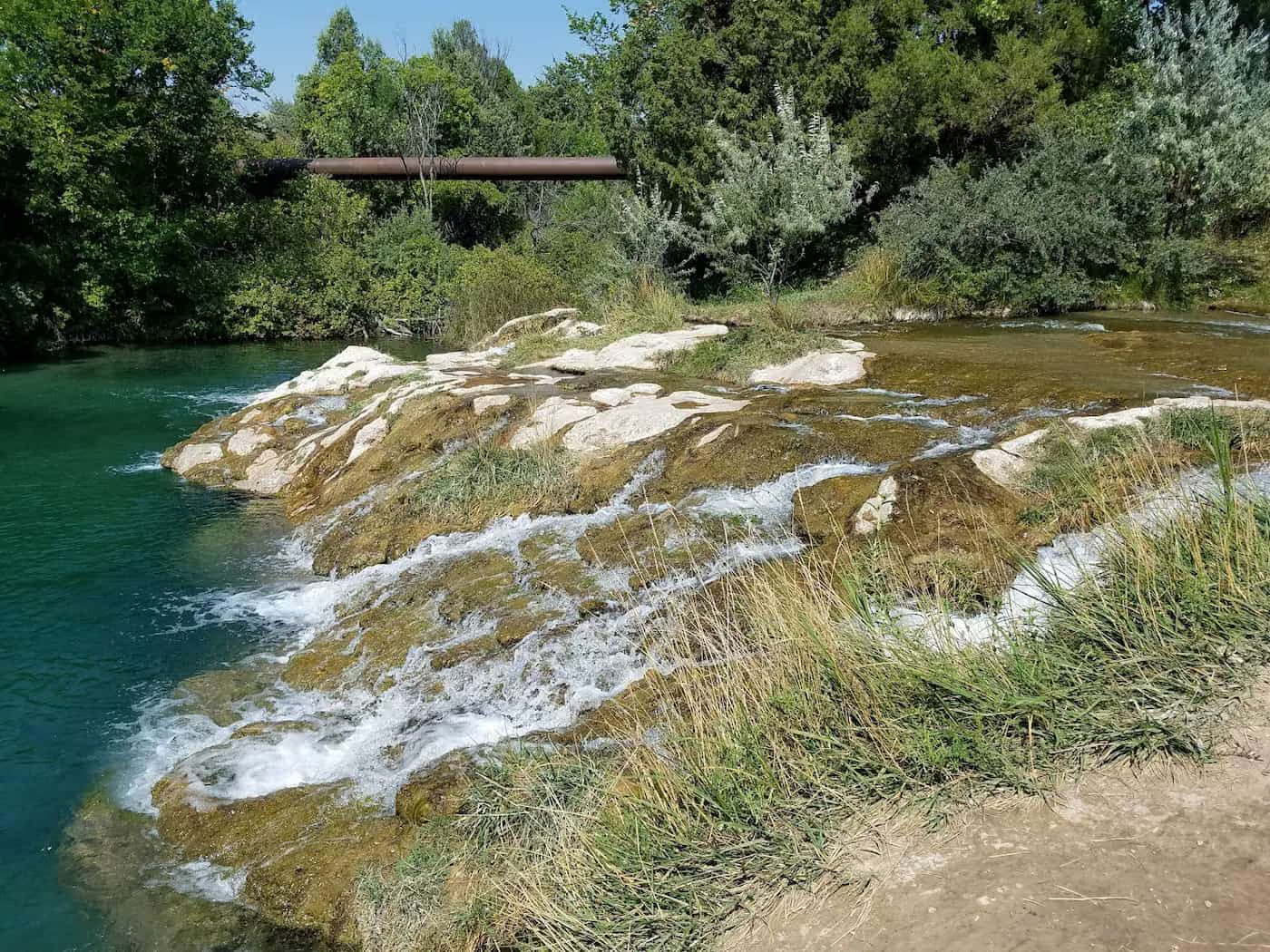
The falls form where Cascade Creek pours over a travertine mineral deposit into a pool below. The pools vary in depth, with shallow wading areas near the banks and a deeper central pool for swimming. The site includes covered picnic tables, restrooms, and a short established path from the parking lot to the creek, making it one of the more accessible hot springs in the Black Hills for a spontaneous day visit.
Location & Access
Getting to Cascade Falls
Cascade Falls is reached via a short walk of under five minutes from a gravel parking lot directly off SD Highway 71, approximately 8 miles south of Hot Springs in Fall River County. The parking area sits on flat grassland and the path to the falls is visible from the lot. No entry fees, permits, or reservations are required to visit the site.
From the parking lot, an established trail descends to the creek and includes a stairway leading down a steep bank to the water. The path can be uneven and muddy after rain, so footwear with grip is recommended. The Forest Service lists this site as the J.H. Keith Cascade Falls Picnic Area. A separate Forest Service site called Cascade Springs Picnic Area is located about a mile closer to Hot Springs on the same highway but does not permit swimming.
Highway 71 is a paved two-lane road running south from Hot Springs toward the Nebraska border. The Cascade Falls parking area is on the west side of the highway and is signed for the picnic area. The drive from downtown Hot Springs takes approximately 15 minutes. For visitors seeking hot springs near Hot Springs in this corridor, Cascade Falls is the closest natural swimming option along this route. Cell service can be inconsistent in the southern Black Hills, so downloading a map before departing is a useful precaution. Shaded highway curves can hold ice in spring and fall, so checking road conditions before traveling in shoulder seasons is advisable.
Suitability & Accessibility
Who Can Visit Cascade Falls
Cascade Falls suits families with children and most adults in reasonable physical condition, as the walk from the parking area is short and the site offers pools at varying depths that accommodate wading children and swimming adults. The shallow edges of the creek allow younger children to wade while older swimmers use the deeper central pool.
Visitors seeking accessible hot springs in South Dakota should be aware that the path to the falls includes an uneven surface and a stairway down a steep bank, which makes the swimming area unsuitable for visitors with limited mobility. The flat parking lot and picnic area above the creek are easier to navigate, but there is no wheelchair-accessible route to the water itself.
The site works well for visitors who want a relaxed, low-cost natural swimming experience. The water temperature, around 67 degrees Fahrenheit, is warmer than most Black Hills creeks but cooler than a traditional geothermal soak. Visitors expecting an intensely warm pool will find this experience different from a developed thermal facility. The site pairs well as a complement to nearby attractions such as Wind Cave National Park and the Mammoth Site, both within a short drive of Hot Springs. It can be a quick 30-minute stop or extended into a longer picnic outing depending on the day and crowd level.
Safety & Etiquette
Safety and Etiquette at Cascade Falls
Cascade Falls is a site where visitors should be mindful of natural hazards present along the creek. There is no lifeguard on duty, and the creek depth varies across the pools. The main pool below the falls is deep enough to be over an adult's head in places, and younger children should be supervised at all times near the water.
Poison ivy grows along the banks of Cascade Creek in several areas near the swimming hole. Visitors should stay on the established trail and avoid contact with bankside vegetation. Wearing long socks and closed-toe shoes on the walk to the water can reduce the risk of accidental exposure. Prairie rattlesnakes are also present in the surrounding region, particularly on rocky banks and in dry grassland near the parking area. Remaining on cleared paths and checking rocks before sitting is a reasonable precaution.
Water shoes or sandals are recommended for navigating the rocky creek bed, which can be slippery where the water flows over travertine deposits near the falls. The stairway from the parking area to the creek can also be slick when wet. Swimming is permitted at the Cascade Falls Picnic Area only. Swimming is not permitted at the Cascade Springs Picnic Area located upstream.
No potable water is available on-site, so visitors should bring their own supply. The Forest Service maintains restrooms and picnic tables, though availability of services can vary by season. Visitors should pack out all waste. The site attracts local crowds on hot summer weekends, and arriving early or on a weekday can make for a quieter visit. Keeping noise at a level appropriate for a shared natural area and leaving the creek bank clean are both part of the informal etiquette that keeps this site enjoyable for everyone who visits.