
Quick FactsOverview
About Chattanooga Hot Springs
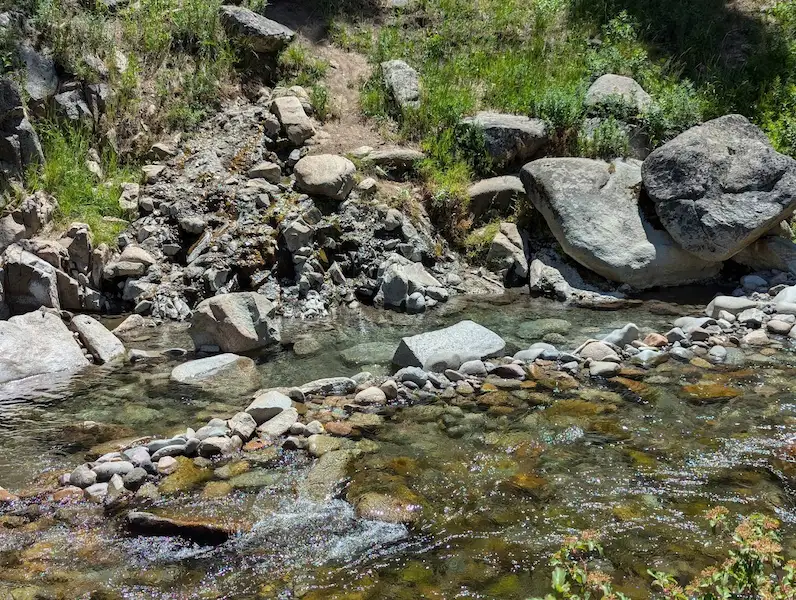
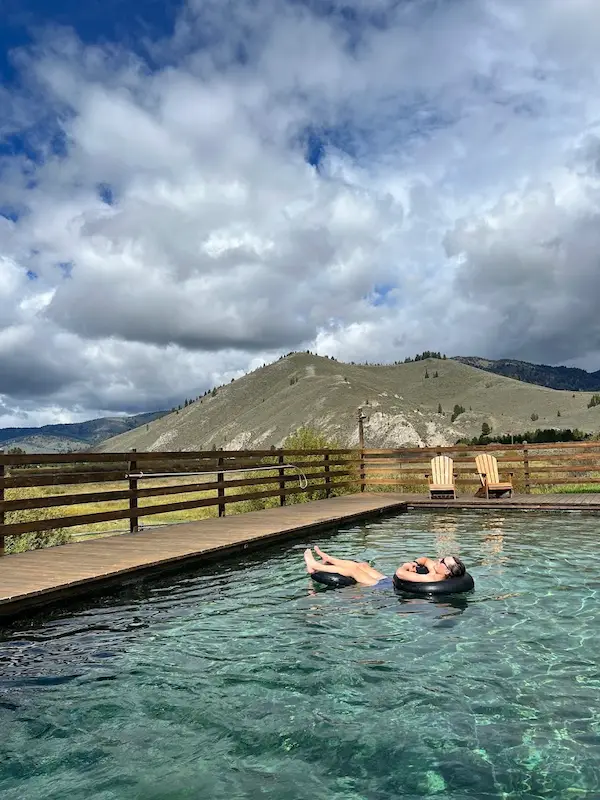
Chattanooga Hot Springs, Idaho is a free, undeveloped geothermal pool set at the base of a steep rock cliff in the Boise National Forest, approximately 1.5 miles from the historic mining town of Atlanta in Elmore County. A single large soaking pool is built from rock and sand by volunteers, filled by a geothermal waterfall that cascades down the cliff face and enters the pool at high temperature before cooling to a soakable range. The pool sits alongside the Middle Fork of the Boise River, giving visitors open views of the river and the surrounding forested hills.
This is one of several natural hot springs along the Middle Fork Boise River corridor, a stretch of terrain known for its concentration of geothermal activity and its remoteness. There are no built structures, no entry fee, no ranger presence, and no maintained facilities. Visitors arrive, soak, and leave the site as they found it.
The hot springs near Atlanta are accessible only during the warmer months for most visitors. The forest roads are unpaved and prone to snow and ice from late October through May or June. During those months, access requires a snowmobile, snowshoes, or skis, making the site effectively off-limits to casual visitors until the roads dry out in summer.
Location & Access
Getting to Chattanooga Hot Springs
Chattanooga Hot Springs is reached by driving approximately 56 miles southwest of Lowman, Idaho on a combination of paved and unpaved forest roads, including Middle Fork Boise River Road (FS-268). The final approach follows FS-268 to a pullout near the end of the road just past Atlanta. From that pullout, a short but steep trail drops roughly 100 feet down the cliff face to the pool below.
The entire access route requires a high-clearance 4WD vehicle. The roads are unpaved, narrow in places, and subject to washouts after heavy rain. From Boise, the total driving time is approximately three hours under good conditions. There are no gas stations in the area, so visitors should fill up before leaving any paved road. The nearest services are in Lowman or Idaho City, both well over an hour from the site.
For those seeking hot springs near Atlanta Idaho, this is the most well-known option in the immediate area, and it sits within easy walking distance of the Powerplant Campground, a free USFS campground located about 0.7 miles to the east. The campground has picnic tables, water, and an outhouse, making it a practical base for a multi-day visit.
Cell service is not available along Middle Fork Boise River Road or at the hot springs. Emergency services are a significant distance away. Visitors should download offline maps and share their itinerary before heading in.
Suitability & Accessibility
Visiting Chattanooga Hot Springs
Chattanooga Hot Springs suits experienced outdoor visitors who are comfortable with remote driving conditions and a short but steep trail, as the approach requires a 4WD vehicle and the path down to the pool is uneven and can be slippery. The pool itself is large and relatively shallow, which makes the soaking experience accessible to a range of adults, but the overall journey is not suited to young children, elderly visitors, or anyone with mobility limitations.
This site is clothing optional, which is common at undeveloped natural hot springs in Idaho. Visitors should be prepared for that norm before arriving. The site has no changing rooms or privacy screens, and the pool is often shared by multiple groups during peak season.
For those looking for free hot springs Idaho has to offer in a backcountry setting, this spring represents a good balance between remoteness and accessibility. It is far enough from paved roads to filter out casual visitors, but does not require a multi-day hike or technical wilderness skills. A capable vehicle, a full tank of fuel, and standard outdoor preparation are the main requirements.
Visitors with dogs are welcome at the site, though dogs should be kept out of the soaking pool as a courtesy to other users. The trail down to the pool involves loose rock and a steep grade, which can be difficult for some dogs. The surrounding forest roads and the Middle Fork of the Boise River offer ample space for dogs before or after a soak.
Safety & Etiquette
Safety at Chattanooga Hot Springs
Chattanooga Hot Springs is in a remote area with natural hazards, and visitors should be fully self-sufficient before arriving, as the geothermal water enters the pool at temperatures that can exceed what is safe for immediate immersion and there is no attendant or lifeguard present at any time. The water cools as it runs down the cliff face, but pool temperatures can vary by season. Always test the water before getting in, and move gradually toward the hotter inflow rather than sitting directly under it.
The steep cliff trail from the parking area to the pool is the main access hazard. The path is loose in places and can become slippery after rain or when wet from spray. Appropriate footwear is strongly recommended, and bare feet on the trail increase the risk of a slip or fall.
Road safety is a significant consideration for this site. Middle Fork Boise River Road is unpaved, narrow, and subject to washouts. It is closed in winter and generally not passable until late June in a typical snow year. Driving in after early October without checking road conditions first carries real risk of being stranded. The nearest emergency services are well over an hour away.
There are no facilities at the hot spring itself: no toilets, no trash cans, and no water. Visitors should pack out all waste. Leave No Trace principles apply throughout the area, and the site depends on visitor care to remain open and undamaged.
Water in the Middle Fork Boise River alongside the pool runs cold and fast during spring runoff, which can raise the water level around the pool and reduce the available soaking area. In some high-water years, the pool can be partially submerged and unusable. Late summer and early fall are typically the most reliable seasons for a stable soak.