
Quick FactsOverview
About Crab Cooker Hot Springs
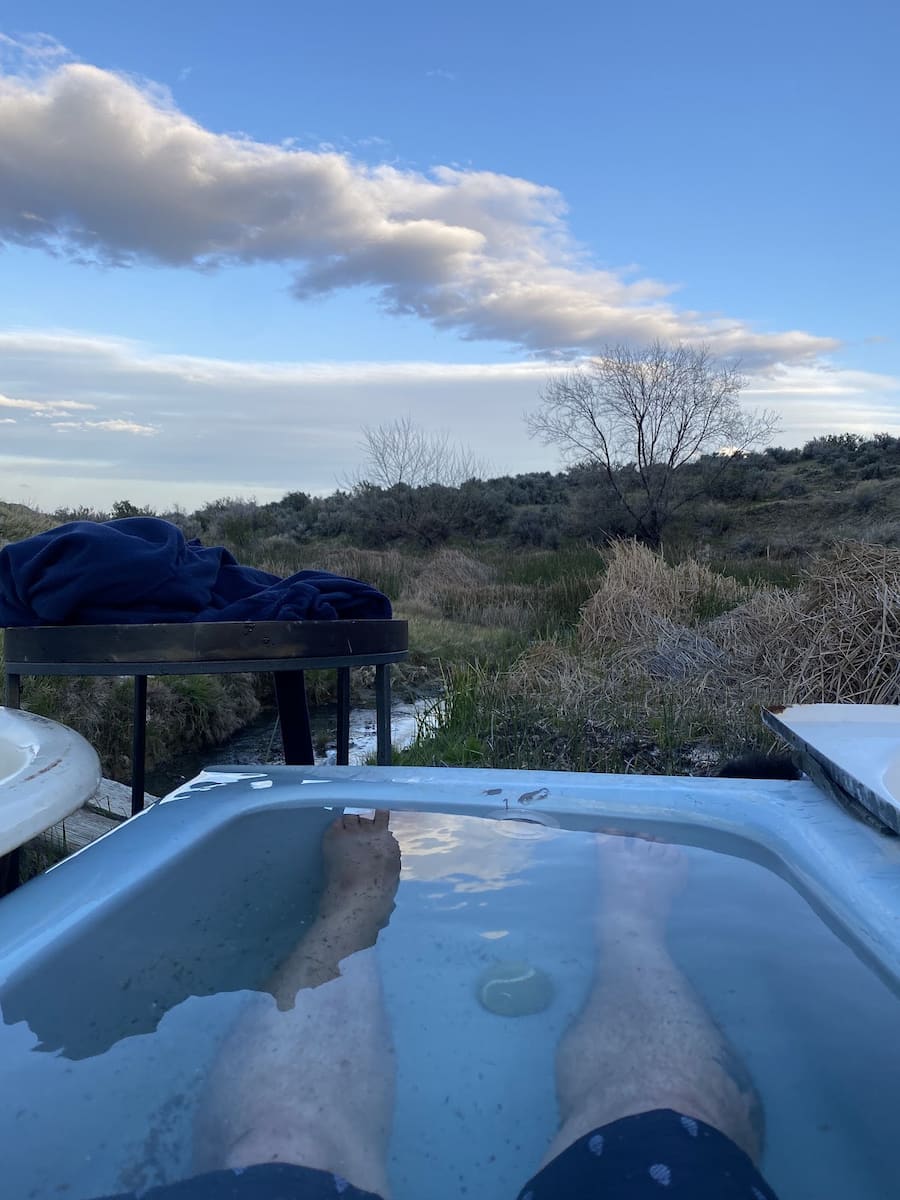
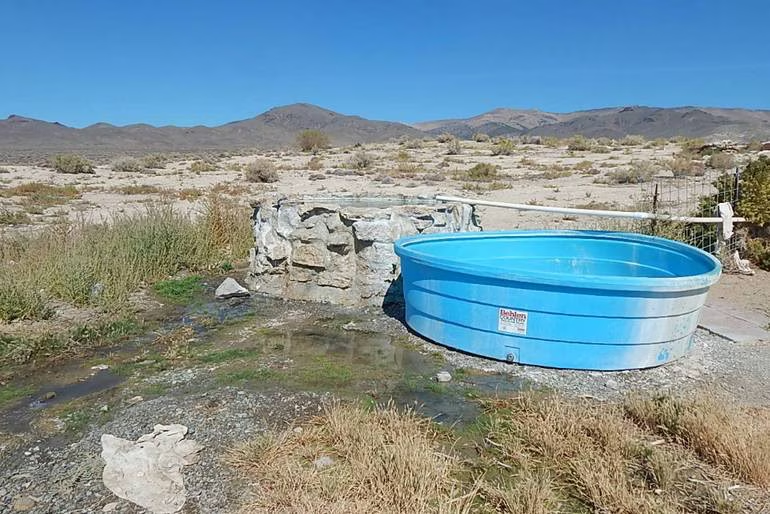
Crab Cooker Hot Springs, California is a free primitive hot spring in the Long Valley Caldera on Bureau of Land Management land, approximately 12 to 15 miles east of Mammoth Lakes off Benton Crossing Road. A single cement soaking tub sits on an elevated hilltop with panoramic 360-degree views of the Eastern Sierra and Long Valley. Geothermal source water reaches up to 150 degrees Fahrenheit and is diverted into the tub via an adjustable valve, typically cooling to approximately 105 degrees when partially open.
The site has no facilities: no restrooms, trash cans, or running water. The tub fits three to eight people and is clothing-optional. The spring sits on land owned by the Los Angeles Department of Water and Power; camping is not permitted at the spring itself, though dispersed camping is available on nearby BLM land. The site is maintained by volunteers.
Crab Cooker is one of several free natural hot springs in California clustered in the Long Valley Caldera near Mammoth Lakes. It sits higher than the surrounding springs and offers the most elevated views of the group. Visitors should note that the spring has historically run cold or dry intermittently. Checking recent reports before making the drive is strongly advisable.
Location & Access
Getting to Crab Cooker Hot Springs
Crab Cooker Hot Springs is reached from Highway 395 by turning onto Benton Crossing Road, marked by a green church at the corner. From Mammoth Lakes, head south approximately 13 miles and turn left. From Bishop, drive north approximately 35 miles and turn right. Continue on Benton Crossing Road through multiple cattle gates, then turn left onto an unsigned rough dirt road and follow it to a small parking area. A 0.2-mile trail leads from the parking area to the tub.
The dirt road is rough and rutted; a high-clearance vehicle with four-wheel drive is recommended. Standard cars may manage in dry conditions but the road becomes impassable in wet or snowy weather. Cell service is limited or absent throughout. Downloading offline maps or saving coordinates before losing coverage is strongly recommended, as GPS navigation is unreliable for the final approach.
For visitors looking for natural hot springs near Mammoth Lakes on this corridor, Crab Cooker shares the Benton Crossing Road approach with several nearby springs. Shepherd Hot Springs, approximately 0.5 miles north, can serve as a walking access point to Crab Cooker when road conditions make the direct approach difficult. The parking area is small and the site can be crowded on summer evenings.
Suitability & Accessibility
Who Should Visit Crab Cooker Hot Springs
Crab Cooker Hot Springs suits visitors comfortable with remote, undeveloped hot springs and a rough dirt road approach. It is free, open year-round when accessible, and the 0.2-mile walk from the parking area is easy and flat. Families with children can visit with close supervision, as the elevated site and hot source pipe require attentiveness. The site has no facilities and self-sufficiency with food, water, and sun protection is essential.
The single tub fits a small number of people, making this better suited to solo visitors, couples, or small groups than to larger parties who may need to wait. Clothing is optional here as at other Long Valley Caldera springs. The site is not wheelchair accessible given the rough road and unimproved trail. Visitors comfortable with uncertainty will get the most from this spring: it offers excellent solitude and the highest views of the Long Valley group, but only when the tub is flowing.
Those seeking free natural hot springs in California with elevated panoramic views and a more secluded character than the busier Wild Willy's will find Crab Cooker worthwhile when conditions allow. The main caveat is reliability: the tub has been known to run cold or dry intermittently, and checking current conditions before making the drive is strongly recommended to avoid arriving at an empty spring after a demanding dirt-road approach.
Safety & Etiquette
Safety at Crab Cooker Hot Springs
Crab Cooker Hot Springs is a remote area with natural hazards. The geothermal source water reaches up to 150 degrees Fahrenheit and will cause burns on contact. Do not touch the source pipe or the area immediately around it. Before entering the tub, always test the water temperature and close the valve if it is too hot. Children must be kept away from the source pipe and must not enter the tub until an adult confirms a safe temperature.
The hilltop site is fully exposed with no shade. Sun exposure at approximately 7,000 feet is intense; bring sun protection, hats, and adequate water. Temperatures can drop sharply after sunset and strong winds are common in the Long Valley Caldera. Warm dry layers for the return trip are essential, particularly in cooler months or at dusk.
Cell service is not available at the site. The nearest services are in Mammoth Lakes, approximately 13 to 15 miles away. Visitors should tell someone their plans before departing. No trash disposal exists on site; pack out everything brought in. The access road is impassable in wet or snowy conditions and should not be attempted after rain.
The spring's intermittent flow is an additional practical hazard: arriving at a cold or empty tub after a demanding dirt-road drive is a documented possibility. Checking recent visitor reports before setting out significantly reduces this risk. If the tub is cold or empty on arrival, do not force the valve open beyond its normal range, as this can damage the infrastructure that other visitors depend on.