
Quick FactsOverview
About Gandy Warm Springs
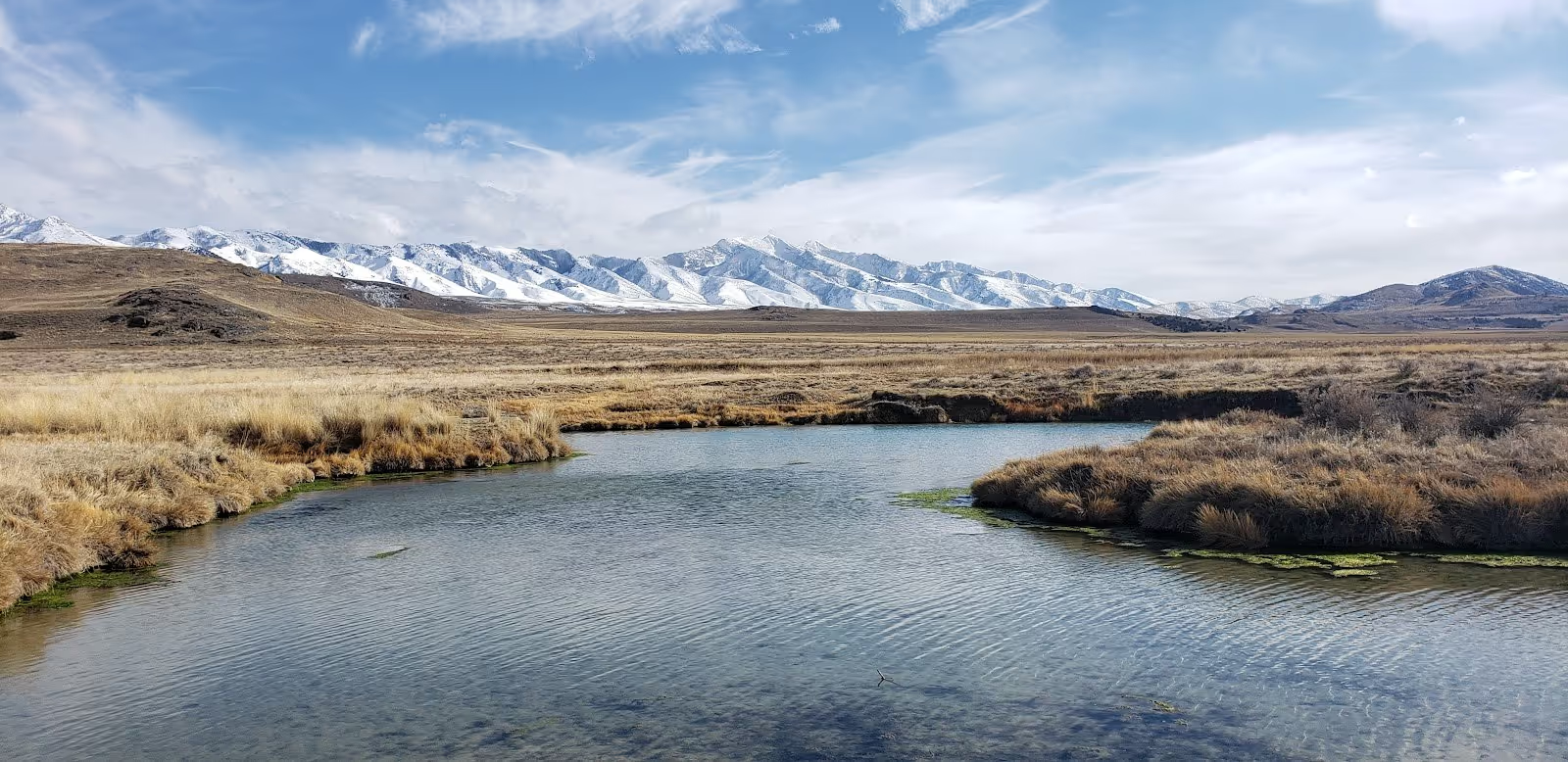
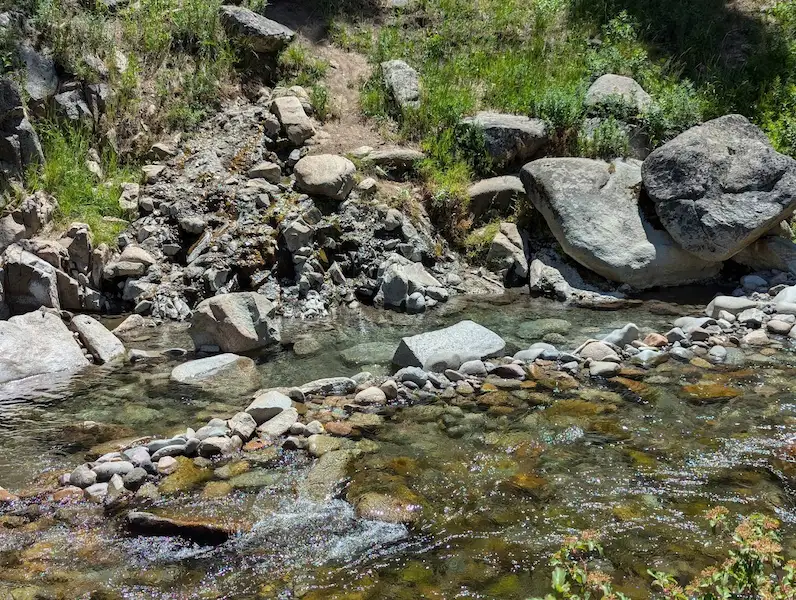
Gandy Warm Springs, Utah is a free geothermal spring on BLM land in western Millard County, near the Nevada border on the western edge of Snake Valley. Multiple pools, cascades, and cave springs emerge at the base of Spring Mountain at temperatures up to 81 degrees Fahrenheit, feeding the eastward-flowing Warm Creek. The site discharges nearly 9,000 gallons per minute, an extraordinary volume for a spring of this size, creating a lush green oasis of mosses, watercress, and bright algae against the surrounding high desert. No fee is required and the site is on public land.
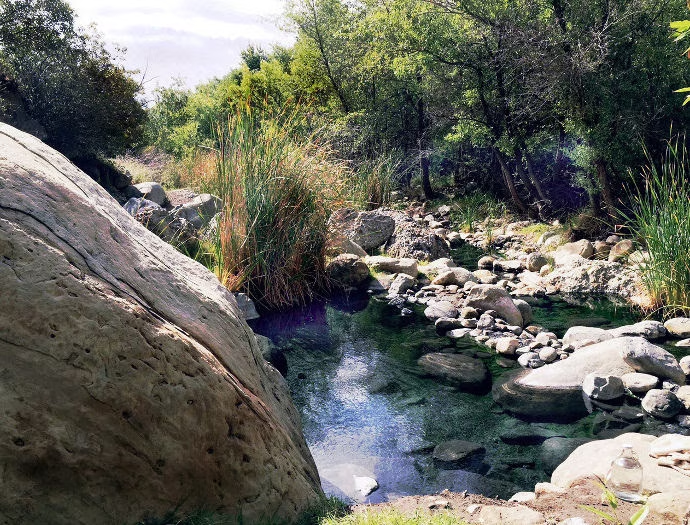
A cave spring known informally as Beware Cave is one of the most distinctive features at Gandy, with the cave entrance marked by a limestone overhang where water emerges at the deepest part of the spring area, approaching four feet in depth. The site is home to an endemic springsnail, Pyrgulopsis saxatilis, found nowhere else on earth, along with native speckled dace fish. Gandy Warm Springs is approximately 150 miles from both Salt Lake City and Las Vegas, making it genuinely remote. The nearest services are at the Border Inn on US-50 at the Nevada state line, approximately 30 miles south, and the town of Delta, Utah, approximately 120 miles to the east.
Location & Access
Getting to Gandy Warm Springs
Gandy Warm Springs is reached by turning north off US Highway 50/6 onto Gandy Road, about two-thirds of a mile west of the Utah-Nevada state line. Drive approximately 28 miles north on Gandy Road until reaching a signed left turn for Gandy. This turn is approximately 100 feet before Warm Creek, which is visible as a green ribbon of vegetation cutting across the dry landscape. Turn left and drive west for approximately 2.7 miles, partly along the south edge of a farm. The last section of road loops northeast and descends to a turnaround and parking area at the creek. The road is passable for all standard vehicles in dry weather. The spring can also be accessed from the north via the towns of Trout Creek and Partoun on the Snake Valley Road.
There are no facilities at the springs. The nearest fuel, food, and lodging is at the Border Inn at the Nevada state line on US-50, approximately 30 miles south. Delta, Utah, is approximately 120 miles to the east and provides a full range of services. Camping is permitted on the surrounding BLM land and on Utah State Trust Lands directly west of the springs. There are no designated campsites, water, or restrooms. Visitors should be fully self-sufficient and carry all water, food, and supplies. Cell service is unreliable in this part of Snake Valley. For those looking for natural hot springs near Delta Utah, Gandy is the most accessible wild spring in the region, though the drive is considerable.
Suitability & Accessibility
Suitability and Accessibility of Gandy Warm Springs
Gandy Warm Springs suits visitors who are comfortable with remote, undeveloped desert environments and self-sufficient travel, as the spring is approximately 30 miles from the nearest services and has no on-site facilities of any kind. The pools and cascades are accessible on foot from the parking area across relatively flat terrain. The site is genuinely remote and requires advance preparation, but the drive-up access on a gravel road means no hiking experience is necessary to reach the springs.
The water temperature reaches up to 81 degrees Fahrenheit, which is warm for soaking but cooler than most dedicated hot springs. The pools vary in depth up to nearly four feet. The cave spring area adds an unusual geological dimension that distinguishes Gandy from typical soaking pools. The lush vegetation around the spring, including watercress, mosses, and green algae, is a notable visual contrast to the surrounding desert.
The site is popular with local residents for soaking, indicating its suitability for families and casual visitors when conditions are appropriate. There is no wheelchair access. The soft creek-bank terrain near the pools may be uneven and muddy. For those seeking natural hot springs in Utah in a remote and undeveloped setting, Gandy offers a rare combination of cave springs, endemic wildlife, and an extraordinary flow rate in an otherwise dry Great Basin landscape.
Safety & Etiquette
Gandy Warm Springs Safety Tips
Gandy Warm Springs is generally safe for soaking at its maximum temperature of 81 degrees Fahrenheit, though standard precautions for undeveloped outdoor swimming apply. The water is not treated and contains natural minerals and aquatic life. Visitors should avoid swallowing the water and should rinse off after soaking. The endemic springsnail and native fish are protected and should not be disturbed or removed.
The primary hazards at Gandy are related to its extreme remoteness rather than the water itself. The site is approximately 30 miles from the nearest services on unpaved roads that can become impassable when wet. Visitors should check road conditions before departing and carry a spare tyre, extra fuel, and sufficient water for the full round trip. There is no cell coverage in this part of Snake Valley. Emergency response times in this area could be measured in hours. Visitors should inform someone of their plans before heading out.
Summer heat in the Snake Valley is extreme, with temperatures regularly exceeding 100 degrees Fahrenheit. Visiting in spring, autumn, or early morning in summer reduces heat risk. Flash flooding is possible in desert drainage areas after monsoon rain from July through September. The cave spring area involves low overhangs and uneven footing around water. Visitors should take care when exploring the cave entrance.
The area is active rattlesnake habitat in warmer months. Visitors should watch where they step and sit, particularly around rocks and vegetation. Leaving the area as found, packing out all trash, and avoiding disruption to the spring ecosystem are important given the protected endemic species present.


%252C%2520Utah%25202.avif)