
Quick FactsOverview
About the Springs
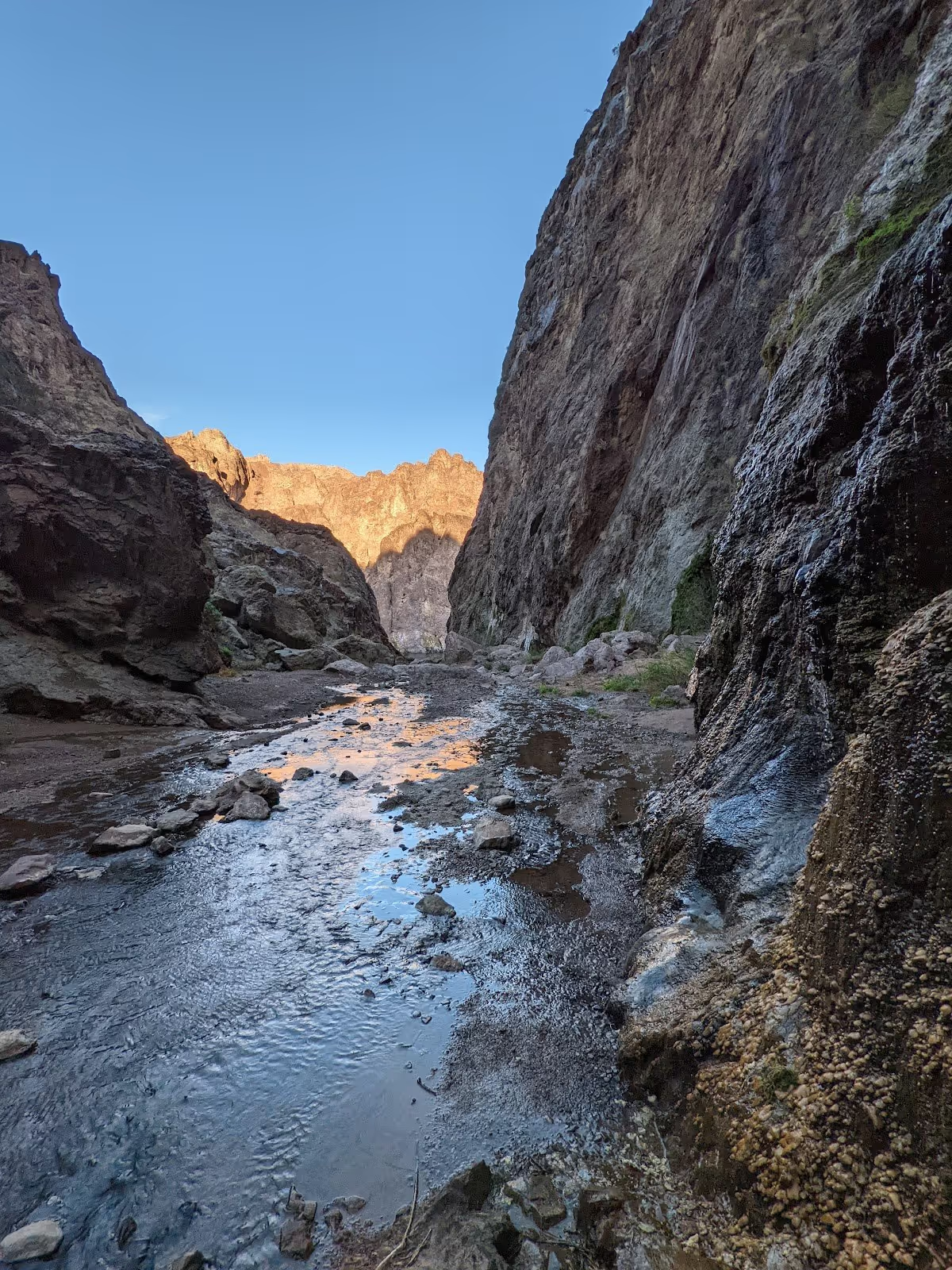
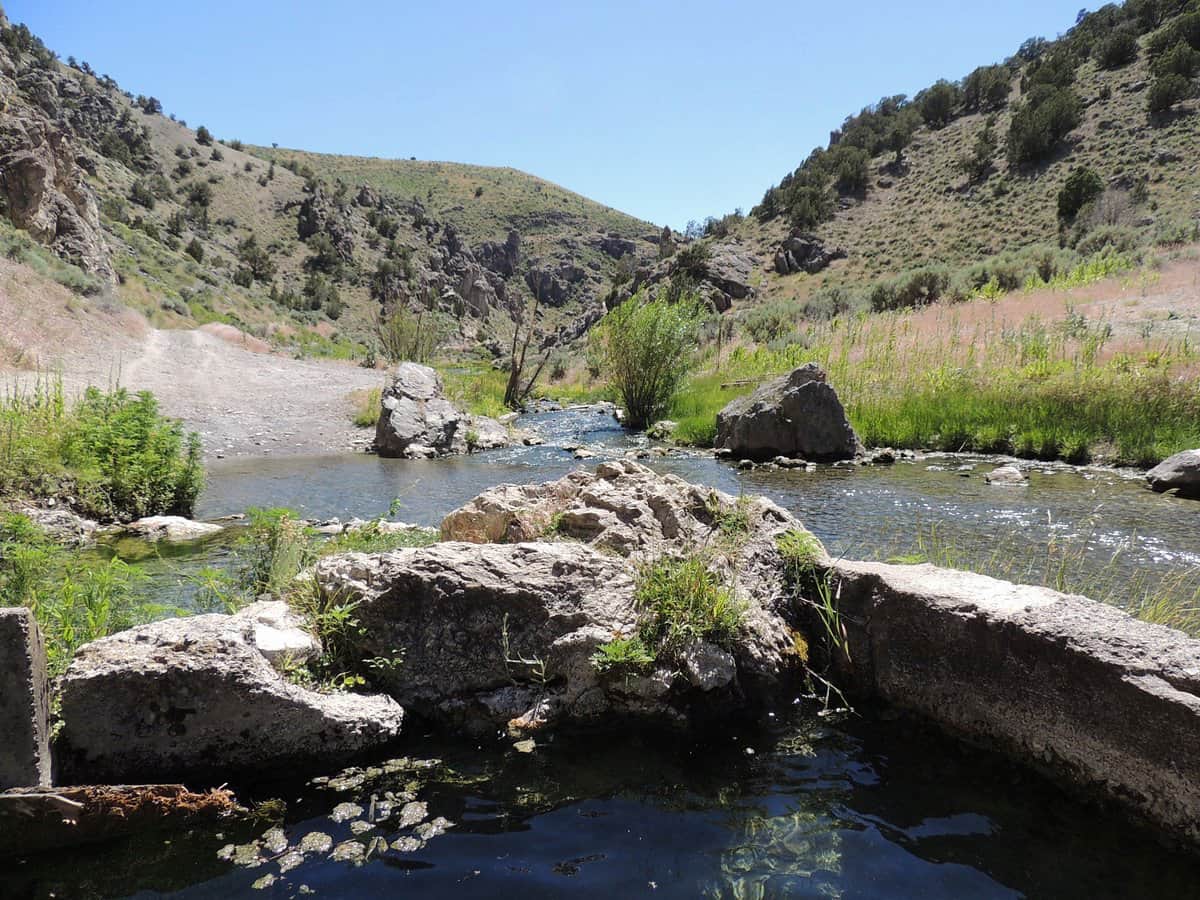
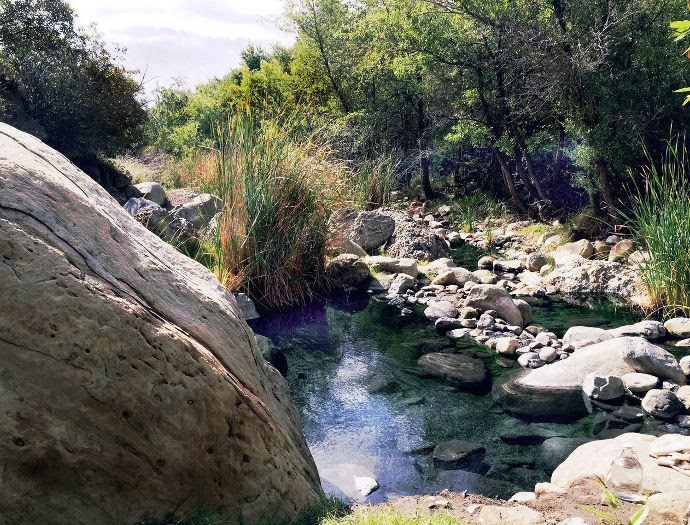
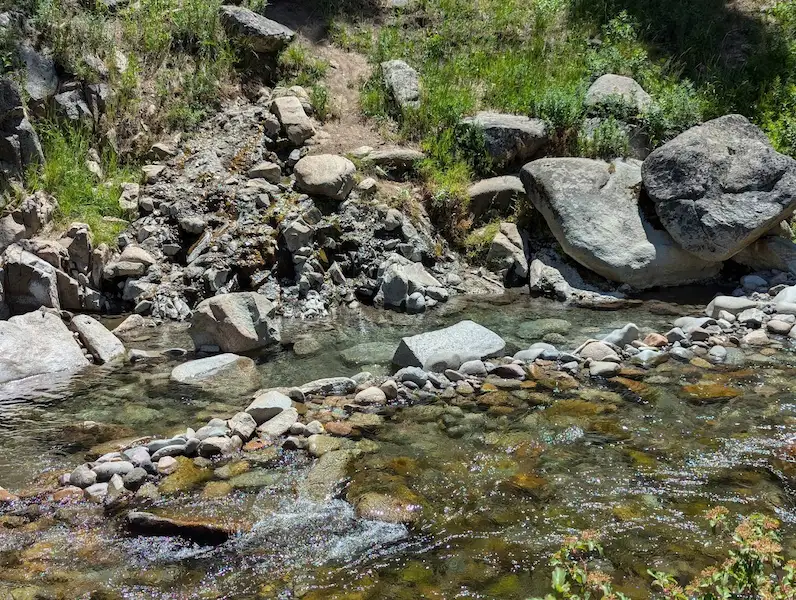
Gold Strike Hot Springs, Nevada is a geothermal spring in Gold Strike Canyon within Lake Mead National Recreation Area, near Boulder City and Hoover Dam. Spring water seeps from the canyon walls and collects in a series of primitive rock pools extending roughly two miles along the canyon floor, with temperatures ranging from around 100 degrees Fahrenheit in the upper pools to 109 degrees near the source. The springs are reached by a strenuous canyon descent of about 1,000 feet over 2.75 miles, using eight fixed rope sections of roughly 20 feet each and Class 3 scrambling over boulders.
The trail is known for its canyon scenery as much as the soaking experience. Red volcanic rock walls, grottos, small waterfalls, and bighorn sheep characterize the canyon. Where the canyon meets the Colorado River, visitors can wade in the river directly. The trail is also accessible by kayak from the Hoover Dam put-in, a shorter and less technical approach that bypasses the rope sections entirely.
An NPS entry fee applies and the trail closes from May 15 to September 30 due to extreme heat. For visitors looking for natural hot springs near Boulder City Nevada, this is the most dramatic soaking destination in the area and one of the most popular outdoor hikes in the Las Vegas region.
Location & Access
Directions and Access
The trailhead is on Highway 93 just before the Mike O'Callaghan-Pat Tillman Memorial Bridge, approximately 35 miles south of Las Vegas or 4 miles past Boulder City. Exit Highway 93 at Exit 2, turn right, then turn left onto a short dirt road to the free parking lot. A Lake Mead NRA entry fee of $25 per vehicle applies. The trailhead coordinates are 36.0062823, -114.7759282, and the address is Goldstrike Pass Road, Boulder City, NV 89005.
The hike is 5.5 miles round trip with about 1,000 feet of elevation change. The first 1.5 miles follow a gravel and sand track. The final section uses eight rope-assisted descents of roughly 20 feet each, rated Class 3. Most hikers take 3 to 4 hours each way. The trail can also be accessed by kayaking from Willow Beach, avoiding the rope sections. No day-use permit is required beyond the NPS entry fee. Overnight camping is not permitted.
The trail is closed May 15 to September 30. October through April is the recommended visiting window. Arrive early on weekdays to avoid crowds. Cell service is not available inside the canyon. For visitors looking for hot springs near Boulder City Nevada, plan for a full day given the hiking and soaking time involved.
Suitability & Accessibility
Who Should Visit
The springs suit experienced hikers comfortable with rope-assisted descents and Class 3 scrambling in a remote canyon. The eight rope sections each require pulling your body weight up and down roughly 20-foot drops on fixed ropes in volcanic rock. If this is not within your comfort level, the kayak approach from Willow Beach is a significantly more accessible alternative to reach the same pools without the technical demands of the canyon route.
Dogs are permitted on a leash but strongly discouraged by the National Park Service due to the technical terrain. Families with older children who have scrambling experience can attempt the hike, but it is not appropriate for young children, anyone with vertigo, or anyone with knee or shoulder injuries. The round trip can take 6 to 8 hours including soaking time. Physical endurance is as important as technical skill on this route.
There is no wheelchair accessibility on this trail. For those seeking natural hot springs near Boulder City Nevada without technical demands, Arizona Hot Springs on the Arizona side of the Colorado River provides a less technical alternative within the same area of Lake Mead NRA. The canyon pools are clothing optional, as is common at undeveloped hot springs, though the site is very popular and crowded on winter weekends when temperatures are mild.
Safety & Etiquette
Gold Strike Hot Springs Safety Tips
Flash flooding is the most serious hazard in this canyon. The narrow walls are not escapable once inside, and a storm anywhere in the upstream watershed can produce a flood wave with very little warning. Check weather forecasts for the full watershed before entering. Do not enter the canyon if rain is forecast or weather is uncertain. Flash floods have caused deaths at canyons in the Lake Mead area. There is no cell service inside the canyon, so you cannot call for help once committed to the route, making preparation before departure essential.
The eight fixed rope sections use ropes placed by previous visitors or volunteers and are not maintained or inspected by park authorities. Test any rope before weighting it. Falling on these sections is a serious risk. Wear closed-toed shoes with good grip; sandals are completely unsuitable. Bring at least 3 liters of water per person for a full-day trip. Dehydration is common even in cool weather during strenuous desert hiking in this environment.
Pool temperatures range from around 100 to 109 degrees Fahrenheit. Always test before entering and use the cooler pools away from the source. Do not submerge your head in any natural hot spring as a standard precaution. The trail is officially closed May 15 to September 30; attempting the hike in this window risks heat exhaustion at canyon temperatures that can reach 115 degrees or more. Check current trail status with Lake Mead NRA before visiting. The NPS entry fee of $25 per vehicle applies at the park entrance.