
Quick FactsOverview
About Hookers Hot Springs
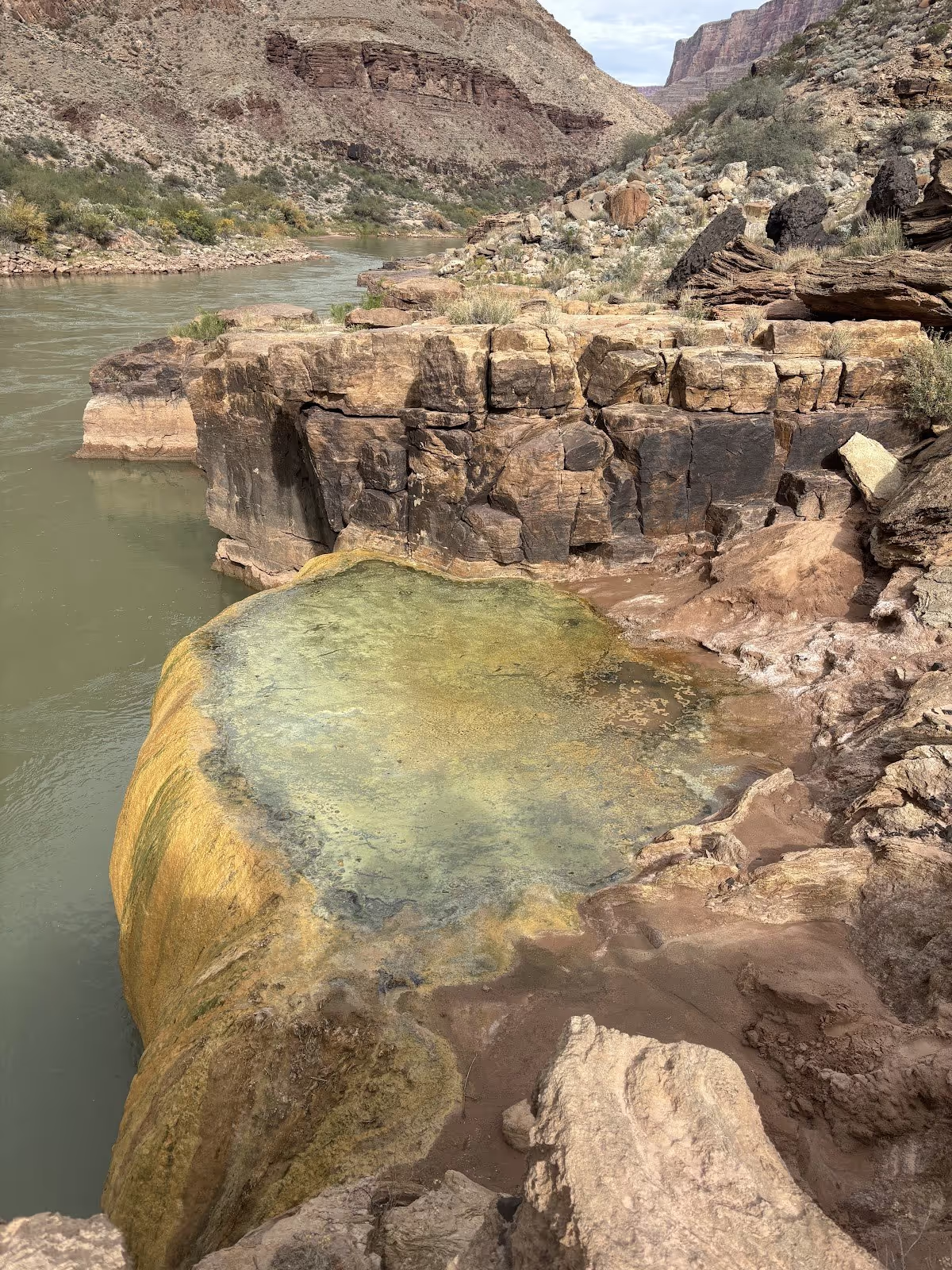
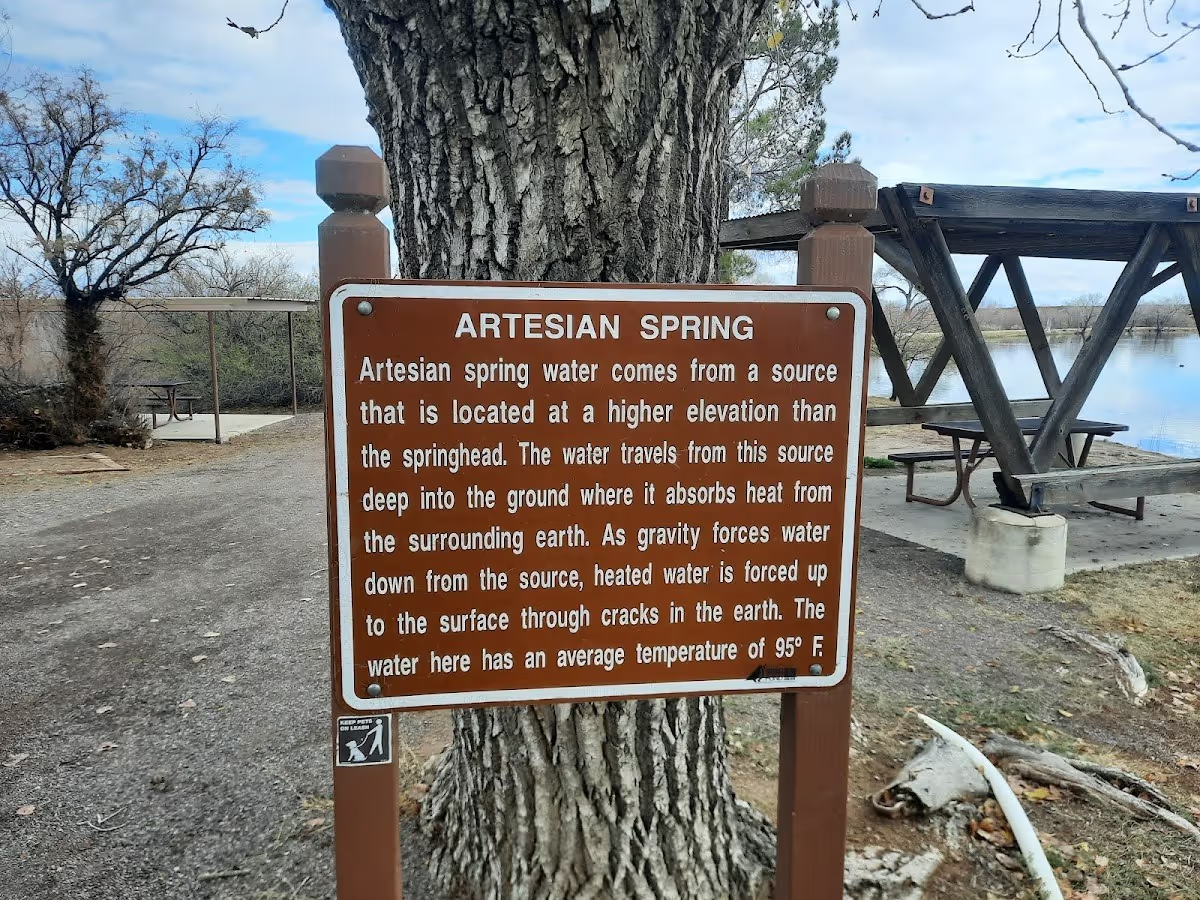
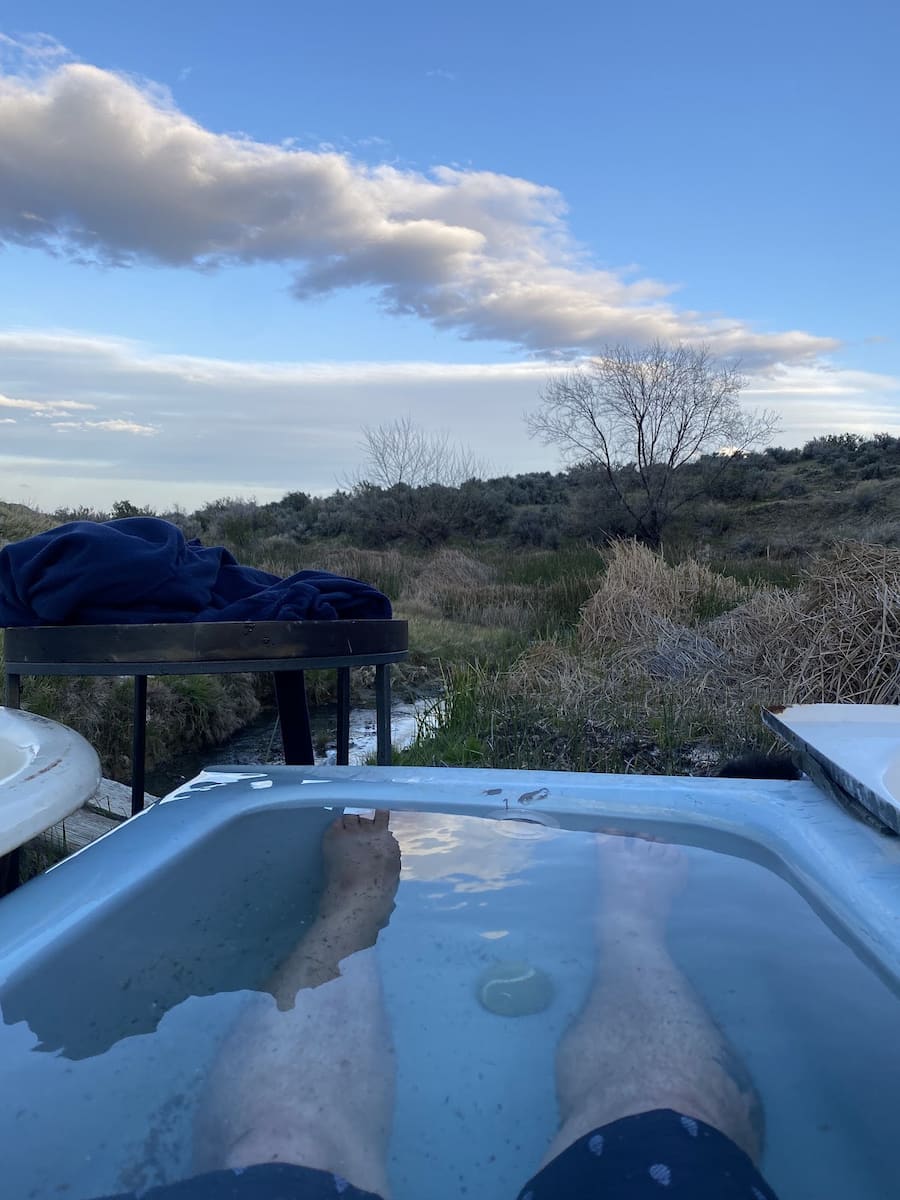
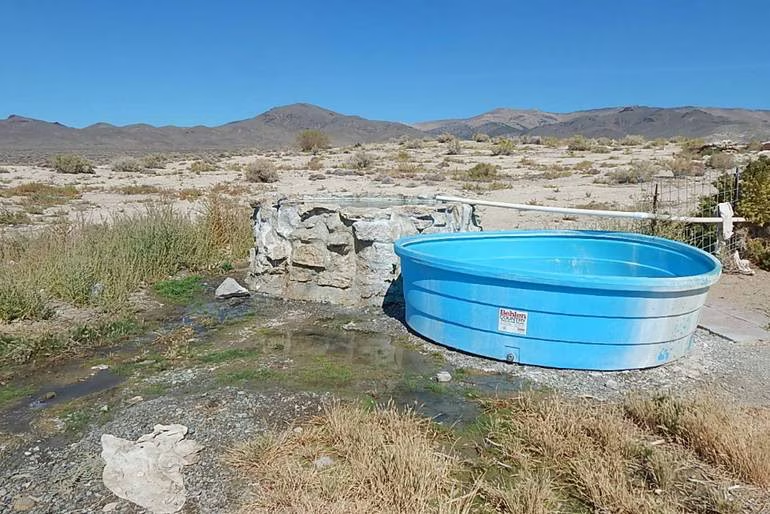
Hookers Hot Springs, Arizona is a geothermal spring in the southern foothills of the Galiuro Mountains within the Muleshoe Ranch Cooperative Management Area in Cochise County, reaching 127 degrees Fahrenheit. The historic bathhouse and springs are closed to all visitors and are not available to the public or through Nature Conservancy membership. The preserve lies about 30 miles northwest of Willcox, and day visitors can still hike its trails, though no route reaches the closed soaking area.
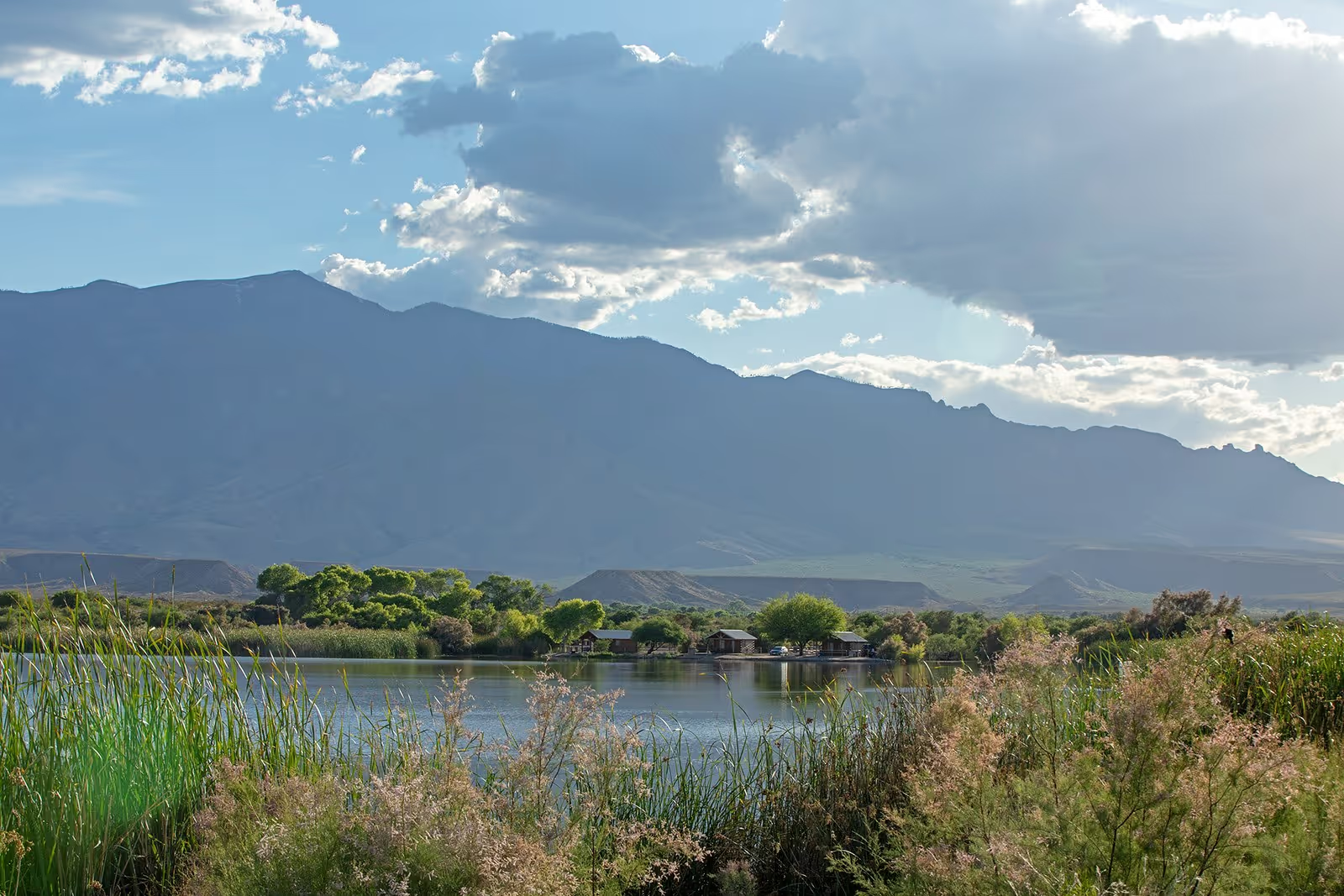
The ranch was established in the 1860s and the springs were commercially used by the 1880s when a bath house piped the water into soaking tubs. The property eventually passed to The Nature Conservancy and now forms part of the 56,000-acre Muleshoe Ranch CMA, jointly managed with the Bureau of Land Management and the Coronado National Forest. Seven permanently flowing streams run through the preserve, supporting endangered fish species and one of the most intact riparian ecosystems in the Southwest. Natural hot springs within active conservation reserves like this are rare in Arizona. The preserve supports exceptional wildlife: deer, coatimundis, javelinas, six hummingbird species, seven owl species, and fourteen hawk and eagle species are documented here.
Location & Access
Getting to Hookers Hot Springs
Hookers Hot Springs is reached from Willcox by driving Airport Road for 15 miles to the junction near a row of mailboxes, then bearing right onto Muleshoe Ranch Road for approximately 14 miles to the ranch entrance. The approach from Interstate 10 uses Exit 340 south onto Rex Allen Drive, then right on North Bisbee Avenue and right onto Airport Road. The total drive from Willcox is roughly 30 miles, and the final 14 miles on Jackson Cabin Road requires a high-clearance four-wheel-drive vehicle.
Jackson Cabin Road is unmaintained private Nature Conservancy land, subject to regular washouts, with no phone reception and no services of any kind along the route. Day hikers park at the designated Bass Canyon area, not at the ranch headquarters. The Bass Canyon to Hot Springs Loop trail is 6.9 miles out-and-back with modest elevation gain. For those searching for hot springs near Willcox in a backcountry setting, this trail is among the most remote options in southeastern Arizona, passing through riparian canyon habitat that is otherwise difficult to access. The hot springs and historic bathhouse are closed to all visitors, including Nature Conservancy members, so the trail leads to canyon scenery rather than any soaking area.
Suitability & Accessibility
Who Should Visit Hookers Hot Springs
Hookers Hot Springs suits experienced hikers and wildlife watchers rather than soakers, because the historic bathhouse and springs are closed to all visitors. General day visitors can access surrounding preserve trails for hiking and wildlife viewing but cannot enter the hot springs area. The site is not suitable for families with young children, casual visitors, or anyone requiring accessible terrain or facilities.
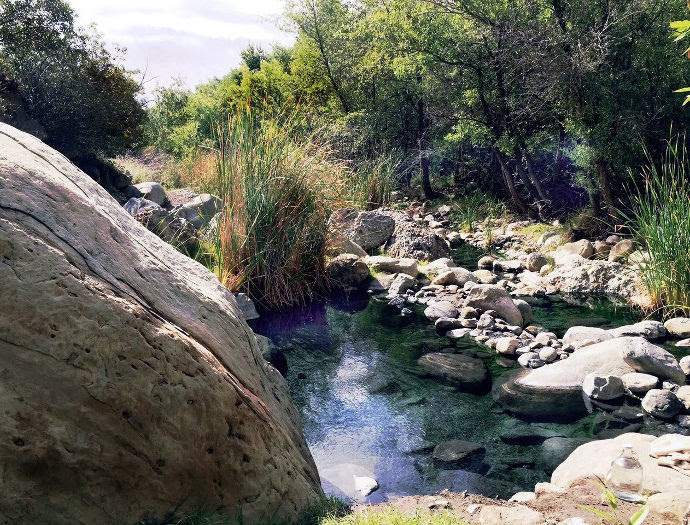
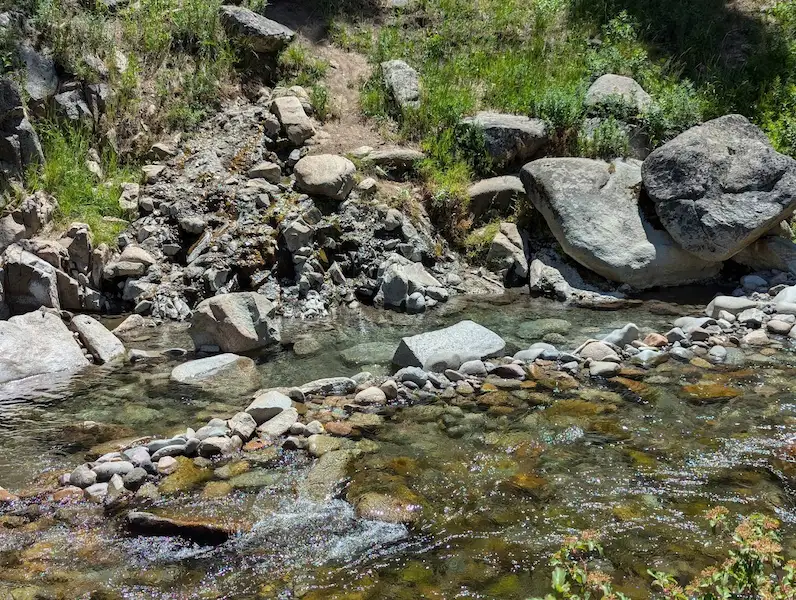
The Bass Canyon trail rewards hikers with creek-side canyon scenery, dense riparian vegetation, and exceptional birdwatching in a landscape that sees relatively few visitors compared to other hot springs in Arizona. Birders find the preserve particularly rewarding given the combination of perennial water and varied elevation that supports a wide range of species. Dogs are not permitted on preserve trails. Horses are allowed in designated areas. No camping is available at the day-use trailhead.
Visitors should be in solid physical condition for the hike, which involves creek crossings and route-finding in sections where the trail is indistinct. A natural hot springs soak is not available to any visitors, as the historic bathhouse is closed and not offered to the public or to members. The value for most day visitors lies in the canyon scenery and wildlife rather than soaking access. The surrounding wilderness is part of a network of hot springs in Arizona that remain largely undeveloped and managed for conservation rather than recreation.
Safety & Etiquette
Safety at Hookers Hot Springs and the Muleshoe Ranch Preserve
Hookers Hot Springs is in a remote area with natural hazards, and visitors must be completely self-sufficient, with no mobile phone reception, no drinking water, and no emergency services within easy reach of the trailhead. Venomous reptiles including rattlesnakes and Gila monsters are active in the canyon from March through October, and hikers should watch where they step and where they place their hands on rocks.
The Jackson Cabin Road is accessible only by high-clearance four-wheel-drive vehicles and can become impassable after rain or flooding. Visitors should check weather conditions before the drive, particularly during summer monsoon season from July through September when flash flooding in desert canyons can be rapid and severe. The road is not maintained and drivers assume all risk. Carrying extra water, food, and a spare tire is strongly recommended for anyone driving to the trailhead.
On the trail itself, visitors should carry enough water for the full 6.9-mile round trip, as no potable sources are available along the route. Canyon walls can reflect significant heat in summer, and temperatures in the Galiuro foothills regularly exceed 100 degrees Fahrenheit from late spring through early fall. Early morning starts are advisable in warm months. The trail passes through active wildlife habitat and visitors should stay on established routes where possible to avoid disturbing the endangered fish species in the streams. All waste must be packed out, and collecting plants, minerals, or wildlife is prohibited throughout the preserve.