Quick FactsOverview
About Hutlinana Hot Springs
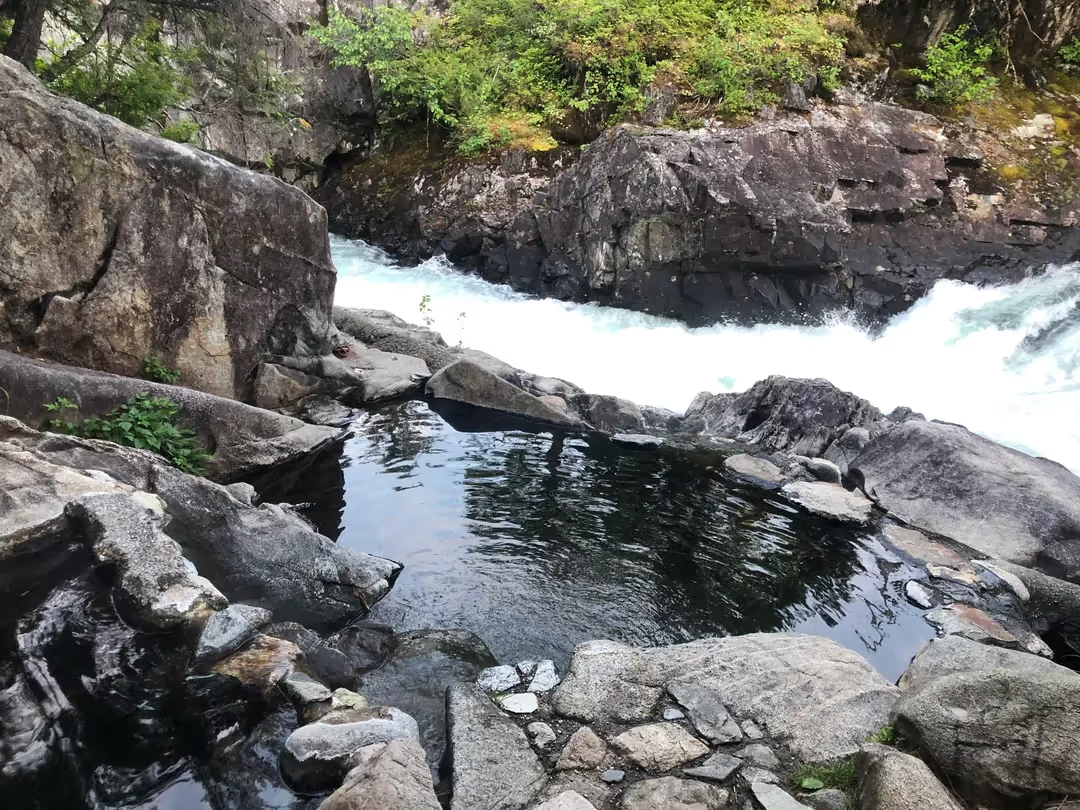
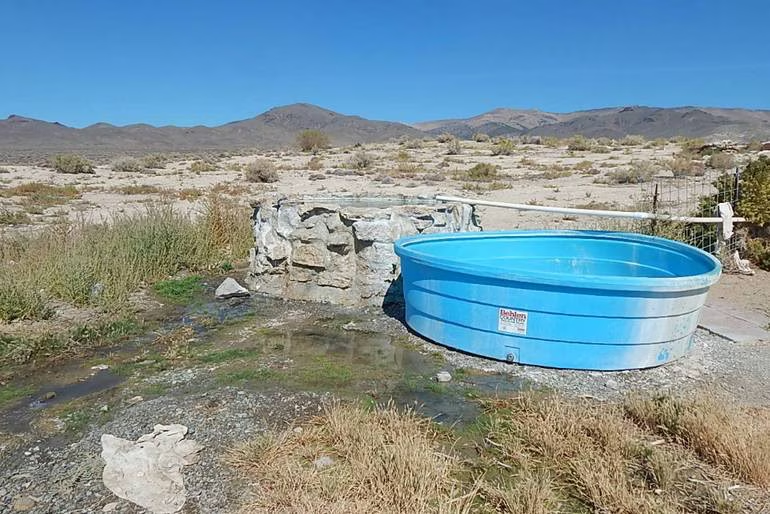
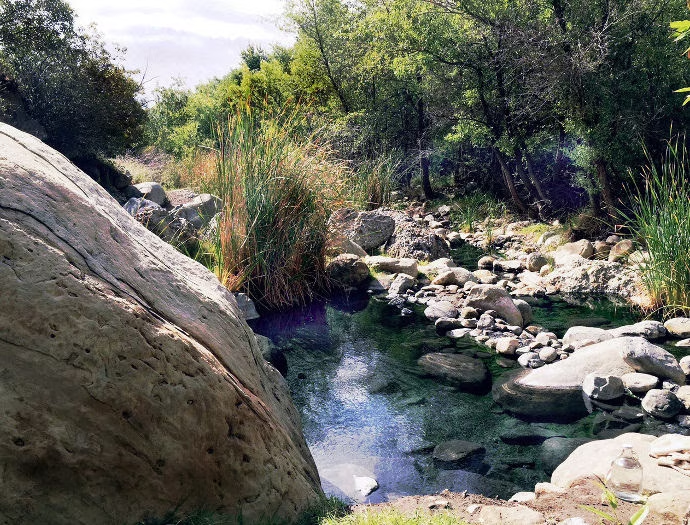
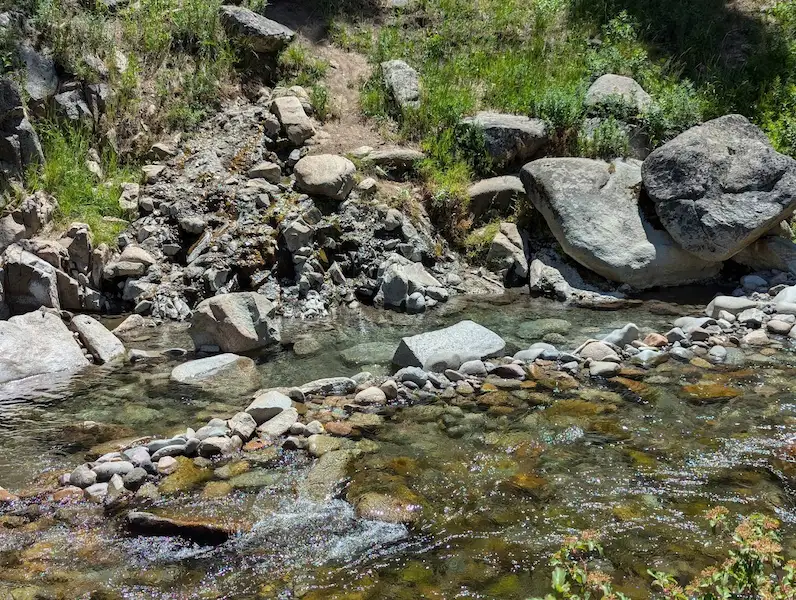
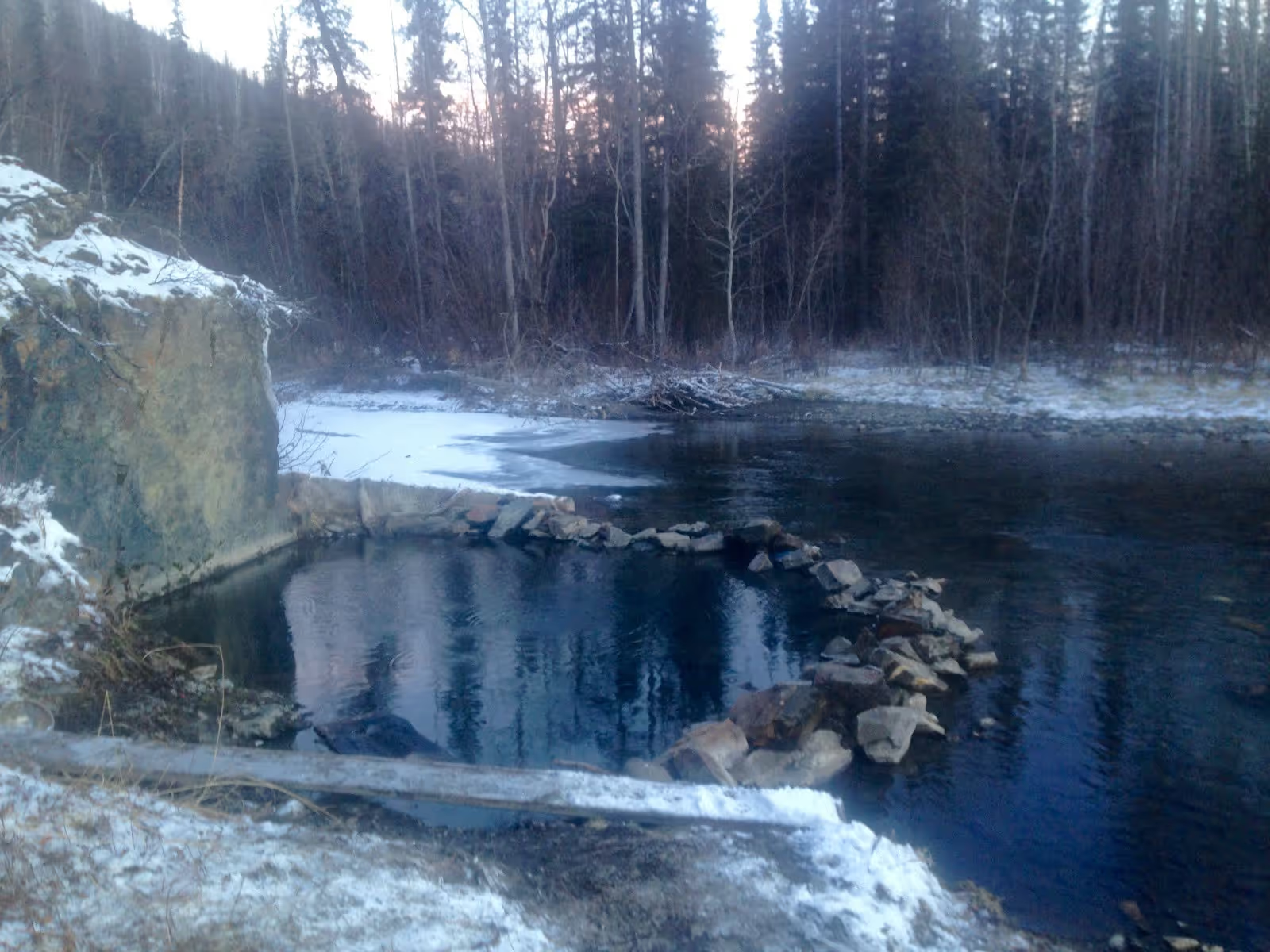
Hutlinana hot springs alaska is a natural geothermal pool on the right bank of Hutlinana Creek in the interior of Alaska, roughly 150 miles northwest of Fairbanks. The spring sits at the edge of the creek, separated from the cold flowing water by a short stone dividing wall. There are no developed structures at the site - no bathhouses, no tubs, no maintained facilities of any kind. The pool is the spring itself, fed directly by geothermal water that surfaces at a temperature comfortable for soaking. The creek's proximity to the warm spring keeps a section of the waterway from freezing in winter, which creates a visible open channel through the frozen landscape that is part of what makes the site memorable.
The trail to Hutlinana Hot Springs is approximately 6.5 to 7 miles one way from the nearest trailhead pullout on the Elliott Highway near mile 128. The trail is not officially maintained and is poorly marked in all seasons, with the least difficult access in winter when the ground is frozen and the route is traveled by skiers and snowmachiners. Summer access is possible but involves slogging through boggy, mosquito-heavy terrain that most people who have done it describe as considerably more challenging than the winter version of the same route.
This is among the most remote natural hot springs alaska has accessible from an Interior highway. The reward for reaching it is a quiet, entirely undeveloped soak in a wilderness setting with no other visitors in earshot and no amenities beyond the water itself. It is a destination suited to experienced backcountry travelers who are comfortable navigating unmarked trails and carrying everything they need.
Location & Access
Getting to Hutlinana Hot Springs
The trailhead for Hutlinana Hot Springs is located near mile 128 of the Elliott Highway, before the highway crosses the bridge over the Hutlinana River heading toward Manley Hot Springs. The best trailhead access is reported to be the fourth pullout on the east side of the highway before the bridge. There is typically no clearly marked or signed parking area at the trailhead itself, and the trail departure point requires careful searching. The parking area is located approximately 100 yards from the trail start; from there, walk east along the north side of the road about 100 yards and the trail heads north from that point.
From the trailhead, the route to the springs is approximately 6.5 to 7 miles and follows an ATV track through Interior Alaska terrain. The trail crosses several creek drainages and passes through stretches of boggy, low-lying ground before reaching the spring at the edge of Hutlinana Creek. In winter, the trail is typically skied or traveled by snowmachine, and the frozen ground makes for faster and more straightforward movement than the muddy summer version. Map and compass skills are required regardless of season, as trail markers are informal - mostly improvised markers left by previous visitors - and cannot be relied upon.
Hot springs near fairbanks in the backcountry like Hutlinana require a different level of preparation than road-accessible sites. Carry a topographic map of the Livengood A-6 quadrangle, reliable navigation equipment, and enough supplies for an unplanned overnight in the field. Build in extra time and do not plan a tight return schedule. The trail can take 2.5 hours or more one way in good conditions, and considerably longer in poor weather or if the route proves difficult to follow on a particular day.
Suitability & Accessibility
Who Hutlinana Hot Springs Suits Best
Hutlinana Hot Springs suits experienced backcountry travelers who are comfortable with multi-mile navigation over unmarked terrain in remote Interior Alaska. This is not an entry-level outdoor destination. The trail is long, the markings are unreliable, and the terrain in summer is wet and slow. In winter, the frozen ground makes the route faster, but cold temperatures and low visibility add their own set of challenges. Visitors should have prior experience with winter travel, map reading, and self-rescue before attempting the winter route.
The site is not suitable for children or casual day hikers without backcountry experience. There are no amenities at the spring, no cell service in the area, and no guarantee that the trail markers left by previous visitors will be in place when you arrive. The experience rewards those who are self-sufficient and comfortable being genuinely far from assistance.
For Fairbanks residents and experienced Interior Alaska adventurers, Hutlinana is a well-known destination worth the effort. The free hot springs alaska backcountry experience it offers - a natural pool beside a frozen creek in a snow-covered spruce forest -- is difficult to replicate anywhere else. Those who arrive by ski in winter often describe it as one of the most satisfying hot springs experiences in the state. Overnight camping is possible near the springs on the trails, and packing in a tent and sleeping gear to spend a night at the site extends the experience significantly beyond a single day's soak.
Safety & Etiquette
Safety and Etiquette at Hutlinana Hot Springs
Navigation is the central safety challenge at Hutlinana Hot Springs. The trail is not officially maintained, markers are informal and may not be present when you need them, and the terrain in summer is genuinely disorienting in sections. Carry a printed topographic map of the Livengood A-6 quadrangle and a compass, and know how to use both before you leave the highway. A GPS device provides useful backup but should not replace map and compass skills in an area with no cell coverage and where battery drain in cold temperatures is a real concern.
In winter, the primary hazards are cold temperature and the open water section near the spring. The proximity of the geothermal spring keeps a portion of Hutlinana Creek unfrozen even in deep cold. Do not cross the creek in winter without visually confirming ice thickness, and do not approach the open water section carelessly. Hypothermia risk is elevated if clothing becomes wet in subfreezing conditions, and the distance back to the highway makes a self-rescue scenario extremely serious. Travel in a group of at least two people and carry emergency shelter, fire-starting materials, and enough food for an unplanned overnight.
In summer, the boggy terrain and high mosquito density require appropriate preparation. Waterproof boots are essential; light trail shoes will not be adequate for the creek crossings and wet sections. Insect repellent is necessary from late May through August, and the quantity required in Interior Alaska is typically higher than visitors from other regions expect.
The site is entirely undeveloped and there are no outhouses. Practice Leave No Trace principles strictly, burying human waste well away from the creek and the spring. Pack all trash out. This is a wild place that relies entirely on visitor behavior to remain in the condition it is in. Keep the area around the spring clean and avoid disturbing the stone wall that divides the soaking pool from the creek, as this simple structure is what makes the pool usable.