Quick FactsOverview
About Kaiser Hot Springs
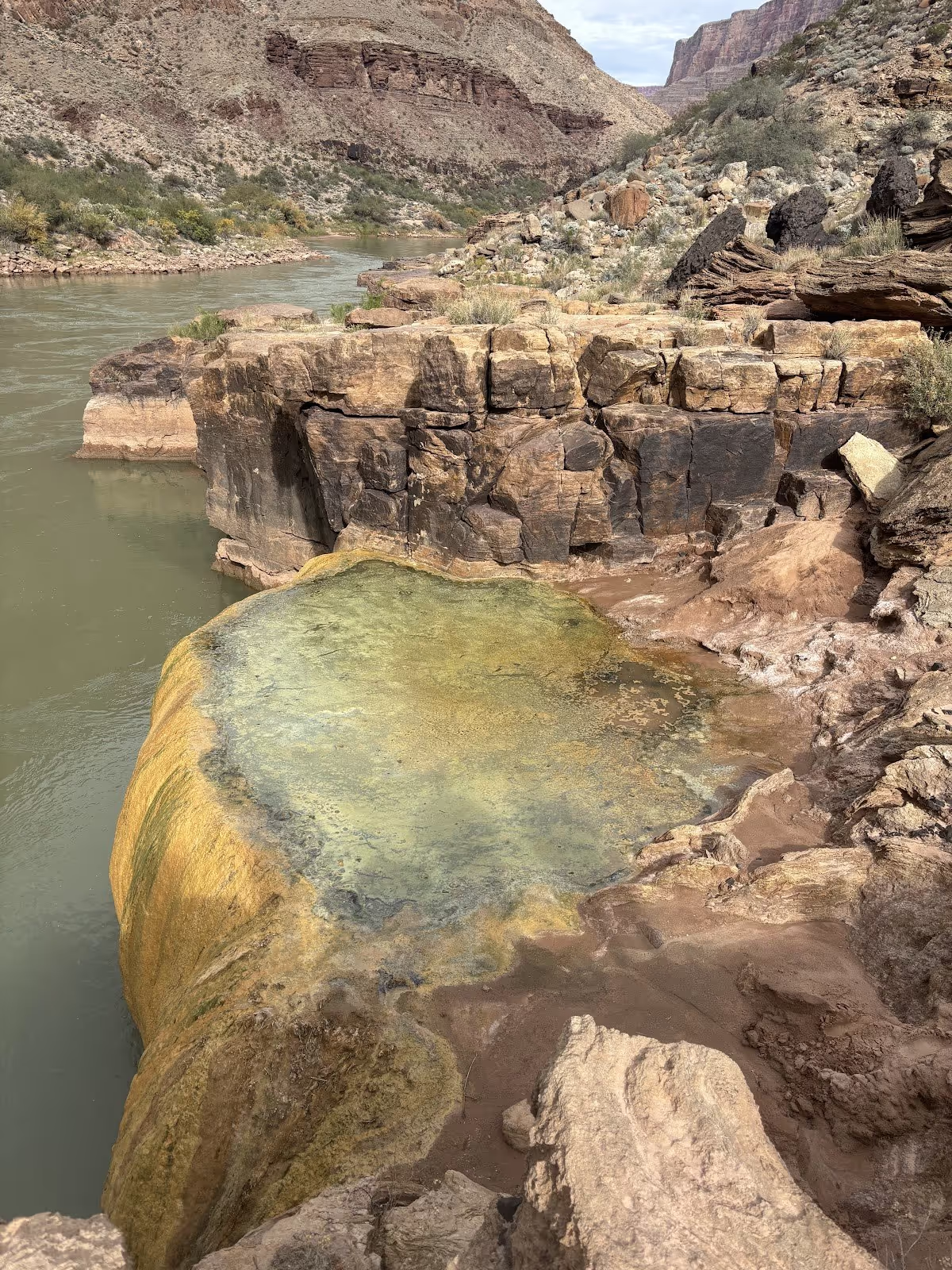
Kaiser Hot Springs, Arizona is a free, primitive geothermal pool set inside Warm Spring Canyon on Bureau of Land Management land in Mohave County, approximately 150 miles northwest of Phoenix. The spring emerges from the canyon wall into a small rock-walled soaking pool at around 99 to 100 degrees Fahrenheit, at the end of a roughly 1.4-mile flat hike through a sandy desert wash. Visitors looking for hot springs near Wikieup will find this spring tucked inside a narrowing canyon with tall basalt walls, about 5 miles north of Burro Creek Bridge along US Highway 93.
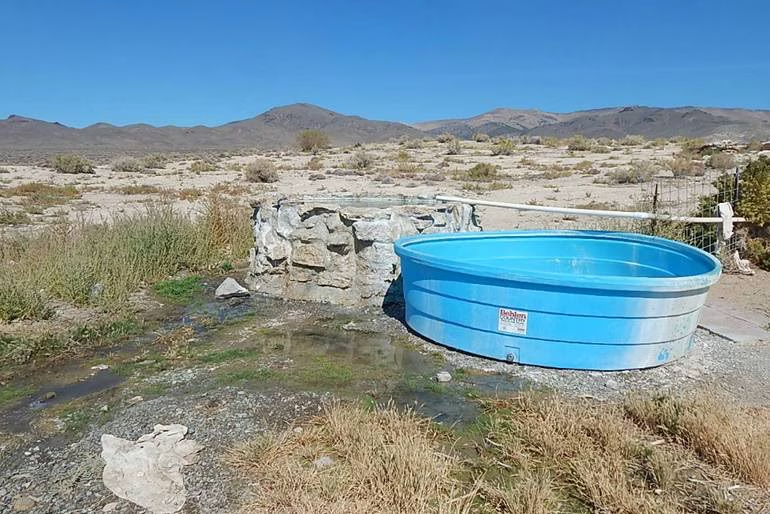
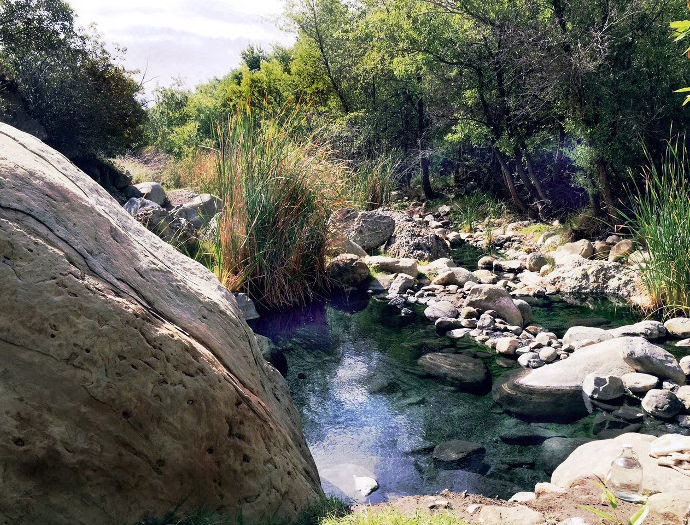
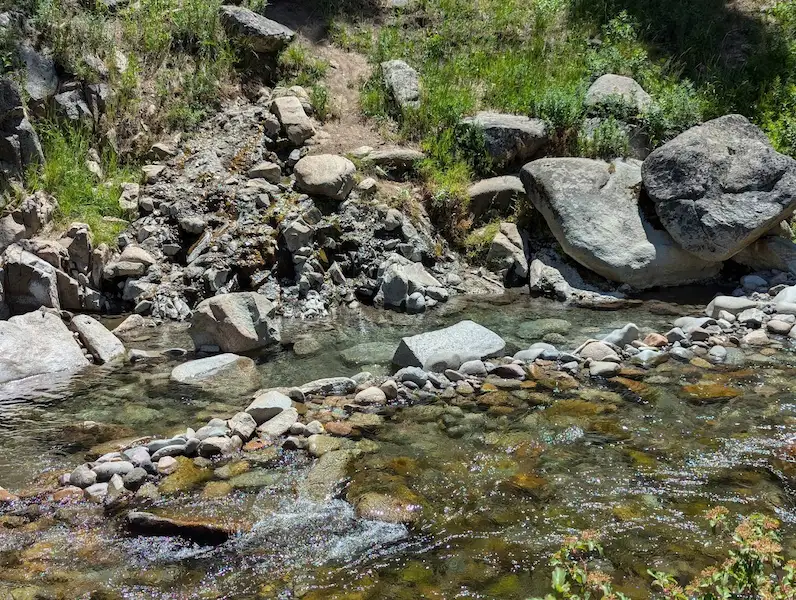
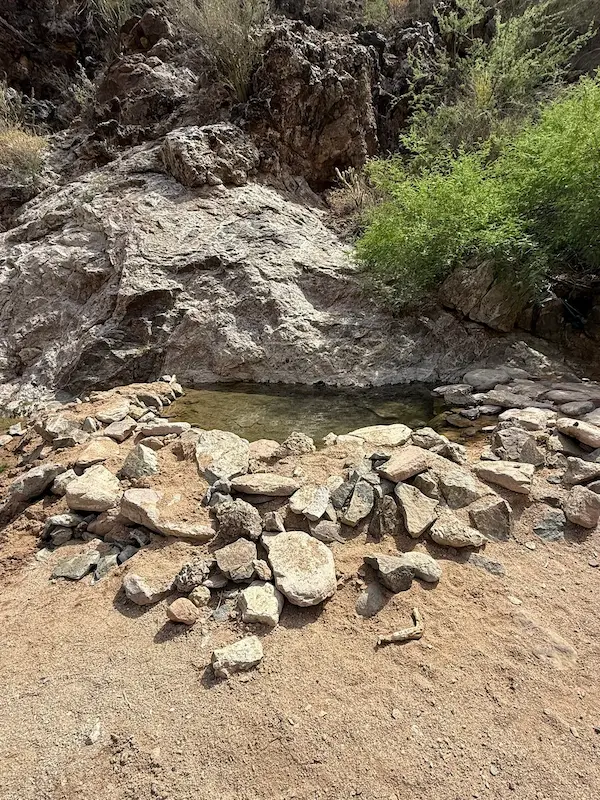
The pool sits at the base of the canyon wall where warm water seeps directly from the rock, then collects in a shallow basin that has been reinforced over time by visitors piling rocks and dirt. The pool is small, comfortably holding two to four people at a time, and the overflow trickles down the wash toward Burro Creek in wet conditions. The canyon around the spring is one of the more visually striking sections of the route, with sheer dark volcanic walls rising on both sides and occasional small caves and rock formations breaking up the cliff faces. Because this is natural hot springs in Arizona at its most undeveloped, there are no constructed facilities of any kind: no signage, no toilets, no maintained trail, and no permit system. The BLM land that surrounds the approach corridor is open to dispersed recreation, and nearby Burro Creek Campground provides the closest organized camping with basic amenities.
Location & Access
Finding Kaiser Hot Springs
Kaiser Hot Springs is reached by driving to US Highway 93 near mile marker 135, approximately 63 miles north of Wickenburg or roughly 68 miles south of Kingman, where a dirt road descends from the highway into Warm Spring Canyon. From Wickenburg, drive north on US-93 for about 63 miles to just past the second major bridge; a highway crossover on the east side provides a turning point, and a short bumpy dirt road leads to a flat parking area near a fence. This approach is passable by standard two-wheel-drive vehicles, though the road is unpaved and can become rutted. A separate 4WD alternate route via Forest Road 7519 on the west side of the highway provides access for high-clearance vehicles. From the main parking area, hikers pass through a gate and descend briefly into the sandy wash, then follow the canyon floor downstream to the southwest. The hike is roughly 1.4 miles one-way with minimal elevation change, making the full round trip about 3.4 to 3.6 miles. The path is unmarked and follows the wash bed itself, which is wide and sandy for the first mile before narrowing as the canyon walls close in. For those searching for hot springs near Wikieup or planning a stop on the Phoenix-to-Las Vegas corridor, the spring is well-positioned as a half-day side trip from Burro Creek Campground, which sits about 5 miles south along US-93.
Navigation apps may not show the exact turnoff clearly, so using the mile marker 135 reference and downloading offline maps before the trip is practical. Cell service along this stretch of US-93 can be inconsistent, particularly in the canyon below the highway. The parking area near the fence gate is visible from the dirt road and accommodates several vehicles. Burro Mine lies roughly 0.4 miles past the spring, and the canyon continues down to Burro Creek itself if visitors want to extend the walk.
Suitability & Accessibility
Visiting Kaiser Hot Springs
Kaiser Hot Springs suits hikers and desert soakers who are comfortable navigating an unmarked sandy wash and do not require developed facilities, as the entire experience is primitive from the trailhead to the pool itself. The flat terrain and modest distance make the hike accessible to most reasonably fit adults, and the canyon scenery adds interest beyond the spring itself. Those seeking natural hot springs in Arizona without crowds will find this site particularly rewarding on weekday mornings or outside the February-to-March peak season, when it attracts the most visitors. Dogs are permitted and do well on the sandy, flat wash. The pool is small and shallow, which suits adults looking for a quiet soak but means it fills quickly when multiple groups arrive. Families with older children who can manage an easy sandy hike in appropriate desert footwear will generally enjoy the trip. Young children and toddlers need close supervision near the spring outflow, which enters the pool at a higher temperature than the pooled water. The site is not wheelchair accessible: the dirt road, sand wash, and uneven rocky ground near the spring all present barriers to wheeled mobility aids. Summer visits require careful planning given the extreme heat at this low-elevation desert canyon; the BLM and most visitors who know the area consider October through April the practical window for comfortable hiking and soaking.
Clothing at the spring is optional, which is consistent with the remote and unmanaged character of the site. Visitors should not expect privacy, as the pool is small enough that whoever arrives finds the same shared space. Because there are no toilets, following Leave No Trace waste disposal practices, including carrying a trowel and waste bags, is the responsible approach. Rockhounds sometimes look for minerals along the wash during the hike, which the BLM generally permits for personal quantities.
Safety & Etiquette
Safety and Etiquette at Kaiser Hot Springs
Kaiser Hot Springs carries a remote area safety profile, meaning visitors need to be self-sufficient because help is not immediately available if something goes wrong in this desert canyon far from services. The main practical concerns are heat, water, and navigation: summer temperatures in this part of Mohave County regularly exceed 110 degrees Fahrenheit, making the low-elevation canyon dangerous in the warmer months. Carry at least two liters of water per person for the round trip even in cooler weather, and more in spring and fall. The approach wash is sandy and largely flat, but rocks near the spring pool are uneven and can be slippery when wet from overflow.
The spring water enters the pool at around 99 to 100 degrees Fahrenheit, which is warm but not scalding; test the temperature before entering since conditions can vary. Flash floods are a risk in any Arizona canyon during monsoon season, which typically runs July through September. Avoid the canyon if storms are visible or forecast anywhere upstream, as water can surge into the wash quickly with little warning and the walls provide no easy escape route in a narrow section. The road off US-93 passes close to an active mine operation at times, and mine property boundaries should be respected. Cell service is unreliable in the canyon, so let someone know your itinerary before heading in. There are no posted rules or rangers, so visitors are expected to manage their own behavior: pack out all trash, do not use soap or shampoo in the pool, keep voices reasonable given the echo of canyon walls, and share the small pool cooperatively when others are present. Camping directly at the spring is not the norm; Burro Creek Campground nearby offers a proper base with fire grates and toilets for those planning an overnight trip.