
Quick FactsOverview
About Kanuti River Hot Springs
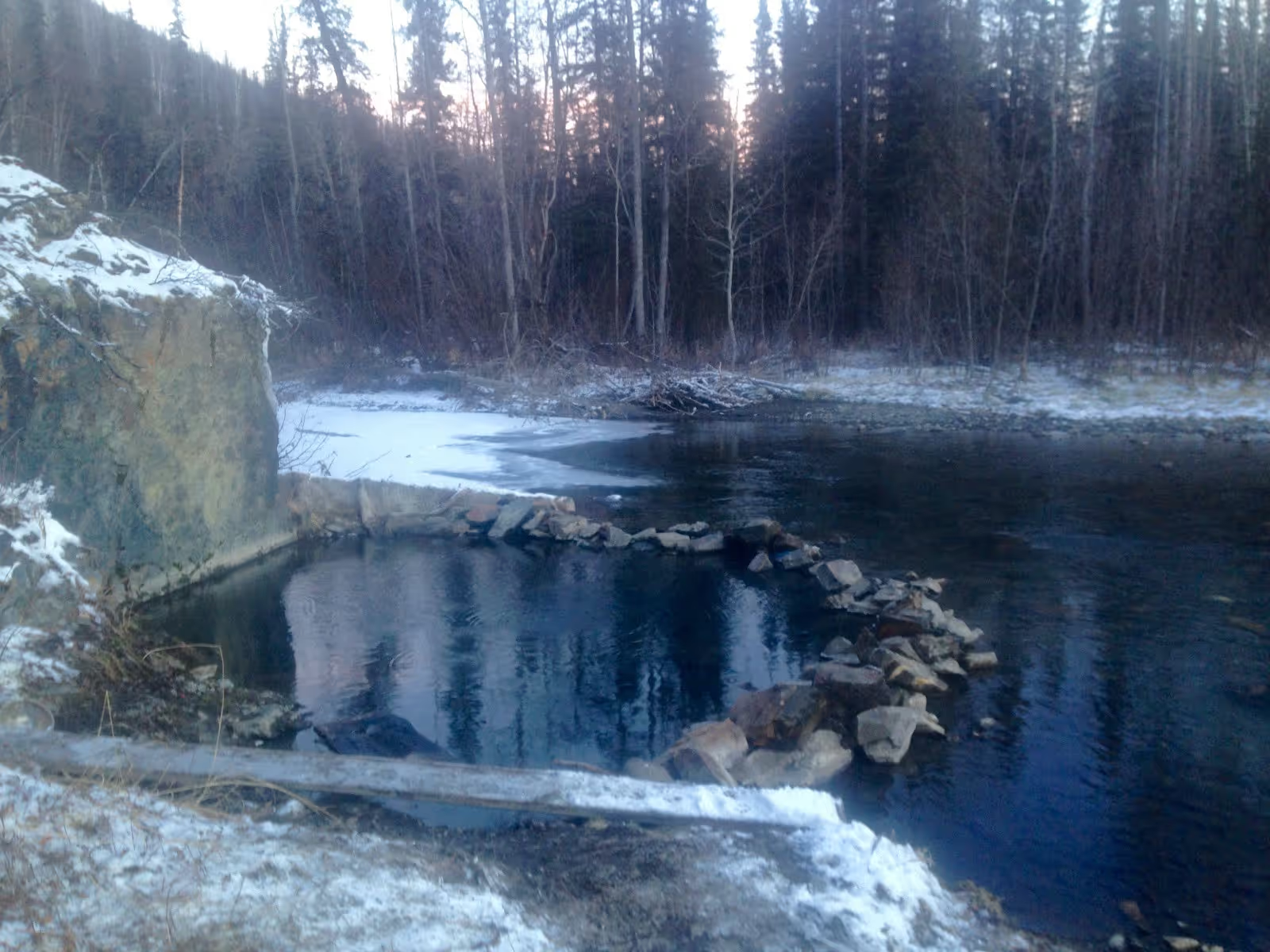
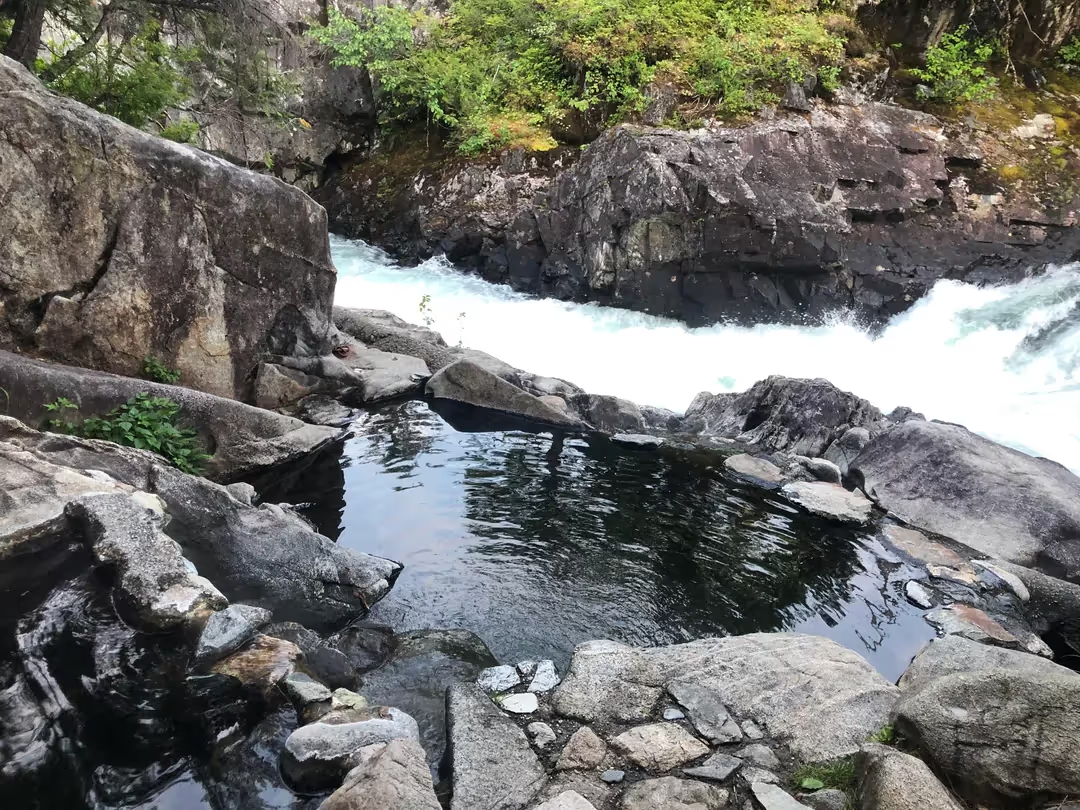
Kanuti river hot springs alaska is a wild, undeveloped geothermal site inside the Kanuti National Wildlife Refuge, located 15 miles north of the Arctic Circle and roughly 12 miles west of the Dalton Highway at mile marker 103. The hot mineral water emerges from the ground near the banks of the Kanuti River, forming two natural pools set in a grassy opening surrounded by boreal forest. Water temperatures at the source range from 110 to 151 degrees Fahrenheit, requiring visitors to soak near the inflow of cooler water to reach a bearable temperature. Colonies of cyanobacteria color the edges of the pools in white, yellow, and orange, marking the zones of highest geothermal activity.
There are no structures, no trails, no facilities, and no markers of any kind at this site. The Kanuti National Wildlife Refuge is entirely undeveloped by design, and the hot springs are no exception. Visitors must carry a Bettles B-2 topographical map and have the skills to use it. The route to the springs from the Dalton Highway involves either a 14-mile float down the Kanuti River or a cross-country approach on foot, with a return that climbs the Caribou Mountain ridgeline above the tree line before descending back to the road. Neither route is simple, and neither should be attempted without full backcountry preparation.
The setting is one of the most remote and intact in the state. The Kanuti Refuge hosts 130 species of birds, moose, wolves, wolverines, black and brown bears, and a portion of the Western Arctic caribou herd. Visiting these springs means entering a functioning Arctic ecosystem, and the experience is defined as much by the surrounding wilderness as by the pools themselves. This is one of the most demanding free hot springs alaska has accessible by any route, and one of the most rewarding for those who reach it.
Location & Access
Getting to Kanuti River Hot Springs
The standard summer approach begins at the Dalton Highway crossing of the Kanuti River at mile marker 103, approximately 100 miles north of Fairbanks. From this point, visitors launch a packraft or inflatable kayak and float approximately 14 miles down the Kanuti River to the hot springs. The river float is the more direct summer route, though it requires appropriate watercraft and the ability to read moving water. On the return, visitors hike out over the Caribou Mountain ridgeline, following tundra terrain above the tree line before descending back to the highway. The complete trip is typically done over two or more days.
An overland approach on foot is also possible in summer using a cross-country route from the highway, but the terrain involves tussock tundra, wetland crossings, and sections of dense brush that make progress significantly slower than the float approach. In winter, the springs are accessible by cross-country ski or snowmachine from the Dalton Highway, and the frozen ground eliminates many of the summer obstacles. Winter travel requires experience with Arctic conditions, navigation in low visibility, and gear appropriate for extended exposure to extreme cold.
The nearest community to the trailhead is Coldfoot, approximately 70 miles north of mile marker 103 on the Dalton Highway, which has fuel, limited accommodations, and the Arctic Interagency Visitor Center. Fairbanks, about 100 miles south of the Kanuti crossing, is the primary resupply point for most visitors. There are no hot springs near fairbanks that match Kanuti's level of remoteness, which is part of what defines this trip as a serious wilderness undertaking rather than a casual day outing.
Suitability & Accessibility
Who Kanuti River Hot Springs Suits Best
Kanuti River Hot Springs suits experienced wilderness travelers who are fully self-sufficient and comfortable navigating unmarked Arctic terrain over multiple days. There is nothing at the site to support anyone who is not. No cell service exists in the refuge, there is no emergency infrastructure, and there are no other people nearby. Visitors who arrive underprepared face genuine risk.
The site is not appropriate for children, casual hikers, or anyone without prior backcountry experience. The river float requires watercraft and the ability to handle moving water safely. The overland return involves sustained cross-country navigation above the tree line. Winter visits require extensive cold-weather travel experience and Arctic-rated equipment. For those who meet these requirements, the springs offer a soaking experience unlike anything accessible from a road in Alaska.
The Kanuti Refuge is an established destination for experienced Interior Alaska wilderness travelers and cross-country skiers who treat the approach itself as part of the trip. Packrafters who combine the Kanuti River float with a hot springs stop have documented the route in detail, and accounts from prior visitors are the most reliable source of current conditions. The free hot springs alaska backcountry experience at Kanuti rewards those who come prepared with exactly what its remoteness promises: total quiet, undisturbed wildlife, and warm water in the middle of an intact Arctic landscape.
Safety & Etiquette
Safety and Etiquette at Kanuti River Hot Springs
Navigation is the primary safety challenge at Kanuti. There are no marked trails, no route signs, and no infrastructure of any kind from the Dalton Highway to the springs. A printed topographic map of the Bettles B-2 quadrangle is essential, and map-and-compass skills must be reliable before departure. A GPS device is useful but should not replace traditional navigation skills, as battery performance degrades in cold conditions and device failure in this environment could be life-threatening. Build a detailed route plan before leaving the highway and leave a copy with someone at your departure point.
The pools reach temperatures of up to 151 degrees Fahrenheit at the source. Do not enter any pool without first identifying the cooler inflow zones where water temperatures are reduced to a safe soaking level. Overheating is a real risk; soak in short intervals and monitor your body temperature. The pools vary considerably in temperature across different sections, and conditions can change between visits.
Bears are present throughout the Kanuti Refuge and are particularly active in spring when the greenery around the springs attracts wildlife. Carry bear spray at all times, make noise on approach, store all food in sealed containers away from your sleeping area, and be aware of your surroundings throughout the visit. The springs area, set in a grassy opening in the forest, is exactly the type of habitat that attracts bears foraging for vegetation in late spring and early summer.
The refuge is an area of critical environmental concern. Pack everything in and pack everything out. Human waste must be buried well away from the water and at least 200 feet from any water source. Do not disturb the geothermal features, the cyanobacteria formations at the pool edges, or the surrounding vegetation. Camping is permitted within the refuge but requires full Leave No Trace practice. This is public land in its most protected form, and the condition of the site depends entirely on the behavior of the few people who visit each year.