Longmire Springs, Washington
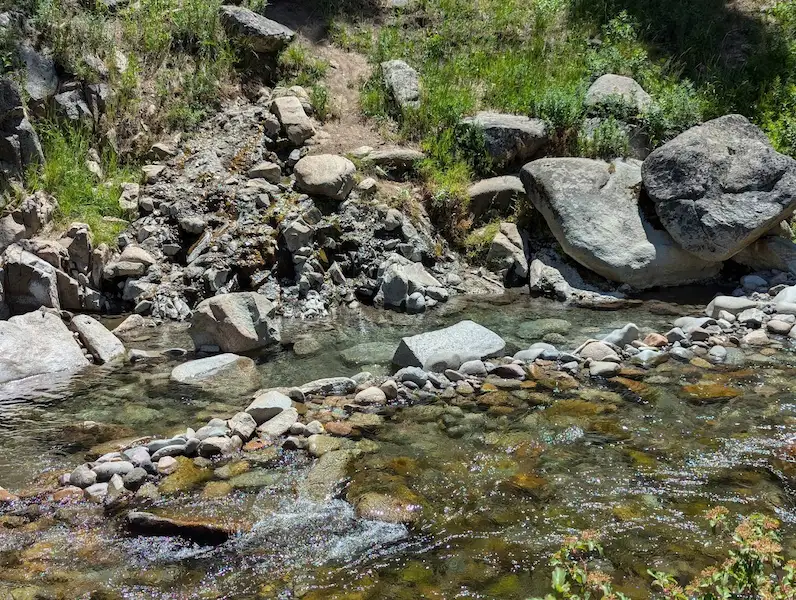
Mineral springs in Mount Rainier National Park on the Trail of the Shadows loop. Not open for soaking. National Park entry fee applies, year-round access.
Trail of the Shadows, Longmire, WA 98304
Ashford
Washington
US
46.7501
-121.8132
Wild / Natural
Paid
Easy to reach (no hike)
Generally safe
Swimsuit required
true
false
North America
longmire-springs-washington
Can you soak at Longmire Springs?
No. Longmire Springs are cold to warm mineral seeps ranging from 50 to 85 degrees Fahrenheit and are not open for soaking. The National Park Service does not permit wading or bathing in the springs, which are protected as natural and historical features. Visitors can view the bubbling springs along the Trail of the Shadows, a 0.7-mile interpretive loop across the road from the National Park Inn.
What is the Trail of the Shadows?
The Trail of the Shadows is a 0.7-mile easy interpretive loop trail in the Longmire area of Mount Rainier National Park, located across the main road from the National Park Inn. The trail passes several named mineral spring points including Soda Springs and Iron Mike, the site of the 1890 Longmire Medical Springs Hotel, a replica of the 1888 Elcaine Longmire cabin, and a marsh meadow created by the mineral spring activity. The trail takes approximately 20 to 30 minutes to walk.
Do you need to pay to see Longmire Springs?
A Mount Rainier National Park entrance fee is required to access the Longmire area and the Trail of the Shadows. The fee covers entry for all park areas for a set number of days and can be purchased at the Nisqually Entrance or online. America the Beautiful passes are accepted. There is no separate charge for the Trail of the Shadows beyond the park entrance fee.
Are Longmire Springs geothermal hot springs?
The Longmire springs are volcanic mineral springs fed by geothermal activity related to Mount Rainier, but they emerge cold to warm rather than hot, ranging from 50 to 85 degrees Fahrenheit. They were historically marketed as medicinal mineral springs, but government testing in the early 20th century found no evidence of therapeutic value and the National Park Service prohibited further health claims. They are viewable as a geological and historical feature only.
Is the Trail of the Shadows wheelchair accessible?
2026-09-21
Updated September 21, 2026
Longmire Springs, Washington
Mineral springs in Mount Rainier National Park on the Trail of the Shadows loop. Not open for soaking. National Park entry fee applies, year-round access.
Access Level
Easy to reach (no hike)
Safety Level
Generally safe
What to Wear
Swimsuit required
Address
Trail of the Shadows, Longmire, WA 98304
Find a place to stay
Compare prices near this exact spot across Booking.com, Expedia and more.
See nearby stays →
Overview
About Longmire Springs
Longmire Springs, Washington is a free historical mineral spring site within Mount Rainier National Park, 6.5 miles east of the Nisqually Entrance on SR-706 in Pierce County. The springs are not open for soaking. Cold to warm mineral seeps bubble at temperatures from 50 to 85 degrees Fahrenheit across approximately 49 spring points in the meadow, viewable on the Trail of the Shadows, a 0.7-mile interpretive loop.
James Longmire discovered the springs in 1883 and established a homestead and by 1890 had opened the Longmire Medical Springs Hotel. The Bureau of Chemistry's Hygienic Laboratory later tested the waters and found no medicinal value, after which the NPS prohibited therapeutic claims. The resort properties passed to the National Park Service by 1939 and no soaking infrastructure was ever built by the park. The Trail of the Shadows passes named spring points including Soda Springs and Iron Mike, an interpretive sign marking the hotel site, and a replica of the 1888 cabin built by Elcaine Longmire, the oldest surviving structure in the park.
Location & Access
Getting to Longmire Springs
Longmire Springs is accessible within the Longmire area of Mount Rainier National Park, 6.5 miles east of the Nisqually Entrance on State Route 706. From Ashford, follow SR-706 east into the park and continue to the Longmire parking area adjacent to the National Park Inn and Longmire Museum. The Trail of the Shadows trailhead is located directly across the main road from the National Park Inn. The trail is open year-round, though snow may be present in winter. All vehicles entering the park must pay the Mount Rainier National Park entrance fee, which covers all areas of the park for a set number of days.
Longmire is the second most visited area in Mount Rainier National Park after Paradise and serves as the park's year-round hub. The National Park Inn, the only inn in the park open year-round, is located at Longmire. The Longmire Museum and the Longmire Wilderness Information Center are also here, along with a general store, restrooms, and ranger services. For those seeking hot springs near Ashford Washington, Longmire Springs is the closest mineral spring feature to the Nisqually Entrance, accessible year-round as part of a broader park visit. The Trail of the Shadows begins just across the highway and takes approximately 20 to 30 minutes to complete as a loop.
Suitability & Accessibility
Suitability and Accessibility of Longmire Springs
Longmire Springs suits families, history enthusiasts, casual walkers, and first-time park visitors looking for a short interpretive walk in the Longmire area of Mount Rainier National Park. The Trail of the Shadows is 0.7 miles long with minimal elevation gain and takes around 20 minutes to complete. The trail surface is a mix of paved asphalt, packed gravel, and wooden boardwalk. The section nearest the road is partially accessible for wheelchair users with assistance, though the far side of the loop includes tree roots and uneven terrain.
The springs themselves are cold to warm mineral seeps, not a hot spring for soaking. No soaking, wading, or drinking from the springs is permitted by the National Park Service. The springs are viewable from the trail at close range, with stone-ringed spring points, mineral-stained ground, and a distinctive meadow created by volcanic mineral activity visible throughout the loop. Interpretive signs explain the geology of the springs and the history of the Longmire family.
A National Park entrance fee is required for all visitors arriving by vehicle. Timed entry permits are not required for the Longmire area at the time of writing, but check NPS alerts before visiting as these requirements can change during peak season. The Trail of the Shadows is dog-free. For those interested in mineral springs near Ashford Washington in the broader context of a Mount Rainier visit, the springs are an easy and informative addition to a stop at Longmire.
Safety & Etiquette
Longmire Springs Safety Tips
Longmire Springs is a managed site within Mount Rainier National Park with ranger services and visitor facilities at Longmire year-round. The Trail of the Shadows is a short, easy loop with no significant hazards for healthy visitors under normal conditions. However, several points specific to this site and to Mount Rainier National Park apply.
Do not drink the spring water. The National Park Service explicitly advises against consuming the water from any of the springs at Longmire. The mineral composition of the water, including iron and various dissolved gases, is not suitable for drinking despite the historic reputation of the springs as mineral water. Do not wade in or attempt to access the springs directly. The springs are protected natural features and the surrounding vegetation and mineral deposits are fragile.
In winter, the Trail of the Shadows may have snow, ice, or wet, slippery conditions on the gravel and boardwalk sections. Traction devices are advisable for winter visits. All drivers in Mount Rainier National Park are required to carry snow chains or equivalent traction devices between November and May, including those with AWD vehicles who may be required to install them at or beyond Longmire.
Mount Rainier is an active stratovolcano and the park is subject to volcanic hazard monitoring. The mountain presents no day-to-day hazard to visitors at Longmire, but checking current NPS alerts before any park visit is good practice. Wildlife including black bears and deer are present in the Longmire area. Store food and scented items appropriately and do not approach wildlife.
Frequently Asked Questions
1
Can you soak at Longmire Springs?
No. Longmire Springs are cold to warm mineral seeps ranging from 50 to 85 degrees Fahrenheit and are not open for soaking. The National Park Service does not permit wading or bathing in the springs, which are protected as natural and historical features. Visitors can view the bubbling springs along the Trail of the Shadows, a 0.7-mile interpretive loop across the road from the National Park Inn.
2
What is the Trail of the Shadows?
The Trail of the Shadows is a 0.7-mile easy interpretive loop trail in the Longmire area of Mount Rainier National Park, located across the main road from the National Park Inn. The trail passes several named mineral spring points including Soda Springs and Iron Mike, the site of the 1890 Longmire Medical Springs Hotel, a replica of the 1888 Elcaine Longmire cabin, and a marsh meadow created by the mineral spring activity. The trail takes approximately 20 to 30 minutes to walk.
3
Do you need to pay to see Longmire Springs?
A Mount Rainier National Park entrance fee is required to access the Longmire area and the Trail of the Shadows. The fee covers entry for all park areas for a set number of days and can be purchased at the Nisqually Entrance or online. America the Beautiful passes are accepted. There is no separate charge for the Trail of the Shadows beyond the park entrance fee.
4
Are Longmire Springs geothermal hot springs?
The Longmire springs are volcanic mineral springs fed by geothermal activity related to Mount Rainier, but they emerge cold to warm rather than hot, ranging from 50 to 85 degrees Fahrenheit. They were historically marketed as medicinal mineral springs, but government testing in the early 20th century found no evidence of therapeutic value and the National Park Service prohibited further health claims. They are viewable as a geological and historical feature only.
5
Is the Trail of the Shadows wheelchair accessible?
Partially. The section of the Trail of the Shadows nearest the road is paved or packed gravel and accessible for wheelchair users with assistance, including a short spur trail. The far side of the loop includes exposed tree roots, uneven terrain, and a short boardwalk section that may be more difficult. AllTrails notes the trail surface as paved asphalt, packed gravel, or wooden boardwalk at least 3 feet wide with edge railings in some sections. Verify current conditions with the Longmire Ranger Station before visiting.
Gallery
No pictures available for this hot spring.
Location
Address:
Trail of the Shadows, Longmire, WA 98304
Find a place to stay
Compare prices near this exact spot across Booking.com, Expedia and more.
See nearby stays →
46.7501
-121.8132
Longmire Springs, Washington
Text LinkTrail of the Shadows, Longmire, WA 98304
More hot springs in Washington
More hot springs in United States
Some accommodation links on this site are affiliate links. If you book through them, we may earn a small commission at no additional cost to you. This helps keep hotspringsguides.com free to use.