Quick FactsOverview
About the Springs
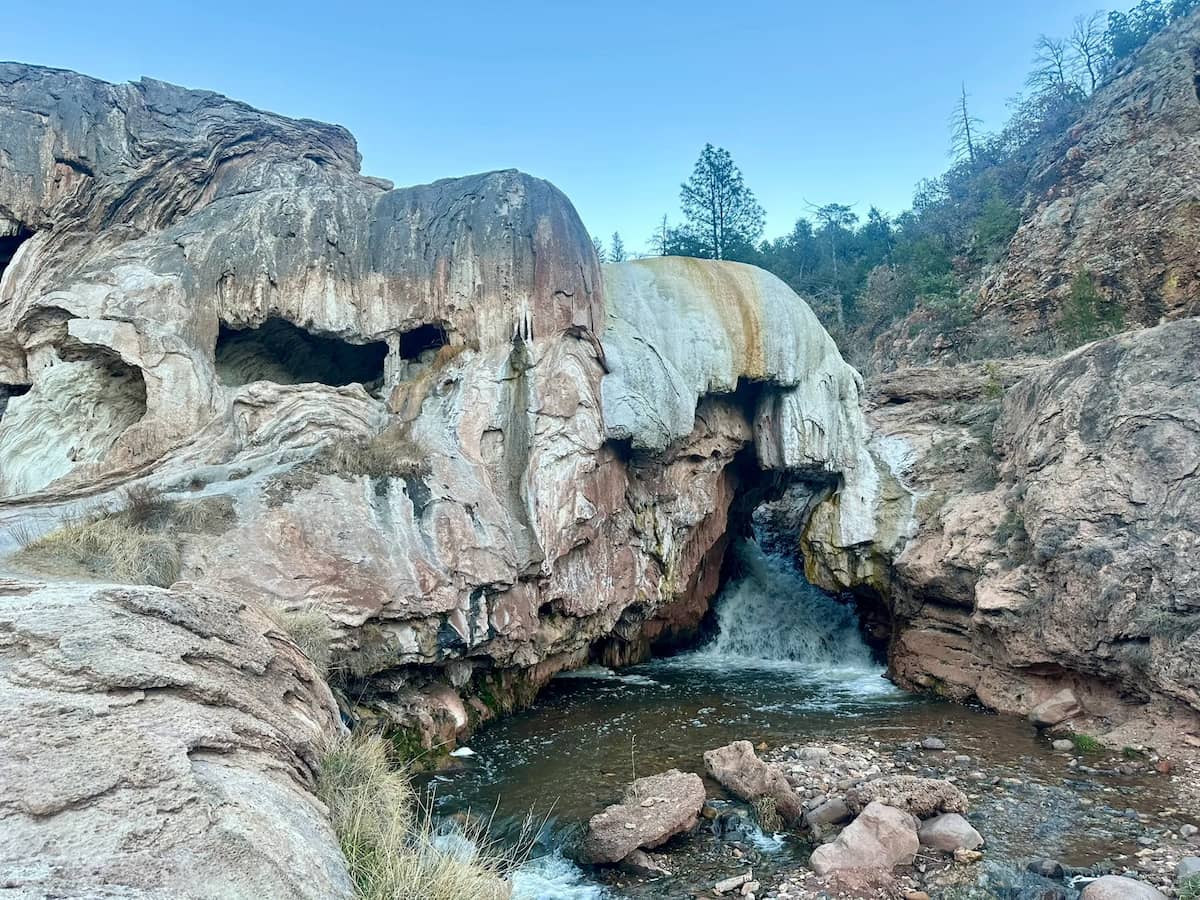
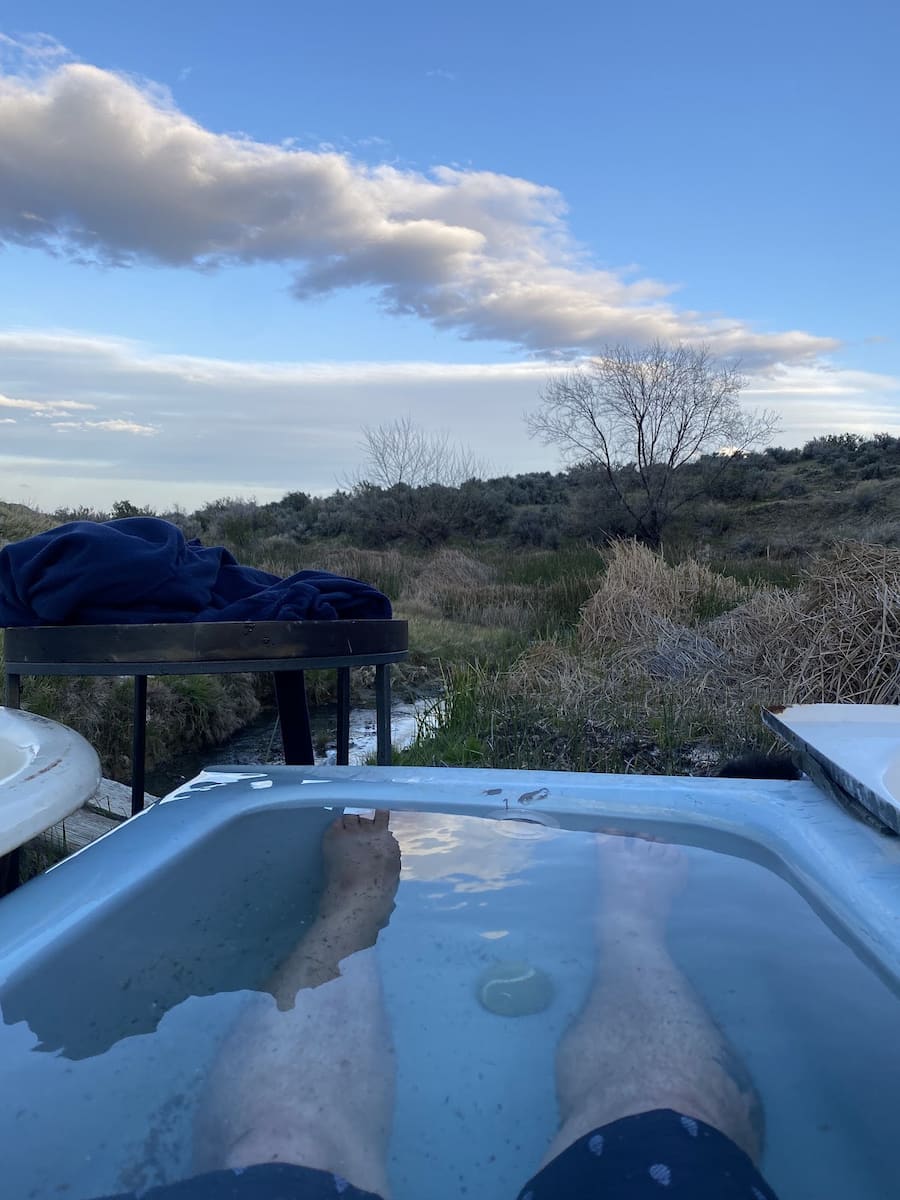
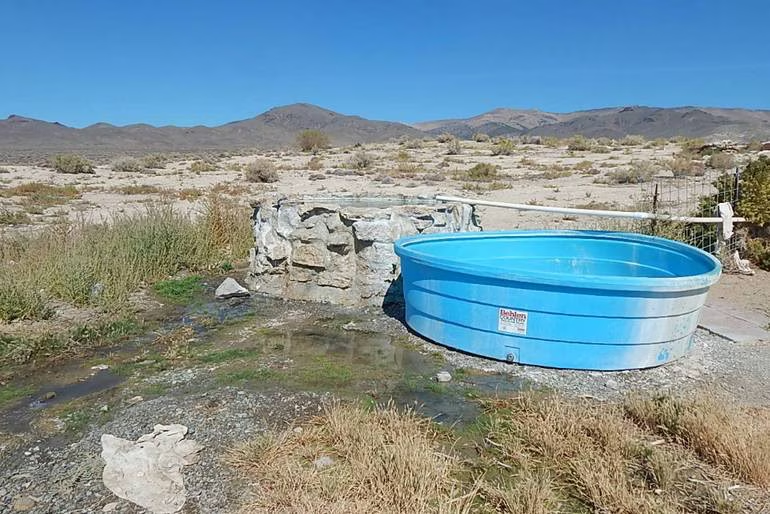
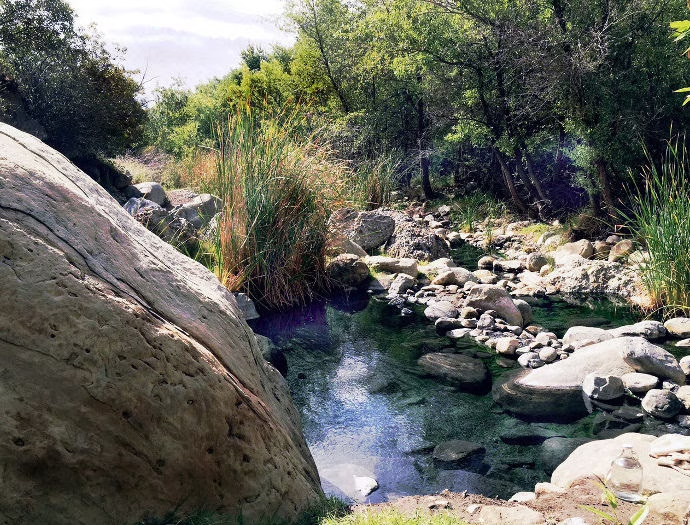
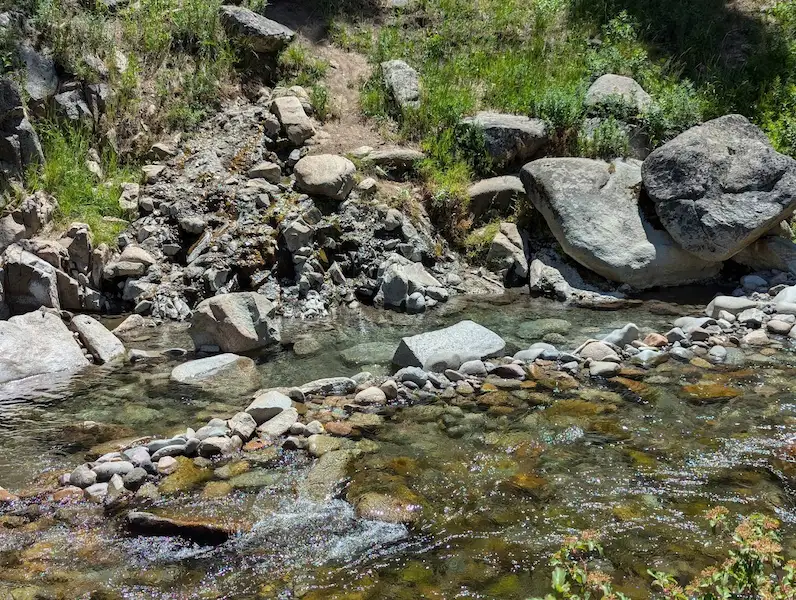
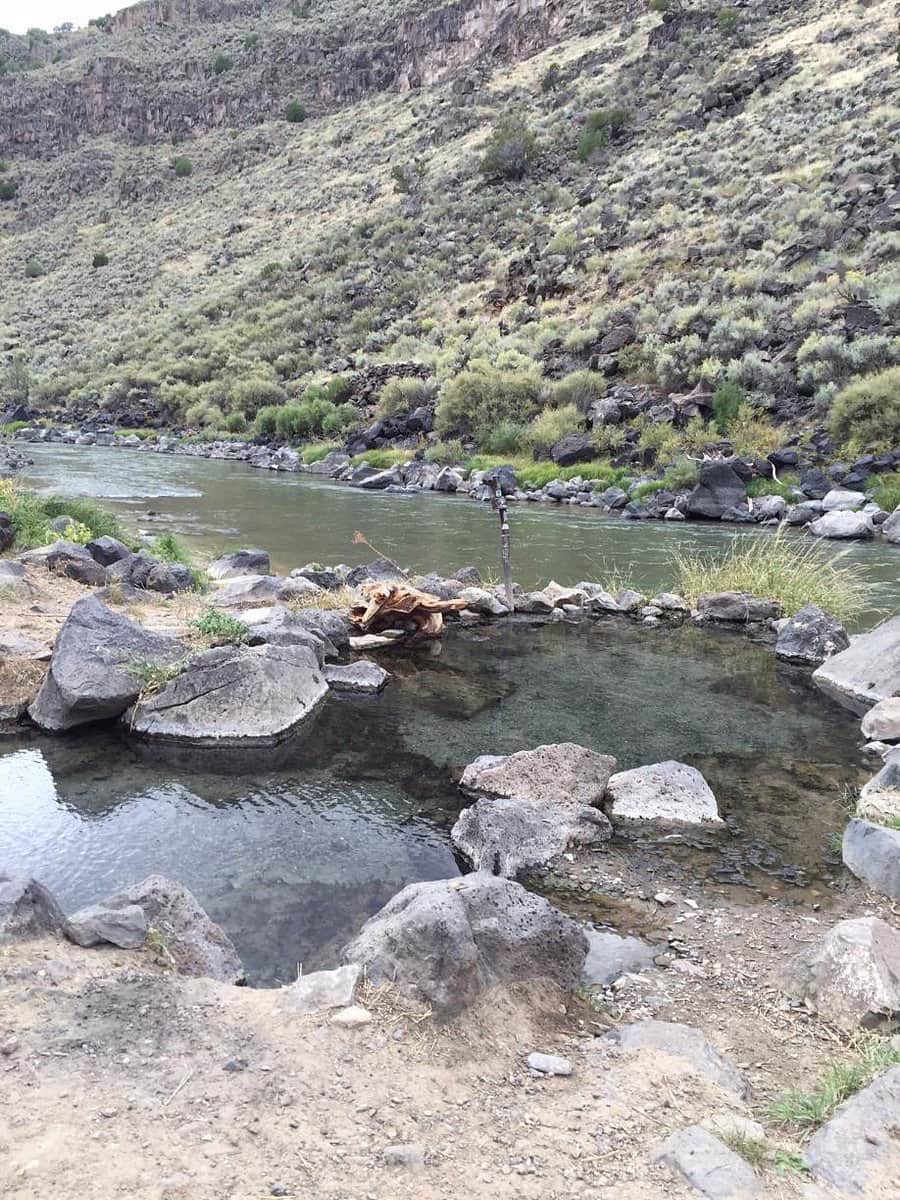
Manby Hot Springs, New Mexico is a free, undeveloped geothermal spring on the east bank of the Rio Grande within the Rio Grande del Norte National Monument, on Bureau of Land Management land, approximately 12 miles from Taos. Three primitive rock-lined pools with sandy bottoms sit at the ruins of a 19th-century stagecoach stop. The main pool at the river edge reaches approximately 98 degrees Fahrenheit and is several feet deep. A smaller warmer pool sits at the ruins of the former stagecoach station. Additional pools along the river may flood during heavy rain.
The springs have been used since long before European contact; the Puebloan people called the place Wa-pu-mee, meaning "water of long life." Arthur Rochford Manby acquired the land in 1906 and envisioned a luxury resort never completed; only a rock-walled bathhouse and several cabins were built before flooding destroyed much of the site in 1927. The ruins remain visible.
For visitors looking for hot springs near Taos New Mexico, the springs offer a historically distinctive setting in a dramatic river gorge, combining geothermal soaking with the remains of a stagecoach era stop deep inside the Rio Grande canyon.
Location & Access
Getting There
The springs are at coordinates 36.513333, -105.725556, on the east bank of the Rio Grande approximately 12 miles west of Taos. The most commonly used land route begins at the John Dunn Bridge, accessed via County Road B007 from Highway 522 North at approximately mile 5.3, then Tune Drive into the canyon. A high-clearance vehicle is recommended; 4WD may be needed during July to September monsoon season. From the parking area, the fisherman's path runs south along the east bank of the Rio Grande for approximately 2 miles to the springs; AllTrails describes this as 4.1 miles round trip, moderately challenging, narrow, rocky, with potential poison ivy.
No trail markers exist beyond the trailhead. The springs are also accessible by boat on the Rio Grande. Confirm current road and trail access with the BLM Taos Field Office before visiting, as the access road passes through land under a private conservation easement and status can change. The John Dunn Bridge approach is the most clearly documented public access route.
For visitors seeking hot springs near Taos New Mexico, this is the most dramatically situated river-canyon spring within a day trip of the city, but access requires checking current conditions in advance regardless of route.
Suitability & Accessibility
Who Should Visit
The springs suit experienced hikers comfortable with unmaintained, rocky trail conditions and visitors who appreciate geothermal soaking in a significant historical setting. The hike involves boulder scrambling, narrow sections, muddy riverside terrain, and potential poison ivy. It is not suitable for those who need maintained trails or clear signage. Fishermen, gorge hikers, and boaters on the Rio Grande all use the springs as a stop point.
The springs are widely understood to be clothing-optional, and most regular visitors soak without swimwear. Visitors expecting a clothed environment should be prepared for this local custom. The pools can hold up to six people in the main pool. High river levels in summer can submerge the pools entirely; late fall, winter, or early spring offer the most reliable conditions. Dogs are allowed on the trail but must be leashed. No age restrictions apply, but the rocky terrain and clothing-optional culture make it less suitable for families with young children.
For those seeking free hot springs New Mexico has in the northern Rio Grande corridor, this site is one of the most historically layered and visually striking. Check USGS stream gauge data for the Rio Grande at Embudo before visiting, as high river stage can flood the pools and make the riverside trail impassable.
Safety & Etiquette
Manby Hot Springs Safety Tips
The most significant hazard is river flooding. The pools sit only a few feet above the normal Rio Grande water level, and moderate rises can submerge them completely. Always check current river levels via the USGS stream gauge at Embudo before visiting, particularly during spring snowmelt from March to June and the monsoon season from July to September. Do not approach the pools if the river is running high or the water is turbid. Flash floods in tributary canyons are also a risk; check the weather forecast for the entire watershed before departing.
Poison ivy grows along significant sections of the fisherman's path, particularly in late spring and summer. Wear long sleeves and long pants, inspect yourself carefully after the hike, and wash exposed skin and clothing promptly after contact. The trail is rocky with large boulders requiring scrambling; footing is often wet and muddy close to the river. Carry sturdy, waterproof footwear and more water than you expect to need.
The pools are at the base of a steep gorge with no cell service in the canyon. Do not hike alone. Check BLM Taos Field Office guidance on current access conditions before your visit, as road and trail status can change without notice. Summer heat in the gorge can be severe; start early, carry sun protection, and plan your return well before mid-afternoon. The main pool water temperature is approximately 98 degrees Fahrenheit; visitors with cardiovascular conditions or heat sensitivity should take standard precautions for hot mineral bathing.