
Quick FactsOverview
About Melozi Hot Springs
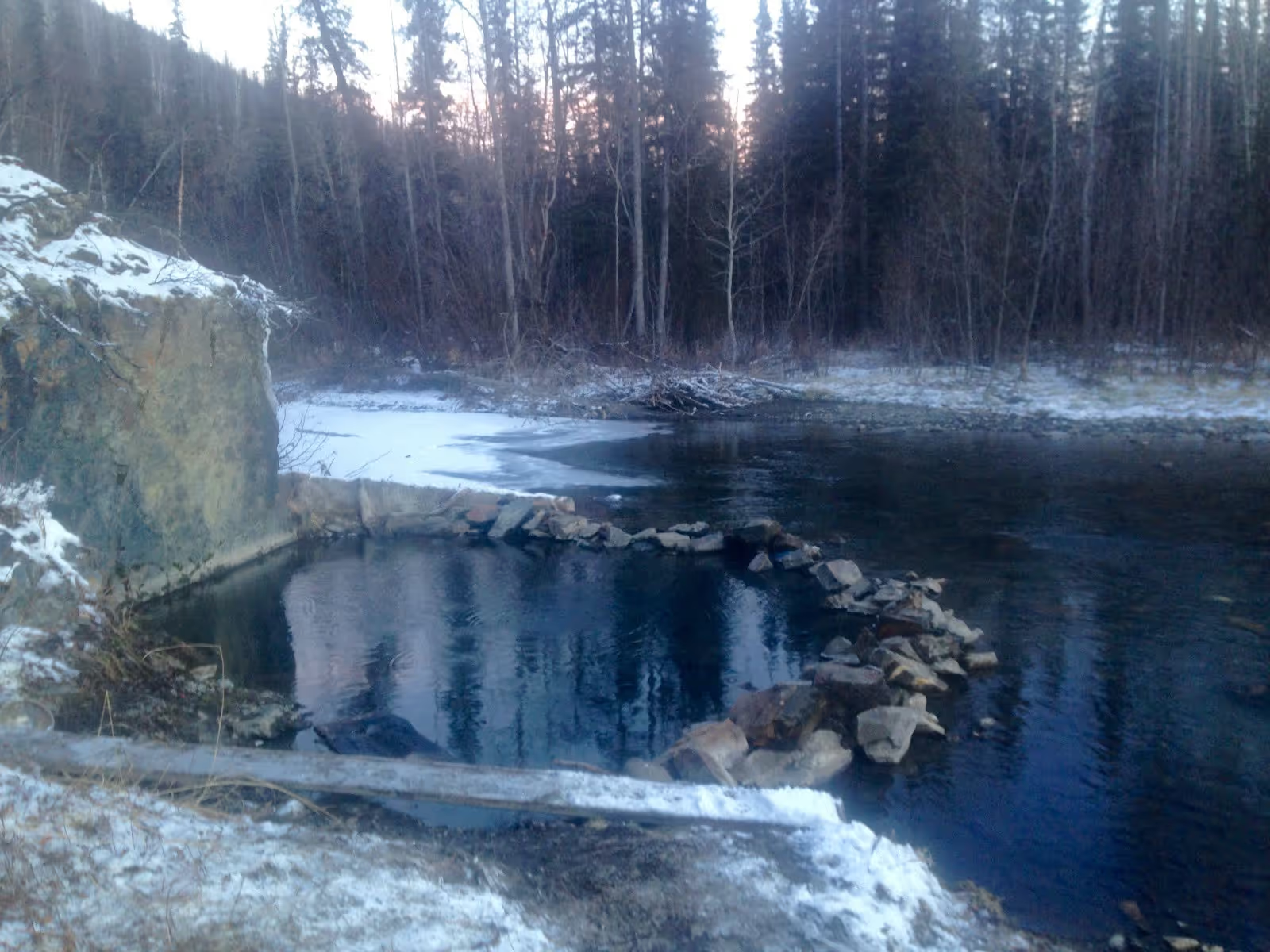
Melozi Hot Springs, Alaska is a remote cluster of roughly 20 natural mineral springs located along Hot Springs Creek in the Kokrines-Hodzana Highlands of interior Alaska, approximately 30 miles northeast of the Yukon River community of Ruby. The springs sit at an elevation of about 380 feet in a boreal forest setting and have been known to travelers in the region since at least the early twentieth century. The site is one of the more genuinely isolated hot springs destinations in the state.
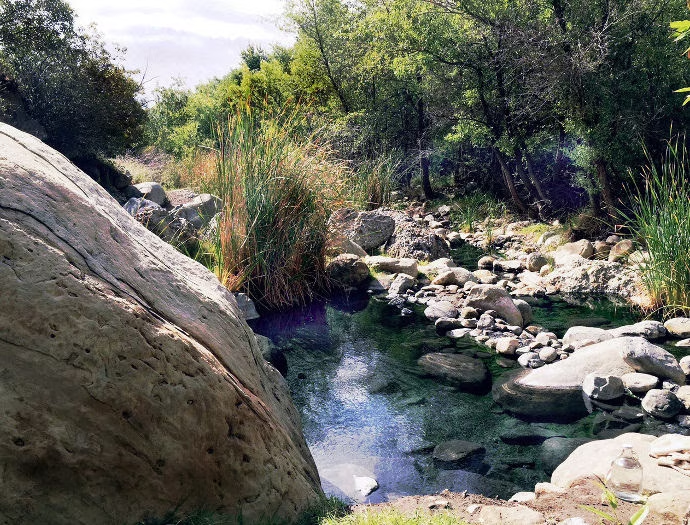
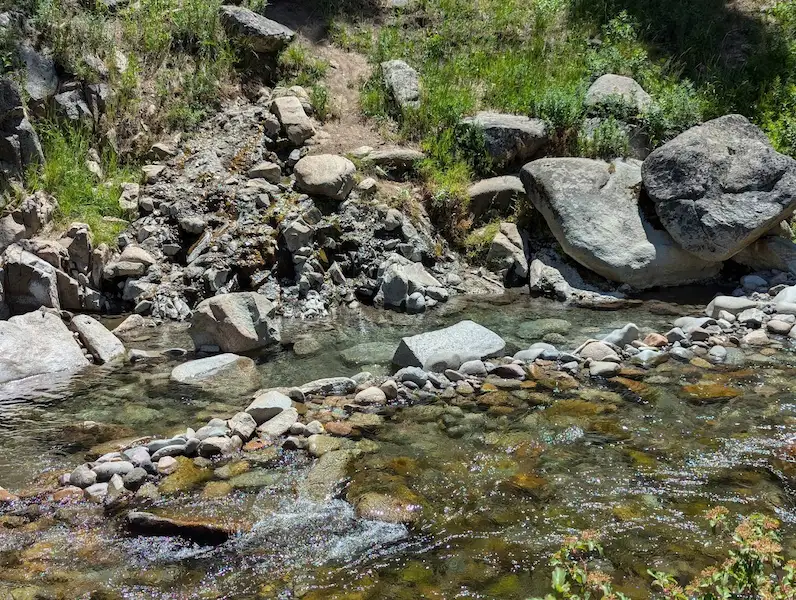
The springs emerge as natural hot springs in Alaska along a short stretch of Hot Springs Creek, a tributary of the Melozitna River. Source water temperatures have been recorded around 131 degrees Fahrenheit, though the natural pools available for soaking have cooled considerably from that figure by the time they collect along the creek bank. The water is clear and mineral-rich, with a pH around 8.36 and dissolved solids consistent with a sodium-type spring.
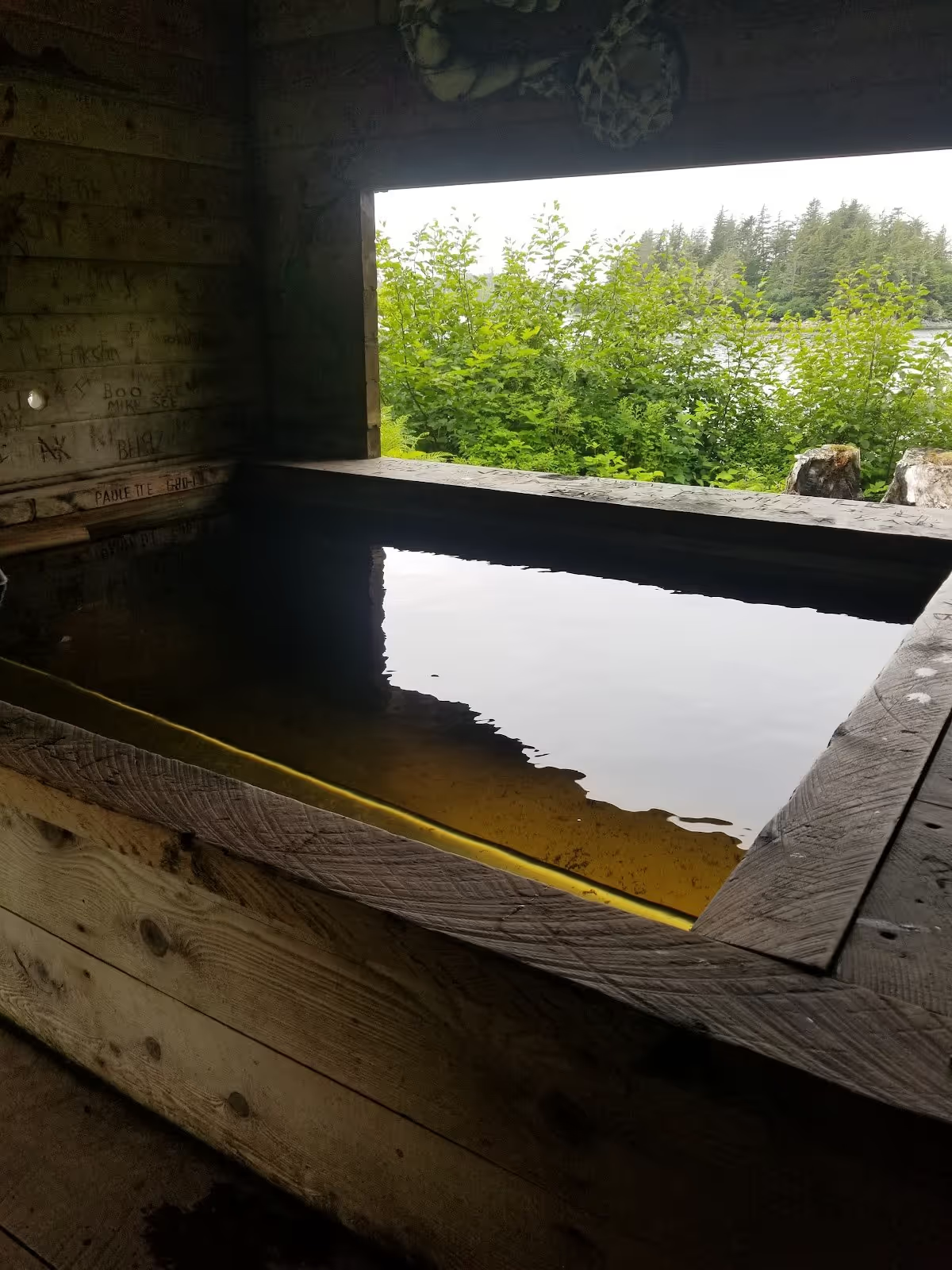
A wilderness lodge operated at the site from roughly the 1960s through the early 1980s. The lodge buildings, a pool enclosure, a shop, and several outbuildings remain standing in various states of deterioration, giving the place a quiet historical character that draws backcountry travelers as much as the thermal water does. The site is private land. There is no managed entry, no staff, and no services of any kind.
Location & Access
Getting to Melozi Hot Springs
Melozi Hot Springs has no road access. The two realistic approaches are charter floatplane and overland backcountry travel, and both require significant planning. A floatplane from Galena or Fairbanks can land on the lake or airstrip near the springs, making it the most direct option for those with the budget for a charter. Galena is the closest hub with regular air service, located roughly 50 miles to the southwest along the Yukon River corridor.
Overland access follows a multi-day winter or early spring route used by local travelers on skis or snowmachine. The most documented approach begins with a flight to Ruby, followed by travel to the Yukon River, then northeast overland through the Kokrines Hills to the springs. This route covers well over 50 miles of trackless terrain and requires navigation through dense boreal forest, river drainages, and hill country. Summer overland access is considered extremely difficult due to thick brush, wetlands, and the absence of maintained trails. Those looking for hot springs near Ruby Alaska should treat this as a serious wilderness objective requiring float or air logistics, not a day trip.
There is a small airstrip at the lodge site that can accommodate wheeled aircraft in dry conditions. Pilots familiar with backcountry Alaska strips should assess conditions before committing. No fuel, services, or communications infrastructure exist at the site. Visitors should file a detailed flight plan and leave a full itinerary with a contact in Galena or Fairbanks.
Suitability & Accessibility
Who Melozi Hot Springs Suits
Melozi Hot Springs is suited exclusively to experienced backcountry travelers and pilots comfortable operating in remote interior Alaska without any support infrastructure. The site has no services, no staff, no cell coverage, and no emergency response capability within dozens of miles. Visitors must be fully self-sufficient from the moment they leave the nearest community until the moment they return.
For those with the skills and logistics to reach it, the experience is genuinely uncommon. The springs flow clear and warm in a pristine boreal setting, and the abandoned lodge buildings add a layer of history rarely found at Alaska's other wild hot springs. Winter visits by snowmachine or ski offer solitude that is essentially absolute. Summer visits by floatplane or packraft are possible for experienced wilderness travelers but require careful route planning through challenging terrain.
This is not a destination suited to families with young children, visitors without wilderness travel experience, or anyone relying on predictable conditions or reliable extraction. It is one of the few free hot springs in Alaska that demands this level of preparation as a baseline rather than as an optional precaution. Children, inexperienced soloists, and visitors unfamiliar with bear country in interior Alaska should choose a more accessible destination. Anyone considering the trip should assess their floatplane options, emergency communication plan, and bear safety protocol before committing.
Safety & Etiquette
Safety at Melozi Hot Springs
The primary safety consideration at Melozi Hot Springs is the remoteness of the site itself. There are no emergency services, no cell phone coverage, and no other people at the springs during the vast majority of visits. Any injury, medical event, or mechanical failure must be managed entirely by the party on site until outside help can be arranged. A satellite communicator is not optional at this location. It is the only means of calling for help.
The hot spring source water emerges at temperatures that are far too hot to enter directly. The pooled and creek-side soaking areas have cooled naturally, but temperatures can vary depending on flow conditions and the specific spot along the creek. Test water carefully before entering and never assume a pool is safe based on appearance alone. Stay hydrated and limit soak time, particularly in warmer weather.
Grizzly bears are present throughout the interior Alaska river drainages near Melozi. The Melozitna River drainage and the Kokrines Hills have documented high bear densities. Travel in groups where possible, make consistent noise on approach, store all food in bear-resistant containers or hung well away from camp, and carry bear spray at all times. Do not cook or eat near your sleeping area.
The lodge buildings at the site are structurally deteriorated. Roofs, floors, and staircases may be unstable. Do not enter any building without assessing structural condition carefully from the outside first. The pool enclosure structure in particular has been documented as partially collapsed. Treat all buildings as potentially unsafe and enter only with caution.
Weather in interior Alaska can change rapidly and severely. Floatplane operations are subject to fog, low ceilings, and wind without warning. Plan extra days into any fly-in itinerary. Snowmachine travelers should be aware of overflow ice, thin spots on rivers, and whiteout conditions. Never travel alone in this area. Leave a detailed plan with a trusted contact who will initiate search and rescue procedures if you do not check in by an agreed time.