%252C%2520Utah%25202.avif)
Quick FactsOverview
About Stinky Hot Springs
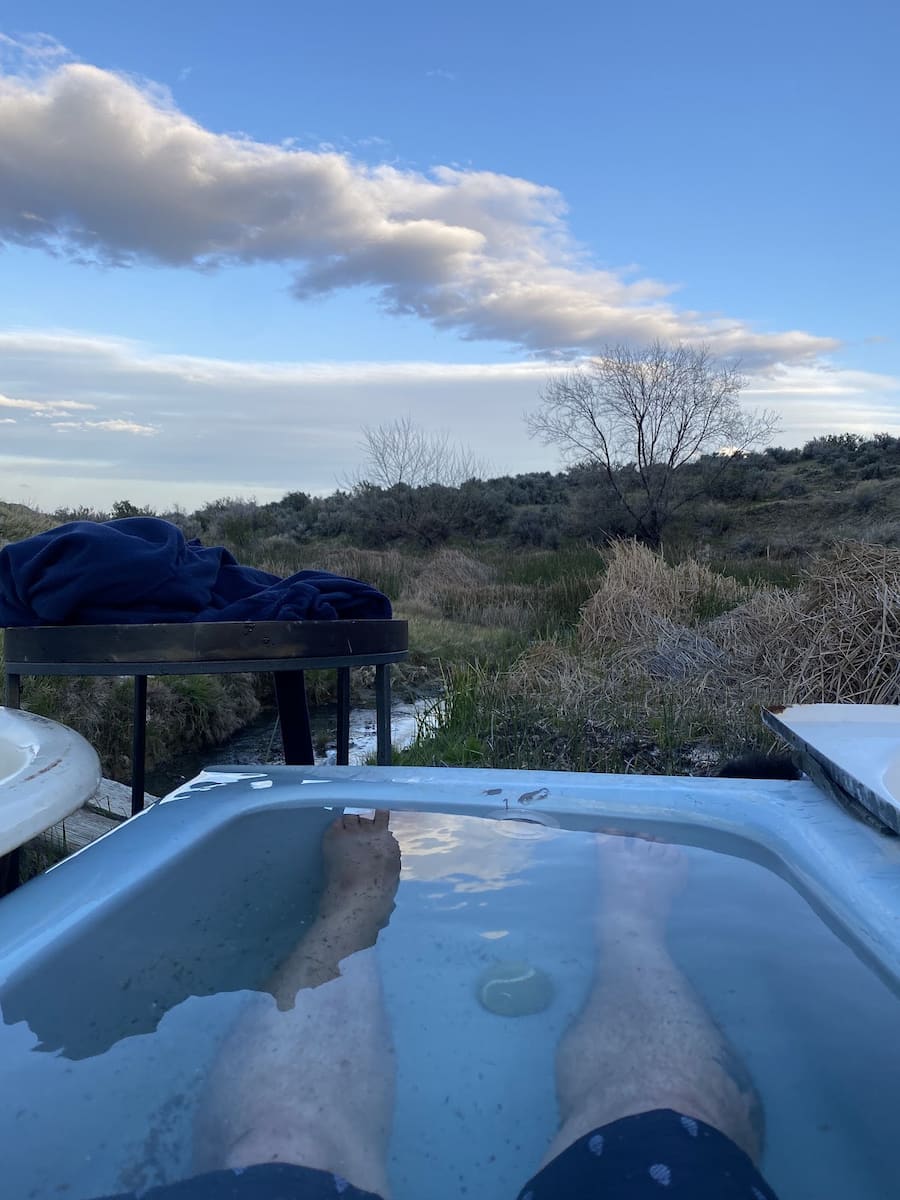
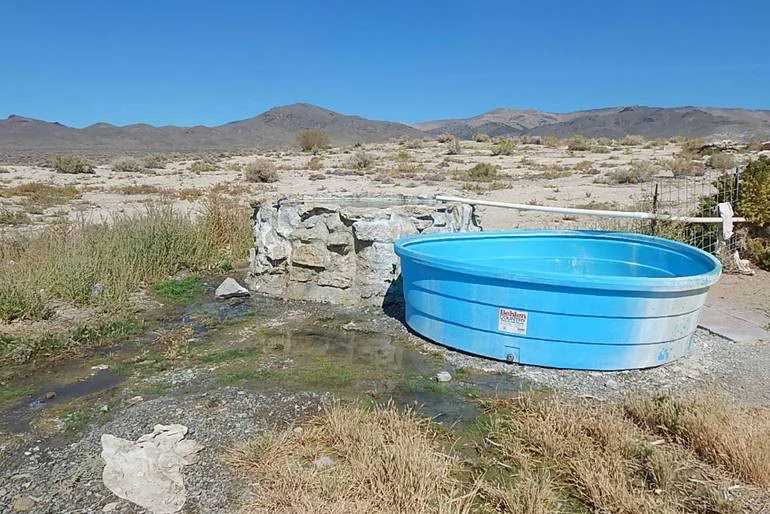
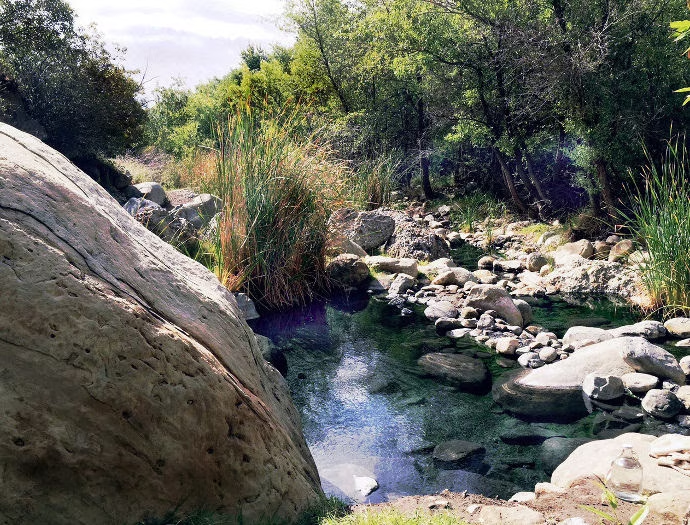
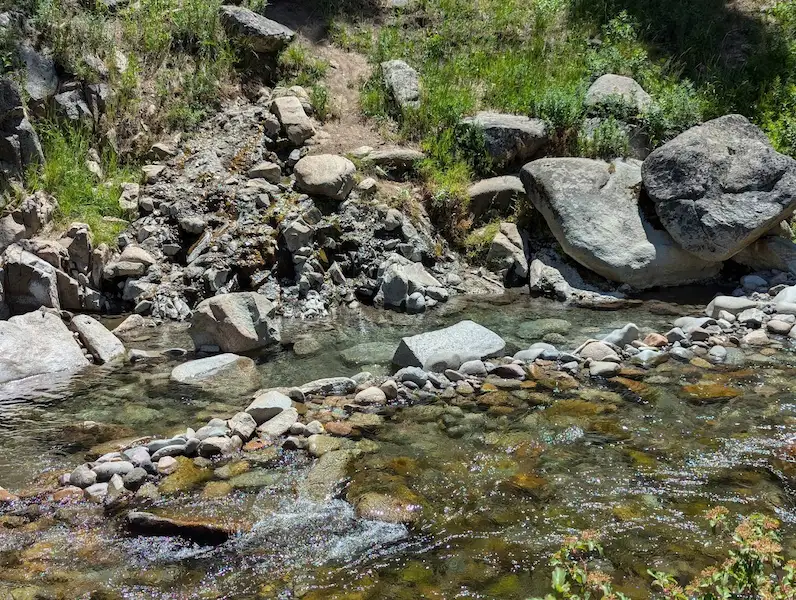
Stinky Hot Springs, Utah, also known as Old Indian Hot Springs or Stinking Hot Springs, is a free geothermal site off Utah State Route 83 near Corinne in Box Elder County, consisting of three cement-walled soaking tubs fed by a highly mineralized sulfur spring emerging from the base of Little Mountain. The site gets its name from the powerful sulfur odor produced by high concentrations of hydrogen sulfide gas in the water. Pool temperatures run between 108 and 113 degrees Fahrenheit, having increased from around 104 degrees following seismic activity in 2020. The land is privately owned and the owner allows public access at no charge.
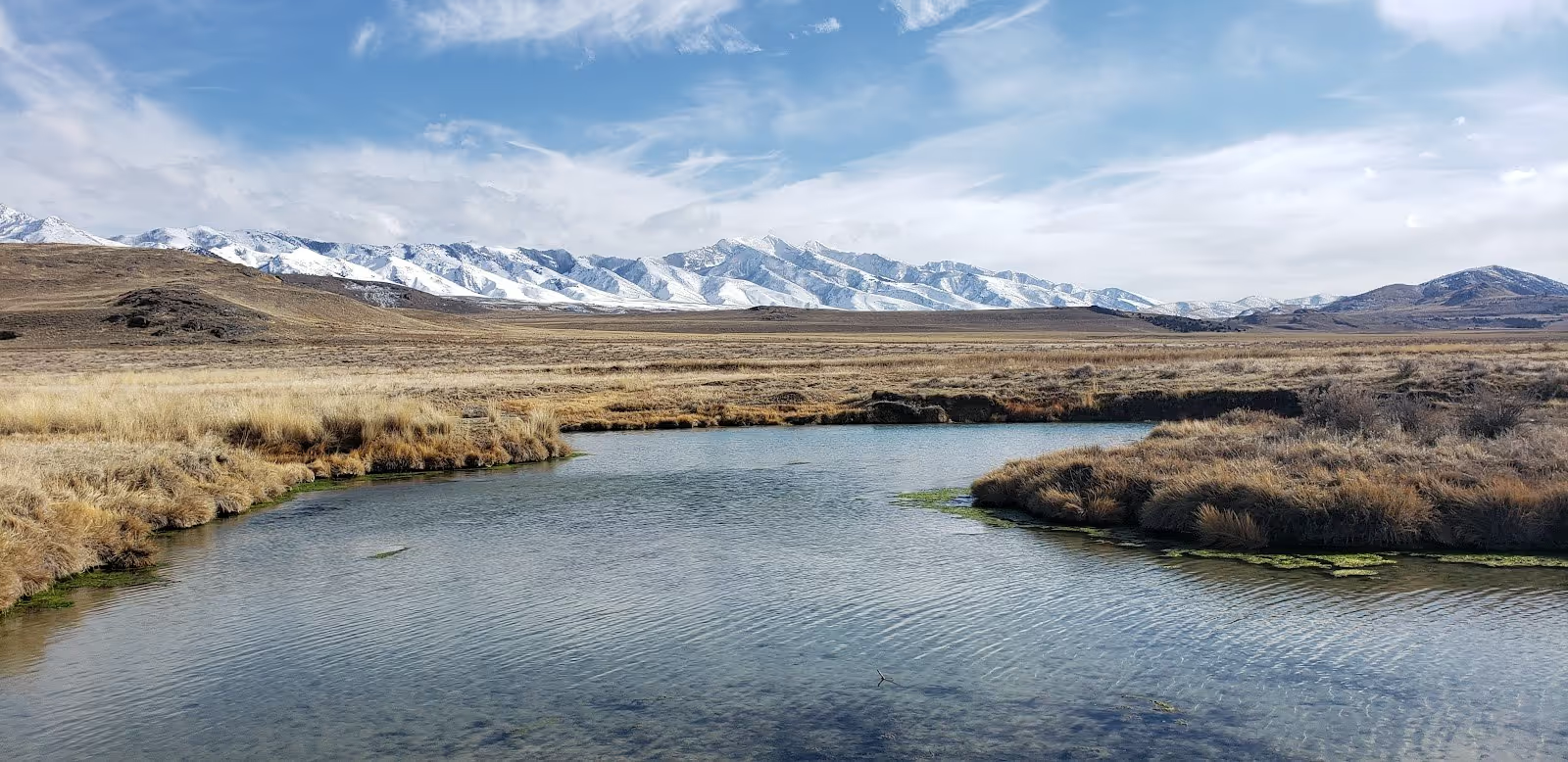
A covered bathhouse originally stood at the site and operated until approximately 2000, when it was demolished following an incident in which a man died, attributed at least in part to carbon dioxide and hydrogen sulfide gas trapped inside the enclosed structure. The Utah Health Department subsequently determined the site did not meet bathing standards. The three cement tubs remain and are open to the elements. The water is highly mineralized with sodium chloride, lithium, bromide, iodide, and radium in addition to hydrogen sulfide. The site sits in a flat desert near the Great Salt Lake marshes, close to the Spiral Jetty and Golden Spike National Historical Park.
Location & Access
Getting to Stinky Hot Springs
Stinky Hot Springs is located approximately 6.7 miles along an improved dirt road from the junction with Utah State Route 83, near the base of Little Mountain, about 6 miles southwest of Bear River City in Box Elder County. From Salt Lake City, take Interstate 15 north to exit 365, then follow directions northwest on UT-83. The springs are on the left side of the road and are visible from the highway, with the cement tub structure and steam rising from the water serving as landmarks. The drive from Salt Lake City takes approximately one hour. The dirt access road is generally passable for standard vehicles in dry conditions.
There is no formal parking area, no trailhead signage, and no facilities at the site. Visitors park on the roadside near the tubs. The site is in a remote part of Box Elder County with limited cell service. The nearest towns with services are Corinne and Brigham City, each approximately 20 miles away. The Spiral Jetty on the north arm of the Great Salt Lake and Golden Spike National Historical Park at Promontory Summit are both in the same general area of Box Elder County and are often visited on the same day trip. For those seeking hot springs near Brigham City Utah, Stinky Hot Springs is the most accessible option in the area, though the site's condition and water quality require careful consideration before soaking.
Suitability & Accessibility
Suitability and Accessibility of Stinky Hot Springs
Stinky Hot Springs suits adventurous solo visitors and couples who are comfortable with a primitive, unmanaged site with known health cautions. The tubs are roadside and require no hiking, but the site has no facilities, no shade, and a history of litter and vandalism. The Utah Health Department has previously stated that the site does not meet bathing standards. Visitors who choose to soak do so at their own discretion. The site is not suitable for families with children due to the high temperatures, unmanaged environment, reports of broken glass, and regular presence of nudity.
There is no wheelchair access. The terrain around the tubs is flat desert but surfaces near the water can be slippery from mineral deposits. The site has clothing-optional use in practice and visitor behaviour varies. The sulfur odor is strong and present at all times. Some visitors report that the smell lingers on skin and hair after soaking.
The spring water has high mineral content including radium, lithium, bromide, and iodide alongside hydrogen sulfide. Visitors who soak should avoid submerging their heads, avoid open wounds, and limit time in the water. For those seeking free hot springs in Utah that are accessible without any hiking, Stinky Hot Springs is among the most primitive options in the state and appeals primarily to visitors seeking an unusual and unconventional soaking experience.
Safety & Etiquette
Stinky Hot Springs Safety Tips
Stinky Hot Springs carries significant safety considerations that visitors should understand before deciding to soak. The site does not meet Utah Health Department bathing standards, and the water contains high levels of hydrogen sulfide gas, carbon dioxide, sodium chloride, lithium, bromide, iodide, and radium. The covered bathhouse was demolished around 2000 following a death at the site attributed at least in part to toxic gas buildup inside the enclosed structure. The open-air tubs reduce gas accumulation compared to the original indoor facility, but hydrogen sulfide at elevated concentrations remains a hazard, particularly if visitors linger with their faces close to the water surface.
Water temperatures are between 108 and 113 degrees Fahrenheit, significantly above the commonly cited safe soaking limit of 104 degrees. Visitors should test temperature carefully before entering and should not remain in the hottest tub for extended periods. Heat stress, dehydration, and burns from direct contact with hotter inflow areas are genuine risks.
The site has a history of litter, broken glass, and vandalism. Visitors should check the tub floors before entering and wear water shoes or sandals. Rattlesnakes are present in the surrounding desert during warmer months. The area is remote with limited cell service. Visitors should not go alone and should inform someone of their plans. Do not drink the spring water.
The site is on private land and the landowner permission for public access is informal and can be withdrawn. Treat the site with respect and pack out all rubbish to help maintain goodwill with the landowner and keep the site open for future visitors. Overnight camping is not permitted.
%252C%2520Utah%25203.avif)