Quick FactsOverview
About Olympic Hot Springs
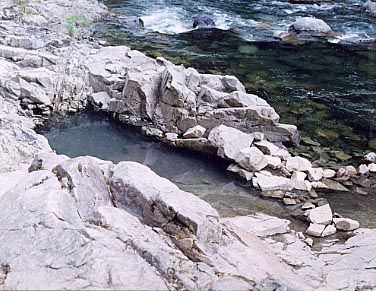
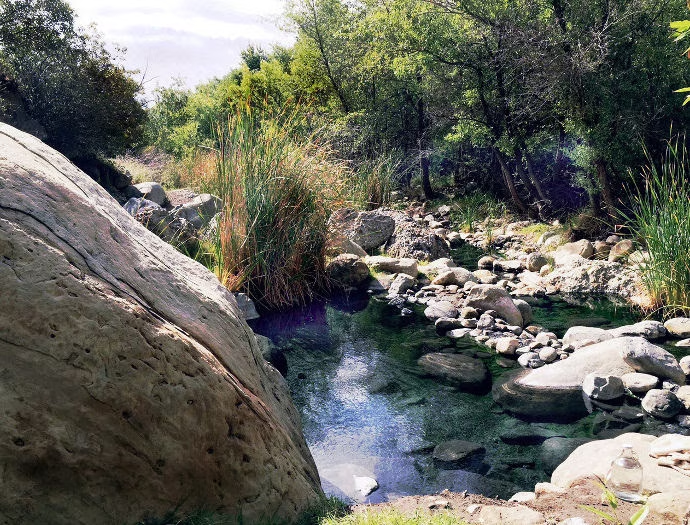
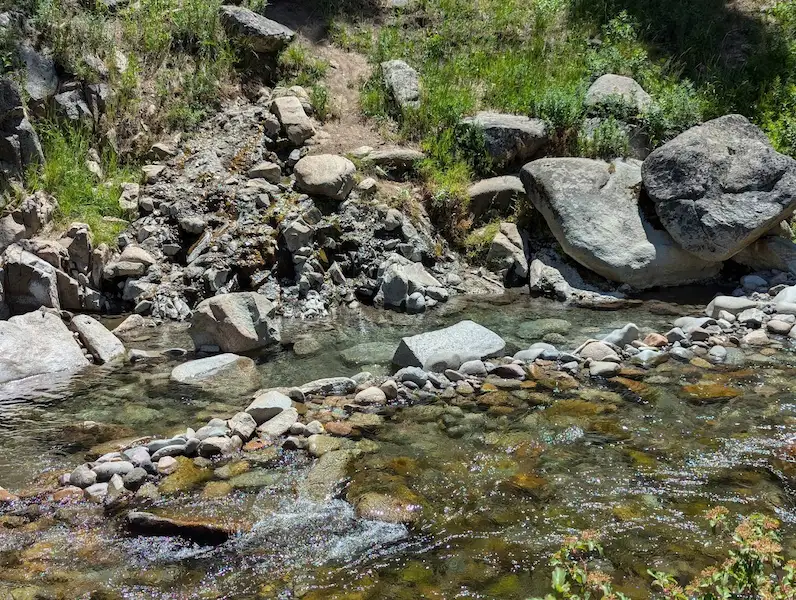
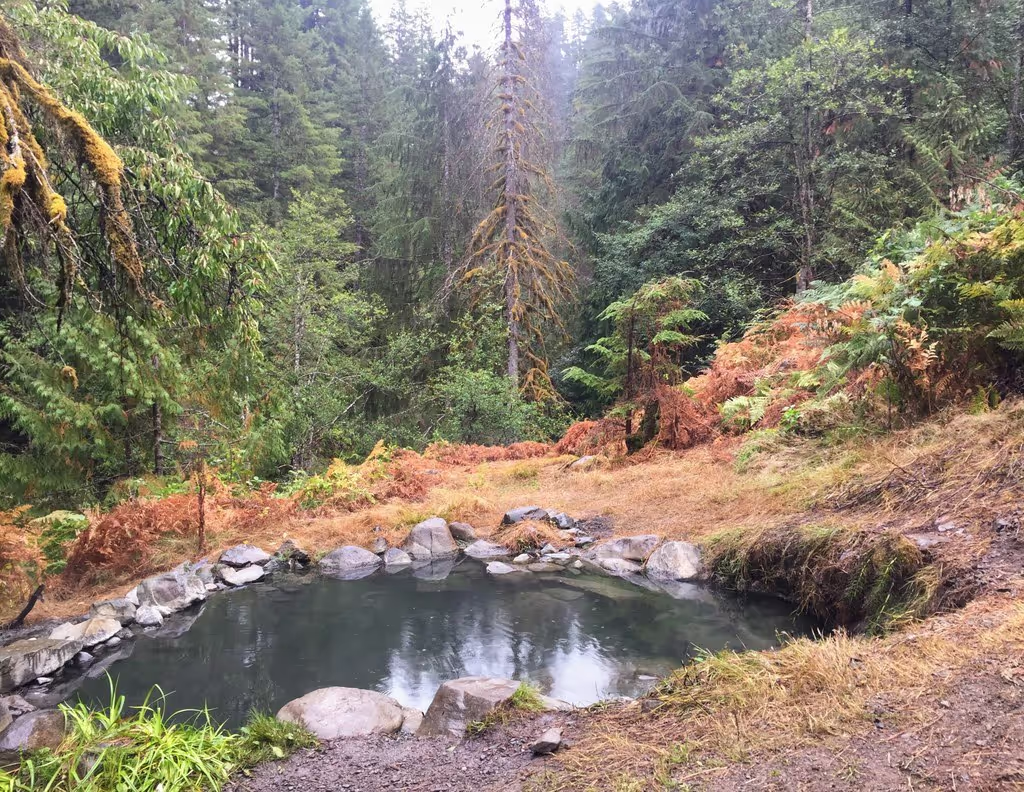
Olympic Hot Springs, Washington is a free geothermal spring in Olympic National Park, Clallam County, on the Olympic Peninsula approximately 20 miles southwest of Port Angeles. Multiple primitive pools scattered through a forested area near Boulder Creek range from approximately 85 to 105 degrees Fahrenheit in temperature. The pools are natural depressions with no constructed infrastructure and vary in size, depth, and temperature. A shallow depth of around one foot is typical, with some pools deeper where rocks have been stacked to retain water. The springs sit on a fault line where breaks in the rock allow surface water to be heated geothermally.
A resort operated at the site until 1966 when its lease with the National Park Service expired. The buildings were subsequently removed and the site has remained undeveloped since. The springs are within the Boulder Creek drainage, a tributary of the Elwha River, and are surrounded by old-growth temperate rainforest characteristic of the Olympic Peninsula. No facilities exist at the springs. A wilderness permit is required for any overnight stay, with designated backcountry campsites located along the Boulder Creek Trail approximately 0.5 to 1 mile from the springs. Day visitors do not require a permit beyond the park entrance fee.
Location & Access
Getting to Olympic Hot Springs
Olympic Hot Springs is reached from Port Angeles by taking US-101 west for approximately 8 miles and turning left onto Olympic Hot Springs Road into Olympic National Park. As of September 2024, the Olympic Hot Springs Road is closed indefinitely to vehicle traffic beyond the Madison Falls parking lot at the park boundary due to extensive flood damage and road washout. The Madison Falls parking lot is the last accessible vehicle parking point. From there, the road is open to pedestrians and cyclists only. The total one-way distance from the Madison Falls parking lot to the hot springs is approximately 10.5 miles: about 8 miles of paved closed road followed by the 2.5-mile Appleton Pass Trail. This makes the round trip approximately 21 miles, a full-day or multi-day commitment.
Before the road closure, the approach was 2.5 miles from the Boulder Creek Trailhead. Visitors should check current Olympic National Park road conditions before planning a trip, as the road closure status may change. The paved road section is accessible to mountain bikes, making an e-bike or bicycle approach viable for many visitors. A National Park entrance fee is required. For those seeking natural hot springs near Port Angeles Washington, Olympic Hot Springs remains accessible but requires substantially more planning than before the closure.
Suitability & Accessibility
Suitability and Accessibility of Olympic Hot Springs
Olympic Hot Springs suits experienced hikers and cyclists prepared for a full-day or multi-day trip of approximately 21 miles round trip given the current road closure. Before September 2024, the springs were suitable for most moderate hikers on the 5-mile round trip from the Boulder Creek Trailhead. With the road closure extending the approach by 16 miles, the springs now require substantially more fitness, planning, and time. An e-bike or standard bicycle for the 8-mile paved road section reduces the effort considerably, and many visitors now use this approach.
The springs themselves are primitive. There are no changing facilities, restrooms, or maintained pools. Pool conditions vary with season, rainfall, and snowmelt. Water temperatures and clarity can fluctuate significantly. Clothing-optional bathing is the norm at the springs. The area is within the national park and dogs are not permitted on backcountry trails.
The springs are not wheelchair accessible. Families with children should be aware of the clothing-optional environment and the absence of any facilities. For those seeking natural hot springs near Port Angeles Washington, Olympic Hot Springs is the only wild geothermal spring in Olympic National Park and one of the few free soaking options on the Olympic Peninsula, making it worth the planning effort despite the current access challenge.
Safety & Etiquette
Olympic Hot Springs Safety Tips
Olympic Hot Springs is an undeveloped geothermal site within Olympic National Park with no staff, ranger presence at the springs, or emergency services nearby. Water temperatures range from approximately 85 to 105 degrees Fahrenheit across the pools. Test each pool before entering as temperatures vary significantly and can change with weather and season. The hottest pools near vent areas can produce dangerously hot water. Do not enter any pool before testing the temperature.
The Olympic Hot Springs Road has been closed to vehicles since September 2024 due to flood damage and road washout. Check current NPS road conditions before planning any trip. The road section includes a washout bypass trail at approximately 0.88 miles from Madison Falls that routes through the forest around a damaged section. Trail and road conditions on the Olympic Peninsula can change rapidly due to high rainfall and storm activity year-round.
The hike passes through old-growth forest with multiple stream crossings. Crossings can become difficult or hazardous after heavy rain or during spring snowmelt. Waterproof footwear is strongly recommended. Three water crossings are documented on the approach trail to the springs. Carry sufficient water for the round trip as no potable water source is marked on the route.
Black bears, cougars, and elk are present in this part of Olympic National Park. Store food in a bear canister or use provided food storage at any overnight campsite. Do not leave food unattended. All waste must be packed out. A wilderness permit is required for overnight camping in the Boulder Creek area and can be obtained from the Wilderness Information Center in Port Angeles.