Quick FactsOverview
About Penny Hot Springs
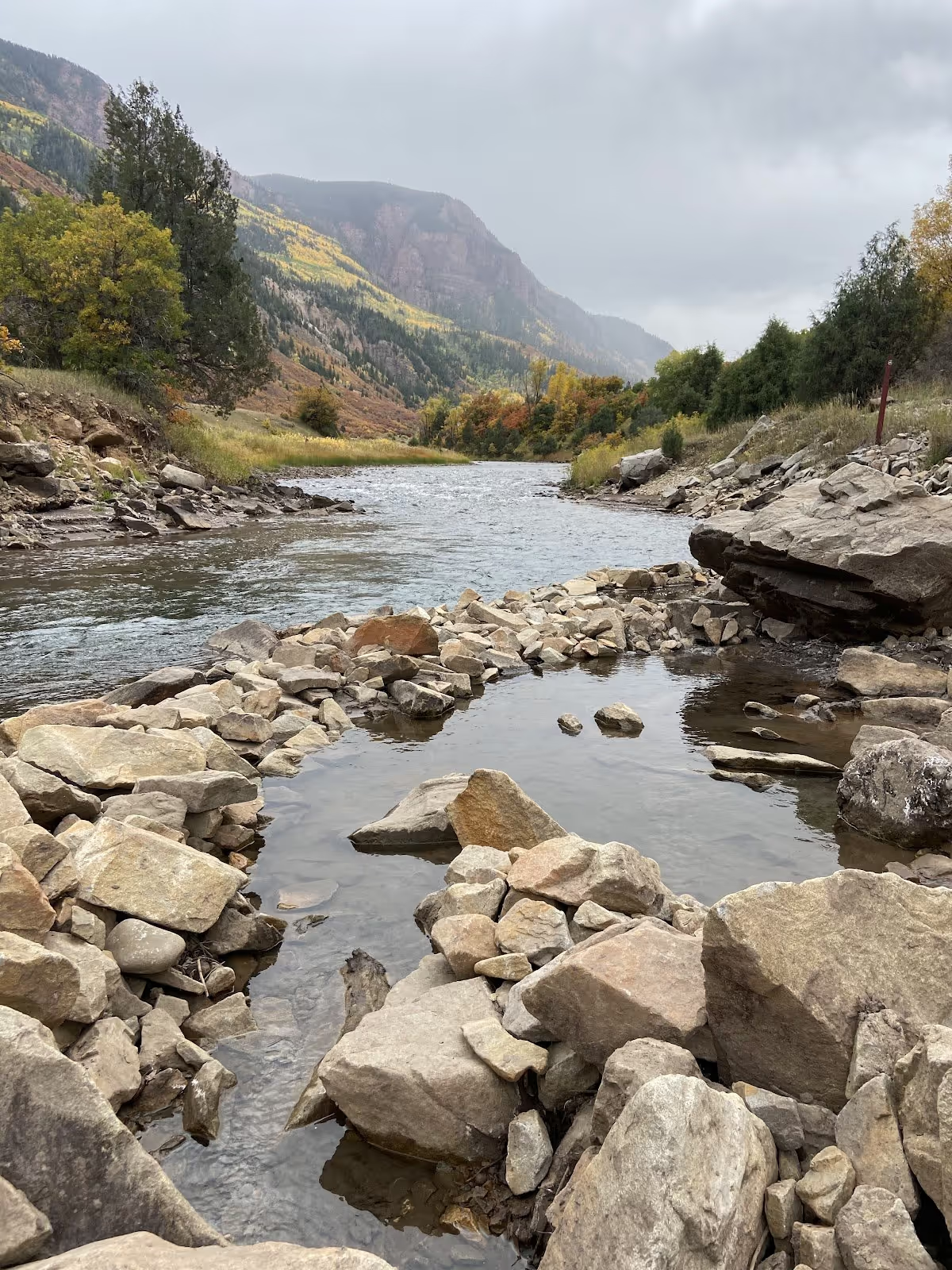
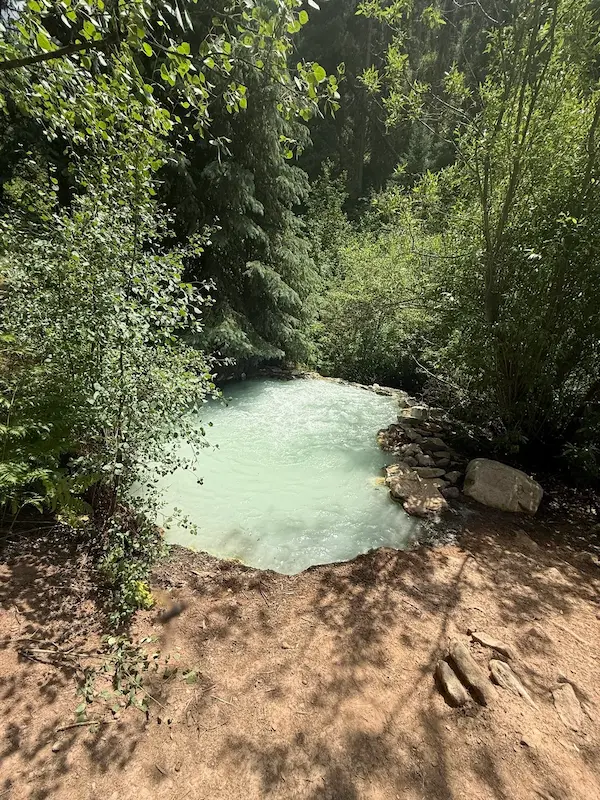
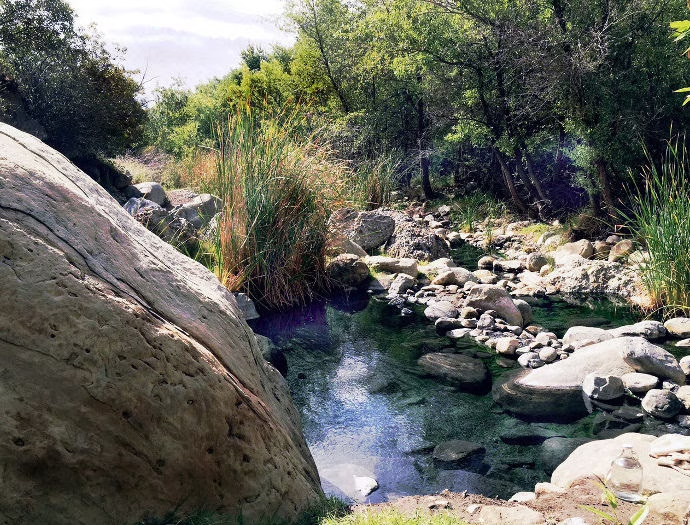
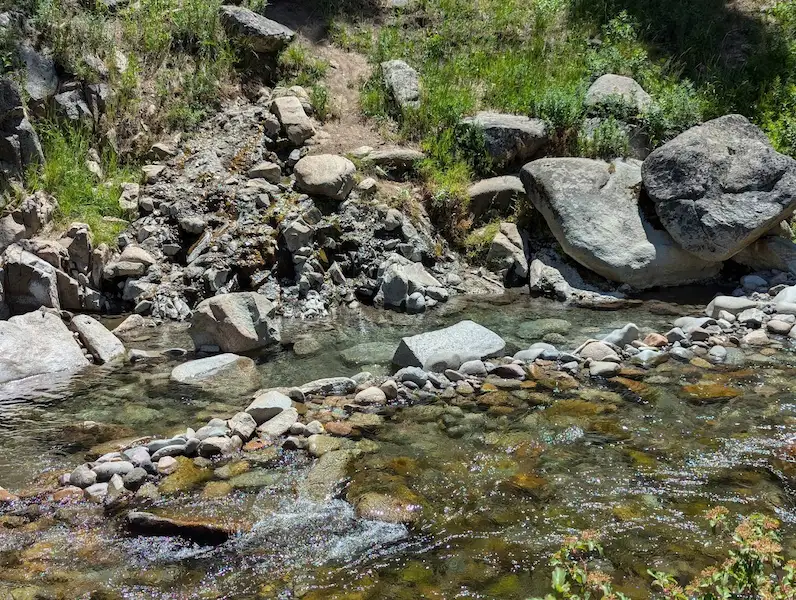
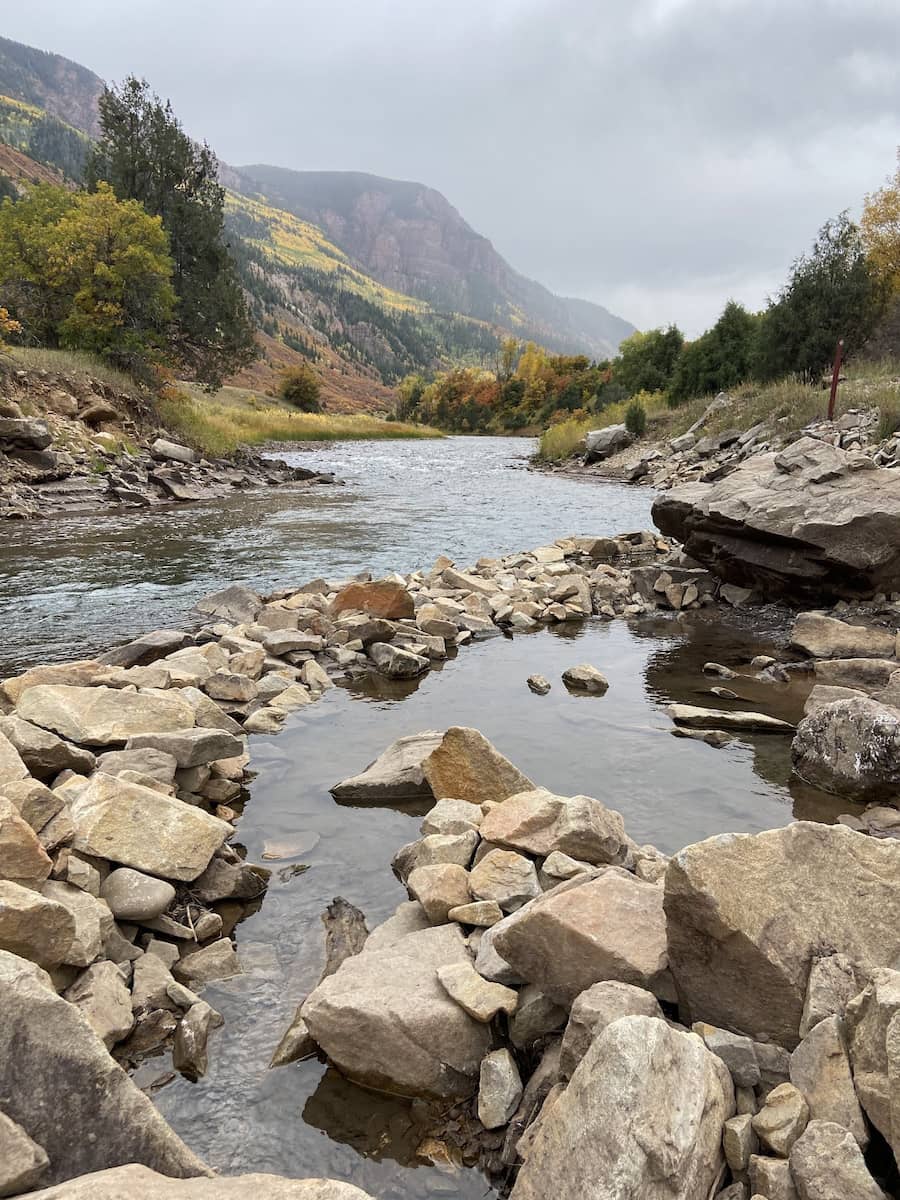
Penny Hot Springs, Colorado is a free primitive hot spring on the Crystal River at CO-133 near mile marker 55, approximately 14 miles south of Carbondale in Garfield County. One large rock-lined pool about 20 feet across sits below the granite cliffs known as Hell's Gate. Source water enters at around 130 degrees Fahrenheit and cools to approximately 100 to 106 degrees in the pool. Visitors can adjust the rock walls to control how much cold river water mixes in. The pool is about 2 feet deep and holds around 10 to 12 people. A porta-potty is available on site. Open year-round with no permit required.
The springs are named for Dan Penny, who operated a hotel and bathhouse along the railroad line upstream of Avalanche Creek in the late 1800s. In the 1960s, visitors began soaking without clothing, which led local residents to bulldoze the bathhouse. The pools were rebuilt and reopened in the early 1990s after Garfield County acquired the property.
The setting below the Hell's Gate granite cliffs with the Crystal River and Filoha Meadows Nature Preserve opposite is dramatic. Penny is a convenient stop for visitors exploring natural hot springs near Carbondale on CO-133 between Glenwood Springs and Redstone.
Location & Access
Getting to Penny Hot Springs
Penny Hot Springs is on the east side of CO-133 near mile marker 55, approximately 14 miles south of Carbondale. There are no signs; look for a wide shoulder parking area on the east side of the highway just north of mile marker 55. From the parking area, hike down a steep rocky path to the Crystal River. The descent takes just a few minutes but involves uneven rocks and can be slippery when wet or icy.
From Glenwood Springs, take CO-82 east approximately one mile to the traffic circle, take the second exit onto CO-133 south, and continue about 13 miles to the pullout near mile marker 55. From Carbondale, take CO-133 south for about 14 miles. From Aspen, the drive is approximately 45 minutes via CO-82 and CO-133. The parking area holds about 20 vehicles. On busy summer weekends it fills quickly; arriving early or on a weekday significantly improves the experience.
The road is well-maintained year-round. Spring snowmelt typically runs from March through May, flooding the pools. Summer through early winter is best for soaking. No camping is allowed directly at the springs. Campsites are available in Redstone and Carbondale, and Avalanche Ranch is about 10 miles south for those seeking natural hot springs near Carbondale with more amenities nearby.
Suitability & Accessibility
Who Penny Hot Springs Suits
Penny Hot Springs suits adults, families, and outdoor enthusiasts looking for a free undeveloped natural soaking experience. There are no amenities beyond a porta-potty; visitors must bring towels, water, and everything else needed. The access path from the highway is steep and rocky; those with significant mobility limitations may find the descent challenging. The pool itself is on a flat riverbank once reached. No prior outdoor experience is required.
Swimwear is the official Garfield County policy. The site has a long history of clothing-optional use which continues informally, but the official guideline requires swimsuits. Children are welcome and the pool is shallow enough for most ages. However, pool temperatures can reach 106 degrees, above the threshold recommended for young children and some health conditions. Dogs are allowed but must stay leashed and out of the water. Glass is prohibited.
The springs can become crowded on summer weekends and evenings; weekday mornings and off-season visits offer a quieter experience. The historic setting below Hell's Gate cliffs adds distinctive character for visitors interested in the geology and history of the Crystal River Valley. This is one of the more accessible natural hot springs in Colorado for free soaking near Glenwood Springs and Aspen.
Safety & Etiquette
Penny Hot Springs Safety Tips
Penny Hot Springs is generally safe for most visitors, but several natural hazards require attention. The path from the highway to the river is steep and rocky and can be slippery when wet or icy. Appropriate footwear is important. The Crystal River runs immediately adjacent and can be fast and cold; do not enter the main river channel, particularly during spring snowmelt when flows are highest.
The source water enters the pool at approximately 130 degrees Fahrenheit. Test the temperature and adjust the rocks before entering. Scald risk is real near the hot spring inlet. Pool temperatures typically range from 100 to 106 degrees, at or above the threshold for elevated heat risk for extended soaking. Take breaks and alternate with cooler water throughout your visit.
People with cardiovascular conditions, high or low blood pressure, or pregnancy should consult a physician before soaking in pools above 100 degrees Fahrenheit. Dehydration is a common risk; bring drinking water as there is none on site. The site is at approximately 6,400 feet elevation where UV exposure and altitude effects are more pronounced. There is no cell service for many carriers; inform someone of your plans before visiting, particularly in winter or when alone.
Pack out all trash; the site relies entirely on visitors to maintain its condition. No camping is permitted at the springs. The nearest emergency services are in Carbondale, approximately 14 miles north. Spring visits before June are not recommended as the pools are flooded by snowmelt.