Quick FactsOverview
About Pumpkin Spring
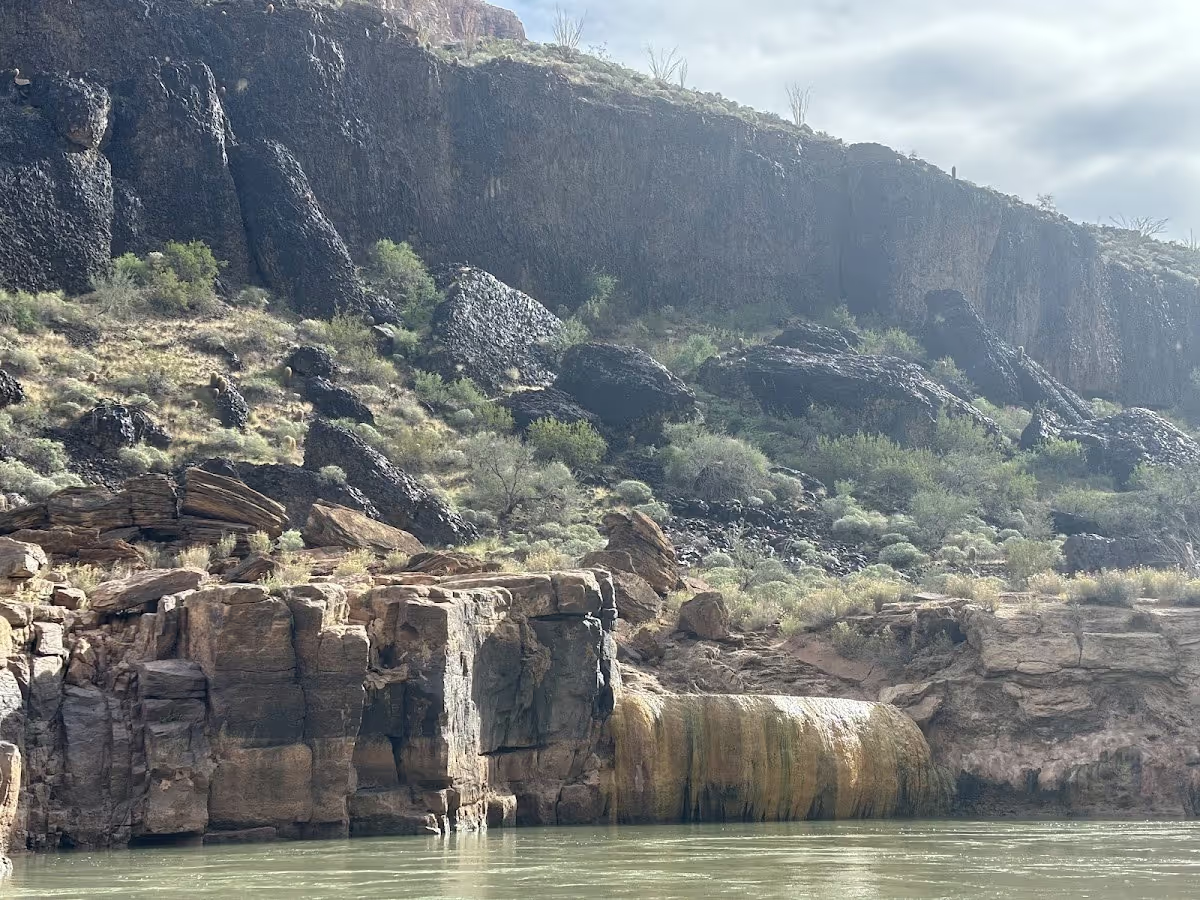
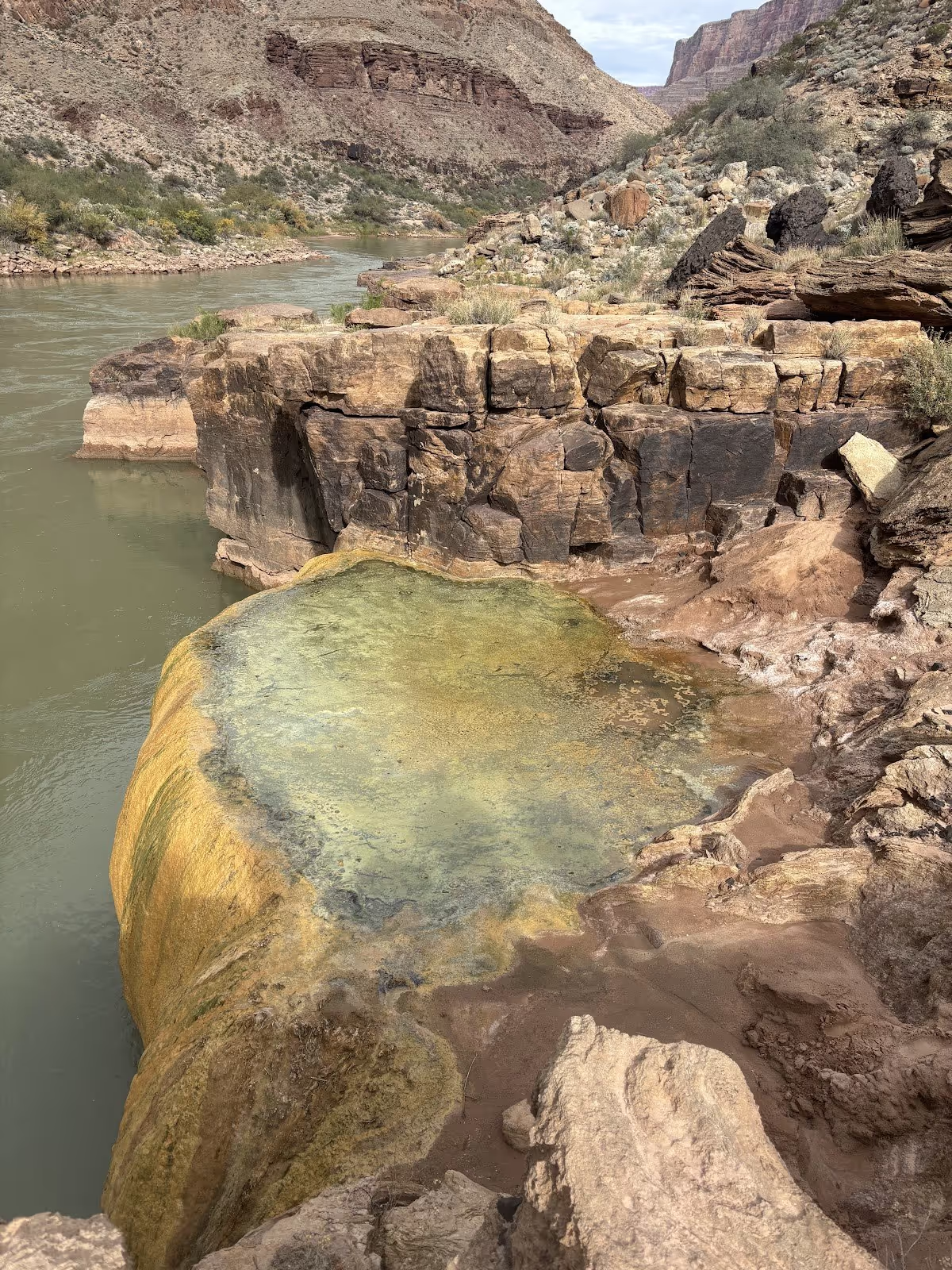
Pumpkin Spring, Arizona is a geothermal mineral hot spring on the shore of the Colorado River at mile 212.9 in the lower Grand Canyon, inside Grand Canyon National Park. It is shaped like a large pumpkin, with bright orange travertine walls and vertical mineral striations, forming a shallow carbonate mound filled with murky green water. It is one of the more unusual natural features accessible to visitors making multi-day rafting trips through hot springs in Arizona, sitting at the base of towering canyon walls in a section of the river only reachable by boat.
The spring emerges from a mineralized carbonate mound at the river's edge, where water flows up from within the pool, over the rim of the travertine bowl, and down into the Colorado River below. This slow overflow is part of what has allowed the travertine formation to grow over time: as mineral-laden water evaporates at the surface, it leaves deposits of calcium carbonate, iron compounds, and other minerals that gradually build the bowl's orange-colored walls higher. The process is ongoing and the mound is, very slowly, still growing as the river carves deeper into the canyon floor. The water flowing through the pool carries dissolved arsenic at approximately 1,100 milligrams per liter, well above any safe threshold for contact or consumption, along with elevated concentrations of zinc, lead, and copper. Despite its warm, inviting appearance, the National Park Service discourages soaking and prohibits drinking from the spring. Adjacent rock ledges and a sandstone platform just upstream of the pool are used by rafters for cliff jumping into the river, which is separate from the toxic pool water itself.
Location & Access
Reaching Pumpkin Spring by River
Pumpkin Spring is reached exclusively by multi-day rafting or motorized boat trip along the Colorado River through the Grand Canyon, at river mile 212.9 in the Lower Canyon section, which spans from roughly mile 180 to the take-out at Diamond Creek around mile 226. There is no road, trail, or hike that leads to this spring; the canyon walls in this section rise hundreds of feet and the terrain above is inaccessible without a river trip. Most full-length Grand Canyon river expeditions launch at Lees Ferry near the Arizona-Utah border at mile 0 and travel the entire 226-mile corridor over 7 to 14 days, passing Pumpkin Spring toward the later section of the journey. A shorter option is joining a lower-half trip that puts in at Whitmore Wash near mile 188, making Pumpkin Spring reachable in a few days from that entry point. Both options require advance permit arrangements, either through a licensed outfitter or, for private trips, through the National Park Service's lottery permit system. For those searching for hot springs near Grand Canyon Village, this site does not function as a day destination; the village is roughly 100 river miles upstream, and the spring itself requires a wilderness boating expedition to reach. Once at the spring, rafters pull into a calm eddy near the riverbank and walk a short distance up from the water's edge to reach the pool.
Commercial outfitters that operate on the Colorado River in the Grand Canyon are licensed by the National Park Service and have been running trips since the 1960s. Trip lengths and entry points vary, but all river access operates under strict NPS permit requirements and capacity limits designed to protect the canyon corridor. Private boaters must hold a separate permit, which is allocated by lottery and typically requires planning well in advance due to high demand. No walk-in, day-hike, or helicopter access to this section of the canyon exists for the general public.
Suitability & Accessibility
Visitor Experience at Pumpkin Spring
Pumpkin Spring suits experienced outdoor travelers who have planned or booked a multi-day river expedition through the Grand Canyon, as it is a notable visual landmark along the route rather than a soaking destination in its own right. The spring pool itself is not appropriate for swimming or bathing due to the verified toxic mineral content of the water, and the National Park Service actively discourages contact. Visitors who are drawn to natural hot springs in Arizona as soaking experiences will find this site does not function that way; it is best understood as a geological curiosity and photography subject on a rafting itinerary. The cliff-jumping area adjacent to the spring, on the Tapeats sandstone ledges just upstream, is a different matter and is a standard activity on most river trips through this section. Children on family river expeditions can observe the spring safely from a few feet away, and the visual contrast of the orange pumpkin-shaped bowl against the dark canyon walls is one of the most striking sights on the entire river corridor. River trips through the lower Grand Canyon involve camping on sandy beaches, managing all personal gear and waste in a remote environment, navigating Class III and IV whitewater, and operating under wilderness conditions for multiple consecutive days.
Most commercial trips include a stop at Pumpkin Spring as a standard waypoint, giving passengers time to walk up from the boats, photograph the formation, and use the rock ledges for jumping into the river. The site has no facilities of any kind: no signage, no toilets, no shade structures, and no drinking water. Everything needed for a canyon river trip must be carried on the boats. The spring water should not be used for any purpose, including washing.
Safety & Etiquette
Safety Information for Pumpkin Spring
Pumpkin Spring is not safe for soaking or contact with the water, because the spring contains arsenic at approximately 1,100 milligrams per liter, which is over 100 times the Environmental Protection Agency's safe drinking limit and well above any safe threshold for skin exposure. The National Park Service prohibits drinking from the spring and discourages any contact with the pool water. Incidental splashing is not considered immediately life-threatening, but prolonged contact or ingestion poses a genuine health risk.
The broader safety context for this site is the Grand Canyon river environment itself, which involves significant wilderness hazards including Class III-IV rapids, remote location far from emergency services, extreme heat in summer, flash flood risk in side canyons, and the technical demands of multi-day river camping. Commercial outfitters provide all safety equipment, trained guides, and emergency protocols as part of their trips. Private boaters must carry all required safety gear per NPS regulations and are responsible for managing their own emergency response. The lower canyon section, where Pumpkin Spring is located, is among the most remote parts of the Grand Canyon corridor. Helicopter evacuation is possible in a genuine emergency but is not routine or readily available. At the spring itself, the adjacent cliff-jumping area carries standard jumping hazards: always check water depth before jumping, never jump when other people are below, and be aware of river currents when swimming back to the boats. Leave no trace principles apply throughout the canyon. All human waste must be packed out using groover systems provided by commercial operators or carried by private boaters. Do not touch, collect, or disturb the travertine formation of the spring itself, which is a protected geological feature within Grand Canyon National Park.