Quick FactsOverview
About Puna Rainforest Retreat
Puna Rainforest Retreat, Hawaii is a private 20-acre geothermal estate in the lower Puna district of the Big Island, offering volcanically steam-heated hot tubs, a cold plunge pool, and a 1.2-mile nature trail over active steam vents. The property sits on Ala'Ili Road approximately 4 miles from Pahoa, set within the Puna Forest Reserve on the slopes of Kilauea volcano. Access is by overnight booking only.
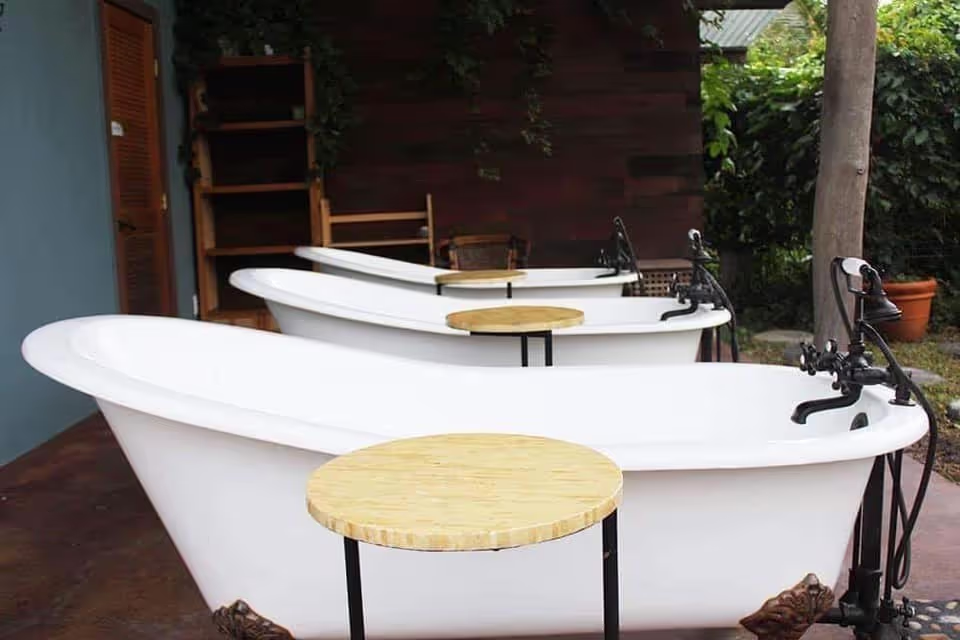
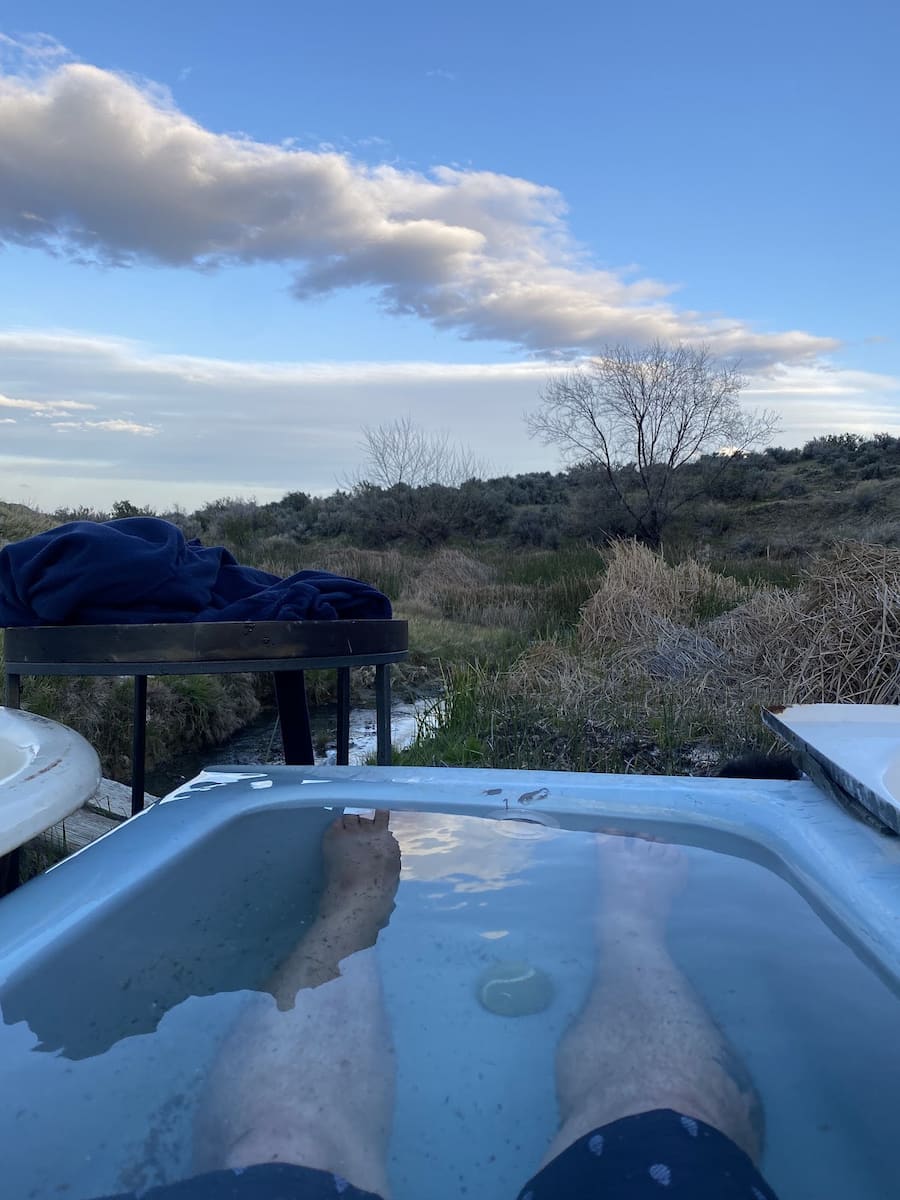
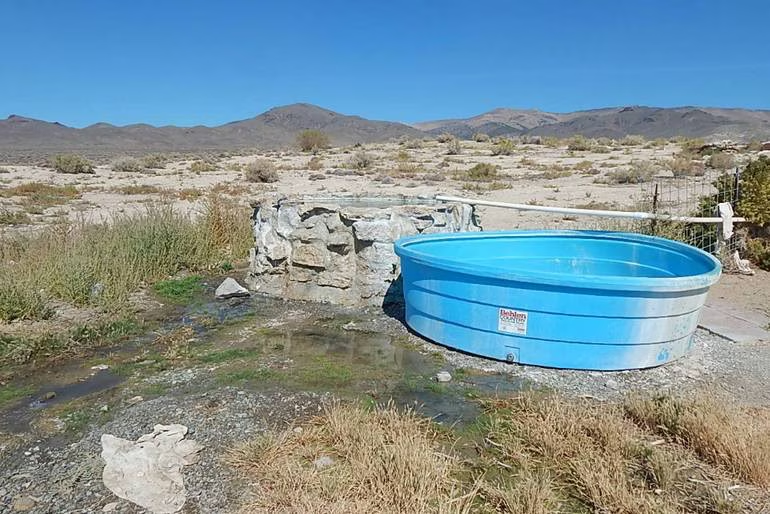
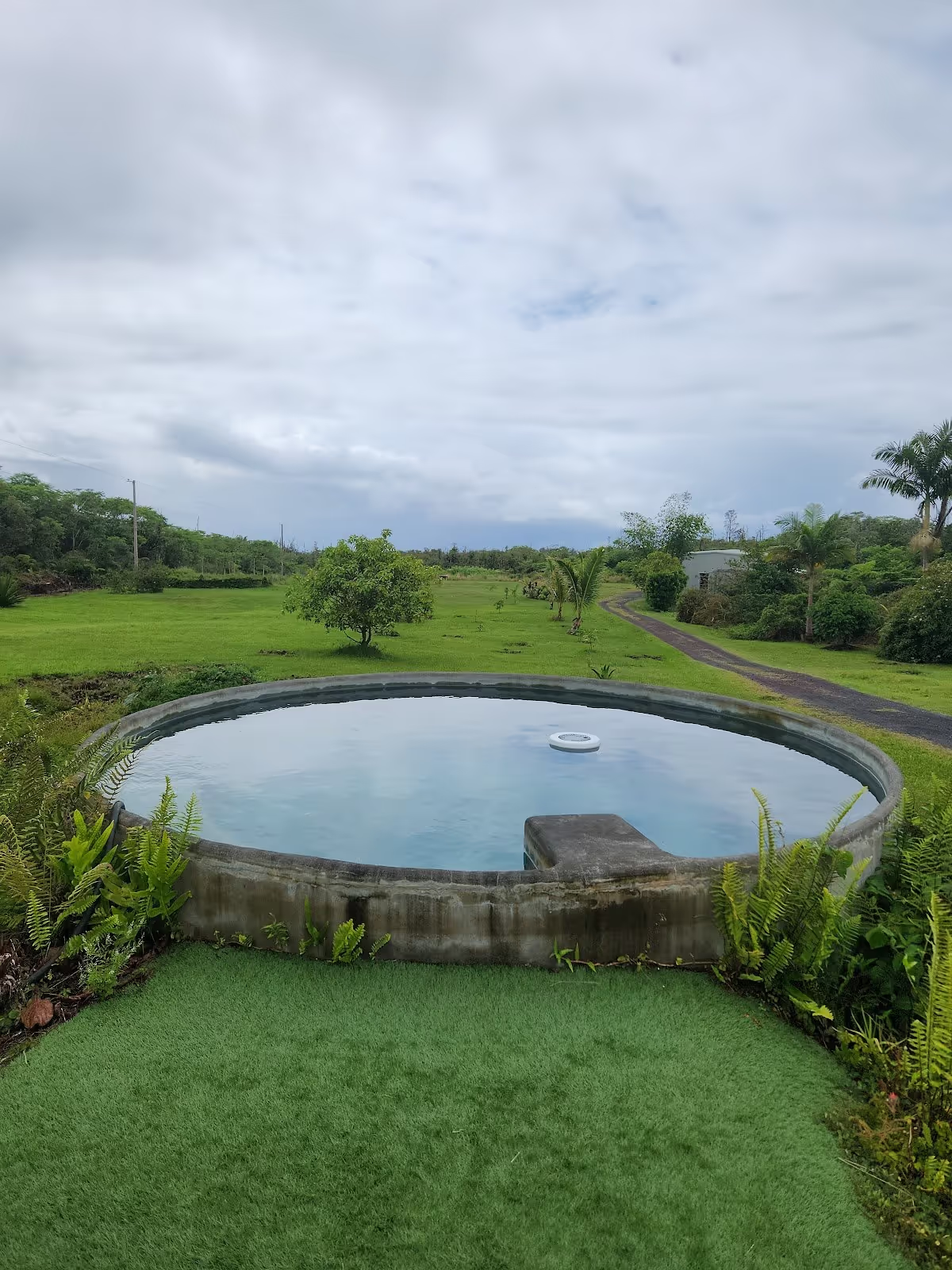
The hot tubs are fed by geothermal steam vents on the lower portion of the grounds. Steam temperatures at the vents reach close to 200 degrees Fahrenheit, and the system has been tested multiple times and confirmed free of harmful gases. The tubs are built around natural geothermal inputs, giving guests a genuinely volcanic soak in a private rainforest setting. The trail passes directly over the vents, offering an unusual walk through the lower property.
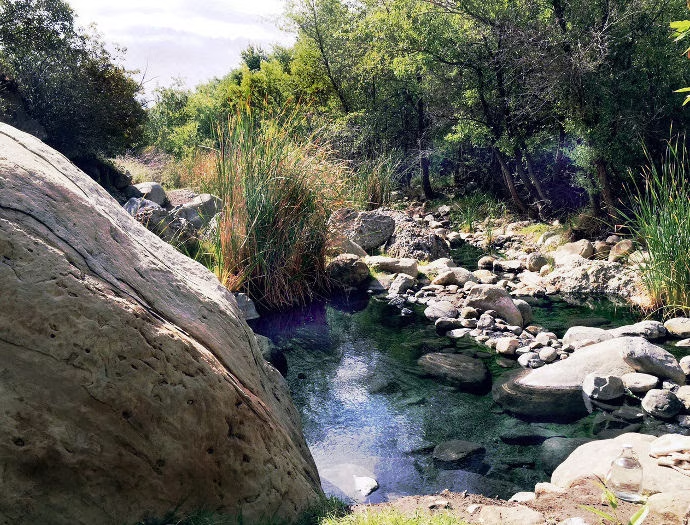
The estate includes a main four-bedroom house and four separate cottages, suitable for couples, families, groups, and retreats. Fruit orchards, a vegetable garden, and ocean views from the upper meadow complete the setting. The property sits within an Ohia forest habitat and native Hawaiian birds are regularly seen on the grounds. Geothermal estates of this kind are rare on the Big Island, where most volcanic activity is inaccessible to visitors.
Location & Access
Directions and Access
The estate is reached by driving south from Pahoa on Highway 130 and then turning onto Ala'Ili Road, approximately 4 miles from Pahoa town center. The full address is 13-3773 Ala'Ili Road, Pahoa, HI 96778. GPS navigation is generally reliable to the property, though the driveway entrance is set back from the road on a quiet paved lane within the Puna Forest Reserve. From Hilo Airport the drive takes approximately 35 minutes.
The property is gated and access is exclusively for booked guests. There is no walk-in or day-use access. Individual cottages and the main house are bookable through the property website and major vacation rental platforms. Check-in is arranged directly with the host. The area is rural and the nearest grocery shopping is in Pahoa, so stocking up before arrival is practical. Cell coverage in the Puna Forest Reserve can be patchy, and downloading offline maps before leaving Pahoa is worthwhile.
The Puna district surrounding the estate includes the Kehena Black Sand Beach, the Pohoiki Warm Ponds, and the scenic coastal road along Highway 137. For guests searching for hot springs near Pahoa in addition to the estate's own tubs, Pohoiki is about 15 miles away and offers a free, publicly accessible geothermal soak at Isaac Hale Beach Park. The estate's rural position also makes it a convenient base for day trips to Hawaii Volcanoes National Park, about 30 miles to the southwest.
Suitability & Accessibility
Who Should Stay at the Retreat
The retreat suits couples, families, small groups, and organizers seeking a private geothermal soak with accommodation on the Big Island. The property has hosted yoga retreats, weddings, scientific conferences, and family reunions, and can accommodate up to 22 guests when the entire estate is booked.
Individual cottages work well for couples or small families of two to four, each with a private lanai and access to the shared hot tubs, plunge pool, and trail. The main house sleeps up to ten and suits larger groups. Children are welcome and the grounds are spacious, though the steam vent trail requires adult supervision near the vents due to high surface temperatures.
Wheelchair accessibility is limited by the nature of the property. The grounds include uneven garden terrain, and the hot tubs are set into natural landscape rather than a constructed spa environment. Guests with significant mobility limitations should contact the host in advance to discuss access. For visitors seeking accessible hot springs in Hawaii, this estate may not be the best fit for those with limited mobility, though the cottage accommodations themselves are generally manageable. The property's seclusion, ocean views, and geothermal features make it a distinctive option among resorts and spas on the Big Island.
Safety & Etiquette
Puna Rainforest Retreat Safety Tips
The estate is generally safe for guests, but the geothermal features require awareness. The steam vents on the lower trail reach very high surface temperatures and should never be closely approached or touched. The property has maintained and monitored the vents for many years, and testing has confirmed no harmful gases are present, but guests should stay on the marked trail path and keep children well clear of vent openings at all times.
The hot tubs are fed by geothermal steam and maintained by the host. Unlike a commercial spa, these tubs operate in a natural outdoor environment, so conditions such as temperature and water level may vary. Guests with open wounds, compromised immune systems, or serious cardiovascular conditions should consult a doctor before using geothermal water features. Warm, slow-moving freshwater in Hawaii carries a general leptospirosis risk, and guests with any skin breaks should avoid full immersion as a precaution.
The rural Puna location means emergency services response times are longer than in urban areas, so guests should take standard precautions during their stay. The nearest hospital is in Hilo, approximately 23 miles away. The property is gated and private, which provides a secure setting. Evening conditions on the grounds are very dark given the forest canopy, so carrying a light when moving between cottages and the hot tub area after dark is strongly advisable. The steam vent trail is best walked in daylight. The host provides a detailed information book on arrival that covers all property features, trail etiquette, and local emergency contacts.